What Tools Do Electrical Engineers Use in Their Work
Electrical engineers rely on a wide range of tools, from basic hand tools like wire strippers and multimeters to advanced software like CAD and simulation programs. Understanding these tools helps you appreciate the complexity of modern electrical design and troubleshooting. This guide breaks down every category of equipment so you know exactly what goes into an engineer’s toolkit.
Electrical engineers are the backbone of modern technology. They design the circuits that power our phones, build the systems that light up our cities, and create the controls that run entire factories. But none of this happens without the right gear. So, what tools do electrical engineers use in their work? The answer is more diverse than you might think.
From simple hand tools you can find in any toolbox to sophisticated software that designs microchips, the tools electrical engineers use span a wide spectrum. Some items are essential for every junior engineer, while others are reserved for specialized roles. In this article, we will walk through every major category. You will learn what each tool does, why it matters, and how it fits into the bigger picture of electrical engineering.
Whether you are a student exploring this career path or a curious mind who wants to understand the trade better, this guide has you covered. We will break things down into simple sections so you can follow along easily. Let us dive into the world of electrical engineering tools and see what makes them so important.
Key Takeaways
- Hand tools form the foundation: Every electrical engineer needs wire strippers, pliers, screwdrivers, and a good soldering iron to handle everyday tasks.
- Measurement equipment is non-negotiable: Multimeters, oscilloscopes, and clamp meters let engineers test circuits and diagnose problems accurately.
- Software tools are just as important: CAD programs and simulation software drive modern circuit design and analysis.
- Power tools and generators play a role: Engineers working on-site or in labs often use air compressors and backup generators to power equipment.
- Safety gear comes first: Insulated gloves, safety glasses, and proper grounding tools protect engineers from electrical hazards.
📑 Table of Contents
- Essential Hand Tools Every Electrical Engineer Needs
- Measurement and Testing Equipment
- Software and Design Tools
- Power Tools and Workshop Equipment
- Safety Equipment and Protective Gear
- Specialty Tools for Advanced Electrical Engineering
- Common Mistakes Engineers Make With Their Tools
- Quick Tips for Choosing the Right Tools
- Final Thoughts
Essential Hand Tools Every Electrical Engineer Needs
Hand tools are the starting point for any electrical engineer. You do not need a fancy lab to begin working with circuits. A solid set of basic hand tools will take you far. These are the items you will reach for every single day.
Wire Strippers and Cutters
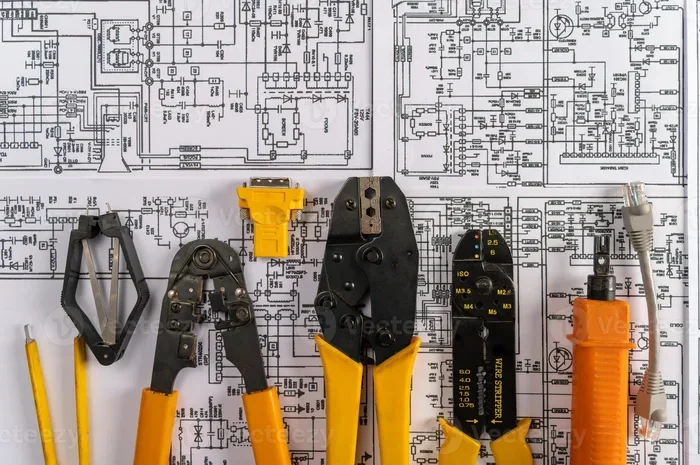
Wire strippers remove the insulation from electrical wires without damaging the metal inside. This is a basic but critical step in almost every project. Engineers use them to prepare wires for connections, soldering, and terminal lugs. A good pair of wire cutters also handles trimming excess wire cleanly.
Screwdrivers and Pliers
Electricians and engineers both rely on a variety of screwdrivers. Flathead and Phillips head sizes are the most common. Insulated screwdrivers are a must because they protect against electric shock. Pliers, including needle-nose and lineman pliers, help with gripping, bending, and cutting wire.
Soldering Irons and Solder
Soldering is how engineers create permanent electrical connections. A soldering iron heats up a metal alloy called solder, which melts and joins two components together. This skill is essential for building circuit boards, repairing electronics, and prototyping new designs. A quality soldering station gives you precise temperature control, which makes a big difference in the quality of your joints.
Tweezers and Helping Hands
Small components like resistors, capacitors, and microchips are tiny. Tweezers let engineers handle them with precision. A helping hands tool (also called a third hand) holds components steady while you solder or test them. These small tools save a lot of frustration during detailed work.
Measurement and Testing Equipment
If hand tools are the foundation, measurement tools are the brain of electrical engineering. You cannot build or fix what you cannot measure. These devices tell engineers exactly what is happening inside a circuit.
Multimeters
The multimeter is the single most important tool in any engineer’s kit. It measures voltage, current, and resistance. Basic models are affordable and easy to use. Advanced digital multimeters offer features like frequency counting and capacitance testing. When you ask yourself what tools do electrical engineers use first, the multimeter is always at the top of the list.
Oscilloscopes
An oscilloscope displays electrical signals as waves on a screen. This lets engineers see how a signal changes over time. It is incredibly useful for debugging circuits and analyzing signal quality. There are handheld oscilloscopes for field work and benchtop models for detailed lab analysis.
Some engineers also work with optical compressors in signal processing applications. These tools use light to control signal levels, and they are popular in audio and telecommunications engineering. You can learn more about how optical compressors work if you are curious about this niche area.
Clamp Meters and Voltage Testers
A clamp meter lets you measure current without disconnecting a wire. You simply clamp it around the conductor and read the value. This is a huge time-saver during troubleshooting. Voltage testers, on the other hand, quickly check whether a circuit is live or dead. Both tools are essential for safe and efficient electrical work.
Signal Generators
A signal generator produces electrical waveforms for testing purposes. Engineers use them to simulate inputs and verify that circuits respond correctly. They are common in audio engineering, communications, and control systems design.
Software and Design Tools
Modern electrical engineering is not just about hardware. Software tools are equally important, and in many cases, they come first. Engineers design and simulate circuits on computers before ever building a physical prototype.
CAD Software
Computer-Aided Design (CAD) software lets engineers create detailed schematics and circuit layouts. Popular programs include AutoCAD, Altium Designer, and KiCad. These tools make it easy to visualize complex circuits and spot design errors early. They also generate the files needed for manufacturing printed circuit boards (PCBs).
Simulation Software
Simulation tools like SPICE allow engineers to test how a circuit will behave under different conditions. You can run virtual experiments without building anything physical. This saves time, reduces costs, and improves accuracy. Simulation is a core part of the circuit design software toolkit for any serious engineer.
Programming and Firmware Tools
Many electrical engineers also write code. Microcontrollers and embedded systems require programming in languages like C, C++, and Python. Engineers use integrated development environments (IDEs) and debugging tools to write, test, and upload firmware to hardware. This blend of hardware and software skills is what makes modern electrical engineers so versatile.
Power Tools and Workshop Equipment
Electrical engineers often work in workshops and labs where they need reliable power sources and mechanical tools. These items support the hands-on side of engineering.
Air Compressors and Pneumatic Tools
Air compressors power pneumatic tools like drills, grinders, and nailers. In engineering labs and manufacturing environments, compressed air is a clean and safe power source. Engineers use air compressors for tasks like cleaning circuit boards, operating automated systems, and running assembly line equipment. Understanding how compressor settings affect performance is important, and you can read about what attack does on a compressor to learn more about compressor parameter tuning.
Backup Power and Generators
Power outages can ruin sensitive experiments and delay projects. Backup generators keep labs and workshops running when the grid fails. Engineers working on power systems or field projects need to understand generator sizing and fuel consumption. If you want to explore this further, check out how big of a backup generator you need for practical guidance on selecting the right unit.
Bench Power Supplies
A bench power supply provides adjustable voltage and current for testing circuits. Engineers set precise output levels and monitor how circuits draw power. These supplies are adjustable, reliable, and essential for any electronics workbench.
Heat Guns and Thermal Tools
Heat guns are used for shrink-wrapping tubing, desoldering components, and heat-shaping plastic parts. They are versatile tools that every engineer should have in the workshop. Thermal cameras take this a step further by visualizing heat distribution on circuit boards, which helps identify hot spots and failing components.
Safety Equipment and Protective Gear
Safety always comes first in electrical engineering. Working with electricity carries real risks, and the right protective gear can prevent serious injury.
Insulated Gloves and Safety Glasses
Insulated rubber gloves protect against electric shock when working with live circuits. They come in different voltage ratings, and engineers must choose the right pair for the job. Safety glasses shield the eyes from sparks, debris, and solder flux. These two items should be worn in every lab and workshop session.
Grounding Tools and ESD Protection
Electrostatic discharge (ESD) can destroy sensitive electronic components without you even noticing. Anti-static wrist straps and grounding mats prevent static buildup. Engineers use these tools when handling circuit boards, microchips, and other delicate parts. A simple grounding tool can save hundreds of dollars in damaged components.
Fire Extinguishers and First Aid Kits
Every electrical workspace should have a fire extinguisher rated for electrical fires. Class C extinguishers are designed specifically for energized equipment. A well-stocked first aid kit handles minor burns, cuts, and other workshop injuries. These are not glamorous tools, but they are absolutely essential.
Specialty Tools for Advanced Electrical Engineering
As engineers move into specialized fields, they encounter tools that go beyond the basics. These advanced instruments open up new possibilities and enable cutting-edge work.
Spectrum Analyzers and Network Analyzers
Spectrum analyzers measure the frequency content of signals. They are vital in RF engineering, telecommunications, and audio design. Network analyzers go further by testing how signals travel through a system. Together, these tools help engineers optimize signal quality and system performance.
Logic Analyzers and Protocol Testers
Digital circuits communicate using protocols like I2C, SPI, and UART. Logic analyzers capture and display these digital signals so engineers can verify that data is flowing correctly. Protocol testers go a step further by checking whether the communication follows the correct standards. These tools are essential for embedded systems and firmware development.
Thermal Imaging Cameras
Thermal cameras detect heat patterns and display them as color images. Engineers use them to find overheating components, identify poor solder joints, and optimize thermal management in electronic devices. They are also valuable in building inspection and industrial maintenance.
3D Printers and Prototyping Equipment
3D printing has revolutionized how engineers build enclosures, housings, and custom parts. Instead of waiting weeks for a machined component, engineers can print a prototype in hours. This speeds up the design process and encourages experimentation. Combined with CAD software, 3D printers make rapid prototyping faster and more accessible than ever.
Common Mistakes Engineers Make With Their Tools
Even experienced engineers sometimes make avoidable mistakes with their tools. Knowing these pitfalls helps you work smarter and safer.
- Skipping calibration: Measurement tools drift over time. Regular calibration ensures accurate readings and prevents costly design errors.
- Using the wrong tool for the job: A standard screwdriver instead of an insulated one can lead to electric shock. Always match the tool to the task.
- Ignoring software updates: Outdated CAD or simulation software may have bugs that affect your designs. Keep your tools up to date.
- Neglecting safety gear: It is tempting to skip gloves or glasses when you are in a rush. Do not. One mistake can cause serious harm.
- Overlooking maintenance: Clean your tools regularly. A dirty multimeter or a corroded soldering tip gives unreliable results.
Quick Tips for Choosing the Right Tools
- Start with a quality multimeter. It is the tool you will use most often.
- Invest in a good soldering station with temperature control.
- Choose software that matches your industry focus, whether it is PCB design, signal processing, or embedded systems.
- Always prioritize safety gear over convenience.
- Build your toolkit gradually. You do not need everything at once.
- Learn how to use each tool properly before relying on it for critical work.
Final Thoughts
The world of electrical engineering is vast, and the tools electrical engineers use reflect that diversity. From simple wire strippers and multimeters to advanced simulation software and thermal cameras, each tool serves a unique purpose. Together, they form a complete toolkit that enables engineers to design, build, test, and troubleshoot the electrical systems we rely on every day.
Understanding these tools gives you a deeper appreciation for the engineering profession. Whether you are building your first circuit on a breadboard or designing a complex embedded system, the right tools make all the difference. Start with the basics, invest in quality equipment, and never stop learning. The more tools you master, the more capable and confident you will become in your work.
So the next time you wonder about the gear behind great engineering, remember this guide. The right tools in the right hands can change the world. And for electrical engineers, that is exactly the goal.
Engineers who work with generators and power systems should also understand fuel efficiency and power requirements. For example, natural gas generator fuel consumption is an important consideration for engineers designing backup power systems. Similarly, issues like compressor short cycling can affect workshop equipment reliability, so understanding these problems helps engineers maintain a smooth workflow.
Frequently Asked Questions
What are the most basic tools an electrical engineer should own?
A multimeter, wire strippers, a soldering iron, screwdrivers, and pliers are the essentials. These tools handle the majority of everyday tasks. Start with these and build from there as your projects become more complex.
Do electrical engineers need to know how to use software?
Absolutely. Modern electrical engineering relies heavily on software. CAD tools, simulation programs, and programming environments are just as important as physical tools. Learning software early in your career gives you a significant advantage.
How much should I spend on my first multimeter?
A decent digital multimeter costs between 30 and 100 dollars. You do not need an expensive model to start. Focus on features like auto-ranging, true RMS, and a clear display. These basics will serve you well for years.
Why is safety gear so important for electrical engineers?
Working with electricity always carries risk. Insulated gloves, safety glasses, and grounding tools protect you from shock, burns, and static damage. Skipping safety gear is never worth the risk, no matter how small the task seems.
Can electrical engineers work without an oscilloscope?
Yes, many engineers work without one, especially in design-focused roles. However, an oscilloscope is incredibly helpful for debugging and signal analysis. If you plan to do hands-on testing or field work, owning one is a big advantage.
What is the difference between a clamp meter and a multimeter?
A clamp meter measures current by clamping around a wire without breaking the circuit. A standard multimeter requires you to break the circuit and connect the meter in series. Clamp meters are faster and safer for measuring current in live circuits.
=== /FAQS ===