Why is Coaching One of the Most Powerful Tools Ever
Coaching is widely regarded as one of the most powerful tools for personal and professional growth. It combines accountability, guidance, and proven techniques to help people achieve results faster than going it alone. Whether you seek career advancement, better health, or improved relationships, coaching delivers measurable transformation.
Why Coaching Is One of the Most Powerful Tools Ever
Have you ever wondered why top performers in every field rely on a coach? Athletes have them. CEOs have them. Even world-class musicians work with mentors and coaching professionals. The reason is simple. Coaching is one of the most powerful tools ever developed for human growth and achievement.
Coaching is not just about giving advice. It is a structured, intentional process that unlocks potential, builds confidence, and drives real results. In this article, we will explore exactly why coaching holds such a unique position in the world of personal and professional development. You will learn how it works, what makes it different from other tools, and how you can use it to transform your own life.
## What Makes Coaching So Powerful
### The Core of Coaching
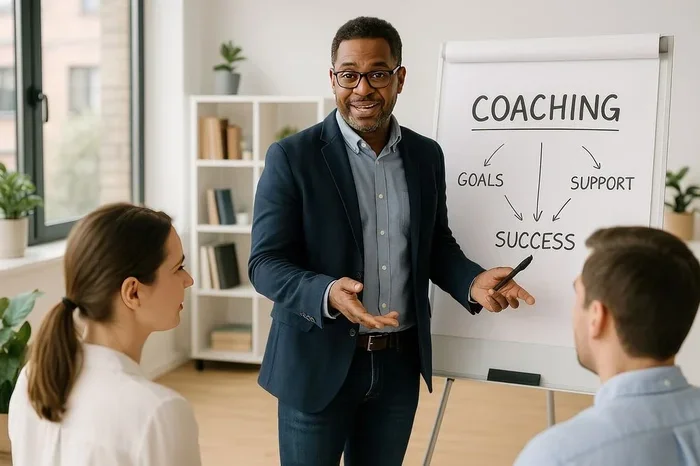
At its heart, coaching is a partnership. It is not a lecture. It is not a class. A coach works with you one on one to identify your goals, remove obstacles, and create a clear path forward. This personalized approach is what makes coaching so effective.
Think of it this way. You would not try to perform surgery on yourself just because you read a book about it. Yet many people try to navigate life’s biggest challenges without any guidance. Coaching fills that gap. It gives you a trained partner who has helped others succeed before.
### The Power of Accountability
One of the biggest reasons coaching works so well is accountability. When you have a coach, you are more likely to follow through on your commitments. A coach checks in, asks tough questions, and keeps you on track.
Here is a quick look at how accountability shapes results:
- Regular check-ins keep you focused on your goals.
- Honest feedback helps you see blind spots you might miss on your own.
- Structured plans break big goals into manageable steps.
- Motivation boost helps you push through when things get hard.
Accountability alone can be a game-changer. Many people set goals and then quietly abandon them. A coach changes that dynamic completely.
### Personalized Guidance
No two people are the same. That is why generic advice often falls flat. Coaching works because it is tailored to you. A good coach listens, observes, and designs strategies that fit your unique situation.
This is very different from reading a self-help book or watching a motivational video. Those resources can be helpful, but they lack the personal touch. Coaching adapts to your pace, your personality, and your specific challenges.
## The Science Behind Coaching Effectiveness
### What Research Says About Coaching
You might be surprised to learn that there is solid research behind coaching. Studies have shown that people who work with a coach are more likely to achieve their goals. They also report higher levels of satisfaction and confidence.
For example, research from the International Coach Federation found that over 80% of people who received coaching reported improved self-esteem. Around 70% saw better work performance. These numbers are hard to ignore.
The reason coaching works so well from a scientific standpoint comes down to how the brain learns and changes. Coaching uses techniques that rewire thought patterns, build new habits, and reinforce positive behavior. It is not magic. It is neuroscience and psychology working together.
### How Coaching Changes the Brain
When you repeat new behaviors with the guidance of a coach, your brain forms new neural pathways. This process is called neuroplasticity. Over time, these new pathways make it easier to think, act, and respond differently.
Think about it like building a muscle. The first few reps are hard. But with consistent practice and guidance, the effort becomes natural. Coaching provides the reps, the guidance, and the feedback loop that makes lasting change possible.
This is also why coaching is so much more effective than temporary motivation. Motivation fades. Neural pathways built through consistent coaching practice do not.
### The Role of Emotional Intelligence in Coaching
Many people underestimate the role of emotions in decision-making and performance. Coaching helps you develop emotional intelligence, which is the ability to recognize, understand, and manage your emotions.
People with high emotional intelligence tend to:
- Communicate more effectively
- Handle stress better
- Build stronger relationships
- Make clearer decisions under pressure
A skilled coach helps you build these skills through real-time conversations and exercises. This is one reason why coaching is considered such a transformative tool.
## Different Types of Coaching and Their Impact
### Life Coaching
Life coaching is one of the most popular forms of coaching. It covers areas like relationships, health, personal fulfillment, and work-life balance. A life coach helps you clarify what you want out of life and create a plan to get there.
Life coaching is not about fixing what is broken. It is about helping you grow and thrive. Many people turn to life coaching during major transitions, such as career changes, divorce, or retirement.
### Executive Coaching
Executive coaching is designed for leaders and managers. It focuses on leadership skills, strategic thinking, and organizational impact. Many Fortune 500 companies invest heavily in executive coaching because the results speak for themselves.
Executives who work with coaches often see improvements in:
- Team performance and morale
- Decision-making speed and quality
- Communication with stakeholders
- Conflict resolution skills
Executive coaching is especially powerful because leaders set the tone for entire organizations. When one leader grows, the ripple effect touches everyone.
### Career Coaching
Career coaching helps people navigate their professional paths. Whether you are just starting out or looking to make a big leap, a career coach can help you identify opportunities and build the skills you need.
A career coach might help you with resume writing, interview preparation, or networking strategies. But more importantly, they help you understand your strengths and align them with the right career path.
### Performance Coaching
Performance coaching is common in sports, but it is also used in business and creative fields. It focuses on optimizing output and achieving peak performance. Many people use performance coaching to break through plateaus and reach the next level.
Interestingly, the concept of performance optimization is not so different from how audio engineers use tools like is a limiter a compressor to fine-tune sound output. Just as a limiter helps control dynamics and bring out the best in a recording, a performance coach helps you control your energy, focus, and output to deliver your best work consistently.
## How Coaching Transforms Personal and Professional Life
### Building Confidence Through Coaching
Confidence is not something you either have or you do not. It is a skill that can be built. Coaching is one of the most effective ways to develop genuine, lasting confidence.
A coach helps you recognize your achievements, challenge negative self-talk, and step outside your comfort zone in a safe way. Over time, these small victories add up to a deep sense of self-belief.
### Improving Relationships with Coaching
Our relationships are often the biggest source of joy and the biggest source of stress. Coaching can help you communicate better, set boundaries, and understand others more deeply.
Coaching does not give you relationship advice in a generic way. Instead, it helps you understand your own patterns and triggers. Once you see those clearly, you can make conscious choices that improve every relationship in your life.
### Achieving Work-Life Balance
Many people feel pulled in a hundred directions. Between work, family, health, and personal goals, it is easy to feel overwhelmed. Coaching helps you prioritize what truly matters and create a balanced life that feels sustainable.
A coach will ask you tough questions like:
- What matters most to you right now?
- Where are you spending time that does not align with your values?
- What would your ideal week look like?
These questions cut through the noise and help you focus on what really counts.
## Why Coaching Outperforms Other Development Tools
### Coaching vs. Self-Help Books
Self-help books are valuable. They can inspire you and teach you new concepts. But there is a limit to what a book can do for you. Books cannot adapt to your specific situation. They cannot hold you accountable. And they cannot give you personalized feedback.
Coaching fills those gaps. It takes the best ideas from books and applies them directly to your life. This is why many people who read dozens of self-help books still feel stuck, while a few sessions with a coach can create real momentum.
### Coaching vs. Therapy
Therapy and coaching are both powerful tools, but they serve different purposes. Therapy often focuses on healing past wounds and addressing mental health challenges. Coaching focuses on the present and future. It is about setting goals, building skills, and creating action plans.
Some people benefit from both therapy and coaching at different stages of their journey. But if you are looking to grow, achieve, and move forward, coaching is often the more direct and efficient path.
### Coaching vs. Online Courses
Online courses are great for learning new skills. But knowing something and actually doing it are two very different things. Coaching bridges that gap. A coach helps you apply what you learn and stay committed to the process.
Think about how different tools serve different needs. Just as someone might use an how big of a backup generator do i need guide to figure out the right power solution for their home, coaching helps you figure out the right development strategy for your personal and professional life. It is about matching the tool to the need.
### Coaching vs. Mentoring
Mentoring and coaching are often confused, but they are not the same. A mentor shares their own experience and wisdom. A coach asks questions that help you find your own answers. Both are valuable, but coaching is more structured and goal-oriented.
A mentor might tell you what worked for them. A coach helps you discover what will work for you. This distinction makes coaching a uniquely powerful development tool.
## How to Get the Most From Coaching
### Choosing the Right Coach
Not all coaches are created equal. Finding the right fit is essential. Here are some tips for choosing a coach:
- Look for certification. A certified coach has completed rigorous training and follows ethical standards.
- Check their specialty. Make sure their expertise aligns with your goals.
- Ask for references. A good coach will gladly share success stories from past clients.
- Schedule a discovery call. This helps you gauge whether the coach’s style works for you.
### Setting Clear Goals
The more specific your goals, the better your coaching results. Before your first session, take time to think about what you want to achieve. Write it down. Be as clear as possible.
Instead of saying “I want to be happier,” try “I want to feel more fulfilled in my career by the end of this year.” Specific goals give your coach something concrete to work with.
### Committing to the Process
Coaching is not a one-time event. It is a journey. The people who get the most from coaching are those who commit fully. They show up to sessions prepared, do the work between sessions, and stay open to feedback.
Think about it like using a powerful tool. You would not use a high-end camera and never learn how to adjust the settings. Similarly, you need to engage fully with the coaching process to see real results.
### Measuring Your Progress
Good coaches track progress with you. They use specific metrics and regular check-ins to make sure you are moving in the right direction. This keeps the process focused and prevents you from losing momentum.
Progress tracking also helps you celebrate small wins along the way. These wins build momentum and keep you motivated to continue.
## The Future of Coaching
### AI and Technology in Coaching
Technology is changing the coaching landscape. AI-powered tools and platforms now make coaching more accessible than ever. You can connect with a coach from anywhere in the world, schedule sessions on your phone, and track your progress through apps.
Interestingly, the rise of AI tools like the AI one pager generator shows how technology is reshaping the way we approach tasks and productivity. Similarly, AI-enhanced coaching platforms are making personalized development more accessible to people everywhere.
### The Growing Demand for Coaching
The demand for coaching has grown dramatically in recent years. More people recognize the value of having a guide in their personal and professional lives. This trend is likely to continue as the world becomes more complex and fast-moving.
Organizations are also investing more in coaching programs for their teams. The return on investment is clear. Companies that invest in coaching see higher retention rates, better performance, and stronger culture.
## Conclusion
Coaching stands out as one of the most powerful tools ever created for human growth and achievement. It combines accountability, personalization, and science-backed techniques to help people reach their full potential. Whether you are looking to advance your career, improve your relationships, or simply become the best version of yourself, coaching can make a real difference.
The key is to approach coaching with an open mind and a willingness to do the work. Find the right coach, set clear goals, and commit to the process. The results will speak for themselves.
Do not wait for the perfect moment. Start your coaching journey today and experience the transformative power of having a dedicated partner in your growth.
## Frequently Asked Questions
What exactly is coaching?
Coaching is a structured partnership between a coach and a client. It focuses on setting goals, creating action plans, and achieving specific results. Unlike therapy, coaching is forward-focused and action-oriented.
How is coaching different from mentoring?
A mentor shares their own experience and wisdom. A coach asks questions that help you find your own answers. Coaching is more structured and goal-driven, while mentoring is often more informal and experience-based.
Who can benefit from coaching?
Anyone can benefit from coaching. It is not just for executives or athletes. Students, parents, professionals, and retirees all use coaching to grow, improve, and achieve their goals.
How long does it take to see results from coaching?
Many people notice positive changes within a few sessions. However, lasting transformation usually takes several months of consistent coaching. The timeline depends on your goals and how actively you engage in the process.
Can coaching replace therapy?
No, coaching and therapy serve different purposes. Therapy addresses mental health and past trauma. Coaching focuses on growth, performance, and future goals. Some people benefit from both at different stages of their journey.
What should I look for in a good coach?
Look for a certified coach with experience in your area of focus. Check their references, schedule a discovery call, and make sure their communication style feels right for you. The best coach is someone you trust and feel comfortable being honest with.
Key Takeaways
- Coaching accelerates growth: A good coach helps you reach goals faster by cutting through confusion and keeping you accountable.
- Multiple coaching types exist: From life coaching to executive coaching, there is a style for every need.
- Science supports coaching: Research shows that coaching improves performance, confidence, and decision-making.
- Coaching is not therapy: It focuses on forward action and results rather than dwelling on the past.
- Anyone can benefit: Coaching is not just for CEOs or athletes. Everyday people use coaching to transform their lives.
- Coaching works best with commitment: The more you invest in the process, the greater the results.
Frequently Asked Questions
What is why is coaching one of the most powerful tools?
why is coaching one of the most powerful tools is an important topic with many practical applications.