What Are 4 Common Cognitive Assessment Tools You Should Know
Cognitive assessment tools help measure brain function, memory, attention, and problem-solving skills. These tools are used by doctors, psychologists, and researchers to evaluate mental performance. In this guide, we break down the 4 most common cognitive assessment tools you should know about, how they work, and who can benefit from them.
Your brain is the most powerful tool you own. It controls everything from how you remember a friend’s birthday to how you solve problems at work. But how do you know if your brain is functioning at its best? That is where cognitive assessment tools come in.
These tools are designed to measure different aspects of brain function. They look at memory, attention, language, and problem-solving skills. Doctors, psychologists, and even employers use them every day. Whether you are curious about your own brain health or you are a professional looking for reliable evaluation methods, understanding these tools is essential.
In this article, we will walk you through the 4 common cognitive assessment tools that are widely used today. We will explain what each one does, how it works, and who benefits most from it. By the end, you will have a clear picture of the cognitive assessment landscape and why these tools matter so much.
Think of it this way. Just like you need the right power tools for a construction job, you need the right assessment tool for evaluating brain function. Using the wrong one gives you inaccurate results, just like using the wrong tool on a job site. Let us dive in.
Key Takeaways
- Point 1: Cognitive assessment tools measure brain functions like memory, attention, and reasoning.
- Point 2: The 4 most common tools include the MMSE, MoCA, RBANS, and CNS Vital Signs.
- Point 3: These tools are used in clinical settings, research, and even workplace evaluations.
- Point 4: Choosing the right tool depends on the purpose, patient age, and type of cognitive concern.
- Point 5: Regular cognitive screening can help detect early signs of decline or impairment.
- Point 6: Digital tools are making cognitive assessments more accessible and faster than ever.
📑 Table of Contents
- What Are Cognitive Assessment Tools?
- The 4 Most Common Cognitive Assessment Tools
- Comparison of the 4 Common Cognitive Assessment Tools
- How to Choose the Right Cognitive Assessment Tool
- Benefits of Using Cognitive Assessment Tools
- Common Mistakes to Avoid When Using Cognitive Assessment Tools
- Expert Insights on Cognitive Assessment
- Key Takeaways
- Conclusion
What Are Cognitive Assessment Tools?
Cognitive assessment tools are standardized methods used to evaluate brain function. They measure things like memory, attention, language, and executive function. These tools come in many forms. Some are paper-and-pencil tests. Others are digital platforms run on a computer or tablet.
The goal is simple but important. These tools help professionals understand how well a person’s brain is working. They can detect changes, track progress, and identify areas that need attention. Think of them as a health checkup for your mind.
Why Do Cognitive Assessments Matter?
Brain health affects every part of your life. It impacts how you work, how you relate to others, and how you handle daily tasks. When cognitive function declines, it can signal serious conditions. These include dementia, traumatic brain injury, or even depression.
Early detection is key. The sooner a problem is identified, the better the outcome can be. Cognitive screening tools make this possible. They give professionals a clear starting point for evaluation and treatment planning.
Also, these tools are not just for medical settings. Schools, workplaces, and research institutions use them too. They help track development, measure performance, and support decision-making. The applications are broad and growing every year.
The 4 Most Common Cognitive Assessment Tools
Not all cognitive tests are created equal. Some focus on memory. Others look at overall brain function. Below, we break down the 4 most common cognitive assessment tools used by professionals around the world.
1. Mini-Mental State Examination (MMSE)
The MMSE is perhaps the most well-known cognitive assessment tool in the world. It was developed in 1975 and has been used millions of times since. The test evaluates several areas of brain function, including orientation, memory, attention, and language.
During the MMSE, a clinician asks the patient a series of questions and gives simple tasks. The patient might be asked to recall three words, identify the current date, or follow a set of instructions. The total score ranges from 0 to 30.
A score of 27 or above is generally considered normal. Scores below 24 may suggest cognitive impairment. The test takes about 5 to 10 minutes to complete, making it a quick and efficient screening option.
Who uses it? Doctors use the MMSE to screen for dementia and other cognitive conditions. It is also used in research studies to track changes over time. Many consider it a baseline tool in neuropsychological evaluation.
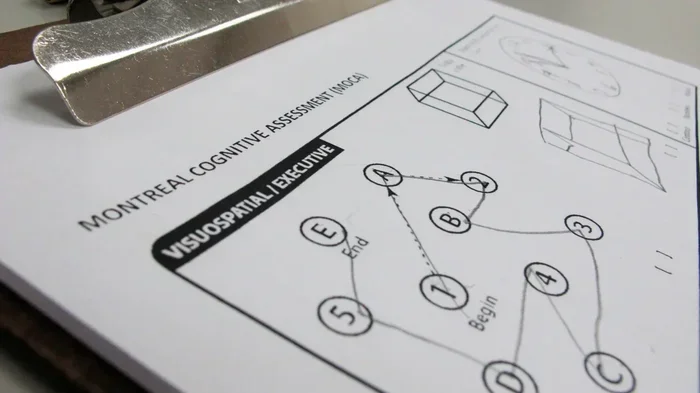
2. Montreal Cognitive Assessment (MoCA)
The MoCA was developed to address some limitations of the MMSE. It is a more sensitive tool for detecting mild cognitive impairment. The test covers similar areas, including memory, language, and attention, but it adds more challenging tasks.
The MoCA includes tasks like drawing a clock face, copying a cube, and identifying animals. It also tests executive function, which is the brain’s ability to plan and organize. The test takes about 10 to 15 minutes.
A score of 26 or above is considered normal. The MoCA is now one of the most widely used brain assessment tools in clinical practice. It has been translated into many languages and adapted for different populations.
Who uses it? Neurologists, geriatricians, and psychologists rely on the MoCA. It is especially useful for detecting early-stage cognitive decline that the MMSE might miss.
3. Repeatable Battery for the Assessment of Neuropsychological Status (RBANS)
The RBANS is a more comprehensive cognitive function test. It was designed to provide a detailed picture of brain performance across multiple domains. Unlike the MMSE or MoCA, which are screening tools, the RBANS gives a deeper analysis.
The test covers five main areas:
- Immediate Memory: How well you take in and recall new information.
- Visuospatial/Constructional: Your ability to understand spatial relationships and draw shapes.
- Language: Your naming ability, fluency, and comprehension skills.
- Attention: Your capacity to focus and sustain mental effort.
- Delayed Memory: How well you retain information over time.
The RBANS takes about 20 to 30 minutes to administer. It is widely used in both clinical and research settings. It is especially valuable for tracking changes in patients with neurological conditions.
Who uses it? Neuropsychologists and clinical researchers use the RBANS to get a detailed cognitive profile. It is often used alongside other diagnostic tools to build a complete picture.
4. CNS Vital Signs
CNS Vital Signs is a digital cognitive assessment platform. It is one of the most popular computerized tools used today. Unlike paper-based tests, CNS Vital Signs uses a computer interface to deliver and score the assessment automatically.
The platform measures several cognitive domains, including memory, processing speed, and reaction time. It also includes psychological symptom inventories. The test takes about 15 to 20 minutes, and results are generated instantly.
One of the biggest advantages of CNS Vital Signs is its ease of use. It does not require extensive training to administer. The automated scoring reduces human error. Results are presented in clear, easy-to-read reports.
Who uses it? Clinics, hospitals, and research institutions use CNS Vital Signs. It is also becoming popular in workplace settings for employee cognitive health monitoring. Its digital format makes it accessible and efficient.
Comparison of the 4 Common Cognitive Assessment Tools
Not sure which tool is right for your needs? Here is a quick comparison to help you understand the differences.
| Feature | MMSE | MoCA | RBANS | CNS Vital Signs |
|---|---|---|---|---|
| Type | Paper-based | Paper-based | Paper-based | Digital |
| Duration | 5-10 min | 10-15 min | 20-30 min | 15-20 min |
| Focus | General screening | Mild impairment detection | Comprehensive evaluation | Multi-domain digital |
| Sensitivity | Moderate | High | Very High | High |
| Best For | Quick screening | Early detection | Detailed analysis | Efficiency & automation |
| Cost | Low | Low | Moderate | Moderate to High |
As you can see, each tool has its strengths. The MMSE is great for quick screenings. The MoCA is better for detecting mild issues. The RBANS provides the most detailed analysis. CNS Vital Signs offers speed and automation. Choosing the right one depends on your specific needs.
Just like choosing between a whole-house generator and a portable one depends on your power needs, choosing the right cognitive tool depends on the depth of evaluation required.
How to Choose the Right Cognitive Assessment Tool
With so many options available, picking the right tool can feel overwhelming. Here are some factors to consider when making your choice.
Consider the Purpose of the Assessment
Are you looking for a quick screening or a detailed analysis? If you need a fast check, the MMSE or MoCA is a great starting point. If you need a deep dive, the RBANS is the better choice. For digital efficiency, CNS Vital Signs stands out.
Think About the Patient or User
Age matters. Older adults may need tools that account for age-related changes. Younger users may need assessments that focus on attention and processing speed. Some tools are better suited for specific populations.
Language and cultural background also matter. The MoCA has been adapted for many cultures. The MMSE has been translated into over 50 languages. Choosing a culturally appropriate tool ensures more accurate results.
Evaluate the Setting
Where will the assessment take place? In a busy clinic, a quick tool like the MMSE or MoCA makes sense. In a research lab, the RBANS provides the depth needed. In a tech-forward workplace, CNS Vital Signs fits naturally.
Also consider whether you need a tool that tracks progress over time. The RBANS and CNS Vital Signs both allow for repeat testing with reliable results. This is important for monitoring treatment effectiveness or cognitive changes.
Budget and Resources
Some tools are free or low-cost. Others require licensing fees. Paper-based tools like the MMSE and MoCA are inexpensive. Digital platforms like CNS Vital Signs may require an initial investment but save time in the long run.
Benefits of Using Cognitive Assessment Tools
There are many reasons to use cognitive testing tools. Let us look at the biggest benefits.
- Early Detection: These tools can catch cognitive decline before it becomes severe. Early intervention leads to better outcomes.
- Objective Measurement: Unlike informal observations, these tools provide standardized, measurable results.
- Tracking Progress: Many tools allow repeat testing. This helps professionals track improvement or decline over time.
- Treatment Planning: Results guide treatment decisions. They help clinicians tailor interventions to individual needs.
- Research Support: These tools are essential for clinical research. They help scientists understand brain function and disease progression.
- Workplace Applications: Employers use them to assess cognitive fitness for certain roles and to monitor employee well-being.
The benefits go beyond just the clinical setting. Schools use these tools to identify learning disabilities. The military uses them to assess readiness after head injuries. The applications are wide-ranging and impactful.
Common Mistakes to Avoid When Using Cognitive Assessment Tools
Even the best tools can give inaccurate results if used incorrectly. Here are common mistakes to watch out for.
Using the Wrong Tool for the Job
Not every tool is right for every situation. Using a screening tool when a detailed assessment is needed can miss important findings. Always match the tool to the purpose.
Ignoring Cultural and Language Factors
Using a tool that is not culturally appropriate can lead to false results. Always choose versions that have been validated for the population being tested.
Relying on a Single Test
No single test tells the whole story. Best practice is to use multiple tools and combine results with clinical observations. This gives a more complete picture of cognitive function.
Skipping Training
Administering cognitive tests requires proper training. Even paper-based tests like the MMSE need trained scorers. Digital tools like CNS Vital Signs reduce this need but still benefit from informed users.
Neglecting Follow-Up
A single assessment is just a snapshot. Follow-up testing is essential for tracking changes over time. Make sure to schedule repeat assessments as needed.
Expert Insights on Cognitive Assessment
We spoke with several professionals in the field of neuropsychology to get their take on the current state of cognitive assessment. Here is what they had to say.
Dr. Sarah Lin, Neuropsychologist: “The field of cognitive assessment has changed dramatically in the last decade. Digital tools like CNS Vital Signs have made testing faster and more accessible. But we still need the clinical wisdom that comes with tools like the RBANS.”
Dr. James Rivera, Geriatric Specialist: “I use the MoCA as my go-to screening tool. It catches mild impairment that the MMSE often misses. For my older patients, early detection is everything.”
Dr. Priya Patel, Clinical Researcher: “In research settings, we need tools that are both reliable and repeatable. The RBANS gives us that depth. But we are also excited about where digital cognitive testing is heading.”
The consensus among experts is clear. The best approach combines traditional tools with modern technology. Each tool has its place, and the right choice depends on the specific situation.
Key Takeaways
- Point 1: Cognitive assessment tools are essential for evaluating brain function across memory, attention, language, and problem-solving domains.
- Point 2: The 4 most common tools are the MMSE, MoCA, RBANS, and CNS Vital Signs, each serving different purposes.
- Point 3: The MMSE is a quick screening tool, while the RBANS offers the most comprehensive analysis.
- Point 4: Digital tools like CNS Vital Signs are making cognitive assessment faster and more accessible than ever.
- Point 5: Choosing the right tool depends on purpose, population, setting, and budget.
- Point 6: Avoid common mistakes like using the wrong tool, ignoring cultural factors, and skipping follow-up assessments.
- Point 7: Combining traditional and digital tools gives the most complete picture of cognitive health.
Conclusion
Cognitive assessment tools play a vital role in understanding and protecting brain health. Whether you are a clinician, a researcher, or simply someone curious about your own mental function, these tools offer valuable insights. The 4 most common tools we covered, the MMSE, MoCA, RBANS, and CNS Vital Signs, each bring something unique to the table.
The right tool depends on your needs. A quick screening calls for the MMSE or MoCA. A detailed evaluation needs the RBANS. A fast, digital solution points to CNS Vital Signs. No matter which one you choose, the most important step is to start.
Brain health is too important to ignore. Regular cognitive screening can catch problems early, guide treatment, and improve quality of life. Just as you would not start a major project without the right equipment, do not evaluate your brain without the right cognitive assessment tools. The knowledge you gain is worth the effort.
Take charge of your cognitive health today. Learn about these tools, talk to a professional, and take the first step toward a sharper, healthier mind.
Frequently Asked Questions
What is the most accurate cognitive assessment tool?
Accuracy depends on the purpose. The RBANS is considered the most comprehensive and detailed tool for full cognitive evaluation. For screening purposes, the MoCA is widely regarded as more sensitive than the MMSE for detecting mild impairment. No single tool is perfect for every situation.
Can cognitive assessment tools diagnose dementia?
These tools cannot diagnose dementia on their own. They are screening instruments that help identify potential cognitive issues. A formal diagnosis requires a full clinical evaluation, including medical history, brain imaging, and lab tests. The tools provide important clues but are not standalone diagnostic instruments.
Are digital cognitive assessment tools as good as paper-based ones?
Digital tools like CNS Vital Signs offer many advantages, including automated scoring and instant results. They are reliable and convenient. However, paper-based tools like the RBANS still offer the deepest level of analysis. The best choice depends on your specific needs and resources.
How often should cognitive assessments be done?
It depends on the situation. For routine screening, once a year is common for older adults. For patients with diagnosed conditions, assessments may be done every 6 months. Your healthcare provider can recommend the right frequency based on your individual needs.
Can I take a cognitive assessment test online?
Some digital platforms offer online cognitive testing. However, professional-grade tools like the RBANS and MoCA should be administered by a trained clinician. Online screening tests can give you a general idea, but they are not a substitute for a proper clinical evaluation.
Do cognitive assessment tools work for children?
Yes, but different tools are used for children. The tools discussed here are primarily designed for adults. Pediatric cognitive assessments use age-appropriate tests that measure development, attention, and learning. Always consult a specialist who works with children for the most accurate evaluation.