Everything You Need to Know About Sine Wave Generators
A sine wave generator is a device or software tool that produces smooth, continuous alternating current signals shaped like sine curves. Whether you need one for audio testing, electronic circuit design, or power backup systems, understanding how these tools work saves time and money. This guide covers everything from basic principles to real-world applications and buying tips.
A sine wave generator is one of the most useful tools in electronics, audio engineering, and power systems. At its core, this device creates a smooth, repeating electrical signal that follows the shape of a sine curve. You have likely encountered sine waves every day, even if you did not realize it. The alternating current (AC) that powers your home is a sine wave. The music coming from your speakers starts as a sine wave signal. Understanding how these generators work opens up a world of possibilities for testing, designing, and powering equipment safely.
Whether you are an electronics hobbyist, a professional audio engineer, or someone looking for backup power solutions, a sine wave generator plays a vital role. The market offers many options, from simple software tools to sophisticated hardware units. But how do you choose the right one? What makes a pure sine wave better than other waveforms? This guide answers all of those questions and more. We will walk through the science, the types, the uses, and the buying tips so you can make confident decisions.
Let us start with the basics and build from there. By the end of this article, you will have a solid understanding of sine wave generators and feel confident applying that knowledge to your own projects.
Key Takeaways
- A sine wave generator creates clean, smooth AC signals that mimic natural electrical waveforms for testing and power needs.
- Pure sine wave output is critical for sensitive electronics, medical devices, and audio equipment that require stable power.
- Software-based sine wave generators offer flexibility and precision, while hardware units provide standalone portability.
- Key specs to watch include frequency range, amplitude, distortion levels, and output voltage.
- Using the wrong type of generator can damage equipment or produce unreliable results in testing.
- Sine wave generators bridge the gap between signal processing and real-world electrical power delivery.
📑 Table of Contents
What Is a Sine Wave Generator?
A sine wave generator is a tool that produces an alternating signal in the shape of a smooth, continuous curve. This curve represents the simplest form of oscillating energy. Unlike square waves or sawtooth waves, the sine wave flows naturally without sharp edges. This smooth transition is what makes it so valuable across many industries.
The generator works by converting direct current (DC) into a smooth alternating current that follows the mathematical sine function. The output repeats at a set frequency, measured in hertz (Hz). Most household electricity in the United States operates at 60 Hz, meaning the wave completes 60 full cycles every second. A quality sine wave generator replicates this pattern with high accuracy and minimal distortion.
How Does a Sine Wave Generator Work?
Inside a generator, an oscillator circuit creates the repeating signal. The oscillator uses capacitors and inductors to produce a smooth back-and-forth flow of electricity. The frequency depends on the values of these components. Software-based generators use digital signal processing (DSP) to calculate and output the waveform point by point.
Hardware generators take this a step further by amplifying the signal to deliver usable power. The result is a clean output that closely matches the ideal sine shape. Any deviation from this perfect shape is called distortion, and lower distortion means a cleaner signal.
Types of Sine Wave Generators
Not all sine wave generators are the same. Different applications require different levels of precision and power output. Understanding the main types helps you pick the right tool for your needs.
Pure Sine Wave Generators
A pure sine wave generator produces the smoothest possible output. The waveform has no flat spots, sharp corners, or harmonic distortion. This type is essential for sensitive electronics like computers, medical devices, and precision instruments. If you need clean power for testing or backup, a pure sine wave unit is the way to go.
Many people wonder about the difference between pure and modified sine wave options. A modified sine wave has steps and pauses in the waveform. While it works for basic appliances, it can cause humming, overheating, or malfunction in delicate equipment. For anything that demands stable, reliable power, stick with a pure sine wave output.
Software Sine Wave Generators
Software-based sine wave generators run on computers or digital platforms. They use algorithms to create and display waveforms on screen. These tools are perfect for signal processing, audio design, and electronic testing where visual feedback matters. Popular software options let you adjust frequency, amplitude, and phase in real time.
One major advantage of software generators is cost. Many are free or inexpensive compared to hardware units. They also offer precise control over every aspect of the waveform. If you are working on audio projects or circuit design simulations, a software generator gives you the flexibility you need without the hardware investment.
Hardware Signal Generators
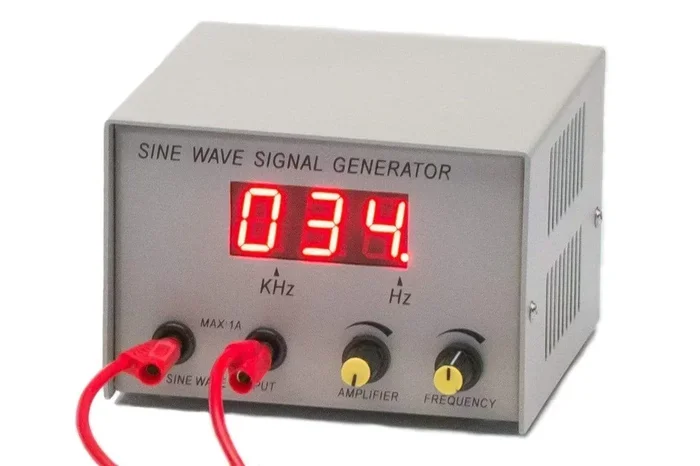
Standalone hardware units are built for durability and real-world use. These devices connect directly to circuits, speakers, or power systems. They come in portable handheld forms and larger benchtop models. Professional-grade hardware generators offer wide frequency ranges and high output voltages.
If you work in a lab, a production facility, or on-site installations, a hardware sine wave generator gives you reliable, on-demand performance. These units often include additional waveform options like square waves and triangle waves, giving you more versatility in a single device.
Why Sine Wave Output Matters
The shape of the waveform directly affects how equipment performs. A clean sine wave delivers energy smoothly and predictably. Other waveform shapes can cause problems because of their abrupt transitions and harmonic content.
Clean Power for Sensitive Electronics
Devices like laptops, smartphones, and medical monitors rely on steady electrical input. When the power waveform contains harmonics or distortions, these devices can overheat, freeze, or suffer long-term damage. A pure sine wave generator eliminates these risks by delivering the same smooth waveform that comes from your wall outlet.
This is especially important for backup power situations. When the grid goes down and you switch to a generator, the quality of the output waveform determines whether your electronics stay safe. Many affordable generators produce modified sine waves that can harm sensitive equipment. Investing in a pure sine wave unit protects your gear and extends its lifespan.
Audio and Signal Testing Applications
In audio engineering, sine waves serve as reference signals for testing speakers, microphones, and amplifiers. A known frequency at a set amplitude helps professionals measure frequency response and identify problems in a system. Without a clean sine wave source, accurate audio testing would be nearly impossible.
Signal integrity depends heavily on the purity of the generated waveform. Engineers use sine wave generators to verify that circuits respond correctly across a range of frequencies. This testing ensures that products meet safety standards and perform reliably under real-world conditions.
Key Specifications to Consider
When shopping for a sine wave generator, several specifications determine whether it fits your needs. Knowing what to look for saves you from buying the wrong tool.
Frequency Range
The frequency range tells you the lowest and highest outputs the generator can produce. Basic models cover 20 Hz to 20 kHz, which covers the full range of human hearing. More advanced units reach into the megahertz range for radio frequency testing and electronic circuit analysis.
Think about what frequencies you actually need. If you are testing audio speakers, you need coverage through the audible range. For power system testing, you mainly need 50 or 60 Hz output. Matching the frequency range to your application prevents overspending on features you will never use.
Amplitude and Output Voltage
Amplitude refers to the strength or height of the wave. In practical terms, this translates to output voltage. Some generators output only a few volts, while others deliver hundreds of volts for power testing. Always check the maximum and minimum voltage ratings before purchasing.
For household power simulation, you need a generator that outputs 120 volts or 240 volts depending on your electrical system. For laboratory testing, lower voltages are often sufficient. Make sure the output voltage matches the requirements of the devices you plan to test or power.
Total Harmonic Distortion (THD)
THD measures how much the output waveform deviates from a perfect sine shape. Lower THD means a cleaner signal. Professional-grade generators typically achieve THD ratings below 1%. Budget models may have THD levels of 3% or higher, which can cause noticeable differences in performance.
If you are powering sensitive equipment, pay close attention to THD ratings. A generator with high distortion may seem fine for lights and heaters, but it can cause serious problems for computers and medical devices. Always choose the lowest THD you can afford for critical applications.
Phase Stability and Frequency Accuracy
Phase stability refers to how consistently the wave maintains its timing over long periods. Frequency accuracy tells you how close the output stays to the target frequency. High-quality generators use crystal-controlled oscillators that maintain accuracy within fractions of a percent.
For precise testing and measurement, these specs matter a great deal. A generator with poor frequency accuracy will give unreliable test results. Look for units with built-in frequency counters and phase-locked loop circuits for the best performance.
Common Uses for Sine Wave Generators
The applications for a sine wave generator span many fields and industries. Here are the most common ways professionals and hobbyists use these tools every day.
Power Backup and Home Energy
When you need backup power during outages, the generator you choose must produce clean sine wave output. Household appliances, electronics, and HVAC systems all run on AC sine wave power. Using a generator with a dirty or modified waveform can damage motors, compressors, and sensitive circuits.
For whole-home backup, you need a generator with enough capacity to handle your electrical load. Check out our guide on how many kilowatts you need to run a house to size your backup system correctly. A clean sine wave output ensures your appliances run safely and efficiently during power outages.
Audio Production and Testing
Audio engineers rely on sine wave signals to test speakers, mixers, microphones, and amplifiers. A known frequency at a specific amplitude helps identify resonance problems, frequency response gaps, and distortion issues. Studio technicians use sine wave generators as a baseline reference for every audio system they work on.
Musicians and sound designers also use these tools for creating tones and testing audio equipment. Whether you are setting up a home studio or working in a professional facility, a reliable sine wave source is an essential part of your toolkit.
Electronic Circuit Design and Testing
Engineers and technicians use sine wave generators to test circuits under controlled conditions. By feeding a known frequency and amplitude into a circuit, they can measure how the circuit responds. This process, called frequency response testing, reveals problems like phase shifts, gain errors, and resonance peaks.
In production environments, sine wave testing ensures that every board and component meets design specifications. A function generator that includes sine wave capability streamlines this process and improves quality control across manufacturing lines.
Communications and RF Testing
Radio frequency engineers use high-frequency sine wave generators to test antennas, transmitters, and receivers. The clean, stable output of a quality generator ensures accurate measurements in signal strength, bandwidth, and interference testing. Without a reliable sine wave source, communication system debugging becomes guesswork.
For those working with power systems and generators, understanding fuel consumption is also important. If you are running a backup generator for your home or business, check out our article on how much gas a generator uses to plan your fuel budget effectively.
How to Choose the Right Sine Wave Generator
Selecting the right generator depends on your specific needs. Consider these factors before making a purchase.
Define Your Primary Use Case
Ask yourself what you will use the generator for most often. Audio testing requires different specs than power backup or circuit testing. Write down your frequency range needs, voltage requirements, and portability preferences before shopping.
If you need backup power for your home, look for a unit that produces a pure sine wave output and has enough wattage for your essential loads. You can learn more about sizing your system by reading our article on what size generator you need for whole house power.
Set a Realistic Budget
Software generators cost little to nothing, while professional hardware units can run into thousands of dollars. Set a budget that reflects how often you will use the tool and how critical precision is to your work. A mid-range hardware generator offers excellent value for most hobbyists and small businesses.
Check Portability and Power Source
If you work on-site or in the field, portability matters. Look for battery-powered or lightweight units that fit your workflow. For benchtop use, size and weight are less critical, and you can prioritize output quality and feature sets.
Read Reviews and Compare Brands
Before buying, read user reviews and compare specifications across brands. Look for units with good warranty coverage and responsive customer support. A reliable manufacturer stands behind their product and helps you get the most from your investment.
Common Mistakes to Avoid
Even experienced users sometimes make avoidable mistakes when working with sine wave generators. Here are the most common pitfalls and how to dodge them.
Skipping THD specifications. Many buyers focus only on frequency range and ignore distortion levels. High THD can ruin test results and damage sensitive equipment. Always check the THD rating before purchasing.
Using a modified sine wave for sensitive gear. Modified waveforms work for basic loads but cause problems with electronics that need clean power. If you are unsure, choose a pure sine wave model to be safe.
Overlooking frequency accuracy. A generator that drifts from its target frequency gives unreliable results. For precision work, invest in a unit with crystal-controlled frequency stability.
Ignoring output voltage limits. Exceeding the maximum output voltage can damage the generator and whatever you are testing. Always stay within the rated voltage range for safe operation.
Not matching the generator to the load. Every generator has a maximum wattage rating. Connecting a load that exceeds this rating causes overheating and potential failure. Calculate your total load before connecting anything.
Final Thoughts
A sine wave generator is a powerful tool that serves engineers, audio professionals, and homeowners alike. From testing electronic circuits to providing clean backup power, these devices deliver the smooth, reliable waveform that modern equipment demands. Whether you choose a software solution or a hardware unit, understanding the key specs and applications helps you get the best results.
The right generator protects your equipment, improves your testing accuracy, and gives you confidence in every project. Take the time to match your specific needs to the right type and model. With the knowledge you have gained from this guide, you are well-equipped to make that choice.
Remember, the quality of your output depends on the quality of your input. A clean sine wave source leads to clean results, whether you are powering a home, testing audio gear, or designing the next electronic device. Invest wisely, and your sine wave generator will serve you well for years to come.
Start by identifying your primary use case, set a realistic budget, and compare options carefully. The perfect sine wave generator is out there, and with the right information, you will find it with confidence.
Frequently Asked Questions
What is the difference between a sine wave and a square wave generator?
A sine wave generator produces a smooth, continuous curve that mimics natural electrical flow. A square wave generator creates sharp, abrupt transitions between high and low states. Sine waves are cleaner and safer for sensitive electronics, while square waves are simpler and cheaper to produce but can cause interference and damage to delicate equipment.
Do I need a pure sine wave generator for home backup power?
Yes, for most home backup situations, a pure sine wave generator is the safest choice. It delivers the same smooth AC waveform that your appliances expect from the wall outlet. Modified sine wave generators can cause humming, reduced efficiency, and even long-term damage to motors, compressors, and sensitive electronics in your home.
Can a sine wave generator be used for audio testing?
Absolutely. Sine wave generators are essential tools in audio testing and production. They produce clean, known frequencies that help engineers measure speaker response, amplifier performance, and microphone sensitivity. The pure sine output provides a reliable reference signal for identifying problems in any audio system.
What frequency should a sine wave generator produce for household use?
In the United States, household electricity operates at 60 Hz. For simulating or testing home power systems, your generator should produce a stable 60 Hz output. In other countries, the standard is 50 Hz. Always match your generator frequency to your local electrical standard for accurate results.
Is a software sine wave generator as good as a hardware unit?
Software generators excel at precision, flexibility, and cost savings. They are perfect for digital signal processing, audio design, and circuit simulation. However, hardware units provide actual electrical output that can power real devices and test physical circuits. For the best results, many professionals use both software and hardware generators together.
How do I know if my generator produces a clean sine wave?
Check the Total Harmonic Distortion (THD) rating on the product specifications. A THD below 1% indicates a very clean sine wave output. Lower is always better. You can also use an oscilloscope to visually inspect the waveform and confirm it appears smooth and free of flat spots or sharp distortions.