What Are Dental Tools Called A Simple and Complete Guide
What are dental tools called — they are commonly known as dental instruments or dental equipment, and they cover everything from basic teeth cleaning devices to advanced oral health diagnostic tools. Understanding these names helps patients feel more confident during dental visits and better equipped to discuss their dental care needs. Whether you’re a curious patient, a dental student, or someone interested in oral hygiene, knowing your dentist tools is a great first step toward informed dental treatment.
Key Takeaways
- Learn the main categories: dental tools fall into examination, restorative, and extraction groups.
- Know the examination instruments: mirrors, probes, and scalers help dentists inspect your teeth.
- Restorative tools include drills: handpieces and burs shape teeth during filling procedures.
- Extraction instruments have specific names: elevators and forceps are used to remove teeth safely.
- Understanding tool names helps you: feel more confident during dental visits and treatments.
- Ask your dentist questions: knowing tool names improves communication and builds trust.
📑 Table of Contents
- What Are Dental Tools Called A Simple and Complete Guide
- The Basic Categories of Dental Instruments
- Common Dental Instruments You Will See in Every Office
- Power Tools Used in Modern Dentistry
- How Dental Offices Power Their Equipment
- Tools for Dental Cleaning and Prevention
- Key Takeaways About Dental Tool Names
What Are Dental Tools Called A Simple and Complete Guide
Have you ever wondered what are dental tools called? If you’ve ever sat in a dental chair and looked at all the strange instruments lined up on the tray, you are not alone. The names can sound confusing, and most people have no idea what half of them do. This guide breaks down every major dental tool name in plain language so you finally know what your dentist is reaching for and why.
Understanding what are dental tools called is more useful than you might think. It helps you feel more comfortable during visits, makes aftercare instructions easier to follow, and gives you a better sense of your own oral health. Whether you are a dental student, a curious patient, or someone exploring a career in dentistry, this guide covers everything you need to know about dental instrument names and what they do.
We will walk through each category step by step. You will learn about hand instruments, power tools, cleaning devices, and the equipment that keeps dental offices running. By the end, you will have a clear picture of what are dental tools called and how each one plays a role in keeping your smile healthy.
The Basic Categories of Dental Instruments
Examination Instruments
The first group of tools your dentist picks up is for examination. These dental instruments help the dentist see inside your mouth, check for problems, and measure anything that looks unusual. You will recognize most of them from every visit.
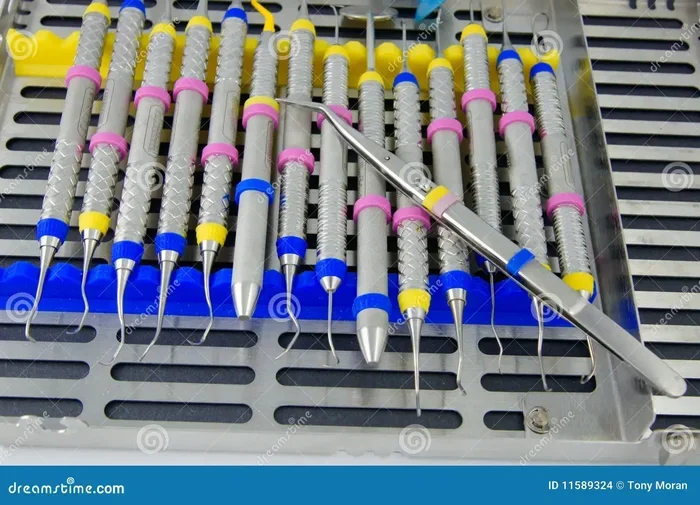
The dental mirror is probably the most famous tool. It lets the dentist see the back sides of your teeth and check areas that are hard to reach. The dental explorer, sometimes called a probe, has a sharp tip that feels for cavities or soft spots in your enamel. Then there is the periodontal probe, which measures the depth of pockets around your gums. All of these fall under the basic dental equipment you will find in any office.
Treatment and Procedure Instruments
The second big group includes tools used during actual treatments. These dentist tools do the hands-on work of repairing teeth, removing decay, and preparing surfaces for fillings or crowns.
Common treatment instruments include dental excavators that scoop out decayed tooth material, condensers that pack filling material into place, and burnishers that smooth everything down. Dentists also use dental forceps for extractions and elevators to loosen teeth before removal. Each one has a specific job, and knowing the name helps you understand what is happening during your procedure.
Common Dental Instruments You Will See in Every Office
The Dental Mirror and Its Job
The dental mirror is the most recognizable of all dental tools. It is a small round mirror attached to a long metal handle. Dentists use it to reflect light into dark areas of the mouth and to get a clear view of tooth surfaces that face the tongue or the roof of the mouth.
Mirrors come in different sizes. Dentists choose a smaller mirror for back teeth and a larger one for front teeth. The mirror also helps retract your tongue and cheeks gently, giving the dentist more room to work. It is a simple tool, but it is absolutely essential for any dental examination.
Explorers, Probes, and Sharp Tools
Dental explorers have a thin, pointed tip that the dentist drags gently across your tooth surface. The explorer catches on any area that feels sticky or soft, which usually signals a cavity. This is one of the oldest oral health tools still in use today.
The periodontal probe looks similar but has marked measurements along the tip. Dentists use it to check your gum health by measuring the space between your gum line and where the gum attaches to the tooth. Deep pockets can signal gum disease, so this tool plays a big role in preventive care.
Scalers and Curettes for Cleaning
Dental scalers and curettes are the tools hygienists use during your cleaning. Scalers remove tartar and plaque from above the gum line, while curettes clean below the gum line in deeper pockets.
Both tools have a curved, hook-like tip that scrapes deposits off tooth surfaces. Modern scalers can be either hand-held or ultrasonic. Ultrasonic scalers use vibrations and water to break up tartar quickly, which makes cleanings faster and more comfortable. These are some of the most important dental care tools for keeping your gums healthy.
| Instrument | Primary Use | Used By |
|---|---|---|
| Dental Mirror | Reflect light, view back teeth | Dentist, Hygienist |
| Explorer / Probe | Detect cavities, soft spots | Dentist |
| Periodontal Probe | Measure gum pocket depth | Dentist, Hygienist |
| Scaler | Remove tartar above gum line | Hygienist |
| Curette | Clean below gum line | Hygienist |
| Forceps | Extract teeth | Dentist |
| Elevator | Loosen teeth before extraction | Dentist |
Power Tools Used in Modern Dentistry
Dental Handpieces and Drills
When most people think of what are dental tools called, the dental drill comes to mind first. The proper name is a dental handpiece. It is a small, high-speed tool that the dentist holds like a pencil and uses to remove decay, shape teeth, or prepare surfaces for fillings and crowns.
Modern handpieces are much quieter and faster than older models. They use either air or electricity to spin the bur at very high speeds. Some handpieces can spin at over 400,000 revolutions per minute. The dentist can attach different dental burs to the handpiece depending on the task, which gives them a lot of flexibility during procedures.
Dental Burs and Their Types
Dental burs are the small cutting bits that attach to the handpiece. They come in many shapes and sizes, and each one serves a different purpose. Round burs remove decay, fissure burs shape grooves in teeth, and flame-shaped burs refine margins on fillings.
Burs are made from diamond-coated material or tungsten carbide. Diamond burs are great for cutting through enamel, while carbide burs offer a smoother cut. The dentist selects the right bur based on the tooth structure they are working with. These tiny rotating tools are at the heart of most restorative dental procedures.
Other Power Tools in the Operatory
Beyond the handpiece, modern dental offices use several other powered dental instruments. The curing light hardens composite fillings and sealants with a bright blue light. Ultrasonic scalers use high-frequency vibrations to break up tartar during cleanings. Suction devices, often called saliva ejectors or high-speed evacuators, keep your mouth dry and clear during procedures.
Some offices also use electric pulp testers to check nerve vitality, autoclaves to sterilize instruments, and digital X-ray machines for imaging. All of these fall under the broader category of dental office equipment that makes modern dentistry faster, safer, and more comfortable.
How Dental Offices Power Their Equipment
Compressed Air Systems in Dentistry
Many of the power tools described above run on compressed air. The dental air compressor is the quiet workhorse behind the scenes that keeps everything running smoothly. Without it, handpieces, air syringes, and several other instruments simply would not work.
The compressor draws in room air, compresses it, and sends it through a series of lines to each dental chair. A small air turbine inside the handpiece spins the bur at incredible speeds using this compressed air. The same system powers the three-way syringe that blows water and air into your mouth during procedures.
Just like any compressed air system, dental compressors can experience issues. For example, compressor short cycling happens when the unit turns on and off too frequently, which can wear out components faster. Understanding what causes compressor short cycling helps dental office managers keep their equipment running efficiently and avoid costly downtime.
Different offices use different compressor setups. Some rely on oil-lubricated models for durability, while others choose oil-free units for a cleaner air supply. The choice of compressor can also depend on whether the office uses what oil does an air compressor take for lubrication and maintenance. Using the right oil ensures the compressor runs smoothly and delivers clean, dry air to every chair.
Another factor that affects performance is the compressor’s settings. The way the unit responds to pressure demands matters a lot in a busy dental practice. Understanding what does attack do on a compressor helps operators fine-tune how quickly the system builds pressure when a tool starts running. A well-tuned attack setting means smoother tool performance and less wear on the compressor motor.
Some dental offices also use optical compressor technology in their air treatment systems. These advanced units use optical sensors to monitor air quality and pressure in real time. This helps maintain a consistent, clean air supply to every instrument, which is critical for patient safety and tool longevity.
Quick Tips for Dental Compressor Maintenance
- Check the oil level regularly if you have an oil-lubricated model.
- Drain moisture from the tank daily to prevent rust and contamination.
- Replace air filters on a schedule recommended by the manufacturer.
- Listen for unusual noises that could signal compressor short cycling or other problems.
- Keep the area around the compressor clean and well-ventilated.
Tools for Dental Cleaning and Prevention
Prophylaxis Instruments
Professional teeth cleaning, also called prophylaxis, requires a specific set of dental tools. The hygienist uses ultrasonic scalers to knock loose larger deposits of tartar and then switches to hand scalers for fine detail work. After scaling, a polishing cup and abrasive paste smooth the tooth surface, making it harder for plaque to stick.
Fluoride applicators are another key part of preventive care. The hygienist applies fluoride varnish or gel using a small brush or tray. This strengthens the enamel and helps protect against cavities between visits. These simple tools are among the most important dental care tools for long-term oral health.
Impression Tools
When a dentist needs to make a crown, bridge, or aligner, they take an impression of your teeth. Impression trays come in various sizes and are filled with a putty-like material or a liquid silicone that sets in your mouth. Once it hardens, the tray is removed, leaving a precise mold of your teeth and gums.
Digital scanners are slowly replacing traditional impression trays in many offices. The scanner uses a small wand to create a 3D model of your mouth on a computer screen. Both methods serve the same purpose, but digital scanning is faster and more comfortable for patients.
Key Takeaways About Dental Tool Names
Now you have a solid answer to the question of what are dental tools called. The world of dental instruments breaks down into a few clear categories: examination tools, treatment instruments, power equipment, cleaning devices, and preventive care tools. Each one has a specific name and a specific job.
From the simple dental mirror to the high-speed handpiece, every dental tool plays an important role in your oral health. Understanding these names makes dental visits less intimidating and helps you communicate better with your dental care team.
If you work in a dental office, remember that the equipment behind the scenes matters just as much as the instruments in the hand. Proper maintenance of your dental office equipment, including air compressors and their components, keeps everything running at peak performance. Paying attention to details like what oil does an air compressor take and watching for issues like compressor short cycling can save you time and money in the long run.
The next time you visit the dentist, you will know exactly what each tool is called and what it does. That knowledge makes the experience more comfortable and more empowering. And if you are considering a career in dentistry, this guide gives you a strong foundation to build from. What are dental tools called? Now you know.
Frequently Asked Questions
What Are Dental Tools Called?
Dental tools are commonly referred to as dental instruments or dental equipment. They include a wide range of devices like mirrors, probes, drills, and scalers that dentists use for exams, cleanings, and treatments.
What Are the Different Types of Dental Instruments?
Dental instruments fall into several categories, including examination tools, restorative tools, and surgical instruments. Common examples are dental mirrors, explorers, handpieces, and periodontal probes used for different procedures.
What Is the Tool Dentists Use to Clean Teeth Called?
The tool used to clean teeth is typically called a dental scaler or an ultrasonic scaler. These dental tools remove plaque and tartar buildup from tooth surfaces and below the gumline during a professional cleaning.
Why Do Dentists Use Specific Dental Tools for Different Procedures?
Each dental instrument is designed for a specific purpose, whether it is examining, cleaning, or repairing teeth. Using the right dental equipment ensures procedures are done accurately, safely, and comfortably for the patient.
Are Dental Tools and Dental Instruments the Same Thing?
Yes, the terms dental tools and dental instruments are used interchangeably in most settings. Both refer to the handheld or powered devices that dentists and hygienists rely on for daily patient care.
What Should I Know About Dental Tools Before a Dental Visit?
Knowing the names and purposes of common dental instruments can help reduce anxiety before a dental visit. Most dental tools are designed to be comfortable, and understanding what each one does can make your next appointment feel much less intimidating.