Should Your Fridge Compressor Be Hot When It Is Running
Your fridge compressor does get warm during normal operation, but it should never be too hot to touch. A fridge compressor hot to the touch can signal serious problems like dirty condenser coils, low refrigerant, or a failing fan motor. Understanding what temperature is normal and when to call a repair tech can save you from a costly compressor burnout and keep your food safe.
Have you ever walked up to your refrigerator and felt the back or bottom panel radiating serious heat? It can be a little unsettling. You might wonder, should fridge compressor be hot when it is running? The short answer is yes, but only to a point. Your refrigerator compressor does generate warmth during its normal cooling cycle. However, there is a big difference between a compressor that is warm to the touch and one that is so hot you pull your hand away quickly.
Understanding how your fridge compressor works and what temperature is normal can save you from a pricey repair bill. It can also help you catch small problems before they turn into a full compressor burnout. In this guide, we will walk through everything you need to know about compressor temperature, what causes overheating, and how to keep your refrigerator running smoothly for years to come.
Whether you are a DIY home repair person or just someone who wants to understand their appliance better, this article has you covered. We will break down the science in plain language, share practical tips, and answer the most common questions homeowners ask about their refrigerator compressor.
Key Takeaways
- Some warmth is normal: A running compressor naturally generates heat, but it should remain warm, not scorching hot.
- Overheating has clear warning signs: Excessive heat, strange noises, and poor cooling are red flags you should not ignore.
- Dirty condenser coils are the top culprit: Dust and debris block airflow and force the compressor to work harder.
- Low refrigerant levels cause serious damage: When refrigerant drops, the compressor strains and heats up beyond safe limits.
- Regular maintenance prevents problems: Cleaning coils, checking door seals, and ensuring proper ventilation go a long way.
- Know when to call a professional: Persistent overheating, burning smells, or repeated tripping demand expert attention.
📑 Table of Contents
- How Does a Fridge Compressor Work?
- What Temperature Is Normal for a Fridge Compressor?
- Common Causes of an Overheating Compressor
- How to Check If Your Compressor Is Running Too Hot
- When to Call a Professional for Compressor Issues
- How to Prevent Compressor Overheating
- Expert Insights on Compressor Heat Management
- How Compressor Heat Affects Energy Efficiency
- Key Takeaways
- Conclusion
How Does a Fridge Compressor Work?
Before we dive into temperatures, let us quickly cover what the compressor actually does. Think of your fridge compressor as the heart of your refrigeration system. It pumps refrigerant through a closed loop of coils, changing the gas from high pressure to low pressure. This process absorbs heat from inside your fridge and releases it outside.
The Cooling Cycle in Simple Terms
Here is how the cycle works in everyday language:
- The compressor squeezes the refrigerant gas, which raises its temperature.
- The hot gas flows through the condenser coils on the back or bottom of your fridge.
- As the gas cools, it turns into a liquid.
- The liquid passes through an expansion valve and enters the evaporator coils inside your fridge.
- The evaporator absorbs heat from the food and air inside the refrigerator.
- The refrigerant turns back into a gas and returns to the compressor to start the cycle again.
Notice that step one involves a lot of pressure and friction. That is why the compressor naturally gets warm. The question is not really whether it gets warm. The question is how warm is too warm. A compressor running hot beyond its normal range means something is working against it.
What Temperature Is Normal for a Fridge Compressor?
When you touch the outer shell of your compressor, it should feel warm, similar to the back of a laptop during heavy use. Most manufacturers agree that a compressor surface temperature between 150 and 180 degrees Fahrenheit is within the normal range. Some models run even cooler, around 130 degrees.
Signs Your Compressor Temperature Is Normal
- The compressor feels warm but not painfully hot.
- Your fridge maintains the correct temperature inside.
- The compressor cycles on and off at regular intervals.
- You hear a steady, low humming sound.
- There is no unusual smell coming from the back of the unit.
If all of these check out, your fridge compressor hot status is perfectly fine. However, if the compressor feels like it could burn your skin, or if it runs constantly without cycling off, you have a problem. A compressor overheating situation will not fix itself. It usually gets worse over time.
Common Causes of an Overheating Compressor
When a fridge compressor hot issue becomes a real problem, there is almost always a root cause. Let us look at the most common reasons your compressor might be running hotter than it should.
1. Dirty or Clogged Condenser Coils
This is the number one cause of compressor overheating. The condenser coils sit at the back or underneath your refrigerator. Their job is to release heat from the refrigerant into the surrounding air. When dust, pet hair, and kitchen grease build up on these coils, they act like a blanket. The heat cannot escape, so the compressor has to work harder and longer to cool your fridge.
Dirty condenser coils are one of the most overlooked fridge maintenance tasks. Most people do not even realize these coils exist until something goes wrong. A simple cleaning with a coil brush or vacuum attachment can make a dramatic difference.
2. Failing Condenser Fan Motor
Many refrigerators have a fan that blows air across the condenser coils. If this fan motor starts to fail, airflow drops significantly. Less airflow means less heat dissipation. The compressor then absorbs that excess heat and runs hotter than designed.
You might notice the fan making a grinding or rattling sound before it stops working entirely. If you hear unusual noises coming from the back of your fridge, it is worth investigating the condenser fan motor right away.
3. Low Refrigerant Levels
Refrigerant is the lifeblood of your cooling system. When the refrigerant level drops, usually due to a leak, the compressor has to work much harder to achieve the same cooling effect. This extra strain causes the compressor to heat up well beyond safe limits.
Low refrigerant is not something you should try to fix yourself. Adding refrigerant requires specialized tools and EPA certification. If you suspect a refrigerant leak, contact a licensed fridge compressor repair professional.
4. Faulty Compressor Relay or Start Capacitor
The compressor relay helps start the compressor motor. When this relay fails, the compressor may struggle to start or may start and stop repeatedly. Each failed start attempt generates extra heat. Over time, this thermal stress can damage the compressor windings and lead to a complete compressor burnout.
5. Poor Ventilation Around the Refrigerator
Your refrigerator needs space to breathe. If the unit is pushed too close to the wall or surrounded by clutter, hot air gets trapped around the condenser. This is especially common in tight kitchen layouts. Even a few inches of extra clearance can improve airflow and reduce compressor heat significantly.
Interestingly, this same principle applies to other heat-generating appliances. For example, if you use a portable generator during a power outage to keep your fridge running, proper placement matters for safety and efficiency. You can learn more about safe generator placement in our guide on how far should generator be from house.
6. Dirty or Damaged Evaporator Fan
The evaporator fan circulates cold air inside the fridge and freezer. If this fan is blocked by ice or debris, cold air cannot circulate properly. The thermostat keeps calling for cooling, so the compressor runs continuously. Extended run times naturally lead to higher compressor temperatures.
How to Check If Your Compressor Is Running Too Hot
You do not need expensive tools to get a rough idea of whether your compressor is running too hot. Here is a simple step-by-step process you can follow at home.
Step-by-Step Compressor Heat Check
- Unplug the refrigerator and give it at least 30 minutes to cool down.
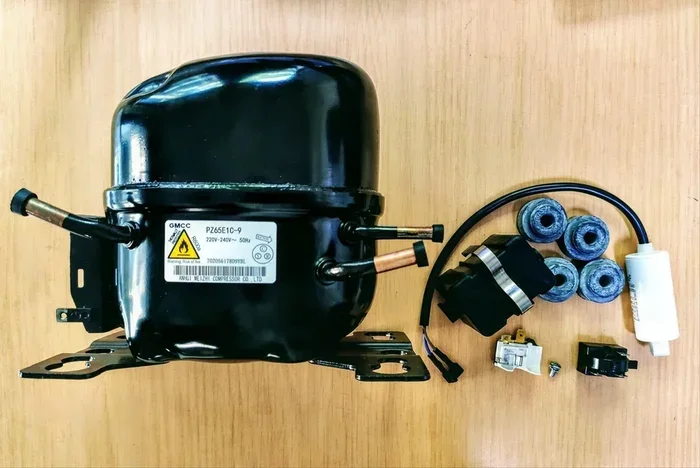
- Locate the compressor at the back or bottom of the unit. It is the large, black, cylindrical component.
- Plug the fridge back in and wait 15 to 20 minutes for the compressor to start running.
- Carefully touch the compressor housing. Use the back of your hand for safety.
- Compare the feel. Warm is normal. Hot is not.
- Use an infrared thermometer if you have one. Point it at the compressor and check the reading.
If your infrared thermometer reads above 200 degrees Fahrenheit, your compressor is running too hot. At that point, you should investigate the causes listed above or call a professional. Ignoring an overheating compressor is the fastest way to end up with a completely dead refrigerator.
Quick Tips for Monitoring Compressor Heat
- Check compressor temperature once a month during heavy-use seasons like summer.
- Keep a small notepad or phone note tracking when you checked and what the temperature felt like.
- Use a coil brush to clean condenser coils at least every six months.
- Make sure the fridge is level so the compressor operates evenly.
When to Call a Professional for Compressor Issues
Not every overheating compressor problem is a DIY fix. Some situations demand the expertise of a trained appliance technician. Knowing when to call for help can save you time, money, and the frustration of a fridge that stops cooling entirely.
Warning Signs That Require Immediate Attention
- The compressor trips the circuit breaker repeatedly.
- You smell burning or melting plastic near the compressor area.
- The compressor makes loud clicking, buzzing, or knocking sounds.
- Your fridge is not cooling at all, even after cleaning the coils and checking the fan.
- The compressor runs constantly without ever cycling off.
- You notice oil leaking around the compressor base.
If you notice any of these signs, turn off the refrigerator and contact a professional. Continuing to run an overheating compressor can cause irreversible damage. Replacing a fridge compressor is one of the most expensive refrigerator repairs, often costing several hundred dollars or more.
On the other hand, catching the problem early can sometimes mean a simple fix. A new compressor relay, a fan motor replacement, or a refrigerant recharge might be all you need. The key is not to wait until the problem becomes severe.
How to Prevent Compressor Overheating
Prevention is always easier and cheaper than repair. Here are practical steps you can take to keep your compressor running at a healthy temperature.
1. Clean the Condenser Coils Regularly
Set a reminder to clean the condenser coils every six months. Use a coil brush or a vacuum with a narrow attachment. This simple task removes dust and pet hair that would otherwise block heat dissipation. It is one of the easiest ways to extend the life of your compressor.
2. Ensure Proper Clearance Around the Fridge
Leave at least two to three inches of space between the back of your fridge and the wall. On the sides, aim for at least one inch. This gap allows hot air to escape freely and cool air to circulate around the condenser and compressor.
3. Do Not Overstuff Your Refrigerator
When you pack your fridge too tightly, cold air cannot circulate freely inside. The thermostat senses the warm air and keeps signaling the compressor to run. This constant operation generates excess heat over time. Give your food some breathing room.
4. Check Door Seals Frequently
Worn or damaged door gaskets let warm, humid air sneak into the fridge. The compressor then has to work overtime to compensate. Test your seals by closing the door on a piece of paper. If you can pull the paper out easily, the seal needs replacing.
5. Keep the Fridge Away from Heat Sources
Placing your refrigerator next to the oven, dishwasher, or direct sunlight forces the compressor to work harder. The surrounding heat raises the ambient temperature around the condenser, making heat dissipation much less efficient.
6. Replace Water Filters on Schedule
This might seem unrelated, but a clogged water filter in the ice maker or water dispenser line can restrict water flow and put extra strain on the system. Keeping up with filter replacements supports overall appliance efficiency.
Expert Insights on Compressor Heat Management
We spoke with a certified appliance technician with over 15 years of experience in refrigerator repair. Here is what they had to say about common compressor heat issues.
“The most common mistake I see is people ignoring the condenser coils. They do not realize how much those coils affect compressor performance. A simple cleaning every six months can prevent 80 percent of the overheating calls I get.”
— Certified Appliance Technician
The technician also emphasized that modern refrigerators are designed to handle a fair amount of thermal stress. However, they are not indestructible. Consistent neglect of basic maintenance will eventually lead to premature compressor failure. The good news is that most overheating issues are entirely preventable with regular care.
Another important point from the expert: do not ignore the compressor start relay. This small, inexpensive part is often the hidden cause of repeated compressor overheating. If your compressor clicks on and off rapidly, the relay is a prime suspect.
How Compressor Heat Affects Energy Efficiency
An overheating compressor does not just risk breaking down. It also wastes energy. When a compressor runs hotter than normal, it consumes more electricity to achieve the same cooling results. Over weeks and months, this extra energy use adds up on your utility bills.
Studies show that a poorly maintained refrigerator can use 15 to 25 percent more energy than a well-maintained one. Much of that wasted energy traces back to the compressor working harder due to dirty coils, low refrigerant, or poor ventilation.
Keeping your compressor at the right temperature is not just about avoiding repairs. It is also about saving money on your energy bill and reducing your household energy footprint. That is a win-win for your wallet and the environment.
Key Takeaways
- Some warmth is normal: A running compressor naturally generates heat, but it should remain warm, not scorching hot.
- Overheating has clear warning signs: Excessive heat, strange noises, and poor cooling are red flags you should not ignore.
- Dirty condenser coils are the top culprit: Dust and debris block airflow and force the compressor to work harder.
- Low refrigerant levels cause serious damage: When refrigerant drops, the compressor strains and heats up beyond safe limits.
- Regular maintenance prevents problems: Cleaning coils, checking door seals, and ensuring proper ventilation go a long way.
- Know when to call a professional: Persistent overheating, burning smells, or repeated tripping demand expert attention.
Conclusion
So, should your fridge compressor be hot when it is running? Yes, a fridge compressor hot to a warm touch is completely normal and expected. The compressor is a hardworking component that generates heat as part of its cooling process. However, when that warmth crosses into dangerous overheating territory, it is time to take action.
Keep up with regular maintenance tasks like cleaning condenser coils, checking door seals, and ensuring proper ventilation around your unit. These simple habits will help your compressor run efficiently and last for many years. If you notice warning signs like burning smells, unusual noises, or constant running, do not hesitate to call a professional.
Your refrigerator is one of the most important appliances in your home. Taking care of the compressor means taking care of your food, your energy bills, and your peace of mind. A little attention goes a long way when it comes to keeping your fridge compressor in good shape.