Where Is the AC Compressor Located Under Your Car Hood
The AC compressor sits in the front of your engine bay, typically mounted near the front of the engine block and driven by a serpentine belt. It is one of the most important parts of your car’s air conditioning system, responsible for pressurizing and circulating refrigerant. Knowing where it is helps you spot problems early and save money on repairs.
If you have ever popped open your car hood and felt completely lost, you are not alone. The engine bay is a crowded, confusing space filled with hoses, wires, and metal parts. But once you know what you are looking for, finding the AC compressor becomes much easier. This small but mighty component is the heart of your car’s air conditioning system, and knowing exactly where it sits can save you time, money, and a lot of frustration.
Whether you are a DIY enthusiast trying to diagnose a weird noise or just curious about how your car keeps you cool on hot days, this guide has you covered. We will walk you through the exact AC compressor location, show you how to identify it, and share practical tips for keeping it in great shape. Let’s dive right in.
Key Takeaways
- Location: The AC compressor is found at the front of the engine bay, usually on the side of the engine block driven by the serpentine belt.
- Identification: Look for a cylindrical component with refrigerant lines, a pulley, and an electrical connector attached to it.
- Common Problems: Leaking refrigerant, strange noises, and weak airflow are all signs your compressor may be failing.
- Maintenance: Regular checks of refrigerant levels and belt tension can extend compressor life significantly.
- Replacement Cost: Expect to pay between $500 and $1,000 for parts and labor, depending on your vehicle model.
- Safety: Always disconnect the battery before working on any AC components under the hood.
📑 Table of Contents
- What Does an AC Compressor Do?
- Where Exactly Is the AC Compressor Located?
- How to Identify the AC Compressor Under the Hood
- Common Signs Your AC Compressor Is Failing
- Maintaining Your Car’s AC Compressor
- When to Replace the AC Compressor
- Protecting Your Compressor from Environmental Damage
- Understanding the AC Compressor Clutch
- How the AC Compressor Relates to Your Car’s Overall Performance
- Key Takeaways
- Conclusion
What Does an AC Compressor Do?
Before we pinpoint the location, it helps to understand what the AC compressor actually does. Think of it as the engine of your car’s air conditioning system. Without it, the refrigerant would just sit there and do nothing. The compressor pressurizes the refrigerant gas and pushes it through the system, which is what makes the air blowing into your cabin feel cold.
Here is a simple breakdown of how it works:
- The compressor pulls in low-pressure refrigerant gas from the evaporator.
- It compresses that gas into high-pressure, high-temperature gas.
- The hot gas then flows to the condenser, where it releases heat and becomes a liquid.
- The liquid refrigerant travels through the expansion valve and into the evaporator.
- Inside the evaporator, it absorbs heat from your car’s cabin, creating cool air.
Without a working compressor, this entire cycle stops. Your air conditioning system simply cannot function. That is why understanding the car air conditioning system starts with knowing where the compressor lives under your hood.
Where Exactly Is the AC Compressor Located?
The AC compressor location is almost always at the front of the engine bay. It is typically mounted on the front of the engine block or on the side, depending on your vehicle’s layout. Most cars place it near the crankshaft pulley, and it is driven by the same serpentine belt that powers other accessories like the alternator and water pump.
In front-wheel-drive cars, you will usually find the compressor on the side of the engine, close to the firewall. In rear-wheel-drive vehicles and trucks, it tends to sit more centrally at the front of the engine. The exact position can vary, but it is always in the engine bay, near the front where the belt-driven accessories are located.
Why the Front of the Engine Bay?
The front of the engine bay is the ideal spot for the compressor because it is close to the condenser, which is located at the front of the car, behind the grille. This proximity allows the refrigerant to flow efficiently between the two components. The belt drive system also works best when all accessories are clustered together at the front of the engine.
Think of it like a kitchen setup. You want the stove, the sink, and the refrigerator close together so you can work efficiently. The same logic applies to your car’s automotive AC components. Everything is placed strategically for the best performance and shortest refrigerant path.
How to Identify the AC Compressor Under the Hood
Now that you know the general area, let’s talk about how to actually spot the compressor. It is not always obvious at first glance, but once you know what to look for, it stands out pretty clearly.
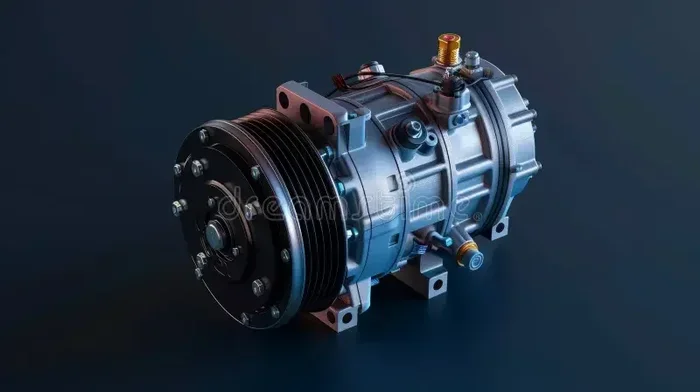
Start by locating the serpentine belt. This is the long, ribbed belt that wraps around several pulleys at the front of the engine. Follow the belt to the component that looks like a small metal cylinder with a pulley on one end. That is your AC compressor.
Here are the key features to look for:
- A cylindrical body: The compressor is usually about the size of a small watermelon or larger, depending on the vehicle.
- Refrigerant lines: You will see two metal tubes connected to the top or side of the compressor. One is the high-pressure line (smaller), and the other is the low-pressure line (larger).
- A pulley with a clutch: The front of the compressor has a pulley that spins when the engine is running. When you turn on the AC, the clutch engages and the pulley starts spinning the compressor.
- An electrical connector: There is usually a wiring plug on the side or top of the compressor that sends signals to the AC clutch.
Sometimes the compressor can be hard to reach because other components block the view. In those cases, you may need to remove a plastic engine cover or look from a different angle. A flashlight can be very helpful here. If you are still unsure, check your vehicle’s service manual. It will have a clear diagram showing the AC compressor location for your specific make and model.
Common Confusion: Compressor vs. Alternator vs. Water Pump
It is easy to mix up the AC compressor with other belt-driven components. The alternator is usually smaller and has a flat, rectangular shape. The water pump often has a round housing with coolant hoses connected to it. The compressor, on the other hand, is typically the most robust-looking component with those two distinctive refrigerant lines sticking out of it.
If you are still unsure, try turning the AC on and off. The compressor clutch will engage and disengage, and you might see or hear the pulley start spinning. This is a quick trick that can help you confirm which component is the compressor.
Common Signs Your AC Compressor Is Failing
Like all car parts, the AC compressor does not last forever. Recognizing the warning signs early can help you avoid a complete breakdown of your car air conditioning system. Here are the most common symptoms of a failing compressor:
- Warm air from the vents: If your AC blows warm or lukewarm air even when it is running, the compressor may not be pressurizing the refrigerant properly.
- Strange noises: Grinding, squealing, or clicking sounds coming from the engine bay when you turn on the AC can indicate a worn compressor bearing or clutch.
- Visible refrigerant leaks: If you see oily residue or refrigerant stains around the compressor lines, there is likely a leak that needs attention.
- Compressor clutch not engaging: When you turn on the AC, the clutch should engage with a slight click. If nothing happens, the clutch or compressor may be faulty.
- Frequent cycling: If the AC turns on and off repeatedly in short bursts, the compressor may be struggling to maintain proper pressure.
Ignoring these signs can lead to bigger problems down the road. A seized compressor can damage the serpentine belt, and refrigerant leaks can harm the environment and your wallet. If you notice any of these symptoms, it is a good idea to have a mechanic take a look.
How Weather Affects the Compressor
Extreme heat can put extra strain on your AC compressor, especially during summer months. The system has to work harder to cool the cabin, which means the compressor runs longer and hotter. Similarly, cold weather can cause the refrigerant to thicken, making it harder for the compressor to start up. This is one reason why some cars blow warm air for a few seconds when the AC is first turned on in cold weather.
It is also worth noting that moisture and water can damage electrical components. Just as can a generator get wet and suffer serious damage, your car’s AC compressor and its electrical connections should be kept dry. If you drive through deep water or flood conditions, have the system inspected afterward to make sure everything is still working properly.
Maintaining Your Car’s AC Compressor
The good news is that keeping your AC compressor healthy is not rocket science. A little regular attention goes a long way toward preventing costly repairs and keeping your car air conditioning system running smoothly for years.
1. Check Refrigerant Levels Regularly
Low refrigerant is one of the most common causes of compressor failure. When the system does not have enough refrigerant, the compressor has to work harder to do its job. Over time, this extra strain leads to overheating and premature wear. Have a mechanic check your refrigerant levels at least once a year, preferably before summer hits.
2. Inspect the Serpentine Belt
The serpentine belt drives the compressor, so a worn or cracked belt can cause all sorts of problems. Check the belt regularly for signs of fraying, glazing, or cracking. Most mechanics will inspect the belt as part of a routine oil change or maintenance visit. Replacing a belt is cheap and easy compared to replacing a compressor.
3. Run Your AC in Winter
This might sound strange, but running your AC for about 10 to 15 minutes every few weeks during winter keeps the system lubricated and the seals soft. The refrigerant carries oil through the system, and if the compressor sits unused for months, the seals can dry out and crack. This simple habit can add years to your compressor’s life.
4. Keep the Condenser Clean
The condenser sits at the front of the car and can get clogged with dirt, bugs, and debris. A dirty condenser restricts airflow, which makes the entire AC system work harder. Periodically hose down the front of your car to keep the condenser clear. This is a quick, easy task that makes a real difference.
5. Address Leaks Immediately
If you notice any signs of refrigerant leaks, get them fixed right away. Even a small leak can cause the system to lose enough refrigerant to damage the compressor. Running the AC on low refrigerant is one of the fastest ways to kill a compressor prematurely.
When to Replace the AC Compressor
Sometimes, despite your best efforts, the compressor fails. When that happens, you need to decide whether to repair or replace it. In most cases, a full compressor replacement is the best option because repairing individual parts of a compressor is often not cost-effective.
Here are some factors to consider when deciding on replacement:
- Age of the vehicle: If your car is older and has high mileage, replacing the compressor might not make financial sense if other components are also wearing out.
- Cost of repair vs. replacement: A compressor repair can sometimes cost nearly as much as a full replacement. Get quotes from at least two mechanics before making a decision.
- Extent of damage: If the compressor has seized completely or if there is significant internal damage, replacement is usually the only option.
- System contamination: If the compressor failed due to metal debris contaminating the system, the entire AC system may need to be flushed or replaced to prevent recurring issues.
The average cost for an AC compressor replacement ranges from $500 to $1,000, including parts and labor. Some vehicles, especially luxury or imported models, can cost more. It is always a good idea to get a detailed estimate before authorizing any work.
DIY vs. Professional Replacement
If you are handy with tools and have some mechanical experience, you might consider replacing the compressor yourself. It involves removing the serpentine belt, disconnecting the refrigerant lines, unbolting the old compressor, and installing the new one. However, working with refrigerant requires special equipment and certification in many areas due to environmental regulations. For most people, having a professional handle the job is the safer and more practical choice.
Also keep in mind that the car’s engine and fuel system work together with the AC system. If you are researching other aspects of your vehicle’s performance, you might find our article on how much gas a generator uses interesting for understanding fuel consumption in power systems, even though it covers a different type of equipment.
Protecting Your Compressor from Environmental Damage
Your car’s AC compressor is exposed to the elements every time you drive. Road salt, rain, mud, and extreme temperatures all take a toll over time. Protecting the compressor and the surrounding components should be part of your regular car maintenance routine.
One of the simplest things you can do is to keep your car clean, especially the underside and the engine bay. Salt and moisture cause corrosion, which can affect electrical connections and metal components. After driving in salty or wet conditions, rinse your car thoroughly, paying extra attention to the undercarriage.
Another important consideration is parking. Whenever possible, park in a covered or shaded area. This protects not only the AC compressor but also the condenser and other exposed components from direct sunlight and weather damage. Just as you would protect any sensitive equipment from the elements, your car’s systems benefit greatly from a little extra care.
For those who use additional power equipment in or around their vehicles, remember that moisture is the enemy of electrical and mechanical components. Whether you are dealing with a portable power unit or your car’s built-in systems, keeping things dry and well-maintained will save you from expensive repairs down the line.
Understanding the AC Compressor Clutch
The AC compressor clutch is a small but critical part of the system. It is the component that engages and disengages the compressor when you turn the AC on and off. When the clutch is activated, it connects the engine’s rotational power to the compressor, allowing it to pressurize refrigerant. When the AC is off, the clutch disengages, and the compressor freewheels without being driven.
A faulty clutch can cause all kinds of problems. If the clutch fails to engage, the compressor will not run at all, and you will get warm air from the vents. If it fails to disengage, the compressor will keep running even when the AC is off, which can drain your engine’s power and reduce fuel efficiency.
Replacing a clutch is sometimes possible without replacing the entire compressor, but this depends on the design of your vehicle. Some compressors have a clutch that can be serviced separately, while others require a full compressor replacement if the clutch fails. A qualified mechanic can assess your specific situation and recommend the best course of action.
How the AC Compressor Relates to Your Car’s Overall Performance
It might surprise you to learn that the AC compressor has an impact on your car’s overall performance. When the compressor is engaged, it adds a load to the engine. This means the engine has to work slightly harder, which can affect fuel economy. In older vehicles, this effect is more noticeable than in modern cars with efficient variable displacement compressors.
Modern vehicles often have compressors that can adjust their output based on cooling demand. This means the compressor does not always run at full capacity, which helps improve fuel efficiency. Some advanced systems even decouple the compressor entirely when full cooling is not needed, reducing the load on the engine.
Understanding this relationship helps explain why you might notice a slight drop in fuel economy when running the AC at full blast on a hot day. It also underscores the importance of keeping the compressor in good working order. A compressor that is dragging or not disengaging properly can waste more fuel than you might expect.
If you are also interested in how other power systems in and around your vehicle work, learning about generators and their fuel consumption can provide helpful context. For more on this topic, our guide on how much gas does a generator use offers valuable insights that apply to understanding power systems in general.
Key Takeaways
- AC compressor location: The compressor is mounted at the front of the engine bay, driven by the serpentine belt and connected to the condenser with refrigerant lines.
- Identification tips: Look for a cylindrical component with two metal tubes, a pulley with a clutch, and an electrical connector.
- Failure signs: Warm air, strange noises, visible leaks, and frequent cycling are all red flags that should not be ignored.
- Maintenance matters: Regular refrigerant checks, belt inspections, and running the AC in winter can significantly extend compressor life.
- Replacement costs: Expect to pay $500 to $1,000 for a professional compressor replacement, depending on your vehicle.
- Environmental protection: Keep the compressor and engine bay clean and dry to prevent corrosion and electrical damage.
Conclusion
Knowing where the AC compressor is located under your car hood is a valuable piece of knowledge for any car owner. It empowers you to diagnose problems faster, communicate more effectively with mechanics, and take better care of your vehicle’s air conditioning system. The compressor is the driving force behind every cool breath you feel on a hot day, and giving it the attention it deserves pays off in comfort and reliability.
Remember to check your refrigerant levels, inspect the serpentine belt, and listen for unusual noises. These simple habits can help you avoid expensive repairs and keep your car air conditioning system running strong for years to come. If you ever feel unsure about what you are seeing under the hood, do not hesitate to consult a professional. A quick inspection can save you from a much bigger headache down the road.
Your car works hard for you every day. Taking a little time to understand its components and keep them in good shape is one of the best things you can do as a vehicle owner. So the next time you are under the hood, take a moment to find that AC compressor and give it the attention it deserves.
Frequently Asked Questions
Can I drive my car with a bad AC compressor?
Yes, you can usually drive with a bad compressor, but your air conditioning will not work properly. In some cases, a seized compressor can also damage the serpentine belt, which could affect other systems like the alternator and water pump. It is best to address compressor issues sooner rather than later.
How long does an AC compressor last in a car?
Most AC compressors last between 100,000 and 150,000 miles, or roughly 10 to 15 years. However, this depends heavily on maintenance, driving conditions, and how often you use the AC. Regular maintenance can help the compressor last closer to the higher end of that range.
Is it expensive to replace an AC compressor?
The cost typically ranges from $500 to $1,000 for parts and labor combined. Luxury vehicles or those with complex AC systems may cost more. Getting multiple quotes from reputable mechanics can help you find a fair price for the replacement.
What causes an AC compressor to fail?
Common causes include low refrigerant levels, moisture contamination, worn serpentine belts, electrical failures, and normal wear and tear over time. Regular maintenance and prompt attention to small problems can help prevent most compressor failures.
Can I replace the AC compressor myself?
It is possible if you have mechanical experience and the right tools. However, handling refrigerant requires special equipment and certification in many regions. For most car owners, having a certified mechanic perform the replacement is the safest and most practical option.
Does running the AC in winter really help the compressor?
Yes, running the AC for 10 to 15 minutes every few weeks during winter keeps the system lubricated and the seals supple. It also helps maintain proper refrigerant circulation, which prevents the system from drying out and developing leaks over time.