Air Compressor Problems and Solutions You Need to Know
Air compressor problems like low pressure, unusual noise, and failure to start are frustrating but often easy to fix. This guide covers the most common air compressor problems and solutions, giving you practical steps to troubleshoot and maintain your machine. Whether you own a small DIY unit or a heavy-duty industrial compressor, you will find clear, actionable advice to keep your system running smoothly and efficiently.
Air compressors are workhorses in workshops, garages, construction sites, and factories. They power nail guns, spray painters, sandblasters, and much more. But like any machine, they break down. Understanding air compressor problems and solutions helps you stay productive and avoid costly downtime.
Whether you use your compressor daily or just on weekends, problems will eventually show up. The good news is that most issues are simple to fix once you know what to look for. This guide walks you through every common problem and gives you clear, step-by-step solutions. You do not need to be a mechanic to handle most of these fixes.
Let us dive into the world of compressor troubleshooting and get your machine running right again.
Key Takeaways
- Low pressure issues are often caused by air leaks, worn seals, or a faulty pressure switch that is simple to diagnose.
- Unusual noises like knocking or squealing usually point to loose parts, low oil, or a damaged pump.
- Compressor won’t start problems can stem from electrical faults, a bad capacitor, or a tripped breaker.
- Regular maintenance including draining the tank, changing oil, and checking filters prevents most common issues.
- Overheating is a serious warning sign that should be addressed immediately to avoid costly repairs.
- Moisture buildup in the tank can cause rust and contamination, which is easily prevented with regular draining.
- Knowing when to call a professional saves time and money compared to attempting complex repairs yourself.
📑 Table of Contents
- Why Air Compressors Develop Problems
- Air Compressor Problems and Solutions: Pressure Issues
- Unusual Noises: Diagnosing and Fixing Compressor Sounds
- Compressor Won’t Start: Electrical and Mechanical Issues
- Air Compressor Problems and Solutions: Overheating Issues
- Moisture and Air Quality Problems
- Maintenance Tips to Prevent Future Problems
- When to Call a Professional
- Comparison Table: Common Problems and Quick Fixes
- Final Thoughts on Air Compressor Problems and Solutions
Why Air Compressors Develop Problems
Air compressors are relatively simple machines. They pull in air, compress it, and store it in a tank. But many moving parts work together to make that happen. Over time, wear and tear takes a toll.
Most problems fall into a few categories. These include air leaks, pressure issues, electrical faults, mechanical wear, and lack of maintenance. Understanding the root cause is the first step toward a fix.
Regular use causes friction, heat buildup, and moisture accumulation. Environmental factors like dust, humidity, and temperature swings also play a role. The better you understand your machine, the easier it is to keep it healthy.
Common Causes of Air Compressor Failures
Several factors lead to compressor breakdowns. Here are the most common culprits:
- Neglected maintenance — skipping oil changes and filter replacements.
- Moisture buildup — water collects in the tank and causes corrosion.
- Worn seals and gaskets — these degrade over time and cause air leaks.
- Electrical issues — faulty wiring, tripped breakers, or bad capacitors.
- Overuse — running the compressor beyond its duty cycle leads to overheating.
- Poor air quality — dirty intake filters restrict airflow and strain the motor.
Most of these causes are preventable with a simple maintenance routine. The next section covers the specific problems you are most likely to face.
Air Compressor Problems and Solutions: Pressure Issues
Pressure problems are the most common complaint among compressor users. If your compressor is not building enough pressure or loses pressure quickly, several things could be at fault.
Problem 1: Compressor Not Building Pressure
This is one of the most frustrating air compressor problems and solutions scenarios. You turn on the machine, but the pressure gauge barely moves. Here is what to check:
- Check the intake filter — a clogged filter restricts airflow and prevents proper compression. Remove and clean or replace it.
- Inspect the unloader valve — if this valve is stuck, it releases compressed air before it builds up. Clean or replace it.
- Look for air leaks — check all fittings, hoses, and seals. Even a tiny leak can prevent proper pressure buildup.
- Examine the pump valves — worn or damaged valves let air escape back into the tank instead of building pressure.
Start with the simplest fixes first. Often, a dirty intake filter or a stuck unloader valve is the cause.
Problem 2: Pressure Drops Quickly
If your compressor builds pressure but loses it fast, you likely have a leak or a faulty check valve.
- Test for leaks — mix soap and water and spray it on all connections. Bubbles will reveal air leaks.
- Check the check valve — this valve prevents air from flowing back into the pump. If it fails, air escapes from the tank.
- Inspect the tank drain valve — if this valve is not fully closed, air will slowly leak out.
A simple soap bubble test can save you hours of guessing. Just spray the mixture on fittings and watch for bubbles.
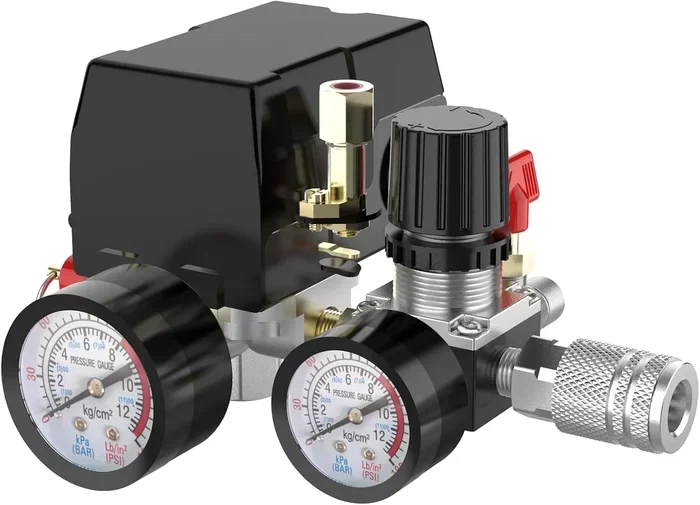
Problem 3: Pressure Switch Malfunction
The pressure switch tells your compressor when to turn on and off. If it fails, your compressor either runs constantly or never starts.
- Adjust the switch — sometimes the pressure differential is simply set wrong.
- Clean the switch contacts — corrosion on the contacts can prevent proper operation.
- Replace the switch — if cleaning does not help, a new switch is inexpensive and easy to install.
Always refer to your compressor manual for the correct pressure settings before adjusting the switch.
Unusual Noises: Diagnosing and Fixing Compressor Sounds
A healthy compressor runs relatively quietly with a steady hum. Strange sounds are your machine telling you something is wrong. Learning to identify these noises can prevent major damage.
Knocking or Clunking Sounds
A knocking sound usually indicates a loose or broken part inside the pump. This could be a connecting rod, piston ring, or valve plate.
- Check the mounting bolts — loose bolts can cause vibration and knocking.
- Inspect the piston assembly — worn pistons create knocking as they move.
- Look for debris — small objects can enter the pump and cause impact noises.
If the knocking comes from inside the pump, you may need professional repair or a pump rebuild kit.
Squealing or Screeching
High-pitched squealing often points to a lack of lubrication or a worn belt.
- Add oil — if your compressor is oil-lubricated, low oil levels cause metal-on-metal friction.
- Inspect the belt — a worn or misaligned belt squeals under tension. Replace it if it shows cracks or fraying.
- Check the motor bearings — worn bearings create a high-pitched whine that gets worse over time.
Do not ignore squealing sounds. Running a compressor with low oil or a bad belt can destroy the motor quickly.
Rattling or Vibrating
Rattling usually means something is loose. Check the tank, fittings, hoses, and housing panels. Tighten any bolts or screws that have worked free over time.
Excessive vibration can also indicate a damaged mounting pad or an unbalanced flywheel. These issues worsen over time and can damage other components if left unchecked.
Compressor Won’t Start: Electrical and Mechanical Issues
There is nothing worse than pressing the start button and hearing nothing. A compressor that will not start can have electrical or mechanical causes.
Electrical Problems
Start with the basics before diving into complex electrical diagnostics.
- Check the power outlet — make sure the outlet is working and provides the correct voltage.
- Inspect the power cord — look for frayed wires, cuts, or burn marks. A damaged cord is a safety hazard.
- Reset the breaker — many compressors trip the circuit breaker when they overheat. Let the machine cool and reset it.
- Test the start capacitor — a bad capacitor prevents the motor from starting. You can test it with a multimeter or replace it.
If your compressor is connected to a generator, make sure the generator can handle the starting wattage. Some compressors draw a huge surge of power when starting up. You may want to check what size generator for 30 amp RV air conditioner if you are using a generator to power multiple tools.
Mechanical Problems
Sometimes the motor works fine, but the pump will not turn.
- Check the unloader valve — a stuck unloader valve can create too much resistance for the motor to overcome.
- Inspect the pump for seized components — lack of oil can cause the piston to seize inside the cylinder.
- Look at the drive belt — a snapped belt means the motor spins but the pump does not.
Never try to force a seized pump by hand. This can damage the motor or injure you. Instead, add oil and let it soak before attempting to turn the pump.
Capacitor and Motor Issues
The start capacitor gives the motor the initial push it needs to begin running. Over time, capacitors weaken and fail.
- Signs of a bad capacitor — humming but no start, slow startup, or clicking sounds.
- Testing — use a multimeter to check capacitance against the rated value on the capacitor.
- Replacement — always replace with a capacitor rated for the same voltage and microfarad.
This is one of the easiest and cheapest fixes. A new capacitor often costs under twenty dollars and takes minutes to swap out.
Air Compressor Problems and Solutions: Overheating Issues
Overheating is a serious problem that can shorten your compressor’s lifespan significantly. If your compressor runs hot, address it immediately.
Common Causes of Overheating
- Low oil level — oil cools and lubricates the pump. Without enough oil, friction generates excessive heat.
- Blocked ventilation — compressors need airflow to cool the motor. Clean any dust or debris from vents.
- Running beyond duty cycle — every compressor has a recommended duty cycle. Exceeding it causes heat buildup.
- High ambient temperature — using your compressor in a hot garage or direct sunlight makes cooling harder.
- Worn motor windings — old motors draw more current and generate more heat.
How to Prevent Overheating
- Check the oil level before every use.
- Clean vents and cooling fins regularly.
- Follow the duty cycle recommendations in your manual.
- Keep the compressor in a well-ventilated area.
- Give the machine time to cool between extended use sessions.
If your compressor overheats frequently, the motor may already be damaged. Continuing to run it can cause permanent failure. Let it cool completely and inspect for damage before using it again.
Moisture and Air Quality Problems
Moisture is a silent enemy of air compressors. When air is compressed, water vapor condenses into liquid. Over time, this moisture causes real damage.
Effects of Moisture Buildup
- Tank rust — water inside the tank corrodes the inside walls and weakens the structure.
- Tool damage — moisture in the air line can ruin pneumatic tools and spray equipment.
- Contaminated output — wet air contaminates paint jobs and damages sensitive machinery.
Solutions for Moisture Control
- Drain the tank after every use — open the drain valve at the bottom of the tank and let the water out.
- Install an air dryer or moisture trap — these devices remove moisture before it reaches your tools.
- Use a refrigerated air dryer — for workshop setups, a small refrigerated dryer keeps output air dry and clean.
- Check the tank for rust — inspect the inside of your tank periodically. Small rust spots can be treated, but deep rust means the tank needs replacement.
Many people forget to drain their tank after use. Making this a habit after every session will dramatically extend the life of your compressor.
Maintenance Tips to Prevent Future Problems
The best way to deal with air compressor problems and solutions is to prevent them from happening in the first place. A solid maintenance routine keeps your compressor running reliably for years.
Daily Maintenance
- Drain the tank after every use.
- Check for visible leaks or damage.
- Listen for unusual sounds during operation.
Weekly Maintenance
- Check the oil level and top off if needed.
- Clean the intake filter of dust and debris.
- Inspect all hoses and fittings for wear.
Monthly Maintenance
- Change the oil if your compressor requires it.
- Replace the intake filter.
- Check the belt tension and condition.
- Test the pressure switch operation.
Seasonal Maintenance
- Have a professional inspect the pump and motor.
- Replace the unloader valve if it shows signs of wear.
- Check all electrical connections for corrosion or looseness.
- Inspect the pressure relief valve for proper function.
Following this simple schedule catches small problems before they become big ones. Think of it as an investment that saves you money on repairs and extends the life of your equipment.
Quick Tips for Compressor Longevity
- Use the right oil — always use the oil type recommended by the manufacturer.
- Keep it clean — wipe down the exterior and remove dust from vents regularly.
- Store properly — if not in use, store the compressor in a dry, covered area.
- Do not overload — never run more tools than the compressor can handle simultaneously.
- Check the power supply — if you rely on a generator, ensure it can handle the compressor’s power needs. You might want to review what size generator to run refrigerator and freezer as a reference for matching appliances and tools to generator capacity.
These small habits add up to big savings. A well-maintained compressor runs more efficiently, uses less electricity, and lasts many more years.
When to Call a Professional
Not every repair is a DIY job. Knowing your limits saves time, money, and prevents dangerous mistakes.
Call a professional if you encounter any of the following:
- Pump internal damage — if valves, pistons, or cylinder walls are damaged, a rebuild requires specialized tools and knowledge.
- Motor burnout — a burned-out motor needs rewinding or complete replacement.
- Tank rust or holes — a compromised tank is a safety hazard and must be replaced by a qualified technician.
- Persistent electrical faults — if you have checked all the simple electrical causes and the compressor still will not work, a pro should handle the wiring.
Always prioritize safety. If you are unsure about a repair, it is better to pay for professional service than to risk injury or further damage to the machine.
Comparison Table: Common Problems and Quick Fixes
Here is a quick reference table for the most common compressor problems and their solutions.
| Problem | Likely Cause | Quick Fix |
|---|---|---|
| Low pressure | Air leak or clogged filter | Check seals and clean/replace filter |
| Won’t start | Bad capacitor or tripped breaker | Test capacitor and reset breaker |
| Unusual noise | Loose parts or low oil | Tighten bolts and add oil |
| Overheating | Low oil or blocked vents | Check oil level and clean vents |
| Pressure drops fast | Leak or faulty check valve | Soap bubble test and replace valve |
| Moisture in output | Tank not drained or no dryer | Drain tank and install moisture trap |
This table is a great starting point whenever a problem arises. Start with the quick fix and dig deeper if the issue persists.
Final Thoughts on Air Compressor Problems and Solutions
Air compressors are reliable machines, but they need attention. Most problems you will face are simple to diagnose and fix. The key is to act quickly when something seems off and not ignore warning signs.
Regular maintenance is the single best thing you can do for your compressor. Drain the tank, check the oil, clean the filters, and listen for unusual sounds. These small actions prevent the majority of breakdowns.
When problems do arise, work through this guide systematically. Start with the simplest explanations and work your way up to more complex ones. In most cases, the fix is quick and inexpensive.
Remember that every compressor is different. Always consult your owner’s manual for specific guidance. The manufacturer knows your machine best and can provide model-specific troubleshooting steps.
With the right knowledge and a little elbow grease, you can handle most air compressor problems and solutions on your own. Your compressor will reward you with years of dependable service.
Frequently Asked Questions
Why is my air compressor not building pressure?
The most common causes are a clogged intake filter, a stuck unloader valve, or air leaks in the fittings and hoses. Start by checking the intake filter and inspecting all connections with a soap and water solution to find leaks.
How often should I drain my air compressor tank?
You should drain the tank after every use. Moisture from compressed air collects at the bottom of the tank and can cause rust and contamination. A quick drain takes only a few seconds and greatly extends tank life.
What causes an air compressor to overheat?
Overheating is usually caused by low oil levels, blocked ventilation, or running the compressor beyond its recommended duty cycle. Check the oil, clean the cooling fins, and make sure you are not using the compressor longer than it can handle.
Can I fix a compressor that won’t start myself?
Yes, in many cases. Start by checking the power outlet, breaker, and start capacitor. These are the most common reasons a compressor will not start and are easy to test and replace at home.
Is it safe to use an air compressor with a rusty tank?
No, a rusty tank is a serious safety hazard. Rust weakens the tank walls and can lead to cracks or even explosion under pressure. If you notice rust on the inside or outside of the tank, have it inspected by a professional or replace the tank.
What is the difference between an oil-lubricated and oil-free compressor?
An oil-lubricated compressor uses oil to cool and lubricate the pump, which generally lasts longer and runs smoother. An oil-free compressor comes pre-lubricated and requires less maintenance but may wear out faster under heavy use. Choose based on your usage frequency and needs.
=== CONCLUSION ===
Air compressor problems and solutions are easier to handle than most people think. From pressure issues and strange noises to failure to start and overheating, the vast majority of problems have simple, affordable fixes.
Stay proactive with maintenance. Drain your tank, check your oil, and inspect your hoses regularly. When problems arise, work through them methodically and safely. And when a repair is beyond your skill level, do not hesitate to call a qualified technician.
Your compressor is a valuable investment. Treat it well, and it will serve you reliably for many years to come.