What Tools Do Roofers Use The Essential Toolkit Revealed
Every professional roofer relies on a carefully curated set of tools to get the job done safely and efficiently. Understanding what tools do roofers use — from roofing hammers and nail guns to chalk lines and roofing ladders — gives you a new appreciation for the craft behind every durable roof. This guide reveals the essential roofing tools every professional keeps on the job site, so you can tackle your own project with confidence.
What Tools Do Roofers Use The Essential Toolkit Revealed
What tools do roofers use? That is a question many homeowners ask, especially when they are planning a roofing project or just curious about the trade. A roofer’s toolkit is not just a collection of random items. Every single tool serves a purpose, and having the right one can mean the difference between a clean, safe job and a frustrating, dangerous mess.
In this guide, we pull back the curtain on what tools do roofers use every single day. From safety gear that protects lives to hand tools and power tools that get the job done fast, you will find everything laid out clearly. We also cover measuring tools, roofing accessories, and how to maintain your gear so it lasts for years. Whether you are a DIY enthusiast or just someone who wants to understand the roofing trade better, this article has you covered.
By the end, you will know exactly what goes into a proper roofing toolkit. You will also learn some practical tips and common mistakes to avoid. So let us get started and explore the essential equipment that every roofer relies on.
Key Takeaways
- Start with basics: A claw hammer, roofing nails, and pry bar form the core of every roofer’s toolkit.
- Prioritize safety gear: Harnesses, hard hats, and non-slip boots are non-negotiable for every roofing job.
- Use specialized tools: Roofing hatchets and nail guns speed up work and reduce physical strain significantly.
- Invest in quality: Professional-grade tools last longer and deliver better results than budget alternatives.
- Measure accurately: Tape measures and chalk lines ensure precise cuts and proper material alignment every time.
- Maintain your tools: Regular cleaning and storage extends tool life and keeps them job-ready.
- Match tools to materials: Different roofing materials like shingles or metal require specific fastening and cutting tools.
📑 Table of Contents
- Safety Gear The Most Important Tools a Roofer Owns
- Hand Tools Every Roofer Needs in Their Kit
- Power Tools That Make the Job Faster and Easier
- Measuring and Layout Tools for Accurate Roofing
- Roofing Materials and Accessories That Complete the Job
- Maintenance and Care for Your Roofing Tools
- Quick Reference Table: Essential Roofing Tools at a Glance
- Key Takeaways for Understanding Roofing Toolkits
Safety Gear The Most Important Tools a Roofer Owns
Before we talk about any other tools, let us address the obvious. Safety comes first. Every roofer knows that working at heights is dangerous. The right safety gear can save your life or prevent serious injuries. This is why experienced professionals never skip this part of their toolkit.
Hard Hats and Helmets
A hard hat is the number one piece of safety equipment on any job site. It protects your head from falling debris, accidental bumps, and even electrical hazards. Most roofers prefer helmets that have a built-in chin strap. This keeps the helmet secure even when you are moving around on a steep pitch. Look for helmets that meet OSHA standards. That is the easiest way to know they are up to code.
Safety Harnesses and Rope Systems
A fall arrest harness is non-negotiable for any roof work above six feet. The harness wraps around your shoulders and legs and connects to an anchor point on the roof. Some roofers use a rope grab system that locks automatically if you slip. This is one of those tools that you hope you never need, but you will be incredibly grateful to have if something goes wrong.
Roofing Boots and Footwear
Your feet are your foundation on a roof. Roofing boots with rubber soles provide excellent grip on shingles and metal surfaces. Many roofers choose boots with ankle support because it reduces fatigue and prevents sprains. Steel-toed boots are also a smart choice, especially on busy job sites where heavy materials are being moved around.
Eye Protection and Gloves
Safety glasses protect your eyes from dust, debris, and UV rays. Polycarbonate lenses are the most popular because they are lightweight and very durable. Work gloves are equally important. They protect your hands from sharp edges, hot surfaces, and rough materials. A good pair of gloves should fit well so you do not lose dexterity when handling small tools.
Hand Tools Every Roofer Needs in Their Kit
Hand tools are the backbone of any roofing job. They do not require electricity or fuel. They are simple, reliable, and effective. Every roofer, whether a beginner or a seasoned pro, keeps these essentials close at hand.
Roofing Hammers and Hatchets
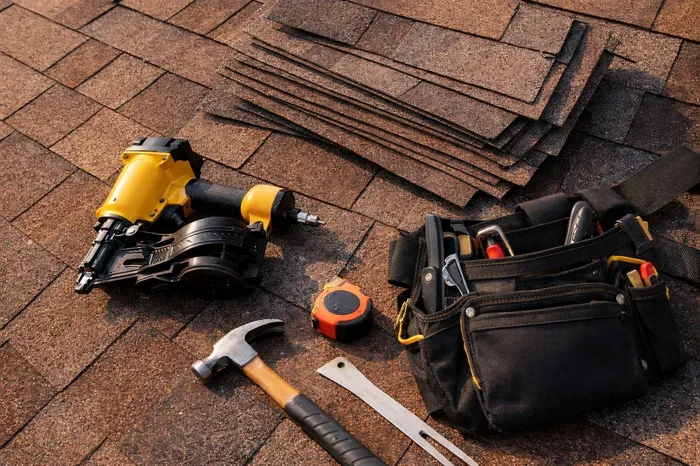
A roofing hammer is one of the most iconic tools in the trade. It has a special curved claw designed to grab and pull roofing nails easily. The head is usually made of steel or aluminum to keep it lightweight. A hatchet-style roofing hammer combines a hammer head on one side and a blade on the other. The blade comes in handy for cutting shingles and prying off old roofing materials.
When choosing a roofing hammer, go for one that feels balanced in your hand. A handle length of about 14 to 16 inches works well for most people. The weight should be comfortable enough for hours of use without causing wrist fatigue.
Utility Knives and Blade Replacements
A sharp utility knife is something you will reach for constantly. You use it to cut shingles, trim roofing felt, open material packages, and score lines. Keep a handful of replacement blades in your pocket at all times. A dull blade slows you down and increases the risk of slips. Many roofers prefer retractable knives with a belt clip for easy access.
Pry Bars and Flat Bars
Pry bars are essential for removing old shingles, prying apart nailed joints, and general demolition work. A flat bar, sometimes called a crowbar, gives you more leverage for heavier tasks. Both tools come in different lengths. A shorter bar is better for tight spaces, while a longer bar provides more pulling power.
Chalk Lines and Marking Tools
Accuracy is everything in roofing. A chalk line helps you snap straight reference lines across the roof surface. This is critical when aligning rows of shingles or installing flashing. The tool works by stretching a string coated in chalk dust and then snapping it against the surface to leave a clear line. It is a simple device, but it makes a huge difference in the quality of your work.
Do Brad Nailers Need a Compressor?
Many roofers wonder whether a brad nailer can work without a compressor. The answer depends on the type of brad nailer you are using. Some brad nailers are pneumatic, meaning they require an air compressor to drive nails. Others are cordless and use battery power. If you are using a pneumatic brad nailer for roofing tasks, you will need a compatible compressor. For a deeper look at this topic, check out our guide on do brad nailers need a compressor. Understanding how your tools connect to your air supply saves time and prevents frustration on the job.
Power Tools That Make the Job Faster and Easier
While hand tools are reliable, power tools bring serious speed and efficiency to roofing projects. They reduce physical strain and help you finish jobs in a fraction of the time. Here are the power tools that every modern roofer depends on.
Nail Guns for Roofing
A pneumatic nail gun is the workhorse of any roofing crew. It drives roofing nails into shingles quickly and consistently. This is far faster than using a hammer, and the results are more uniform. Most roofing nail guns use coils of nails or strip-fed magazines. They connect to an air compressor through a hose.
When using a nail gun, always follow safety protocols. Keep your finger off the trigger until you are ready to fire. Disconnect the air supply before clearing jams. These precautions prevent accidental discharges and injuries.
How To Use a Compressor for Roofing Tasks
An air compressor powers many of the tools on a roofing site, including nail guns, air ratchets, and even paint sprayers for applying roof coatings. Understanding how to set up and operate a compressor properly is a key skill. For a detailed walkthrough, our article on easy air compressor how to use breaks down everything you need to know. From setting the right pressure to connecting your tools, proper compressor use keeps your workflow smooth and your equipment running safely.
Circular Saws and Roofing Saws
Roofing saws are specialized for cutting through roofing materials like asphalt shingles, metal panels, and underlayment. A circular saw with a fine-tooth blade works well for clean cuts. Some roofers prefer a dedicated roofing saw because it is lighter and easier to handle on a steep roof. Always use a blade designed for the material you are cutting. Using the wrong blade leads to rough edges and wasted material.
Angle Grinders and Drills
Angle grinders come in handy for cutting metal flashing, grinding down rusted nails, and shaping materials on the fly. A cordless drill is essential for installing metal roofing, attaching flashing, and driving screws into various surfaces. Keep a set of drill bits and driver bits in different sizes so you are prepared for any fastener type.
Measuring and Layout Tools for Accurate Roofing
Precision matters in roofing. A small measurement error can lead to wasted materials, uneven surfaces, and leaks down the road. These tools help roofers get it right the first time.
Tape Measures and Laser Measures
A long tape measure, typically 25 feet or more, is a roofer’s best friend for measuring roof slopes, rafter lengths, and material quantities. Laser measures are becoming increasingly popular because they take measurements quickly and accurately over long distances. You simply point the device at the target surface, and it gives you a digital reading. This is especially useful on large commercial roofs where accuracy matters even more.
Speed Squares and Framing Squares
A speed square is a triangular tool that helps roofers measure and mark angles quickly. It is incredibly versatile. You can use it to find the pitch of a roof, mark cut lines, and guide circular saws. A framing square is larger and used for more precise layout work, especially when cutting rafters or installing trusses.
Levels and Plumb Bobs
A spirit level ensures that surfaces are flat and even. Roofers use small pocket levels for quick checks and longer torpedo levels for more precise measurements. A plumb bob helps determine vertical alignment, which is useful when checking ridge lines and ensuring that walls are true.
Roofing Materials and Accessories That Complete the Job
Tools are only half the equation. You also need the right materials and accessories to get a professional-quality roof. Here are the items that roofers keep on hand for every project.
Shingles, Underlayment, and Flashing
Asphalt shingles are the most common roofing material for residential homes. They come in various styles, colors, and thicknesses. Underlayment is the protective layer installed beneath the shingles. It acts as a second line of defense against moisture and water infiltration. Flashing, usually made of aluminum or galvanized steel, is installed around chimneys, vents, and valleys to direct water away from vulnerable areas.
Roofing Nails, Screws, and Fasteners
Roofing nails are specifically designed with a large head that holds shingles securely without tearing through them. They are typically made of galvanized or stainless steel to resist corrosion. Screws are used for metal roofing and certain types of underlayment. Always check the manufacturer’s recommendations for the correct fastener type and length for your specific roofing material.
Caulk, Sealant, and Roofing Cement
Sealants fill gaps and prevent water from seeping through joints and seams. Roofing cement is used to secure shingles around edges and penetrations. A high-quality caulk gun makes applying these materials quick and clean. Keep a few tubes of sealant in your toolkit at all times. You never know when a small gap will need immediate attention.
What Oil Does an Air Compressor Take
Keeping your air compressor properly lubricated is essential for longevity and performance. Different compressors require different types of oil. For a detailed guide on selecting the right oil and maintaining your compressor, read our article on what oil does an air compressor take. Using the wrong oil can cause damage to internal components and reduce the lifespan of your compressor. This is a small detail that makes a big difference over time.
What Causes Compressor Short Cycling
One common issue roofers encounter is compressor short cycling, where the unit turns on and off too frequently. This can be caused by a clogged air filter, a faulty pressure switch, or leaks in the air line. Short cycling puts extra strain on the motor and increases energy costs. For troubleshooting tips and solutions, check out our guide on what causes compressor short cycling. Addressing this problem quickly keeps your tools running efficiently throughout the workday.
Maintenance and Care for Your Roofing Tools
Tools are an investment. Proper maintenance extends their lifespan and keeps them performing at their best. A well-maintained toolkit also reduces the risk of accidents caused by malfunctioning equipment.
Cleaning and Storage Tips
After every job, wipe down your tools with a clean cloth to remove dirt, debris, and moisture. Store tools in a dry, organized space to prevent rust and corrosion. Use tool bags or a toolbox with compartments so everything has a designated place. This saves time on your next job because you will not waste it searching for misplaced items.
Sharpening and Blade Replacement
Keep your cutting tools sharp. A dull roofing knife or saw blade makes work harder and increases the risk of injury. Many roofing supply stores offer blade sharpening services or sell replacement blades at reasonable prices. Make it a habit to inspect your blades before each job and replace them when they show signs of wear.
Checking Compressors and Power Tools
For pneumatic tools, check the compressor regularly for leaks, proper pressure levels, and adequate oil. For power tools, inspect cords and batteries for damage. Clean air vents on power tools to prevent overheating. These simple habits keep your equipment running smoothly job after job.
Quick Reference Table: Essential Roofing Tools at a Glance
| Tool Category | Essential Items | Primary Use |
|---|---|---|
| Safety Gear | Hard hat, harness, boots, glasses, gloves | Worker protection and fall prevention |
| Hand Tools | Roofing hammer, utility knife, pry bar, chalk line | Nailing, cutting, prying, layout |
| Power Tools | Nail gun, compressor, circular saw, angle grinder | Fastening, cutting, grinding |
| Measuring Tools | Tape measure, laser measure, speed square, level | Accurate measurements and layout |
| Materials and Accessories | Shingles, underlayment, flashing, nails, sealant | Roof construction and weatherproofing |
| Maintenance Supplies | Cleaning cloths, lubricant, replacement blades | Tool upkeep and longevity |
Key Takeaways for Understanding Roofing Toolkits
Knowing what tools do roofers use gives you a real appreciation for the craft. Safety gear comes first and should never be overlooked. Hand tools like hammers, knives, and pry bars form the foundation of every job. Power tools including nail guns, compressors, and saws bring speed and precision. Measuring tools ensure accuracy, while quality materials and accessories complete the installation.
Maintenance keeps everything running smoothly and extends the life of your investment. Whether you are a professional roofer or a homeowner tackling a weekend project, having the right tools makes all the difference. Start with the essentials, build your collection over time, and always prioritize safety above everything else.
The roofing trade relies on a combination of skill, experience, and the right equipment. With the toolkit outlined in this guide, you are well on your way to understanding what it takes to work on a roof professionally. Keep learning, keep practicing, and always invest in quality tools that will serve you well for years to come.
Frequently Asked Questions
What tools do roofers use on a daily basis?
Roofers rely on a core set of tools including nail guns, utility knives, chalk lines, and roofing hammers. They also use tape measures, safety harnesses, and roofing shovels to handle everyday tasks efficiently. These essential items help roofers work safely and complete jobs with precision and speed.
What safety equipment do roofers need for working at heights?
Roofers must wear safety harnesses, hard hats, and non-slip boots to protect themselves on steep or high roofs. Anchor points, safety ropes, and guardrails are also critical fall prevention tools. Proper safety gear is non-negotiable and helps prevent serious injuries on the job site.
How do roofers measure and mark a roof before installation?
Roofers use tape measures, chalk lines, and laser levels to get accurate measurements before cutting or installing any materials. A framing square helps them check angles and ensure everything lines up correctly. These marking tools save time and reduce costly material mistakes during the project.
What power tools are commonly used in modern roofing work?
Modern roofers frequently use cordless nail guns, impact drivers, and circular saws to speed up the installation process. A roofing crane or material hoist can also be used to lift heavy shingles and rolls to the roof safely. These power tools dramatically reduce physical labor and help crews finish projects faster.
What hand tools are part of a basic roofing toolkit?
A basic roofing toolkit includes a roofing hammer, pry bar, utility knife, and tin snips for cutting and shaping materials. Roofers also carry a chalk box, speed square, and caulking gun for sealing and layout work. These hand tools are compact, reliable, and essential for handling detailed tasks on any roof.
What tools do roofers use for removing old shingles and preparing the roof deck?
Roofers use a roofing shovel, also called a tear-off shovel, to strip away old shingles and underlayment efficiently. A pitch fork and debris hopper help clear waste material off the roof quickly. Once the old material is removed, inspectors use moisture meters to check the deck for water damage before installing new roofing.