What Tools Do Toxicologists Use to Uncover the Truth
Toxicologists rely on a wide range of specialized tools to detect poisons, analyze samples, and protect public health. From mass spectrometers to gas chromatographs, the tools do toxicologists use span basic lab supplies and advanced digital instruments. Understanding these tools helps reveal how experts uncover hidden toxins every day.
Key Takeaways
- Mass spectrometers and chromatographs are the backbone of modern toxicology labs.
- Sample preparation tools like centrifuges and pipettes ensure accurate test results.
- Safety equipment including fume hoods and PPE protects toxicologists from harmful exposure.
- Emerging technologies such as AI and portable sensors are reshaping how toxicology works.
- Proper maintenance of lab equipment keeps instruments running reliably and extends their lifespan.
- Both wet chemistry and digital tools play essential roles in poison detection and analysis.
📑 Table of Contents
- The Vital Role Toxicologists Play in Science and Public Health
- Essential Laboratory Equipment for Toxicology Work
- Analytical Instruments That Reveal Hidden Toxins
- Sample Preparation Tools Every Toxicologist Needs
- Safety Gear and Protective Equipment
- Emerging Technologies Reshaping Toxicology
- Bringing It All Together: The Toxicologist’s Toolkit
The Vital Role Toxicologists Play in Science and Public Health
Toxicologists work behind the scenes to protect people from harmful substances. They test food, water, medications, and even the air we breathe. Their job is to find dangerous chemicals and figure out how they affect the human body. To do all of this, they need a solid set of tools do toxicologists use on a daily basis.
Think of a toxicologist as a scientific detective. They gather clues, run tests, and piece together evidence. But unlike fictional detectives, their clues are chemical compounds, biological samples, and complex data sets. The right tools make all the difference between finding the truth and missing a critical clue entirely.
In this article, we will walk through every major category of tools that toxicologists depend on. We will cover lab basics, high-end analytical instruments, safety gear, and even cutting-edge technology that is shaping the future of the field. Whether you are a student, a curious reader, or someone working in healthcare, this guide will give you a clear picture of what goes on inside a toxicology lab.
The world of toxicology is vast. It touches forensic science, environmental health, pharmaceutical development, and occupational safety. Each of these fields demands slightly different tools. But at the core, the tools do toxicologists use share common principles: precision, reliability, and accuracy. Let us dive into the details.
Essential Laboratory Equipment for Toxicology Work
Every toxicology lab starts with the basics. You cannot run advanced tests without reliable everyday equipment. These tools handle the foundational work of mixing, heating, separating, and storing samples. They are the unsung heroes of the lab.
Microscopes and Magnification Tools
Microscopes let toxicologists examine biological samples at a cellular level. They can spot unusual cell structures caused by chemical exposure. Stereo microscopes are great for inspecting physical samples like plant material or tissue specimens. Digital microscopes add the ability to capture images and share them with colleagues instantly.
Many labs also use magnifying loupes for quick inspections. These are especially handy when handling small vials or identifying physical characteristics of unknown substances. Magnification tools are simple but absolutely essential.
Centrifuges and Separation Equipment
Centrifuges spin samples at high speeds to separate components by density. In toxicology, this is critical for isolating blood plasma, urine sediment, or tissue layers. Without a centrifuge, many tests simply would not work.
There are different types of centrifuges for different jobs:
- Refrigerated centrifuges keep samples cool during spinning, which prevents degradation.
- Microcentrifuges handle small tube volumes, perfect for quick separations.
- Ultracentrifuges reach extremely high speeds for separating very fine particles.
Proper maintenance of centrifuges matters a lot. Regular cleaning and balancing prevent errors and extend the life of the machine. Toxicologists also rely on filtration setups to separate solids from liquids before analysis.
Pipettes and Precision Measurement Tools
Pipettes are the workhorses of any toxicology lab. They allow scientists to measure and transfer tiny volumes of liquid with extreme accuracy. Even a small measurement error can ruin an entire test.
There are several types of pipettes you will find in a toxicology lab:
- Volumetric pipettes for precise single-volume transfers.
- Graduated pipettes for measuring multiple volumes.
- Micropipettes for handling microliter-scale samples.
- Repeat pipettes for dispensing the same volume many times quickly.
Calibration is key. Toxicologists regularly check their pipettes against standards to make sure they are delivering accurate volumes. This simple habit saves time and prevents costly mistakes.
Lab Reagents and Chemical Supplies
No toxicology lab operates without a well-stocked supply of reagents. These are chemicals used to trigger reactions that help identify or quantify substances. Common reagents include solvents like methanol and acetonitrile, as well as staining compounds for microscopy.
Proper storage of reagents is just as important as having them. Many chemicals degrade over time when exposed to light or heat. Toxicologists follow strict protocols for labeling, storage temperature, and disposal. Using the wrong reagent or an expired one can lead to false results.
Analytical Instruments That Reveal Hidden Toxins
This is where toxicology gets truly high-tech. Analytical instruments allow scientists to identify unknown substances and measure their concentration in a sample. These machines are expensive, but they are the gold standard for poison detection.
Mass Spectrometers
Mass spectrometers are arguably the most powerful tool in a toxicologist’s arsenal. They work by measuring the mass-to-charge ratio of molecules in a sample. This allows scientists to identify the exact chemical structure of a substance, even in trace amounts.
Here is how a basic mass spectrometry workflow works:
- The sample is ionized, giving molecules an electric charge.
- The ions are accelerated through a magnetic field.
- A detector measures how each ion bends based on its mass.
- The resulting data creates a fingerprint that identifies the substance.
Mass spectrometers are often paired with other instruments. For example, a liquid chromatograph-mass spectrometer, or LC-MS, first separates the components of a mixture and then identifies each one. This combination is incredibly powerful for detecting drugs, poisons, and metabolic byproducts in biological samples.
Gas Chromatographs
Gas chromatographs separate volatile compounds so they can be analyzed individually. The sample is vaporized and carried by an inert gas through a long column. Different compounds travel through the column at different speeds, allowing them to be separated and identified.
Many toxicology labs use gas chromatography paired with mass spectrometry, known as GC-MS. This combination is especially useful for detecting drugs of abuse, volatile poisons, and environmental contaminants. The setup requires compressed gas supply systems, and lab staff need to know how to use an air compressor properly to maintain stable gas pressure for these instruments.
Spectrophotometers and Optical Tools
Spectrophotometers measure how much light a substance absorbs at different wavelengths. Every chemical has a unique absorption pattern, almost like a fingerprint. By comparing a sample’s absorption to known standards, toxicologists can identify and quantify substances quickly.
There are two main types:
- UV-Vis spectrophotometers use ultraviolet and visible light for analysis.
- Infrared spectrophotometers detect molecular vibrations, useful for identifying organic compounds.
These instruments are more affordable than mass spectrometers, making them a great option for smaller labs or routine screening. They are not as detailed, but they get the job done for many everyday toxicology tasks.
How Instrument Settings Affect Results
Analytical instruments have many adjustable settings that directly impact results. For example, the attack setting on certain compressor-driven systems controls how quickly the instrument responds to changes in pressure or signal. Understanding these parameters is critical for getting accurate, reproducible data. Toxicologists must be trained on each instrument’s specific controls before running real samples.
Instrument settings also include things like column temperature in gas chromatographs, ionization voltage in mass spectrometers, and wavelength selection in spectrophotometers. Small changes in any of these can shift results significantly. That is why calibration and standard operating procedures are so important in every toxicology lab.
Dealing with Equipment Problems
Lab equipment is not immune to problems. One common issue is compressor short cycling, where the compressor turns on and off too frequently. This can destabilize gas flow and affect instrument performance. Causes include clogged filters, low refrigerant levels, or incorrect pressure settings. Toxicology labs need maintenance schedules to catch these issues early before they compromise test results.
Another concern is equipment wear over time. Pumps, seals, and valves degrade with use. Regular inspection and timely replacement of parts keep instruments running smoothly. Labs that ignore maintenance often face inconsistent results, which can have serious consequences in forensic or clinical settings.
Sample Preparation Tools Every Toxicologist Needs
Before any sample goes into a fancy analytical instrument, it must be prepared properly. Sample preparation is often the most time-consuming part of toxicology work, but it is also the most important. A poorly prepared sample will always give bad results, no matter how expensive the instrument is.
Extraction Techniques
Extraction is the process of pulling the target substance out of a complex biological matrix like blood or urine. Toxicologists use several extraction methods:
- Liquid-liquid extraction uses two immiscible solvents to separate compounds based on their solubility.
- Solid-phase extraction passes samples through a column that selectively binds target molecules.
- Protein precipitation removes proteins from blood samples, leaving the target chemicals in solution.
Each method has its strengths and weaknesses. The choice depends on the type of sample, the target substance, and the downstream analysis method. Toxicologists often use a combination of techniques to get the cleanest possible extract.
Evaporators and Concentrators
After extraction, samples often need to be concentrated. Evaporators gently remove solvents, leaving behind a smaller volume with a higher concentration of the target substance. This step is critical when dealing with trace amounts of toxins that would otherwise be too dilute to detect.
Rotary evaporators are the most common type. They use heat and vacuum to speed up evaporation without damaging sensitive compounds. Nitrogen blow-down concentrators are another option, especially for smaller sample volumes.
Glassware and Labware
Do not overlook the importance of good glassware. Beakers, flasks, test tubes, and vials are the basic containers that hold samples throughout the preparation process. Quality glassware is free of contaminants that could interfere with results.
Borosilicate glass is the standard choice because it withstands heat and chemical exposure well. Plastic labware is used when glass might introduce interference, especially for certain types of mass spectrometry. Every piece of glassware must be cleaned thoroughly between uses, often with specialized cleaning solutions.
Maintenance and Care of Lab Equipment
Keeping sample preparation tools in good shape requires regular attention. For equipment that uses compressed air or gas, choosing the right lubricant matters. Toxicologists and lab technicians should know what oil an air compressor takes to ensure smooth, contaminant-free operation. Using the wrong type of oil can introduce impurities that ruin sensitive analyses.
Cleanliness extends beyond glassware. Work surfaces, pipette tips, and even the air in the lab must be kept free of cross-contamination. Many labs use dedicated preparation areas for different types of samples to avoid mixing chemicals.
Safety Gear and Protective Equipment
Toxicology labs handle dangerous substances every day. Protecting the people who work in these labs is not optional, it is essential. Safety gear is one of the most important categories of tools in any toxicology setting.
Personal Protective Equipment
Every toxicologist wears personal protective equipment, or PPE, as a first line of defense. The basic PPE kit includes:
- Lab coats to protect skin and clothing from splashes.
- Nitrile gloves for chemical resistance and dexterity.
- Safety goggles to shield eyes from fumes and splashes.
- Respirators or masks when working with volatile or airborne toxins.
- Closed-toe shoes to protect feet from spills.
The type of PPE needed depends on the specific hazard. Working with highly toxic solvents demands more protection than handling dilute solutions. Labs conduct risk assessments to determine the right level of protection for each procedure.
Fume Hoods and Ventilation Systems
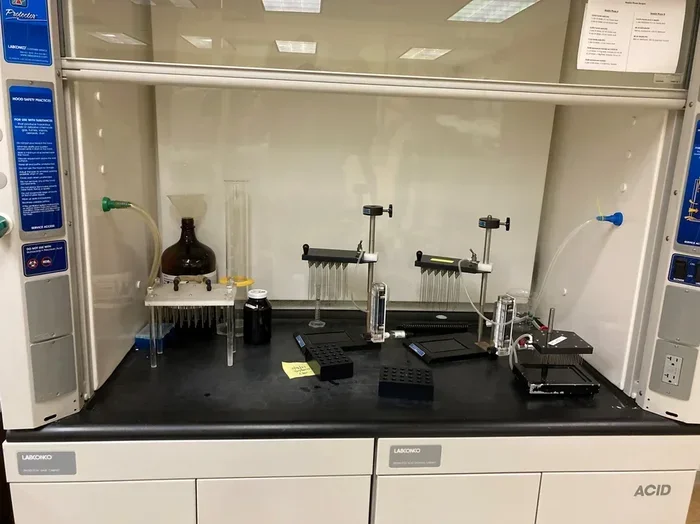
Fume hoods are enclosed workspaces with built-in ventilation. They pull airborne chemicals away from the worker and filter them before releasing them outside. Any time a toxicologist works with volatile substances, a fume hood is the safest place to do it.
Proper ventilation also includes general lab airflow systems. These ensure that no single area of the lab becomes overloaded with fumes. Regular inspection of ventilation systems keeps them functioning at peak performance and protects everyone in the building.
Emergency Equipment
Every toxicology lab needs emergency equipment within easy reach. This includes eyewash stations, safety showers, fire extinguishers, and spill kits. Lab staff should know exactly where this equipment is located and how to use it before an emergency occurs.
Spill kits are especially important in toxicology labs. They contain absorbent materials, neutralizing agents, and waste disposal bags. Quick response to a chemical spill can prevent injuries and contamination from spreading to other areas of the lab.
Emerging Technologies Reshaping Toxicology
The field of toxicology is constantly evolving. New technologies are making it faster, more accurate, and more accessible. These innovations are expanding what toxicologists can accomplish and opening doors to discoveries that were not possible just a few years ago.
Portable and Point-of-Care Testing Devices
Traditionally, toxicology testing required sending samples to a centralized lab. This process could take days or even weeks. Portable testing devices now allow on-site analysis in minutes. These handheld tools are invaluable for emergency rooms, crime scenes, and field research.
Point-of-care devices use compact versions of established technologies like immunoassays and portable mass spectrometers. They may not match the precision of a full lab setup, but they provide rapid screening that can guide immediate decisions. In poisoning cases, speed can save lives.
Artificial Intelligence and Data Analysis Tools
Artificial intelligence is making its way into toxicology labs in a big way. AI-powered software can analyze complex data sets faster than any human could. It can identify patterns in poisoning cases, predict toxicity of new compounds, and flag unusual results for closer review.
Machine learning algorithms are trained on massive databases of known toxins and their effects. Over time, these systems become better at identifying unknown substances and predicting their behavior. This technology does not replace toxicologists, but it gives them a powerful assistant that handles the heavy lifting of data analysis.
Advanced Immunoassay Platforms
Immunoassays use antibodies to detect specific substances in a sample. They are widely used for drug screening and hormone testing. Newer platforms offer higher sensitivity, faster turnaround times, and the ability to test for multiple substances simultaneously.
These platforms are becoming more automated, reducing the chance of human error. Robotics can handle sample loading, reagent addition, and result reporting with minimal human intervention. This frees up toxicologists to focus on interpreting results and making informed decisions.
Environmental and Occupational Monitoring Tools
Toxicologists also use specialized monitoring tools to assess chemical exposure in workplaces and environments. Air sampling pumps collect airborne contaminants over time. Surface swabs detect residue on workstations or equipment. Biological monitoring measures the levels of chemicals in blood or urine to assess cumulative exposure.
These tools play a critical role in occupational health. They help identify unsafe working conditions before workers suffer harm. Employers use the data to improve safety protocols and reduce the risk of chemical-related illness.
Bringing It All Together: The Toxicologist’s Toolkit
The tools do toxicologists use span a wide range, from simple glassware to billion-dollar analytical instruments. Each tool serves a specific purpose, and they all work together as part of a larger process. Without proper sample preparation, even the best mass spectrometer will give unreliable results. Without safety gear, the work becomes dangerous. Every piece of equipment matters.
What makes toxicology so fascinating is how these tools combine science, technology, and detective work. A toxicologist might start with a basic extraction, move to a chromatograph for separation, and finish with a mass spectrometer for identification. Along the way, they rely on safety equipment, reference databases, and their own expertise to interpret what they find.
The field continues to advance rapidly. New instruments are smaller, faster, and more precise. AI is helping analyze data that would have taken weeks to process by hand. Portable devices are bringing lab-quality testing to remote locations and emergency settings. The future of toxicology tools is bright, and the impact on public health will only grow.
If you are considering a career in toxicology or simply want to understand how poison detection works, knowing these tools gives you a solid foundation. The next time you hear about a forensic toxicology report or an environmental health study, you will have a much better idea of the incredible tools that made it possible.
Frequently Asked Questions
What is the most important tool in a toxicology lab?
The mass spectrometer is widely considered the most important tool. It can identify substances at extremely low concentrations, which is critical for detecting poisons and drugs in biological samples. Many labs pair it with a chromatograph for even better results.
Do toxicologists need special training to use these tools?
Yes, absolutely. Most toxicologists hold advanced degrees and receive specialized training in instrument operation, sample preparation, and safety protocols. Handling toxic chemicals and expensive analytical equipment requires both education and hands-on experience.
Can toxicology tools be used outside of a lab setting?
Yes, portable testing devices allow toxicologists to perform basic analyses in the field. These are commonly used at crime scenes, emergency rooms, and environmental monitoring sites. However, they are not as precise as full lab instruments.
How often do toxicology lab instruments need calibration?
Calibration frequency depends on the instrument and how often it is used. Most labs follow manufacturer recommendations and regulatory guidelines. Mass spectrometers and chromatographs are typically calibrated monthly or before each critical analysis batch.
Are toxicology tools expensive to maintain?
Maintenance costs can be significant, especially for high-end instruments like mass spectrometers. Regular servicing, part replacement, and consumable supplies like solvents and columns add up. However, proper maintenance prevents costly breakdowns and ensures accurate results over time.
What role does compressed air play in toxicology labs?
Compressed air is used to power gas chromatographs and other instruments that rely on carrier gases. Labs must maintain clean, dry air supplies to avoid contaminating samples. Using the right compressor oil and preventing issues like short cycling helps ensure stable instrument performance.
=== CONCLUSION ===
The tools do toxicologists use are as diverse as the substances they investigate. From basic pipettes and centrifuges to sophisticated mass spectrometers and AI-driven data platforms, each tool plays a vital role in uncovering the truth behind poisoning cases, environmental contamination, and drug exposure. Understanding these tools gives us a deeper appreciation for the meticulous work that toxicologists do every day to keep our communities safe.
Whether you are entering the field or simply curious about how science protects public health, knowing what goes on inside a toxicology lab is fascinating. The combination of precision instruments, careful technique, and expert analysis makes toxicology one of the most impactful fields in modern science. The tools continue to evolve, and with them, our ability to detect and understand the hidden dangers around us.