How to Find the Best HZ Generator for Your Next Project
Finding the right hz generator can make or break your project’s success. This guide walks you through everything you need to know, from understanding frequency ranges to picking the perfect hz generator for your specific needs. You will learn about types, features, and common pitfalls to avoid.
Whether you are building an audio setup, testing electrical circuits, or running a lab experiment, the right hz generator can change everything. Hz stands for Hertz, which is the unit we use to measure frequency. In simple terms, an hz generator produces signals at specific frequencies, and those signals power or test a wide range of devices and systems.
So why does picking the right one matter so much? Because not all generators are created equal. Some deliver crystal-clear sine waves, while others produce noisy or unstable outputs. A poor choice can ruin your project, waste your money, and eat up hours of troubleshooting time. This guide breaks down everything you need to know to find the best hz generator for your next project without the guesswork.
We will cover what an hz generator actually does, the key features you should compare, the different types available, and how to match one to your specific needs. By the end, you will feel confident walking into a purchase or building your setup with total clarity.
Key Takeaways
- Know Your Frequency Range: Always check the hz range your project demands before buying.
- Match the Generator Type: Different hz generator types serve different purposes, so choose wisely.
- Check Signal Quality: A clean, stable output matters more than fancy extras.
- Consider Your Budget: You do not need the most expensive model to get great results.
- Test Before Committing: Use generator testing methods to verify performance.
- Avoid Common Mistakes: Skipping calibration and ignoring compatibility are top errors buyers make.
📑 Table of Contents
- What Is an Hz Generator and How Does It Work?
- Key Features to Look for in an Hz Generator
- Types of Hz Generators You Can Choose
- Top Applications for Hz Generators
- How to Choose the Right Hz Generator for Your Project
- Common Mistakes to Avoid When Buying an Hz Generator
- Expert Tips for Getting the Most Out of Your Hz Generator
- Conclusion
What Is an Hz Generator and How Does It Work?
An hz generator is a device or tool that creates electrical or audio signals at a set frequency measured in Hertz. Think of it as a tuning fork for machines and circuits. Just like a tuning fork vibrates at a precise pitch, an hz generator sends out a signal at a precise frequency.
The most common waveform you will encounter is the sine wave. A sine wave generator produces a smooth, clean oscillation that is essential for many testing and production tasks. Other waveforms include square waves, triangle waves, and sawtooth waves, but the sine wave remains the gold standard for most applications.
Here is how a typical hz generator works in plain language:
- The device takes in power from a wall outlet or battery.
- A circuit inside creates an oscillating signal at your chosen frequency.
- The output travels through a port or connector to the device you are testing.
- You adjust the frequency up or down to match your project requirements.
Some modern generators also let you tweak the amplitude, which is the strength or volume of the signal. This added control gives you more flexibility when working on sensitive projects.
Why Frequency Accuracy Matters
Not every project tolerates a loose frequency. If you are testing a radio receiver or calibrating audio equipment, even a tiny shift in hz frequency can throw off your entire reading. That is why accuracy specs on an hz generator deserve your close attention. Look for generators with tight tolerance ratings, usually measured in parts per million (PPM). The lower the PPM number, the more precise your output will be.
Key Features to Look for in an Hz Generator
Not all hz generator models are built the same way. Before you spend a single dollar, check these essential features to make sure you are getting the right tool.
Frequency Range
The frequency range tells you the lowest and highest Hertz the generator can produce. For example, a generator rated from 1 Hz to 150 kHz covers a very different set of tasks than one that goes from 20 Hz to 20 kHz. Write down the frequencies your project needs and make sure your chosen hz generator covers that full range with room to spare.
Signal Purity and Distortion Levels
A clean signal is a happy signal. Look for generators that advertise low total harmonic distortion (THD). THD measures how much unwanted noise or extra frequencies sneak into your output. The lower the THD number, the purer your signal will be. For most frequency generator tasks, a THD under 1% is perfectly fine.
Output Impedance and Amplitude Control
Output impedance affects how well your hz generator connects to the device under test. A 50-ohm output is standard for most lab and bench work. Amplitude control lets you set the signal strength, which is crucial when you do not want to overload a sensitive circuit.
Display and User Interface
A clear, backlit display makes your life so much easier. You want to see the exact frequency and amplitude at a glance. Touchscreen models are becoming more affordable and offer a smoother experience than button-only interfaces.
Types of Hz Generators You Can Choose
The market offers several flavors of hz generator tools. Understanding the differences helps you zero in on the right one fast.
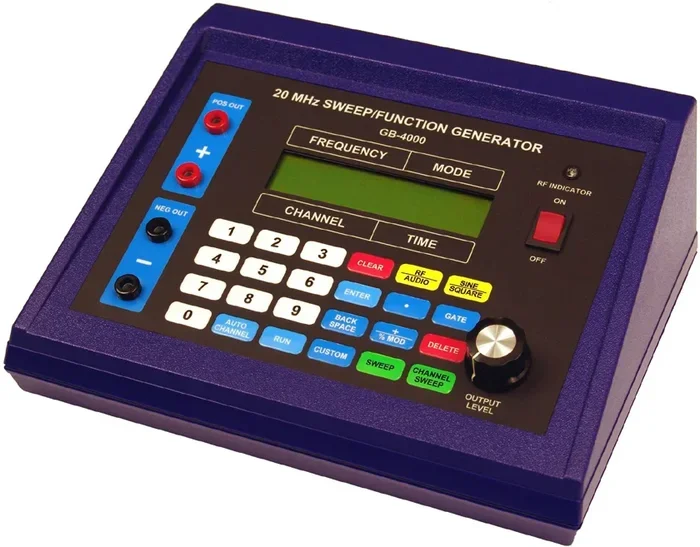
Function Generators
A function generator is the most versatile option. It can produce sine waves, square waves, triangle waves, and more. If your project involves testing multiple types of circuits or audio gear, a function generator is your best bet. Many hobbyists and professionals keep one on their bench at all times.
Signal Generators
A dedicated signal generator focuses on producing one clean, precise waveform, usually a sine wave. These are ideal for radio frequency testing, antenna tuning, and communication system work. They tend to offer better frequency stability than general-purpose function generators.
Audio Generators
An audio hz generator operates in the audible range, typically 20 Hz to 20 kHz. These are perfect for sound engineering, speaker testing, and acoustic measurements. If your project involves music or voice frequencies, this is the type you want.
RF and Microwave Generators
For high-frequency work above 20 kHz, you need an RF or microwave frequency generator. These tools reach into the megahertz and gigahertz ranges. They are used in telecommunications, radar testing, and advanced electronics research. These are specialized and tend to cost more.
Top Applications for Hz Generators
Hz generators are not just for lab techs. They show up in a surprising number of real-world projects and workflows.
Audio and Music Production
Sound engineers use an hz generator to test speakers, microphones, and mixing boards. By sending a pure tone through a system, they can spot weaknesses, resonances, or distortion points. A sine wave generator is the go-to tool here because it produces the cleanest possible tone.
Electrical and Electronics Testing
Electronics engineers rely on generator testing with an hz generator to verify that circuits respond correctly at different frequencies. This is essential when designing filters, amplifiers, and oscillators. A stable signal generator helps catch design flaws early before mass production.
Communications and Radio Work
Radio operators and telecom engineers use high-frequency generators to test transmitters, receivers, and antennas. The signal frequency must be exact, and any drift can cause dropped calls or poor signal quality. A quality hz generator ensures reliable communication systems.
Educational and Research Settings
Universities and research labs use hz generators for experiments in physics, acoustics, and electrical engineering. Students learn how frequency affects circuits and sound by directly manipulating the generator controls. It is one of the most hands-on learning tools available.
How to Choose the Right Hz Generator for Your Project
Picking the right hz generator does not have to be overwhelming. Follow these steps to make a confident decision.
Step 1: Define Your Frequency Needs
Start by writing down the exact frequencies your project uses. Do you need low frequencies around 20 Hz for audio work? Or do you need high frequencies in the kilohertz or megahertz range for RF testing? Knowing this single detail narrows your options dramatically.
Step 2: Set a Realistic Budget
Hz generator prices range from under $50 for basic models to several thousand dollars for lab-grade equipment. You do not always need to spend the most. For most hobbyists and small projects, a mid-range function generator offers excellent value. Save the big budgets for professional or industrial applications.
Step 3: Compare Key Specs Side by Side
Make a quick comparison table in your head or on paper. Look at frequency range, THD, output amplitude, and impedance. These four specs tell you almost everything you need to know about an hz generator‘s performance.
Step 4: Read Reviews and Ask for Recommendations
Before you buy, check reviews from other users who have similar project needs. Ask in online forums or communities. Real-world feedback often reveals issues that spec sheets hide, such as durability problems or software quirks.
Step 5: Test and Calibrate After Purchase
Once your hz generator arrives, do not skip the testing phase. Use a frequency counter or oscilloscope to verify the output matches the display reading. Generator testing is a quick habit that saves you from headaches down the road. Calibration keeps your tool accurate over time.
Common Mistakes to Avoid When Buying an Hz Generator
Even experienced buyers sometimes make poor choices. Here are the mistakes you should steer clear of.
Mistake 1: Ignoring the Frequency Range. Buying a generator that barely covers your needed frequencies is a recipe for frustration. Always choose a model with a wider range than you currently need.
Mistake 2: Overlooking Signal Quality. A cheap generator with high distortion can ruin your test results. Signal purity should always come before fancy features like built-in displays or USB connectivity.
Mistake 3: Skipping Compatibility Checks. Make sure the output connector matches your equipment. A 50-ohm generator into a high-impedance input can cause signal loss and inaccurate readings.
Mistake 4: Forgetting About Power Requirements. Some generators need a stable power supply. If you are working in the field, a battery-powered or portable hz generator might be a better fit than a benchtop model that needs wall power.
Mistake 5: Not Planning for Future Needs. Your project today might grow into something bigger tomorrow. Choose a generator that can scale with your ambitions rather than one that hits a ceiling the moment you outgrow your current task.
Expert Tips for Getting the Most Out of Your Hz Generator
Here are a few insider tips that seasoned professionals swear by.
- Warm up your generator for at least 10 minutes before critical measurements. This stabilizes the internal components and improves frequency accuracy.
- Use short, high-quality cables between your hz generator and the device under test. Long cables can introduce noise and signal loss.
- Keep a calibration log. Record your testing dates and results. This habit pays off when you need to troubleshoot a problem weeks or months later.
- Pair your generator with a quality oscilloscope. Seeing the waveform on screen gives you instant feedback that a digital readout alone cannot provide.
- Store your generator properly. Keep it in a dry, dust-free case when not in use to protect the internal circuitry and extend its lifespan.
These small habits make a huge difference in the long run. They keep your frequency generator performing at its best and your project results reliable.
Conclusion
Finding the best hz generator for your next project comes down to knowing your needs, comparing the right specs, and avoiding the common traps that trip up buyers. Whether you need a simple audio tool or a precision signal generator for lab work, the right choice is out there waiting for you. Take your time, do your homework, and trust the process. A well-chosen hz generator becomes an indispensable part of your toolkit, and it will serve you well for years to come.
Start by defining your frequency range, set a realistic budget, and pick a model with clean signal output and solid reviews. Your next project deserves the right tools, and now you have the knowledge to find them.
Frequently Asked Questions
What does Hz stand for in a generator?
Hz stands for Hertz, which is the unit of frequency. An hz generator produces signals at specific frequencies measured in Hertz. The higher the number, the more cycles per second the signal completes.
Do I need a function generator or a signal generator?
If you need multiple waveform types like sine, square, and triangle waves, go with a function generator. If you only need a clean, precise sine wave for testing, a dedicated signal generator is the better choice. Think about your project’s specific needs before deciding.
Can I use an hz generator for audio testing?
Absolutely. An audio hz generator works perfectly for testing speakers, microphones, and sound equipment. Just make sure the generator covers the 20 Hz to 20 kHz range, which is the full spectrum of human hearing.
How accurate do I need my hz generator to be?
For most projects, a generator with a tolerance of 1% or better is plenty. For precision lab work or radio frequency testing, look for models with tighter specifications, measured in parts per million. Always match the accuracy to your project requirements.
What is the difference between an electrical generator and an hz generator?
An electrical generator converts mechanical energy into electrical power, while an hz generator produces precise frequency signals for testing and measurement. They serve completely different purposes, even though both involve electricity.
How do I know if my hz generator needs recalibration?
If your readings start drifting or your output does not match the display, it is time to recalibrate. Regular generator testing with a frequency counter helps you catch drift early. Most professionals recommend checking calibration every 6 to 12 months.