Whole House Standby Generator Complete Buying Guide
A whole house standby generator keeps your entire home running during power outages automatically. This complete buying guide covers everything from sizing and fuel types to costs and installation tips. You will learn how to choose the right backup generator for your home and avoid costly mistakes.
A whole house standby generator is one of the most valuable investments a homeowner can make. When the power goes out, these systems kick on automatically and keep your lights, appliances, and HVAC running. No candles. No coolers. No stress.
Power outages are more common than most people think. Storms, grid failures, and equipment problems can leave a home dark for hours or even days. A backup generator solves this problem completely. It acts as a second power source that takes over the moment your main electricity drops.
This guide walks you through every step of buying a whole house standby generator. We will cover sizing, fuel types, costs, features, and installation. By the end, you will feel confident making the right choice for your home and family.
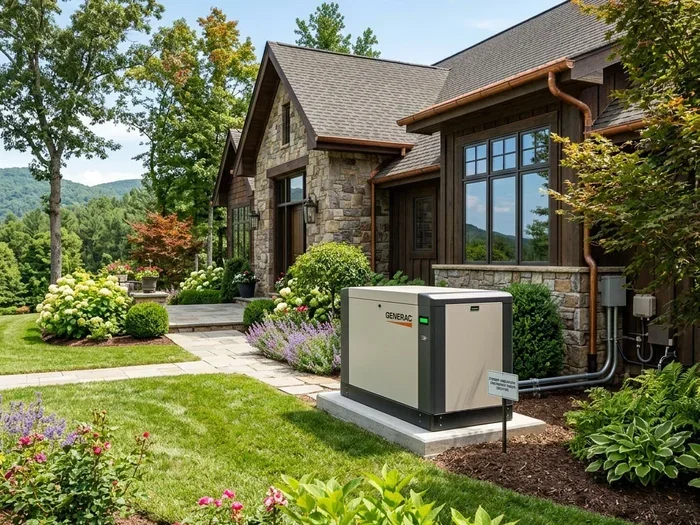
A whole house standby generator is a permanent installation that connects directly to your home’s electrical panel. Unlike portable generators, these units sit outside your house and run on natural gas or propane. They turn on automatically when they detect a power loss.
These generators are also called residential generators or home standby units. They come in different sizes, usually measured in kilowatts (kW). A typical home needs a unit between 20 kW and 30 kW to power essential systems and appliances. Larger homes with electric heating or cooling may need 40 kW or more.
The main difference between a standby generator and a portable one is convenience. A portable unit requires you to set it up, plug things in, and refuel it manually. A standby generator does all of that for you. It monitors your power supply and starts up within seconds of an outage.
How does a whole house standby generator work? The system has three main parts. The generator unit sits outside your home. An automatic transfer switch connects the generator to your electrical panel. A controller monitors the power supply and sends signals to start or stop the generator.
When the grid goes down, the transfer switch detects the loss. It sends a signal to the generator, which starts within about 10 seconds. The transfer switch then disconnects your home from the grid and connects it to the generator. Once power returns, the switch shifts back and the generator shuts down.
This whole process happens automatically. You do not need to be home or flip any switches. The system handles everything on its own.
Sizing is the most important part of buying a whole house standby generator. If you pick a unit that is too small, it will not power everything you need. If you pick one that is too big, you waste money on the upfront cost and fuel.
Start by making a list of the appliances and systems you want to keep running. Most homeowners prioritize the essentials. These include the refrigerator, lights, furnace or air conditioner, sump pump, and water heater. Add up the wattage of each item to get a baseline number.
A general rule of thumb is to add 20 percent to your total wattage for safety margin. This extra buffer prevents the generator from running at full capacity all the time, which reduces wear and tear.
If you are unsure about your power needs, check out our guide on how big of a backup generator do I need. It walks you through the calculation step by step.
Generator sizing chart for common homes:
- Small home or apartment: 12 kW to 18 kW
- Medium home with essential circuits: 20 kW to 24 kW
- Large home with central HVAC: 25 kW to 35 kW
- Very large home with electric heat and cooling: 40 kW to 50 kW
Keep in mind that some appliances draw more power at startup than during normal use. Air conditioners and well pumps are examples of this. Your generator needs to handle that extra surge without tripping.
Fuel type is another big decision when choosing a whole house standby generator. The three main options are natural gas, propane, and diesel. Each has its own benefits and drawbacks.
Natural gas is the most popular choice for residential generators. It connects directly to your home’s gas line, so you never run out of fuel. Natural gas burns clean and produces fewer emissions than other fuels. The main downside is that it may not be available in all areas.
Propane is a great alternative, especially in rural areas where natural gas is not an option. You store propane in tanks outside your home. A typical home generator uses about 2 to 3 gallons of propane per hour at full load. One 500-gallon tank can run a generator for several days.
Diesel generators are less common for homes but offer excellent fuel efficiency and long runtime. They are more common in commercial settings. Diesel fuel is readily available and has a long shelf life. However, diesel units tend to be louder and produce more emissions.
If you want to understand fuel consumption better, read our article on how much natural gas does a generator use. It breaks down fuel costs by generator size and load level.
When comparing fuel types, consider your local climate, fuel availability, and budget. Natural gas offers the most convenience. Propane gives you energy independence. Diesel provides the longest runtime per gallon.
Modern whole house standby generators come packed with features that make them safer and easier to use. Here are the top features to look for when shopping.
Automatic transfer switch is the most important feature. This component handles the switch between grid power and generator power seamlessly. Without it, you would need to manually start the generator and connect it every time the power goes out.
Remote monitoring lets you check your generator’s status from your phone or computer. Many modern units send alerts if there is a problem. You can check fuel levels, run times, and error codes from anywhere.
Quiet operation matters if you live in a neighborhood with noise rules. Look for units with sound-attenuating enclosures that keep noise levels below 60 decibels. That is about as loud as a normal conversation.
Weather-resistant housing protects the generator from rain, snow, and extreme temperatures. A galvanized steel or aluminum enclosure prevents rust and extends the life of the unit.
Load management is a smart feature that prioritizes which circuits get power when the generator is running near capacity. Instead of shutting down everything, the system cycles high-draw appliances to keep things running smoothly.
Self-diagnostic systems run automatic tests to make sure the generator is ready when you need it. These weekly or monthly tests check the engine, fuel system, and electrical connections. If something is wrong, the system alerts you immediately.
Installing a whole house standby generator is a job for professionals. The unit needs to be placed on a concrete pad outside your home. It must be connected to your electrical panel through a transfer switch. If it runs on natural gas, a licensed plumber needs to connect it to your gas line.
The installation process usually takes one to two days. Costs for professional installation typically range from $1,000 to $5,000 on top of the unit price. This depends on the complexity of the job and local labor rates.
Location matters for safety and performance. Place the generator at least five feet from any window, door, or vent. This prevents carbon monoxide from entering your home. Check local building codes for setback requirements before installation.
Regular maintenance keeps your generator running reliably. Most manufacturers recommend an annual inspection by a certified technician. During this visit, the tech checks the oil, air filter, spark plugs, and fuel lines. They also run a full load test to make sure everything works.
For more details on testing your setup, see our guide on generator testing. It covers basic checks you can do yourself between professional service visits.
Between professional visits, there are a few things you can do at home. Check the oil level monthly and top it off as needed. Keep the area around the generator clear of debris, leaves, and snow. Make sure the fuel supply is adequate and the connections are tight.
A well-maintained generator can last 20 to 30 years. Neglecting maintenance can cut that lifespan in half. Stay on top of oil changes, filter replacements, and battery checks.
Comparing a whole house standby generator to a portable generator helps clarify the benefits of each option. Both provide backup power, but they work very differently.
Portable generators are cheaper upfront, usually costing $500 to $2,000. They are movable and can be used for camping or jobsites. However, they require manual setup each time you need power. You must run extension cords into your home and refuel the unit by hand.
Whole house standby generators cost more, typically $5,000 to $20,000 installed. But they offer automatic operation, higher power capacity, and longer runtime. They are permanently installed and connected to your home’s fuel supply. You never have to think about them during an outage.
Quick comparison:
- Standby generators: Automatic, whole-home power, higher cost, permanent installation
- Portable generators: Manual setup, limited circuits, lower cost, easy to move
If you live in an area prone to frequent outages, a standby generator is the clear winner. If you only need occasional backup for a few appliances, a portable unit might be enough.
The cost of a whole house standby generator depends on several factors. The size of the unit, the fuel type, the brand, and installation all play a role. Here is a general breakdown of what to expect.
Unit costs by size:
- 12 kW to 18 kW: $3,000 to $6,000
- 20 kW to 24 kW: $5,000 to $10,000
- 25 kW to 35 kW: $8,000 to $15,000
- 40 kW and above: $15,000 to $25,000
Installation adds another $1,000 to $5,000 depending on complexity. Electrical wiring, gas line connections, and concrete pad preparation all factor into the final price.
Operating costs are relatively low for natural gas units. A typical 20 kW generator running at 50 percent load uses about 1.5 therms of natural gas per hour. At average US natural gas rates, that is roughly $1.50 to $2.00 per hour of operation.
Propane costs more per unit of energy but offers the benefit of being independent of the gas grid. Diesel is efficient but tends to be noisier and produces more emissions.
Many homeowners find that the peace of mind a standby generator provides is worth the investment. You avoid food spoilage, frozen pipes, and uncomfortable temperatures during extended outages. For families with medical equipment that requires constant power, a standby generator is essentially a necessity.
Buying a whole house standby generator is a big decision. Here are some common mistakes to avoid so you get the best value for your money.
Undersizing the generator is the number one mistake. Many homeowners buy a unit based on their current needs without considering future additions. If you plan to add an electric vehicle charger or a hot tub, factor that into your sizing calculations now.
Skipping the transfer switch is dangerous. A transfer switch prevents backfeeding, which sends electricity back through the grid and can injure or kill utility workers. Always install a proper transfer switch.
Ignoring local codes and permits can lead to fines and safety hazards. Most jurisdictions require permits for generator installation. Check with your local building department before starting the project.
Choosing the wrong fuel type can cause problems down the road. If natural gas is not available in your area, do not buy a natural gas generator. Plan your fuel source before you purchase.
Neglecting maintenance will shorten the life of your generator. Set a schedule for oil changes, filter replacements, and professional inspections. Treat your generator like any other major appliance in your home.
Buying the cheapest unit is tempting but risky. Low-cost generators often use lower-quality components that break down more frequently. Invest in a reputable brand with a solid warranty and good customer support.
Whole house standby generators offer a level of convenience and reliability that portable units simply cannot match. With automatic startup, whole-home coverage, and connection to your home’s fuel supply, these systems keep your family comfortable and safe during any outage.
The right backup generator depends on your home size, power needs, budget, and local fuel availability. Take the time to size your unit correctly and choose a reputable brand. Professional installation and regular maintenance will ensure your generator runs reliably for decades.
Power outages do not wait for a convenient time. They happen in the middle of the night, during holidays, and in the worst possible weather. Having a whole house standby generator means you are always prepared. Your home stays warm or cool, your food stays fresh, and your family stays safe.
Start your research today. Get quotes from local installers, compare fuel options, and find the right unit for your home. The investment pays for itself the first time the power goes out and your neighbors are sitting in the dark.
Key Takeaways
- Right-sizing matters: A properly sized unit prevents overload and saves money on fuel costs.
- Automatic operation: Standby generators kick in within seconds of a power outage without manual intervention.
- Fuel choice affects cost and runtime: Natural gas, propane, and diesel each have distinct advantages for long-term use.
- Professional installation is recommended: Proper electrical and gas connections ensure safety and code compliance.
- Regular maintenance extends lifespan: Routine checks keep your generator reliable for 20 to 30 years of service.
- Upfront cost is significant: Expect to invest between $5,000 and $20,000 depending on size and features.
Frequently Asked Questions
How long can a whole house standby generator run continuously?
Most standby generators can run for 24 to 72 hours on a full fuel tank. Natural gas units can run indefinitely as long as the gas supply is available. Propane generators depend on tank size, with a 500-gallon tank typically providing several days of runtime at moderate load.
Is a whole house standby generator worth the cost?
Yes, for most homeowners in areas prone to power outages, a standby generator is worth the investment. It protects your home from food spoilage, frozen pipes, and comfort issues. It also adds resale value to your property.
Do I need a permit to install a whole house standby generator?
Most local jurisdictions require a permit for generator installation. Check with your building department before starting the project. Professional installers usually handle the permitting process for you.
Can I install a whole house standby generator myself?
It is strongly recommended to hire a professional for installation. The unit involves electrical wiring, gas connections, and safety requirements that require licensed expertise. Improper installation can void your warranty and create safety hazards.
What is the difference between a standby generator and a portable generator?
A standby generator is permanently installed and turns on automatically during an outage. A portable generator is movable, requires manual setup, and has limited power capacity. Standby generators cost more upfront but offer far greater convenience and whole-home coverage.
How often should I service my whole house standby generator?
Most manufacturers recommend annual professional maintenance. Between service visits, check the oil level monthly and keep the unit clean. Run the generator under load for at least 30 minutes once a month to keep the engine in good condition.