What Size Air Compressor Do You Need for Sandblasting
Choosing the right size air compressor for sandblasting is essential for getting smooth, consistent results every time. This guide breaks down everything you need to know about CFM, PSI, tank size, and horsepower so you can pick the perfect sandblasting compressor for any project. Whether you are a weekend DIYer or a professional blaster, you will find clear, practical advice to match your compressor to your needs.
Sandblasting is one of the most satisfying ways to strip paint, clean metal, or prepare surfaces for a fresh coat. But here is the thing most people get wrong — picking the wrong what size air compressor for sandblasting can turn a simple project into a frustrating mess. You end up with uneven coverage, constant stops, and wasted abrasive media.
The good news is that finding the right compressor is not as complicated as it sounds. Once you understand a few key numbers — CFM, PSI, and tank size — everything clicks into place. This guide walks you through every detail you need to know. By the end, you will feel confident choosing the right sandblasting compressor for your specific project.
Whether you are setting up a small garage workshop or running a full industrial operation, the right air compressor for sandblasting makes all the difference. Let us break it down together, step by step.
Key Takeaways
- CFM and PSI are the two most important specs: You need enough airflow and pressure to keep your sandblasting gun running smoothly without interruptions.
- Tank size affects continuous blasting time: Larger tanks hold more compressed air, so you can work longer between compressor cycles.
- Match your compressor to the project type: Small DIY jobs need different equipment than large industrial sandblasting operations.
- Don’t overlook portability: A portable sandblasting compressor gives you flexibility, but may sacrifice some power compared to a stationary unit.
- Avoid common sizing mistakes: Undersizing your compressor leads to poor results, wasted abrasive, and frustrating downtime on the job.
- Consider total air consumption: If you run other tools at the same time, your compressor needs to handle the combined load.
📑 Table of Contents
- What Size Air Compressor Do You Need for Sandblasting?
- Understanding CFM and PSI for Sandblasting
- Tank Size: Why It Matters for Sandblasting
- Portable vs Stationary Sandblasting Compressors
- Best Air Compressors for Sandblasting Projects
- Common Mistakes When Sizing a Sandblasting Compressor
- Quick Tips for Getting the Most Out of Your Sandblasting Compressor
- Expert Insight: How Professionals Choose Their Sandblasting Compressor
- Key Takeaways
- Frequently Asked Questions
- Conclusion
What Size Air Compressor Do You Need for Sandblasting?
Understanding Your Blasting Needs
Before you look at any compressor models, take a moment to think about what you will actually be doing. Not all sandblasting projects are the same. A small homeowner stripping rust off a lawn mower needs a very different setup than a shop owner blasting down metal panels all day long.
Start by asking yourself a few simple questions:
- What kind of surface will you be blasting?
- How large is the area you need to cover?
- Will you be working in one spot or moving around a lot?
- Do you need to run other air tools at the same time?
Your answers to these questions will guide every other decision you make. A portable sandblasting compressor might be perfect for a hobbyist who works on cars in the driveway. But a professional painter prepping large commercial surfaces will need something much more powerful.
Matching Compressor Size to Project Type
Here is a simple way to think about it. Small projects like cleaning garden tools or stripping a single metal piece need a compressor that delivers around 4 to 6 CFM at 90 PSI. Medium projects such as prepping a car body or a small metal gate need about 10 to 15 CFM. Large industrial jobs like blasting ship hulls or heavy equipment require 20 CFM or more.
If you are unsure about your project’s demands, check the specifications on your sandblasting gun or blast pot. Most manufacturers list the exact air consumption sandblasting requirements right on the product label. This is the best place to start when figuring out your sandblasting compressor size.
Understanding CFM and PSI for Sandblasting
What Is CFM and Why It Matters
CFM stands for cubic feet per minute. It measures how much air your compressor can deliver in one minute. Think of it as the fuel line to your sandblasting gun. If the CFM is too low, your gun sputters and the abrasive media stalls out mid-blast.
For most sandblasting applications, you want a compressor that delivers at least 1.5 times the CFM your gun requires. This extra buffer keeps the airflow steady even when you are working hard. A compressor that barely meets the minimum CFM will cycle on and off constantly, wearing out the motor faster.
Here is a quick reference for common sandblasting tools:
- Small handheld sandblaster: 3 to 5 CFM
- Medium blast gun with siphon feed: 6 to 10 CFM
- Heavy-duty blast pot system: 15 to 25 CFM
- Industrial turbine-assisted blaster: 20+ CFM
Always check your specific tool’s requirements. Using the wrong CFM is the number one mistake people make with their sandblasting equipment.
PSI Requirements for Different Sandblasting Tasks
PSI stands for pounds per square inch. It measures the pressure of the air pushing through your hose and into the blasting gun. Higher PSI means more force behind the abrasive media, which helps cut through tough rust, paint, and corrosion.
Most sandblasting guns work best between 90 and 120 PSI. Some heavy-duty setups run up to 150 PSI for really tough jobs. But here is the important part — your compressor must be able to maintain that pressure consistently while also delivering enough CFM.
A compressor that can hit 120 PSI but only delivers 4 CFM will not do the job. You need both numbers to be in the right range. Think of CFM as the volume of air and PSI as the push behind it. You need a good balance of both for effective sandblasting air compressor performance.
Tank Size: Why It Matters for Sandblasting
Small Tank vs Large Tank Compressors
The tank on your compressor stores compressed air so it is ready to use the moment you pull the trigger. Tank size is measured in gallons, and it plays a bigger role than most people realize.
A small tank, say 20 to 30 gallons, works fine for short burst work. You blast for a few seconds, the tank refills, and you blast again. This setup is fine for light DIY projects where you are not working continuously.
A larger tank, 60 gallons or more, gives you a much smoother experience. The stored air keeps your blast consistent even when the compressor kicks in to refill. You do not get those annoying pauses where the pressure drops mid-blast. For anyone doing serious sandblasting projects, a larger tank is a game changer.
Here is a simple comparison to help you decide:
| Tank Size | Best For | Burst Time | Compressor Cycle |
|---|---|---|---|
| 20–30 gallons | Light DIY, small touch-ups | Short bursts | Frequent cycling |
| 60–80 gallons | Medium projects, auto prep | Steady, longer blasts | Moderate cycling |
| 100+ gallons | Industrial, continuous work | Extended blasting | Rare cycling |
Keep in mind that larger tanks are heavier and take up more space. If portability matters to you, a smaller tank paired with a portable sandblasting compressor might be the smarter choice.
Portable vs Stationary Sandblasting Compressors
When to Choose a Portable Unit
A portable sandblasting compressor is a great option if you move around a lot. Maybe you work on different job sites, or you just do not have a dedicated shop space. Portable units are lighter, often come with wheels, and take up very little room.
The tradeoff is power. Most portable compressors max out at around 5 to 10 HP. That is plenty for small to medium jobs, but it will struggle with large-scale industrial blasting. If you are doing occasional home projects, a portable unit is more than enough.
One thing to keep in mind: portable compressors often run on gasoline or small engines, similar to other portable power equipment. If you are comparing power sources, think about how you would power something like a how big of a generator do I need for my camper — the same logic applies to choosing the right portable power for your blasting setup.
When to Go with a Stationary Compressor
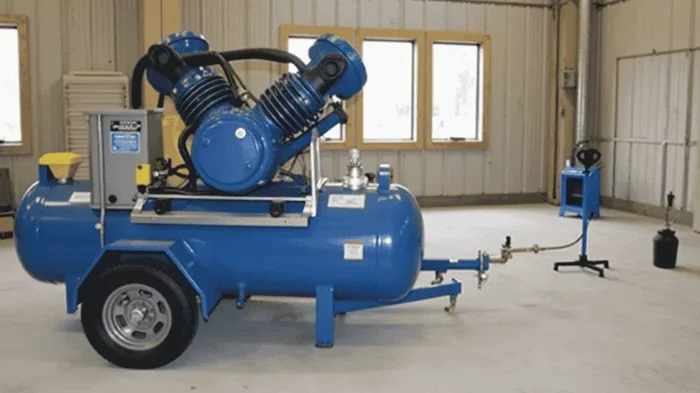
Stationary compressors are built for one thing: serious, continuous work. They plug into a 220V outlet or a dedicated power supply and deliver consistent CFM and PSI for hours on end. These are the workhorses you see in professional autobody shops and industrial coating facilities.
A stationary unit typically has a much larger motor, bigger tanks, and a more robust cooling system. They are louder and heavier, but they do not quit when the work gets tough. If you are running a full shop and using multiple sandblasting tools at once, a stationary compressor is the way to go.
Also, consider your total power needs. If you are running a compressor alongside other heavy-duty tools in a shop, the electrical demand can be significant. Just like you would plan power carefully for a whole setup — similar to how you would plan for a what size generator to run a house — you need to make sure your electrical system can handle everything you are running.
Best Air Compressors for Sandblasting Projects
Small Projects and DIY Work
If you are stripping a old patio furniture set or cleaning rust off a few tools, you do not need anything fancy. A 1 to 2 HP compressor with a 20 to 30 gallon tank and about 5 CFM at 90 PSI will handle the job nicely. These units are affordable, easy to move around, and store without taking up a garage.
Look for compressors with oil-free pumps if you plan to do occasional work. They require less maintenance and are lighter. Just keep in mind they may not last as long under heavy use compared to oil-lubricated models.
Medium Commercial Jobs
For auto body prep, medium-sized metal fabrication, or prep work on a house exterior, you want something in the 5 to 7.5 HP range. These compressors typically deliver 10 to 18 CFM and come with 60 to 80 gallon tanks. They give you the balance of power and portability that most medium sandblasting projects demand.
Some popular options in this category include two-stage belt-drive compressors. They run cooler, last longer, and deliver more consistent air than single-stage models. The initial cost is higher, but the durability pays off over time.
Heavy-Duty Industrial Sandblasting
Professional blasters and industrial operations need serious power. We are talking 10 HP or larger compressors delivering 20+ CFM at 120+ PSI. These units often come with 100 gallon tanks or larger and are built to run all day, every day.
In this category, you also see rotary screw compressors becoming popular. They deliver continuous airflow without the stop-start cycling of piston compressors. The result is smoother blasting and less wear on your abrasive blasting compressor components.
When evaluating options for large operations, it helps to think about your total power setup. Just as you would carefully size a what size generator for 30 amp rv air conditioner to match the cooling load, you need to match your compressor to the demands of your blasting equipment and shop.
Common Mistakes When Sizing a Sandblasting Compressor
Undersizing Your Compressor
This is the most common mistake, and it costs people both time and money. When your compressor cannot keep up with the CFM and PSI demands of your sandblasting gun, the results are frustrating. You get stuttering abrasive flow, uneven surface preparation, and wasted media.
Undersizing also strains the compressor motor. It overheats, the pump wears out prematurely, and you end up paying for repairs or a replacement far sooner than you should. Always choose a compressor that exceeds your minimum CFM and PSI requirements by at least 20 to 30 percent. That buffer gives you room to breathe and protects your equipment.
Ignoring Total Air Demand
Here is something many people overlook. If you are running a sandblasting gun and also using an impact wrench, air grinder, or paint sprayer at the same time, you need to add up the CFM for all of them. Your compressor must be able to handle the total combined air demand.
A simple way to calculate this is to list every air tool you plan to use simultaneously and add their CFM requirements together. Then choose a compressor that exceeds that total by a comfortable margin. This one step saves a lot of headaches and keeps your sandblasting setup running smoothly.
Skipping the Moisture Trap
Compressed air contains moisture, and that moisture can cause problems in your sandblasting equipment. Rust forms inside your blast pot and hoses. The abrasive media clumps and flows unevenly. Your blasting results suffer, and your equipment deteriorates faster.
A simple moisture trap or air dryer attached to your compressor outlet solves this problem. It is a small investment that pays for itself quickly by keeping your sandblasting equipment in good shape and your blasting media flowing freely.
Quick Tips for Getting the Most Out of Your Sandblasting Compressor
- Check your hoses: Use hoses that are the right diameter for your CFM needs. Undersized hoses restrict airflow and reduce pressure at the gun.
- Keep your filters clean: Dirty intake filters starve your compressor of air and reduce performance. Check and clean them regularly.
- Use the right abrasive media: Different media requires different air pressures. Consult your media supplier for the recommended PSI.
- Drain your tank daily: Moisture builds up in the tank and can cause rust. Drain it after every use to extend its life.
- Wear proper PPE: Sandblasting produces fine dust and debris. Always wear a full face shield, respirator, and protective clothing.
Expert Insight: How Professionals Choose Their Sandblasting Compressor
Professional blasters have learned the hard way what works and what does not. The biggest lesson they share is this: always buy a compressor that is slightly bigger than you think you need. The extra capacity gives you room to take on larger projects without buying a new machine.
Many professionals also recommend investing in a two-stage compressor for anything beyond casual use. The second stage cools the air before it enters the tank, which means drier air, less moisture, and longer equipment life. It is an upgrade that pays for itself in saved maintenance and better blasting results.
Another pro tip is to install a pressure regulator between your compressor and your blast gun. This lets you fine-tune the PSI for different materials and media types without constantly adjusting the compressor itself. It is a small addition that makes a big difference in the quality and consistency of your work.
Key Takeaways
- CFM and PSI drive your decision: Always match or exceed your sandblasting gun’s requirements for both airflow and pressure.
- Tank size determines your workflow: Larger tanks mean longer, more consistent blasting without interruptions.
- Portability vs power is a tradeoff: Choose portable for flexibility or stationary for heavy-duty continuous work.
- Buy slightly oversized: A compressor with extra capacity handles unexpected demands and lasts longer under heavy use.
- Account for all air tools: Add up the CFM of every tool you run simultaneously to avoid undersizing.
- Maintain your system: Regular draining, filter cleaning, and moisture trapping keeps everything running smoothly.
Frequently Asked Questions
What size air compressor do I need for sandblasting a car?
For sandblasting a car, you typically need a compressor that delivers at least 10 to 15 CFM at 90 to 120 PSI. A 5 to 7.5 HP compressor with a 60 gallon tank is a solid choice for most automotive sandblasting projects. This gives you enough airflow for consistent blasting without constantly cycling the motor on and off.
Can I use a small portable compressor for sandblasting?
Yes, but only for light-duty work. A small portable compressor works well for quick touch-ups, cleaning small metal parts, or light rust removal. For anything more serious, you will quickly run into airflow limitations that cause poor results and frustration. Match the compressor size to the scope of your project.
How much CFM do I need for a sandblasting gun?
Check the manufacturer’s specifications for your specific sandblasting gun. Most handheld guns need 3 to 10 CFM depending on the nozzle size and type. Larger blast pots and professional guns can require 15 to 25 CFM or more. Always add a 20 to 30 percent buffer to the gun’s listed CFM requirement when choosing your compressor.
Is a two-stage compressor better for sandblasting?
Yes, for most sandblasting applications, a two-stage compressor is the better choice. The second stage cools the compressed air, which reduces moisture and delivers more consistent pressure. Two-stage compressors also run cooler and last longer under heavy use, making them ideal for anyone doing regular sandblasting work.
What happens if my compressor is too small for sandblasting?
An undersized compressor causes a frustrating cycle of pressure drops, inconsistent abrasive flow, and frequent motor cycling. The gun sputters, the surface prep is uneven, and you waste more abrasive media trying to compensate. Over time, the motor overheats and wears out prematurely, leading to costly repairs or replacement.
Do I need a special compressor for abrasive sandblasting?
A standard air compressor works for sandblasting as long as it meets the CFM and PSI requirements for your specific setup. The key difference is that sandblasting compressors need to handle continuous operation and moisture better than compressors used for lighter tasks. Look for models with durable pumps, good cooling systems, and consider adding a moisture trap to protect your equipment.
Conclusion
Choosing the right what size air compressor for sandblasting comes down to understanding your project needs and matching them to the right specs. Focus on CFM, PSI, and tank size, and you will find a compressor that delivers smooth, consistent results every time. Do not rush the decision, and always give yourself a little extra capacity to handle unexpected demands.
Whether you are a weekend hobbyist working on a single project or a professional running a full blasting operation, the right sandblasting compressor makes all the difference in the quality of your work and the longevity of your equipment. Take the time to get it right, and your sandblasting projects will be faster, cleaner, and far more satisfying.
Start with the basics, avoid the common mistakes, and invest in the right setup. You will wonder how you ever managed without the proper air compressor for sandblasting in your shop.