Air Compressor Pressure Switch How It Works Explained
An air compressor pressure switch is the brain that tells your compressor when to start and stop. It monitors tank pressure and triggers the motor automatically, so you never have to guess when to turn the machine on or off. Understanding how this small but critical component works helps you troubleshoot problems, adjust settings safely, and keep your compressor running efficiently for years.
Every air compressor has a small but mighty component that controls when the motor starts and stops. Without it, your compressor would run nonstop, overheat, or never build enough pressure to do useful work. That component is the air compressor pressure switch, and understanding how it works is one of the best things you can do as a compressor owner.
Whether you use your compressor in a garage, a workshop, or on a job site, the pressure switch plays a vital role. It acts like a smart gatekeeper. It watches the air pressure inside the tank and sends a signal to the motor at exactly the right moment. When pressure drops to a certain level, the switch tells the motor to start. When pressure reaches the top, it tells the motor to stop.
This guide breaks down everything you need to know about how an air compressor pressure switch works. We will cover the internal parts, the science behind the cycling, how to adjust settings, common problems, and simple maintenance tips. By the end, you will feel confident diagnosing issues and getting the most out of your compressor.
If you are also curious about power equipment sizing, check out our guide on how big of a generator you need for your camper, which covers similar principles of matching equipment to your power needs.
Key Takeaways
- Core Function: The pressure switch automates compressor cycling by detecting tank pressure changes and turning the motor on or off.
- Cut-In and Cut-Out: These two pressure points define the operating range, and adjusting them correctly prevents motor burnout.
- Diaphragm vs. Mechanical Types: Different switch designs use varying mechanisms, but all serve the same essential purpose.
- Safety First: Always disconnect power before working on a pressure switch, and never bypass the switch.
- Common Problems: Frequent cycling, failure to start, and pressure leaks are the top issues, and most are easy to fix.
- Maintenance Matters: Regular cleaning and inspection extend the life of your pressure switch significantly.
📑 Table of Contents
- What Is an Air Compressor Pressure Switch?
- How Does a Pressure Switch Work Inside?
- Types of Pressure Switches
- How to Adjust Your Pressure Switch
- Common Pressure Switch Problems and Solutions
- Safety Tips for Working with Pressure Switches
- How to Maintain Your Pressure Switch
- When Should You Replace a Pressure Switch?
- Final Thoughts
What Is an Air Compressor Pressure Switch?
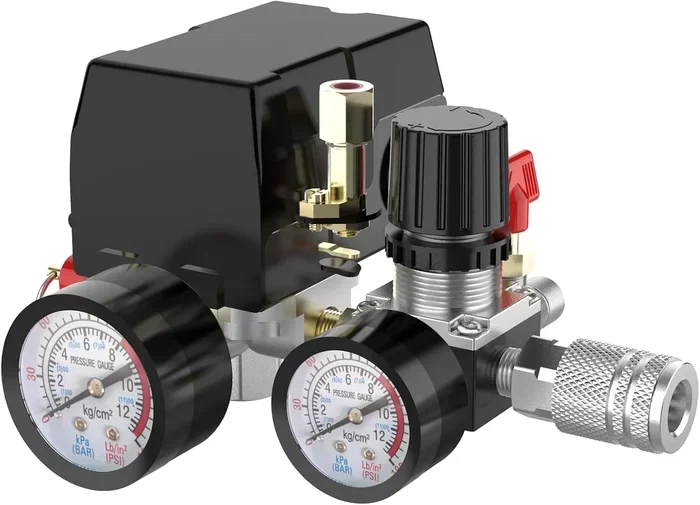
A pressure switch is an electrical device that responds to changes in air pressure. It sits on top of or near the compressor tank. Inside, it contains mechanical parts and electrical contacts that open and close circuits based on pressure levels. Think of it as the automatic on-off button for your compressor motor.
When you plug in your compressor and turn it on, the pressure switch monitors the current air level in the tank. If the pressure is low, the switch closes the electrical circuit. This sends power to the motor, and the compressor starts pumping air. As the tank fills, pressure rises. Once it hits the upper limit, the switch opens the circuit. The motor stops. Simple, right?
But the mechanism behind this process is fascinating. And knowing how it all fits together helps you use your compressor smarter. It also helps you avoid costly mistakes that can damage your equipment.
Why the Pressure Switch Matters
The pressure switch does more than just save you from flipping a switch manually. It protects your compressor motor from running dry or overworking. Without a functioning switch, your motor could overheat, the tank could overpressurize, or the compressor could cycle too frequently. Each of these problems shortens the life of your machine.
A healthy pressure switch also improves energy efficiency. Your compressor only runs when it needs to. This saves electricity and reduces wear on the motor. Over time, these small savings add up to lower operating costs and fewer repairs.
How Does a Pressure Switch Work Inside?
Now let us get into the mechanics. Understanding what happens inside the switch gives you a real advantage when troubleshooting. The process involves three main stages: pressure sensing, mechanism activation, and electrical contact switching.
Stage One: Pressure Sensing
The process starts with air pressure pushing against a sensing element. In most compressors, this is a diaphragm. The diaphragm is a thin, flexible membrane that moves in response to pressure changes inside the tank. As air fills the tank, pressure increases. This pressure pushes down on the diaphragm from inside the switch housing.
As the pressure rises, the diaphragm deflects inward. This movement travels through a lever or linkage system inside the switch. The linkage amplifies the small movement of the diaphragm into a larger mechanical action. That action eventually reaches the electrical contacts.
When the pressure reaches the preset cut-out level, the linkage force is strong enough to pull the electrical contacts apart. The circuit opens. Power stops flowing to the motor. The compressor shuts off. This entire process happens smoothly and automatically every single time you use your compressor.
Stage Two: The Reset and Cut-In Process
Here is where the cycle reverses. When you use air from the tank, pressure drops. The diaphragm relaxes and moves back to its original position. A spring inside the switch provides the restoring force. As pressure falls, it eventually reaches the preset cut-in level.
At the cut-in point, the spring pushes the linkage back. This closes the electrical contacts again. The circuit completes. Power flows to the motor. The compressor starts up and begins building pressure once more.
The difference between the cut-in and cut-out pressures is called the pressure differential. For example, if your switch turns the motor on at 90 PSI and off at 120 PSI, the differential is 30 PSI. This range is important. Too narrow, and the compressor cycles too often. Too wide, and the tank pressure fluctuates too much.
Stage Three: Electrical Contact Action
The electrical contacts inside the switch are the final link in the chain. These are metal pieces that either touch each other (closed circuit) or separate (open circuit). When they touch, electricity flows to the motor. When they separate, the flow stops.
These contacts are designed to handle the electrical load of the compressor motor. Over time, they can wear down, pit, or corrode. This is one of the most common reasons a pressure switch fails. Regular inspection can catch contact wear early, before it causes bigger problems.
For those interested in broader electrical setup, our article on how to wire a generator to a breaker box covers similar electrical connection principles that apply to compressor wiring as well.
Types of Pressure Switches
Not all pressure switches are the same. Different compressors use different switch designs based on the application, tank size, and motor type. Understanding the main types helps you choose the right replacement or adjust your current switch with confidence.
Diaphragm Pressure Switches
Diaphragm switches are the most common type in smaller compressors. They use a flexible rubber or silicone diaphragm that responds directly to tank pressure. These switches are simple, reliable, and affordable. Most home and workshop compressors use diaphragm switches.
The diaphragm moves up and down with pressure changes. A spring and linkage system translates that movement into electrical action. These switches work well for pressures up to about 200 PSI, which covers most standard compressor applications.
Piston-Actuated Pressure Switches
Larger compressors sometimes use piston-actuated switches. Instead of a diaphragm, these use a piston that moves inside a cylinder. The piston responds to pressure and activates the electrical contacts through a mechanical linkage.
Piston switches can handle higher pressures and heavier electrical loads. They are common in industrial compressors and heavy-duty models. They tend to be more durable but also more complex. If you have a large compressor, you might find a piston-type switch inside the housing.
Electronic Pressure Switches
Modern compressors sometimes feature electronic pressure switches. These use sensors and circuit boards instead of purely mechanical parts. They offer more precise pressure control and can include digital displays.
Electronic switches allow you to set custom pressure ranges with great accuracy. They also tend to last longer because there are fewer moving parts that wear out. However, they cost more and can be more complicated to repair if something goes wrong.
How to Adjust Your Pressure Switch
Adjusting your pressure switch lets you control the exact pressure range your compressor operates within. Most switches have two adjustment springs. One controls the cut-in pressure, and the other controls the cut-out pressure. Learning to adjust them correctly makes a big difference in performance.
Identifying the Adjustment Screws
Open the pressure switch housing and look for two springs. The larger spring usually controls the cut-out pressure (the upper limit). The smaller spring typically controls the cut-in pressure (the lower limit). Some switches label these clearly. Others do not, so refer to your compressor manual for guidance.
Before making any adjustments, note the current pressure readings. Use your pressure gauge to record the cut-in and cut-out points. This gives you a baseline to work from.
Adjusting the Cut-Out Pressure
To raise the cut-out pressure, turn the larger adjustment screw clockwise. This tightens the spring, requiring more pressure to push the diaphragm and open the contacts. To lower the cut-out, turn the screw counterclockwise.
Make small adjustments. One-quarter turn at a time is usually enough. After each adjustment, run the compressor and watch the pressure gauge. Note the new cut-out point before making further changes.
Adjusting the Cut-In Pressure
The cut-in adjustment works similarly but affects the lower pressure threshold. Turning the smaller screw clockwise raises the cut-in point. This means the compressor starts at a higher pressure. Turning it counterclockwise lowers the cut-in point.
Keep the differential between cut-in and cut-out consistent. A healthy differential is usually between 20 and 40 PSI. If the differential is too small, the compressor cycles too rapidly. This causes excessive wear on the motor. If it is too large, you may run out of compressed air before the compressor kicks back on.
Quick Tip: Always adjust both springs together to maintain a balanced differential. Changing only one spring without considering the other can create an uneven operating range that stresses your compressor.
Common Pressure Switch Problems and Solutions
Pressure switches are durable, but they do not last forever. Over time, wear, moisture, and dust can cause problems. Knowing what to look for saves you time and money. Here are the most common issues and how to fix them.
Compressor Cycles Too Frequently
If your compressor turns on and off every few minutes, the pressure differential may be set too narrow. A tight differential causes rapid cycling, which overheats the motor and wears out electrical contacts faster.
Try widening the differential by adjusting the springs. Also, check for air leaks in the system. Even a small leak can cause the pressure to drop quickly, triggering frequent starts. Inspect hoses, fittings, and the tank valve for leaks.
Compressor Does Not Start
A compressor that refuses to start often has a pressure switch issue. First, check if the tank pressure is above the cut-in point. If the tank already has high pressure, the switch will not close the circuit. Release some air from the tank until the pressure drops below the cut-in level.
If the pressure is fine, the problem may be worn electrical contacts. Open the switch housing and inspect the contacts for pitting or corrosion. Clean them with fine sandpaper if they are only slightly damaged. Replace the switch if the contacts are badly worn.
Compressor Runs Continuously
If the compressor never shuts off, the cut-out pressure setting may be too high for the tank to reach. Or the pressure switch itself may be stuck in the closed position. Check the pressure gauge while the compressor runs. If the pressure exceeds the normal cut-out level and the motor keeps running, the switch is likely faulty.
This is a serious issue. A continuously running compressor can overheat and cause motor damage. Turn off the compressor and inspect the switch. In many cases, replacing the pressure switch resolves this problem quickly.
Pressure Leaks Around the Switch
Air leaking from the pressure switch housing usually means a damaged diaphragm or worn seals. Inspect the switch for visible cracks or loose fittings. Replace the diaphragm or O-ring if needed. Most pressure switch repair kits are inexpensive and easy to install.
Never ignore a pressure leak. It wastes compressed air, reduces efficiency, and can cause the compressor to cycle more often than necessary. For more on equipment power consumption, see our guide on how much gas a generator uses, which covers similar fuel and energy efficiency concepts.
Safety Tips for Working with Pressure Switches
Pressure switches deal with both compressed air and electricity. Working on them requires caution. Follow these safety guidelines every time you open a pressure switch housing.
- Always unplug the compressor before opening the switch housing. Electrical shock is a real risk.
- Release all tank pressure before starting any work. Open the drain valve and let the tank empty completely.
- Never bypass the pressure switch. Running the compressor without a functioning switch can cause the tank to explode.
- Use the right replacement parts. Match the switch rating to your compressor specifications. An incompatible switch can cause electrical fires or motor damage.
- Keep the area dry. Moisture inside the switch housing causes corrosion and electrical faults.
- Consult your manual. Every compressor model is different. Your owner manual provides specific safety instructions and adjustment procedures.
If you are unsure about any electrical work, hire a qualified technician. Pressure switches are replaceable parts, but safety should always come first.
How to Maintain Your Pressure Switch
Good maintenance keeps your pressure switch working reliably for years. Most maintenance tasks are simple and take only a few minutes. Here is a routine you can follow.
Regular Inspection
Once a month, visually inspect the pressure switch for signs of damage. Look for cracks in the housing, loose wires, or corrosion on the contacts. Catching small problems early prevents bigger failures later.
Clean the Switch Housing
Dust and debris can accumulate around the switch, especially in workshop environments. Wipe down the housing with a dry cloth. Use compressed air to blow out any particles from vents and openings. Keep the area around the switch clean and dry.
Test the Pressure Settings
Every few months, test your cut-in and cut-out pressures. Run the compressor and watch the pressure gauge. Note when the motor starts and stops. Compare these readings to the manufacturer specifications. If the pressures are off, adjust the springs as needed.
Replace Worn Parts Promptly
If you notice contact pitting, a cracked diaphragm, or a weak spring, replace the part right away. Waiting can cause further damage to the compressor motor. Replacement parts are widely available and usually affordable. Many pressure switch repair kits include everything you need for a complete rebuild.
For more on equipment longevity, our guide on how long a Generac generator lasts offers maintenance insights that apply to compressor equipment as well.
When Should You Replace a Pressure Switch?
Even with good maintenance, pressure switches eventually wear out. Knowing when to replace yours saves you from unexpected breakdowns. Here are clear signs that replacement is needed.
- The compressor starts and stops at incorrect pressures, even after adjustment.
- Electrical contacts are visibly pitted, burned, or corroded beyond cleaning.
- The diaphragm is cracked, torn, or no longer moves freely.
- The switch housing shows physical damage or cracks.
- The compressor trips a breaker or blows a fuse repeatedly.
- Unusual clicking or buzzing sounds come from the switch when the compressor runs.
Replacing a pressure switch is usually straightforward. Turn off the power, release the tank pressure, disconnect the wiring, and unmount the old switch. Install the new one following the reverse steps. Always match the replacement switch to your compressor specifications. If you are unsure, consult your compressor manual or a professional technician.
Final Thoughts
The air compressor pressure switch is one of those components that most people take for granted until something goes wrong. But as you have learned, it is a remarkably simple and clever device. It senses pressure, activates mechanical movement, and controls electrical circuits. All of this happens automatically, hundreds of times over the life of your compressor.
Understanding how your pressure switch works empowers you. You can adjust settings for different tasks, troubleshoot problems quickly, and perform basic maintenance that extends the life of your equipment. A well-functioning pressure switch means a reliable compressor that starts when you need it and stops when the job is done.
Take a few minutes to inspect your pressure switch today. Clean it, test its settings, and look for signs of wear. These small habits make a big difference. Your compressor will run better, last longer, and save you money on repairs. And that is a win for everyone.
Remember, if you are planning your workshop power setup, understanding equipment sizing is key. Check out how many kW a generator needs to run a house for helpful context on matching power equipment to your actual needs.