AC Compressor Belt Replacement Cost and What to Expect
The AC compressor belt replacement cost typically ranges from $100 to $400 for parts and labor combined. Several factors influence the final price, including your vehicle type, belt condition, and whether additional components need attention. This guide breaks down everything you need to know about the process, costs, and what to expect.
Dealing with a broken or worn AC compressor belt can be frustrating, especially during the hottest months of the year. You turn on the air conditioning, and instead of cool air, you get nothing—or worse, a loud squealing noise. The AC compressor belt replacement cost is something every car owner should understand before the problem gets worse.
Whether you are a DIY enthusiast or someone who prefers to hand the work over to a professional, knowing the expected costs and the process helps you make smart decisions. In this guide, we walk you through everything from the average price tag to warning signs that your belt is about to fail. Let us get into it.
Key Takeaways
- Average Cost: Most homeowners pay between $100 and $400 for a full AC compressor belt replacement.
- DIY Option: Saving money is possible if you have basic tools and mechanical skills.
- Driving Without the Belt: Your AC will stop working, but the vehicle can still run in most cases.
- Common Symptoms: Squealing noises, visible cracks, and warm air from vents signal a failing belt.
- Timing Matters: Replacing the belt early prevents costly damage to the compressor and other accessories.
- Professional vs. DIY: Labor costs vary widely, so getting multiple quotes is always smart.
📑 Table of Contents
- What Is an AC Compressor Belt and Why Does It Matter?
- Signs Your AC Compressor Belt Needs Replacement
- How Much Does AC Compressor Belt Replacement Cost?
- Step-by-Step: What Happens During the Replacement Process
- Can You Drive With a Broken AC Compressor Belt?
- How to Save Money on AC Compressor Belt Replacement
- Common Mistakes People Make With AC Compressor Belts
- How Often Should You Replace Your AC Compressor Belt?
- When to Call a Professional vs. DIY
- The Bottom Line on AC Compressor Belt Replacement Cost
What Is an AC Compressor Belt and Why Does It Matter?
The AC compressor belt is a rubber belt that connects your engine’s crankshaft to the AC compressor. It transfers power from the engine to the compressor, allowing the system to cool your cabin. Without a working belt, the compressor cannot spin, and your air conditioning simply stops.
Most modern vehicles use a single serpentine belt that drives multiple accessories at once, including the alternator, power steering pump, and water pump. Older vehicles may have a separate belt dedicated only to the AC compressor. Understanding which type your vehicle uses is the first step in estimating your AC compressor belt replacement cost.
Types of AC Compressor Belts
Not all belts are the same. Here is a quick look at the two main types you will encounter:
- Serpentine Belt: A single, long belt that powers multiple engine accessories. Most cars made after 1990 use this design. If it breaks, you lose AC, power steering, and other functions simultaneously.
- V-Belt (Separate AC Belt): A shorter belt that only drives the AC compressor. Found mostly on older vehicles or specific engine setups. If it fails, only the AC stops working.
Knowing which belt your vehicle uses makes it easier to plan for the AC compressor belt replacement cost. Serpentine belt replacements tend to cost a bit more because the belt is longer and more complex to route.
Signs Your AC Compressor Belt Needs Replacement
Spotting a failing belt early can save you from a much bigger repair bill. Here are the most common warning signs that your AC compressor belt is wearing out or about to break.
Squealing or Chirping Noises
A high-pitched squeal when you turn on the AC is one of the first clues. This sound usually means the belt is slipping on the pulley. It could be caused by wear, looseness, or a faulty belt tensioner. Ignoring this noise will only make things worse.
Visible Cracks and Wear
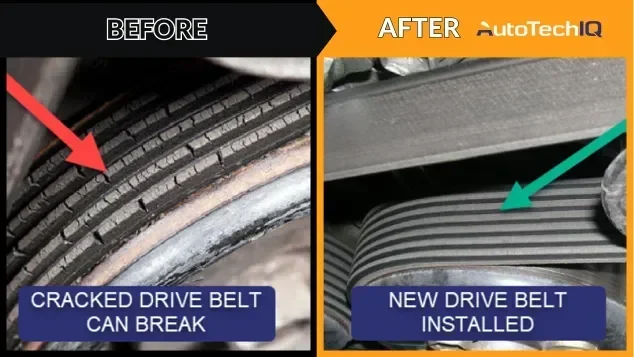
Pop the hood and take a look at the belt. If you see deep cracks, fraying edges, or glazing on the surface, it is time for a replacement. A belt in this condition can snap at any moment, leaving you stranded without AC or other essential accessories.
Warm Air From the Vents
If your AC blows warm air even after running for a while, a broken or slipping belt could be the culprit. The compressor needs the belt to spin and pressurize the refrigerant. No spinning means no cooling.
AC Belt Squeal That Won’t Go Away
Sometimes the squeal persists even after you turn off the AC. This often points to a misaligned pulley or a tensioner that is no longer doing its job. A belt tensioner replacement might be needed alongside the belt itself.
Complete Belt Failure
If the belt snaps entirely, you will notice a sudden loss of power steering (in most vehicles), a dead alternator warning light, and no AC at all. This is the most obvious sign, but it is also the most damaging scenario because the broken belt can cause further engine damage if pieces get lodged in other components.
How Much Does AC Compressor Belt Replacement Cost?
The AC compressor belt replacement cost varies based on several factors. Let us break down the numbers so you know what to expect.
Average Cost Breakdown
Here is a general idea of what you will pay:
- Parts Only: $30 to $150 for the belt itself. Serpentine belts cost more than V-belts, and premium brands carry a higher price tag.
- Labor Costs: $70 to $250 depending on your location, the mechanic’s hourly rate, and the complexity of the job.
- Total Average: Most people pay between $100 and $400 for a complete replacement.
Factors That Influence the Final Price
Several things can push your AC compressor belt replacement cost higher or lower:
- Vehicle Make and Model: Luxury and performance vehicles often require specialized belts and more labor time. A simple compact car will cost less to service than a large SUV or European import.
- Belt Type: A serpentine belt replacement generally costs more than a single V-belt because of the routing complexity and part price.
- Additional Repairs: If the tensioner is worn or a pulley is misaligned, you will need to replace those parts too. This adds to the overall bill.
- Location: Labor rates vary by region. A mechanic in a big city will charge more than one in a rural area.
- DIY vs. Professional: Doing it yourself eliminates labor costs entirely, but it requires the right tools and knowledge.
Cost Comparison: DIY vs. Professional
Let us look at a side-by-side comparison to help you decide:
- DIY Replacement: Parts cost only ($30-$150). You save on labor but need basic tools like a socket set, serpentine belt tool, and a torque wrench. The job typically takes 1-2 hours for someone with experience.
- Professional Replacement: Parts plus labor ($100-$400 total). You get a warranty on the work and peace of mind that the job is done correctly. Most shops complete the job in under 2 hours.
If you are handy and have a clean workspace, DIY can save you a significant amount. However, if the belt routing is complex on your vehicle, paying for professional help is often worth it.
Step-by-Step: What Happens During the Replacement Process
Understanding the replacement process helps you know what to expect when you take your car in for service. Here is a step-by-step look at how a mechanic handles an AC compressor belt replacement.
Step 1: Inspection and Diagnosis
The mechanic starts by visually inspecting the belt and all related components. They check for cracks, glazing, tension issues, and pulley alignment. This step confirms that the belt is indeed the problem and not something else, like a failing AC compressor clutch.
Step 2: Relieving Belt Tension
Next, the mechanic releases the tension on the old belt. On most vehicles, this involves rotating a tensioner pulley with a socket or a dedicated belt tool. The old belt is then carefully removed from all the pulleys.
Step 3: Inspecting Other Components
With the old belt off, the mechanic takes the opportunity to inspect the tensioner, idler pulleys, and the AC compressor pulley itself. Worn components get flagged for replacement to prevent future problems.
Step 4: Installing the New Belt
The new belt is routed around all the pulleys according to the vehicle-specific routing diagram. The mechanic then tightens the tensioner to apply proper pressure on the belt. A quick spin check ensures the belt sits correctly on all pulleys.
Step 5: Testing the System
Finally, the engine is started, and the AC is turned on. The mechanic listens for unusual noises, checks belt tension, and verifies that the compressor engages properly. Everything should run smoothly and quietly.
The entire process typically takes between 1 and 2 hours at a shop. If you are doing it yourself, give yourself extra time, especially if it is your first time working with a serpentine belt.
Can You Drive With a Broken AC Compressor Belt?
The short answer is yes, in most cases. If your vehicle uses a serpentine belt and it breaks, you will lose power steering and the alternator will stop charging the battery. That means you cannot drive far or safely without those systems working.
If your vehicle has a separate AC compressor belt (a V-belt), you can still drive the car without AC. The engine will run normally. However, driving with a damaged or worn belt is risky because it can snap at any time and potentially cause damage to other engine components.
Here are a few things to keep in mind if you find yourself in this situation:
- Do not ignore it: A worn belt is a ticking time bomb. Replacing it early keeps you safe and saves money.
- Check your owner’s manual: It will tell you whether your vehicle uses a single serpentine belt or separate belts for accessories.
- Plan your trip: If you must drive a short distance with a broken belt, do so cautiously and get the replacement done as soon as possible.
Ignoring a failing belt will almost certainly lead to a breakdown. The AC compressor belt replacement cost is small compared to the cost of towing, engine damage, or being stranded on the side of the road.
How to Save Money on AC Compressor Belt Replacement
Nobody wants to overspend on car repairs. Here are some practical tips to keep your AC compressor belt replacement cost as low as possible without sacrificing quality.
Buy the Belt Yourself
Many auto parts stores sell replacement belts at competitive prices. If your mechanic charges a markup on parts, buying the belt yourself and bringing it to the shop can save you $10 to $30. Just make sure you get the right part number for your vehicle.
Get Multiple Quotes
Labor rates differ from shop to shop. Calling two or three local mechanics for a quote can reveal significant price differences. Independent shops often charge less than dealerships, but both can do quality work.
Bundle with Other Services
If your belt is worn, there is a good chance other rubber components like hoses or gaskets are also aging. Having a mechanic inspect the full AC system maintenance routine while the belt is off can save you money in the long run. Catching small problems early prevents expensive repairs down the road.
Consider the Timing
Replacing the belt before it fully breaks is always cheaper. A broken belt can damage the tensioner, crack pulleys, or even harm the compressor itself. Those secondary repairs can easily add $500 or more to your bill.
Check for Recalls or Service Campaigns
Some vehicle manufacturers issue recalls or extended warranty coverage for certain components. It is worth checking if your vehicle qualifies for free or discounted service. This can eliminate the AC compressor belt replacement cost entirely in some cases.
Common Mistakes People Make With AC Compressor Belts
Avoiding these common errors can help you stay ahead of expensive repairs and keep your AC system running smoothly.
Ignoring the Squeal
Many people hear a squeal and simply turn off the AC. They think the problem goes away, but it does not. The belt is still slipping and deteriorating. Addressing the noise early is the cheapest fix you will ever make.
Using the Wrong Belt
Not all belts are interchangeable. Using a belt that is the wrong length or profile will cause it to slip, wear prematurely, or fail completely. Always match the replacement belt to your vehicle’s specifications.
Skipping the Tensioner
A worn tensioner causes even a new belt to fail prematurely. If your mechanic replaces the belt but does not inspect or replace the tensioner, you will be back in the shop soon. Always ask about the tensioner during any belt replacement.
Delaying the Repair
Some car owners put off the repair because the AC still works a little bit. But a compromised belt will only get worse. What starts as a $150 fix can turn into a $1,000+ compressor replacement if the belt snaps and damages the compressor internals.
How Often Should You Replace Your AC Compressor Belt?
Most AC compressor belts last between 40,000 and 70,000 miles, depending on driving conditions and the quality of the belt. Extreme heat, frequent short trips, and exposure to oil or coolant can shorten that lifespan significantly.
Here is a simple maintenance schedule to follow:
- Every 10,000 miles: Visually inspect the belt for cracks, glazing, or fraying during routine oil changes.
- Every 30,000 miles: Have a mechanic check the belt tension and pulley alignment.
- Every 40,000 to 70,000 miles: Consider a proactive belt replacement if you drive in harsh conditions or have not replaced it recently.
Staying on top of AC system maintenance is one of the easiest ways to avoid unexpected breakdowns and keep your AC compressor belt replacement cost within a reasonable range.
When to Call a Professional vs. DIY
Knowing when to handle the job yourself and when to call in the experts depends on your comfort level, tools, and the complexity of the job.
You Should DIY If:
- You have basic mechanical skills and the right tools.
- Your vehicle has a simple belt routing setup.
- You have access to a repair manual or reliable online guide for your specific model.
- You are replacing a simple V-belt (not a serpentine belt).
You Should Call a Professional If:
- The belt routing is complex and hard to follow.
- Multiple accessories are affected and the diagnosis is unclear.
- You do not have the proper tools, such as a serpentine belt tensioner tool.
- You want a warranty on the work and parts.
For most people, the AC compressor belt replacement cost for professional service is reasonable, especially when you factor in the convenience and guarantee of quality work. But if you enjoy working on your car and have the right setup, DIY is a great way to save money.
The Bottom Line on AC Compressor Belt Replacement Cost
The AC compressor belt replacement cost is one of the more affordable repairs you can do on your vehicle. Most people pay between $100 and $400, and the job is straightforward for a trained mechanic. The real question is not whether you can afford the repair, but whether you can afford to delay it.
A worn or broken belt will not fix itself. It will only get worse, and the damage it causes can quickly escalate into a much more expensive problem. Whether you choose to tackle the job yourself or visit a trusted mechanic, the most important step is taking action as soon as you notice the warning signs.
Regular inspections, proactive replacements, and staying on top of your vehicle’s maintenance schedule are the best ways to keep your AC system running smoothly all year round. A small investment today can save you from a big headache tomorrow.
And remember, if you are also curious about broader home power solutions, check out our guide on how much a home generator costs for a complete picture of backup power options for your property.
Frequently Asked Questions
What is the average AC compressor belt replacement cost?
The average cost ranges from $100 to $400, which includes both parts and labor. The exact price depends on your vehicle type, the belt model, and your local labor rates. Getting a quote from a trusted mechanic is always the best first step.
Can I drive my car with a broken AC compressor belt?
Yes, in most cases you can still drive, but you will lose air conditioning and possibly power steering if your vehicle uses a serpentine belt. It is not recommended to drive long distances with a broken belt because it can cause further engine damage.
How long does an AC compressor belt replacement take?
A professional mechanic usually completes the job in 1 to 2 hours. DIY replacements may take a bit longer, especially if you are not familiar with the belt routing on your specific vehicle model.
How often should I replace my AC compressor belt?
Most belts last between 40,000 and 70,000 miles. Regular inspections every 10,000 miles help you catch wear early. Driving in extreme heat or harsh conditions may require more frequent replacements.
Is it cheaper to replace the belt myself or hire a mechanic?
DIY replacement saves you the labor cost, which is typically $70 to $250. However, you need the right tools and some mechanical experience. Hiring a professional ensures the job is done correctly and often comes with a warranty on the work.
What happens if I ignore a worn AC compressor belt?
Ignoring a worn belt can lead to a complete belt failure, which may damage the tensioner, pulleys, or even the AC compressor itself. Those secondary repairs can cost several hundred dollars more than a simple belt replacement.
=== CONCLUSION ===
The AC compressor belt replacement cost is a manageable expense that keeps your vehicle’s air conditioning system running reliably. With average costs between $100 and $400, this is one of the more budget-friendly repairs you can tackle. Whether you choose to handle it yourself or visit a professional, the key is to act quickly when you notice warning signs like squealing noises, visible cracks, or warm air from the vents.
Staying proactive with your AC system maintenance not only saves money but also prevents the cascading damage that a neglected belt can cause. Keep an eye on your belt’s condition, stick to a regular inspection schedule, and never hesitate to ask your mechanic questions about the work being done.
For those interested in broader vehicle and home power solutions, you might also find our article on how much a whole house generator costs helpful for understanding full-home backup power options.