How to Build a Cobblestone Generator with Easy Steps
Discover how to build a cobblestone generator in Minecraft with our simple, step-by-step instructions. This guide covers everything from basic designs to advanced tips for maximizing your infinite cobblestone supply. Whether you are a beginner or a seasoned player, you will find practical advice to level up your Minecraft survival game.
Have you ever wanted a never-ending supply of cobblestone in Minecraft? Building a cobblestone generator is one of the best things you can do for your survival world. It gives you infinite stone to craft tools, build structures, and expand your base without ever running out. In this guide, we will walk you through every single step. You will learn how to build a cobblestone generator from scratch, using simple materials and easy-to-follow instructions. Whether you are new to Minecraft or a veteran player, this guide has something for you. Let us get started!
A Minecraft cobblestone generator works by mixing water and lava to create cobblestone blocks. This simple mechanic has been a staple of Minecraft survival since the very first days of the game. Many players overlook the power of a stone generator, but it can completely change how you play. Instead of spending hours mining stone, you can let your generator do the work for you. The best part is that building one takes only a few minutes and very few resources. By the end of this article, you will know exactly how to set up your own infinite stone farm. You will also learn pro tips to make your generator more efficient and safer to use.
Key Takeaways
- Easy Setup: Building a cobblestone generator requires only a few basic materials like water, lava, and cobblestone.
- Infinite Supply: A properly built generator gives you unlimited cobblestone for all your Minecraft projects.
- Multiple Designs: You can choose from simple manual designs or more advanced AFK-friendly layouts.
- Safe and Efficient: Learn how to build your generator safely without wasting resources or risking your character.
- Boosts Survival Gameplay: Having a steady cobblestone source makes building bases, tools, and farms much easier.
- Beginner-Friendly: No advanced redstone or technical skills are needed to get started.
📑 Table of Contents
- What Is a Cobblestone Generator and Why Do You Need One?
- Materials You Need to Build a Cobblestone Generator
- Step-by-Step Guide: How to Build a Cobblestone Generator
- Different Cobblestone Generator Designs
- Tips for Building an Efficient Cobblestone Generator
- Advanced Cobblestone Generator Ideas
- Benefits of Having a Cobblestone Generator
- Conclusion
What Is a Cobblestone Generator and Why Do You Need One?
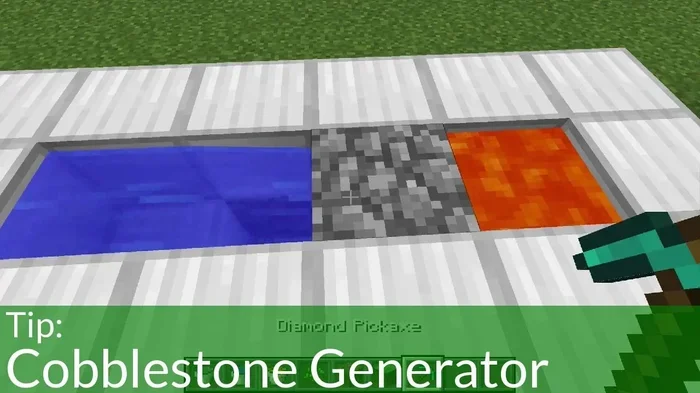
A cobblestone generator is a simple Minecraft structure that uses water and lava to produce cobblestone blocks endlessly. When water touches flowing lava, the lava turns into cobblestone. You can then break the cobblestone and collect it. This process repeats forever, giving you a constant supply of one of Minecraft’s most important building materials.
Why Is Cobblestone So Important in Minecraft?
Cobblestone is the backbone of Minecraft survival. You need it to craft furnaces, tools, weapons, and building blocks. Without a steady supply, early-game survival can feel slow and frustrating. A Minecraft cobblestone generator solves this problem completely. Here are some reasons why every player should build one:
- Infinite Supply: You never run out of cobblestone, no matter how much you use.
- Easy to Build: You only need a bucket of water, a bucket of lava, and a flat surface.
- No Special Tools Required: You can build your first generator within the first few minutes of a new world.
- Versatile Use: Cobblestone can be turned into stone, which looks cleaner and works for many building projects.
- Fuel for Furnaces: Smelt cobblestone into stone or even bricks for advanced crafting recipes.
How Does a Cobblestone Generator Work?
The science behind a stone generator is simple. Lava flows out from a source block and meets water. When the two meet, the lava block turns into a cobblestone block. You break the cobblestone, and more lava flows out to create another block. This cycle continues as long as you keep feeding it lava and water. The key is to position the water and lava correctly so they meet at the right spot. Most designs use a gap of one or two blocks between the water and lava source. This gap is where the cobblestone forms and where you mine it.
Materials You Need to Build a Cobblestone Generator
Before you start building, gather these basic materials. You do not need anything fancy or rare. A cobblestone generator design is meant to be simple and accessible for all players.
Essential Materials List
- Two Buckets: One for water and one for lava. You can craft buckets using three iron ingots each.
- Lava Source: Find lava in caves, ravines, or by using a lava bucket from a crafting table.
- Water Source: Look for water in rivers, oceans, or lakes. You can also create a water source block.
- Building Blocks: Use dirt, cobblestone, or any solid block to shape your generator. Dirt works great because you can break and replace it easily.
- A Pickaxe: You need a stone pickaxe or better to mine cobblestone efficiently.
- Optional: Signs or Glass: These can help contain water and lava in more advanced designs.
Where to Find Lava and Water
Finding lava is usually easy. Look for lava pools in caves or dig down to around Y-level 10 to 16. Lava also appears in some surface structures like villages and nether fortresses. Water is even easier to find. Rivers, oceans, and even rainwater collect in pools you can use. Simply hold a bucket underwater to collect a water source block. Once you have both, you are ready to build.
Step-by-Step Guide: How to Build a Cobblestone Generator
Now for the fun part! Here is a simple, foolproof method to build your first cobblestone generator. Follow each step carefully, and you will have a working generator in no time.
Step 1: Choose a Flat Surface
Find a flat area of ground where you want to build your generator. A clean, flat surface makes the build much easier. You can clear a small patch of grass or dirt if needed. Make sure the area is at least five blocks wide and five blocks long. This gives you enough room to work comfortably. Many players like to build their generator near their base for easy access. Having it close means you do not have to walk far every time you need more cobblestone.
Step 2: Dig a Trench or Pool
Dig a small trench or pool in the ground. The most common design uses a two-block-wide channel. Make the channel about three to four blocks long. This is where the water and lava will meet. Some players prefer a square pit design instead of a channel. Both work well, but the channel style is easier for beginners. The depth of the trench should be about two blocks deep. This gives enough space for the water and lava to flow without spilling out.
Step 3: Place the Water Source
Stand at one end of the trench. Place your water bucket on the ground at the far end of the channel. The water should flow toward the center of the trench. Water flows up to four blocks horizontally from a source block. Make sure the water reaches the middle of your channel. If it does not reach far enough, move the water source one block closer to the center. You will know the water is positioned correctly when it flows smoothly across the trench.
Step 4: Place the Lava Source
Now place your lava bucket on the ground at the opposite end of the trench from the water. The lava should flow toward the center, meeting the water. When lava and water meet, you will see cobblestone forming instantly. This is the magic moment! The cobblestone will appear in the gap between the water and lava streams. Be careful not to stand too close when you place the lava, as it can damage your character.
Step 5: Mine the Cobblestone
Once the cobblestone starts forming, take your pickaxe and mine it. Break the cobblestone block that appeared where the water and lava meet. As you break it, new cobblestone will form right away. Keep mining and collecting the cobblestone into your inventory. You can use a hopper and chest system later to automate collection, but for now, manual mining works perfectly. This manual method is the simplest and most reliable way to start your infinite cobblestone supply.
Step 6: Expand and Improve Your Generator
Once you have the basic design working, you can improve it. Add more water and lava sources to increase the output. You can also build walls around the generator to prevent cobblestone from falling into unwanted areas. Some players like to add a roof to their generator to keep mobs from spawning inside. The possibilities are endless. Experiment with different layouts to find what works best for your playstyle.
Different Cobblestone Generator Designs
Not all generators are the same. There are several popular cobblestone generator designs you can try. Each design has its own benefits and drawbacks. Let us look at the most common ones.
Basic Manual Generator
This is the simplest design we covered in the steps above. It requires no redstone or complex mechanics. You place water and lava, mine the cobblestone by hand, and repeat. This design is perfect for beginners who are just learning how to build a cobblestone generator. It is also the most reliable, with very little chance of breaking or malfunctioning. The only downside is that you have to mine the cobblestone yourself, which can be slow if you need large amounts.
Automatic Cobblestone Generator
An automatic design uses pistons, redstone, and hoppers to mine and collect cobblestone for you. These generators are more complex to build but save a lot of time. You can set up an AFK cobblestone farm where the generator does all the work while you are away. When you return, you have a chest full of cobblestone ready to use. Automatic generators are great for players who want to focus on other tasks while still getting a steady supply of stone.
Double-Size Generator
A double-size generator uses two parallel channels of water and lava. This doubles your cobblestone output without requiring much extra space or materials. It is a great middle ground between the basic manual design and a fully automatic system. Many experienced players prefer this design for its balance of simplicity and efficiency. You can build one in under ten minutes once you have the materials ready.
Comparison of Generator Designs
| Design Type | Difficulty | Output Speed | Automation Level | Best For |
|---|---|---|---|---|
| Basic Manual | Easy | Slow | None | Beginners, Quick builds |
| Automatic | Medium | Fast | High | AFK farming, Large projects |
| Double-Size | Easy-Medium | Medium | Low | Balanced supply and effort |
Tips for Building an Efficient Cobblestone Generator
Building the generator is only half the battle. Making it efficient and safe is just as important. Here are some expert tips to help you get the most out of your Minecraft cobblestone generator.
Use Dirt for Easy Cleanup
When building your generator, use dirt blocks for the walls and floor. Dirt is easy to break and replace. If you make a mistake, you can simply break the dirt and rebuild without wasting valuable resources. Once your generator is working perfectly, you can replace the dirt with more permanent blocks like cobblestone or stone.
Keep Your Generator Safe from Mobs
Mobs can interfere with your generator and even destroy it. Spiders can climb walls and mess up your water flow. Zombies and skeletons can knock blocks around. To prevent this, build a roof over your generator or place torches nearby to keep mobs from spawning. A simple glass cover also works well and lets you see the cobblestone forming.
Use Signs to Contain Water
Water can sometimes flow farther than you want it to. Placing signs in the water stops it from spreading too far. This gives you more control over where the water flows and where the cobblestone forms. Signs are a cheap and effective way to fine-tune your cobblestone generator design. You can find signs by crafting them with six planks and one stick.
Smelt Cobblestone into Stone for Better Building
Raw cobblestone looks rough and ugly. If you are building a base or a structure, consider smelting your cobblestone into smooth stone. Place cobblestone in a furnace and use any fuel source to smelt it. The result is clean, smooth stone blocks that look much better for building. You can even smelt stone further into smooth stone bricks for a polished look. This small extra step makes a huge difference in the appearance of your builds.
Common Mistakes to Avoid
Even experienced players make mistakes when building generators. Here are some common errors to watch out for:
- Placing water and lava too close together: This can cause the lava to turn into stone instead of cobblestone. Keep a small gap between the two.
- Using flowing lava instead of source lava: Only source lava blocks create cobblestone. Flowing lava does not work the same way.
- Mining too close to the lava: Standing in lava damages your character. Always mine from a safe distance.
- Forgetting to collect the cobblestone: If you do not mine the cobblestone quickly, it can turn back into lava or disappear.
- Building on a slope: Generators work best on flat surfaces. Slopes cause water and lava to flow unevenly.
Advanced Cobblestone Generator Ideas
Once you have mastered the basic design, you can explore more advanced options. These ideas take your Minecraft stone generator to the next level.
Add a Hopper Collection System
Place hoppers beneath the cobblestone spawning area and connect them to a chest. This automatically collects your cobblestone as it forms. You do not even need to mine it yourself. Hoppers are crafted using five iron ingots and a chest. This small addition saves a ton of time, especially if you need large quantities of stone.
Build an AFK Cobblestone Farm
An AFK farm lets you collect cobblestone while you are away from the game. You set up the generator, position your character nearby, and let it run. When you come back, you have hundreds or even thousands of cobblestone blocks waiting for you. This is perfect for large building projects or when you need a lot of stone for smelting. Some advanced designs use piston push mechanics to automatically break the cobblestone and push it into a collection system.
Combine with a Stonecutter for Maximum Efficiency
The stonecutter is a Minecraft block that turns cobblestone into stone slabs, stairs, and bricks using less material than a crafting table. By combining your generator with a stonecutter, you get more building blocks from the same amount of cobblestone. This is a great way to maximize your resources and build more with less effort.
Benefits of Having a Cobblestone Generator
A cobblestone generator offers many benefits that improve your Minecraft experience. Here is why you should build one as soon as possible:
- Saves Time: You do not need to spend hours mining stone underground.
- Saves Energy: Mining cobblestone manually can be exhausting. A generator does the work for you.
- Always Available: Your generator works day and night, rain or shine, in any biome.
- Supports Large Builds: Need thousands of blocks for a castle or a farm? Your generator has you covered.
- Boosts Survival Progress: With unlimited stone, you can craft more tools, build better shelters, and advance faster in the game.
Conclusion
Building a cobblestone generator is one of the smartest things you can do in Minecraft. It gives you an infinite supply of one of the game’s most essential resources. With just a few buckets of water and lava, you can create a machine that works forever. This guide has shown you how to build a cobblestone generator step by step, from the basic design to advanced automatic systems. You now know the materials needed, the different designs available, and the tips to make your generator more efficient. The best part is that anyone can build one, regardless of skill level. So grab your buckets, find some lava and water, and start building today. Your future self will thank you when you have unlimited stone for every project that comes your way. Happy mining!
Frequently Asked Questions
What is the easiest way to build a cobblestone generator?
The easiest way is the basic manual design using a simple trench with water on one side and lava on the other. You just place the water and lava, then mine the cobblestone that forms in the middle. No redstone or special materials are needed. This method works perfectly for beginners and takes only a few minutes to set up.
Can I automate my cobblestone generator in Minecraft?
Yes, you can automate your generator using pistons, redstone, and hoppers. An automatic design breaks the cobblestone for you and pushes it into a chest. Some players even build AFK cobblestone farms where the generator runs while you are away. These advanced designs take a bit more effort to build but save a lot of time in the long run.
Do I need iron for a cobblestone generator?
You need iron to craft at least two buckets, which are essential for carrying water and lava. Each bucket requires three iron ingots, so you need six iron ingots total. If you do not have enough iron yet, you can use a single bucket and refill it from a nearby water source or lava pool.
Why is my cobblestone generator not working?
The most common reason is that the water and lava are not positioned correctly. Make sure you are using source blocks, not flowing lava. Also check that there is a small gap between the water and lava where the cobblestone can form. Ensure the surface is flat and that the water and lava are flowing toward each other properly.
Can cobblestone generators be used in the Nether or the End?
No, water does not place in the Nether or the End, so traditional generators do not work there. Lava still exists in these dimensions, but without water, you cannot create cobblestone. Stick to building your generator in the Overworld where both water and lava are available.
How much cobblestone can a generator produce in one hour?
A basic manual generator can produce several stacks of cobblestone per hour, depending on how fast you mine. An automatic generator with hoppers and pistons can produce even more, especially if you leave it running while AFK. The exact amount depends on your design, but a well-built generator will easily give you more cobblestone than you will ever need.
=== META TITLE ===
How to Build a Cobblestone Generator | Easy Steps
=== URL SLUG ===
how-to-build-a-cobblestone-generator
=== SEO TITLE ===
How to Build a Cobblestone Generator with Easy Steps