How Far Should Your Generator Be From Your Own House
Placing your generator too close to your house creates serious safety risks, including carbon monoxide poisoning, fire hazards, and property damage. The general rule is to keep your generator at least 20 feet away from your home, with the exhaust pointing away from windows and doors. Understanding the right generator distance from house ensures your family stays safe while keeping your power running during outages.
Power outages are more common than most people think. Storms, grid failures, and even simple equipment malfunctions can leave your home dark for hours or days. That is where a generator comes in handy. But owning a generator brings a big responsibility: making sure it is placed safely.
One of the most important questions every homeowner asks is, “how far should generator be from house.” The answer is not just about convenience. It is about life and death. Carbon monoxide, fire risks, and electrical hazards all depend on where you put your generator. This guide walks you through everything you need to know about generator placement to keep your family and property safe.
Whether you own a portable generator or a standby unit, the rules for safe distance apply. Let us break them down so you can make confident, informed decisions.
Key Takeaways
- Minimum 20 feet: Always place your generator at least 20 feet from your house to reduce carbon monoxide exposure.
- Exhaust direction matters: Point the exhaust away from windows, doors, and air vents to prevent fumes from entering your home.
- Check local codes: Building codes and HOA rules may dictate specific generator placement requirements in your area.
- Weather protection: Use a generator enclosure or canopy to shield your unit from rain and snow without blocking ventilation.
- Never run a generator indoors: Even in a garage or basement, generator exhaust can build up to lethal levels quickly.
- Noise considerations: Placing your generator too close can violate noise ordinances and disturb neighbors.
- Professional installation helps: A licensed electrician can ensure proper wiring, transfer switch setup, and safe placement.
📑 Table of Contents
- Why Generator Placement Matters So Much
- Recommended Distance: The General Rule
- Factors That Affect How Far Your Generator Should Be
- How to Set Up Your Generator Safely
- Common Mistakes People Make with Generator Placement
- Local Codes and Permits You Need to Know
- Expert Tips for Optimizing Generator Placement
- Conclusion
Why Generator Placement Matters So Much
You might wonder why the distance between your generator and your home even matters. The truth is, a generator produces several dangerous byproducts. Carbon monoxide is the biggest one. This invisible, odorless gas can kill a person in minutes. Even a small amount leaking into your home through windows or vents can cause serious illness or death.
Beyond carbon monoxide, generators pose fire risks. Fuel spills, hot exhaust pipes, and electrical overloads can all lead to fires. Placing your unit too close to your house increases the chance that flames or heat damage your siding, windows, or roof.
Then there is the noise factor. Generators can be loud. Placing one too close to your property line or your neighbor’s home can create complaints and even legal issues. Generator distance from house is not just a safety issue. It is also a community consideration.
The Hidden Dangers of Poor Placement
Many people underestimate how quickly carbon monoxide can accumulate. Even if you think the wind is blowing the fumes away, conditions change. Wind direction shifts, and exhaust can easily drift back toward your home. The Consumer Product Safety Commission reports hundreds of deaths each year from carbon monoxide poisoning related to generators. Most of these incidents happen because the generator was placed too close to the house.
Another hidden danger is electrical backfeed. If your generator is not connected properly, electricity can flow backward into your home’s wiring and even into the power grid. This can electrocute utility workers repairing power lines. Proper generator placement includes safe electrical setup, not just physical distance.
Recommended Distance: The General Rule
The most widely accepted guideline is simple: keep your generator at least 20 feet away from your house. This is the minimum distance recommended by most manufacturers and safety organizations. The 20-foot rule gives enough space for exhaust fumes to dissipate before they reach any windows, doors, or air intakes.
But 20 feet is just the starting point. Several factors can change how far you really need to place your generator. Let us look at those now.
Manufacturer Guidelines vs. Safety Standards
Every generator comes with a user manual. That manual includes specific placement instructions. Always read and follow these guidelines first. Some manufacturers recommend distances greater than 20 feet for certain models, especially larger standby generators that produce more exhaust.
At the same time, local safety codes and fire departments may have their own requirements. These can sometimes exceed manufacturer recommendations. The best approach is to follow whichever rule is stricter. If your manual says 15 feet but your local code says 25 feet, go with 25 feet.
What 20 Feet Actually Looks Like
Twenty feet is about the length of two cars parked end to end. It is roughly six to seven meters. To visualize it, stand at the corner of your house and walk out your driveway. Most driveways are at least 20 feet long. That gives you a good sense of the distance you need.
Use a tape measure or a phone app to measure the actual distance from your house to where you plan to place the generator. Do not estimate. Guessing the distance can put your family at risk. Generator distance from house should always be measured, not guessed.
Factors That Affect How Far Your Generator Should Be
The 20-foot rule is a baseline. But real-world placement depends on several variables. Every property is different, and several factors can change your ideal placement distance.
Wind Direction and Patterns
Wind plays a huge role in how exhaust fumes behave. If your area tends to get strong breezes from a certain direction, you need to account for that. Place your generator so that the exhaust points away from your home and away from windows and vents in your neighbor’s homes too.
In some cases, you may need to place the generator farther than 20 feet if your property is small or surrounded by other houses. The goal is to ensure fumes never drift toward any occupied building.
Type of Generator You Own
Not all generators are the same. A small portable generator produces less exhaust than a large standby unit. Here is a quick comparison:
- Portable generators: These are smaller and typically need at least 15 to 20 feet of distance. They are often used for temporary power during outages or camping trips.
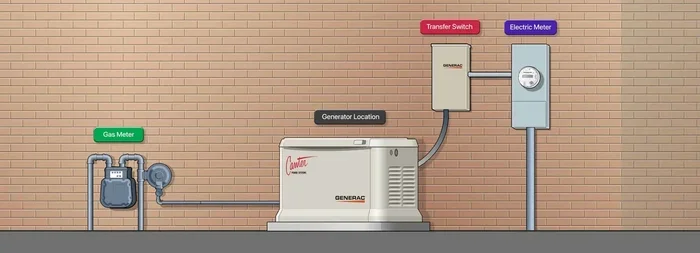
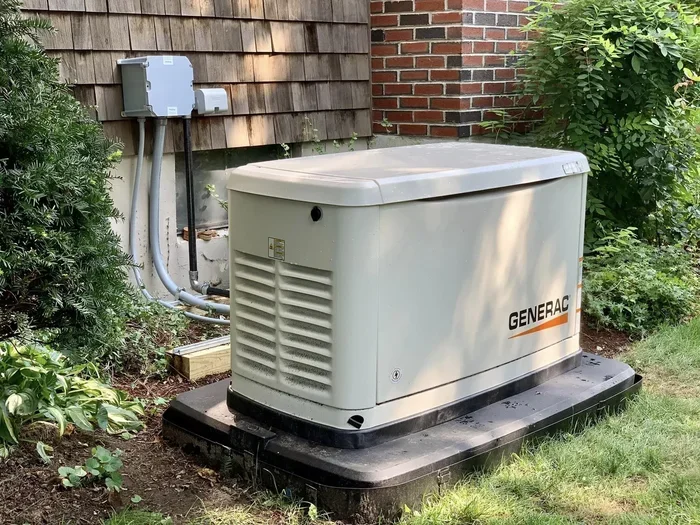
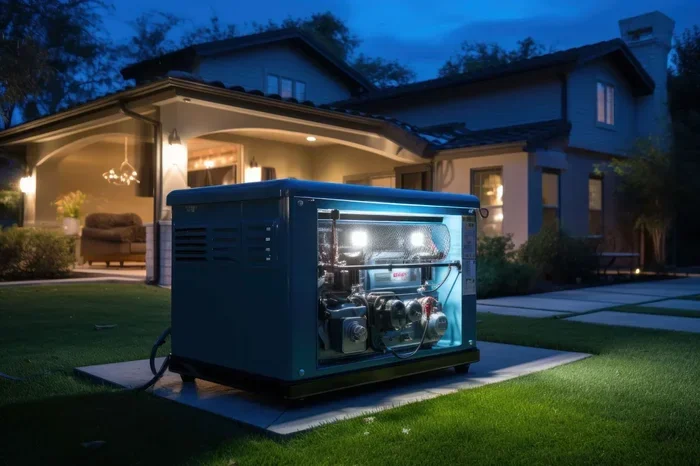
- Standby generators: These are larger, permanently installed units that can produce significant exhaust. They usually require at least 20 feet, sometimes more, depending on the model and local codes.
- Inverter generators: These are quieter and produce cleaner exhaust. They still need at least 15 to 20 feet of distance for safety.
The type of generator you own directly affects your generator placement strategy. Always check your specific model’s manual for exact distance requirements.
Property Size and Layout
Large properties give you more flexibility. You can place the generator far from the house and still run an extension cord or hardwire it through a transfer switch. Small properties are trickier. You may need to get creative with generator enclosure setups or explore underground electrical connections.
Think about your property layout before you buy a generator. If your house is close to the property line, you might not have room for a 20-foot gap on all sides. In that case, consider a standby generator with a proper enclosure that meets safety clearance requirements.
Weather Conditions
Rain and snow are real concerns for generators. Water can damage the unit and create electrical hazards. However, you cannot just put the generator under a closed porch or deck. That traps exhaust and creates a deadly carbon monoxide risk.
The solution is a generator canopy or open-sided enclosure. These protect the unit from weather while allowing proper airflow. Some homeowners install a generator pad with a small roof structure that keeps rain off without enclosing the unit. Just make sure any cover or enclosure is specifically designed for generator use.
How to Set Up Your Generator Safely
Distance is only one part of the equation. Proper setup matters just as much. Here is a step-by-step approach to setting up your generator safely and effectively.
Step 1: Choose the Right Location
Start by selecting a flat, dry surface. Generators should sit on level ground to operate properly. A generator pad made of concrete or composite material works great. Avoid placing the unit on grass or dirt, especially in wet conditions, because moisture can seep into the engine and electrical components.
Make sure the location is visible and accessible. You need to be able to refuel, maintain, and monitor the generator easily. Do not hide it behind bushes or under a deck where you cannot check on it.
Step 2: Position the Exhaust Away from Structures
This is critical. The exhaust pipe must point away from your house, your neighbor’s house, and any open windows or doors. Even at 20 feet, exhaust can enter a home if the wind blows it back toward the building.
A good rule of thumb is to point the exhaust toward the open side of your property. If your house faces north, point the exhaust south. This simple adjustment can make a big difference in keeping fumes away from your living space.
Step 3: Install a Transfer Switch
A transfer switch is a must-have for any permanent generator setup. It connects your generator directly to your home’s electrical panel without the need for extension cords. This is safer, more convenient, and more efficient.
Have a licensed electrician install the transfer switch. They will ensure the wiring is up to code and that the connection prevents backfeed into the grid. A proper electrical connection is one of the most important parts of generator safety.
Step 4: Keep Fuel Storage Safe
If you use a portable generator, you need to store fuel safely. Gasoline, propane, and diesel are all highly flammable. Store fuel containers in a well-ventilated area away from the generator and away from your house.
Never refuel a running generator. Let it cool down for at least 15 minutes before adding fuel. Spilled fuel on a hot engine can ignite instantly. This is one of the most common causes of generator-related fires.
Step 5: Test Your Setup
Before a storm or emergency, test your generator. Run it for at least 30 minutes and check for any issues. Listen for unusual sounds, smell for exhaust leaks, and make sure the unit is running smoothly. Testing also gives you a chance to confirm that the generator distance from house is working and that no fumes are entering your home.
Common Mistakes People Make with Generator Placement
Even well-meaning homeowners make mistakes when setting up their generators. Here are the most common ones to avoid.
Placing the Generator Too Close
This is the number one mistake. People put their generator right next to the garage or just a few feet from a window because it is convenient. Convenience should never override safety. The 20-foot rule exists for a reason. Carbon monoxide does not give you a warning smell. By the time you notice it, it may already be too late.
Running a Generator in the Garage
Never run a generator inside a garage, even with the door open. Many people think an open garage is safe. It is not. Carbon monoxide can build up quickly in an enclosed or semi-enclosed space. The garage door might not provide enough ventilation to keep your family safe.
Ignoring Local Building Codes
Every city and county has its own rules about generator placement. Some require permits. Some have specific distance requirements. Some restrict where generators can be placed based on noise or fire safety. Ignoring these codes can result in fines, forced removal of your generator, or even liability if an accident occurs.
Before you install your generator, check with your local building department. They can tell you exactly what rules apply in your area. This is one of the most overlooked steps in generator placement.
Using the Wrong Extension Cords
If you are using a portable generator, extension cords are often necessary. But using the wrong cord is dangerous. Too-thin cords can overheat and cause fires. cords that are too short tempt you to place the generator closer to the house than is safe.
Use heavy-duty, outdoor-rated extension cords that are long enough to bridge the distance between your generator and your home. Look for cords rated for the wattage of your generator. This keeps both your appliance and your family safe.
Local Codes and Permits You Need to Know
Generator placement is not just a safety issue. It is also a legal one. Local building codes, fire codes, and homeowner association rules all play a role in where and how you can install a generator.
Building Codes and Permits
Most jurisdictions require a permit for generator installation, especially for standby units. The permit process ensures that your setup meets safety standards. It also gives you protection if something goes wrong.
During the permit process, a building inspector may review your generator placement plan. They will check the distance from your house, the exhaust direction, the electrical setup, and the fuel storage arrangement. Passing this inspection gives you peace of mind that your setup is safe and legal.
HOA Rules and Neighborhood Guidelines
If you live in a planned community or a neighborhood with a homeowners association, there may be additional rules. Some HOAs restrict where generators can be placed. Others have noise limits that affect generator placement. Check with your HOA before you install anything.
Even if your HOA does not have specific generator rules, it is a good idea to be a good neighbor. Keep noise to a minimum, make sure your setup looks tidy, and avoid placing the generator where it is visible from the street if that is a concern in your neighborhood.
Noise Ordinances
Many cities have noise ordinances that limit how loud a generator can be and when it can be operated. These rules often apply to both portable and standby generators. Placing your generator too close to a property line can put you in violation of these ordinances.
If noise is a concern, consider investing in a generator with a quiet operation rating or adding a noise-reducing enclosure. These options help you stay compliant while keeping your family powered during outages.
Expert Tips for Optimizing Generator Placement
Getting the placement right is one thing. Optimizing it is another. Here are some expert tips that go beyond the basics.
Use a generator pad. A concrete or composite pad elevates the generator off the ground. This protects it from moisture, debris, and flooding. It also makes it easier to keep the area clean and accessible.
Consider a weatherproof enclosure. If you live in an area with harsh weather, a custom enclosure can protect your generator from rain, snow, and debris. Make sure the enclosure has proper ventilation so exhaust can escape safely.
Plan for future maintenance. When you choose a location, think about how easy it will be to service the generator. You need room to walk around it, access the fuel tank, and perform routine maintenance. Do not place it in a tight spot where you cannot work on it comfortably.
Install carbon monoxide detectors. Even with perfect placement, it is smart to have CO detectors in your home. These detectors give you an extra layer of protection in case something goes wrong with your generator setup.
Keep records of your setup. Take photos of your generator placement, save your permit documents, and note the manufacturer’s placement guidelines. This documentation can be helpful for insurance claims, home sales, or future maintenance.
Conclusion
Knowing how far should generator be from house is one of the most important things you can do as a generator owner. The 20-foot minimum distance is not a suggestion. It is a safety requirement that can save lives. Add in proper exhaust direction, safe electrical setup, and compliance with local codes, and you have a generator system that works reliably and safely.
Take the time to plan your generator placement before you need to use the unit. Do not wait for a storm or an outage to figure out where your generator should go. Set it up now, test it, and make sure everything is in order. Your family and your home deserve that level of preparation.
Generator safety is not complicated. It just requires attention to detail and a willingness to follow the rules. Keep the distance, keep the exhaust away from your home, and keep your family safe. A little planning goes a long way toward making sure your generator is a help and not a hazard.
Frequently Asked Questions
What is the minimum safe distance for a generator from a house?
The minimum safe distance is 20 feet from your house. This is the standard recommended by most manufacturers and safety organizations. At this distance, exhaust fumes have enough room to dissipate before reaching any windows, doors, or vents in your home.
Can I run a generator in my garage if the door is open?
No. Even with the garage door open, running a generator inside a garage is extremely dangerous. Carbon monoxide can build up quickly and enter your living space through shared walls or doorways. Always place your generator outside at a safe distance from your home.
Does wind direction affect generator placement?
Yes, wind direction is an important factor. You should place your generator so that the exhaust points away from your house and away from your neighbors’ homes. Wind can carry exhaust fumes back toward buildings even at a safe distance, so always consider the prevailing wind patterns in your area.
Do I need a permit to install a generator?
In most areas, yes. Standby generators typically require a building permit and may need to be inspected. Portable generators may not require a permit for temporary use, but permanent setups almost always do. Check with your local building department for specific requirements in your area.
How do I protect my generator from rain and snow?
Use a generator canopy or a weatherproof enclosure designed for generator use. Never place a generator under a closed structure like a deck or patio roof, as this traps exhaust and creates a carbon monoxide hazard. A generator pad with a simple open-sided cover works well for most setups.
What should I do if my generator is too loud for my neighborhood?
Consider moving the generator farther from your property line or investing in a quieter model. You can also add a noise-reducing enclosure or pad. Check your local noise ordinances to make sure your setup complies with the rules. Being a considerate neighbor goes a long way in avoiding complaints.