How to Drain Gas from Your Generator the Right Way
Draining gas from your generator is one of the most important maintenance tasks you can do. Whether you are storing your unit for the season or fixing a fuel problem, this guide shows you exactly how to do it safely. You will learn the tools you need, the steps to follow, and common mistakes to avoid. Drain gas from generator units the right way to keep your engine running strong for years to come.
There is nothing more frustrating than pulling your generator out for a camping trip or a power outage and finding that the fuel has gone bad. Old gasoline gunk up the carburetor, clog the fuel line, and leave you in the dark when you need power the most. Learning how to drain gas from generator units is a simple skill that saves you time, money, and a lot of headaches.
This guide walks you through every step of the process. You do not need to be a mechanic to do this. With the right tools and a little patience, you can drain the fuel tank, clean the system, and store your generator properly. Let us get into it.
Key Takeaways
- Always drain old gas before long-term storage: Stale fuel causes hard starting and engine damage.
- Use the right tools: A siphon pump, drain pan, and safety gear make the job easy and safe.
- Follow each step carefully: Skipping steps can lead to fuel leaks or engine problems.
- Dispose of old fuel properly: Never pour gasoline down drains or into the trash.
- Use fuel stabilizer for short-term storage: It extends the life of gasoline in your tank.
- Clean the fuel system after draining: This prevents buildup and keeps your generator running smoothly.
📑 Table of Contents
- Why Draining Gas from Your Generator Matters
- Tools and Supplies You Will Need
- Step-by-Step Guide to Drain Gas from Your Generator
- Common Mistakes People Make When Draining Gas
- How to Store Your Generator After Draining the Fuel
- When to Drain Gas vs. Use Fuel Stabilizer
- Expert Tips for Better Generator Fuel Maintenance
- Frequently Asked Questions
- Final Thoughts
Why Draining Gas from Your Generator Matters
Many people overlook fuel maintenance until something goes wrong. But the truth is, old gasoline causes more generator problems than almost anything else. Here is why draining fuel matters so much.
Gasoline Goes Bad Over Time
Gasoline starts to break down within 30 days of sitting in the tank. The volatile compounds evaporate, leaving behind a sticky residue. This residue can gum up your carburetor and block the fuel line. Ethanol-blended fuels are even worse because ethanol attracts moisture from the air.
When moisture builds up inside your fuel system, it leads to corrosion. Rust particles can clog the fuel filter and damage internal engine parts. Draining gas from generator units before storage is the single best way to prevent these problems.
It Protects Your Engine Long-Term
Think of your generator like a car. You would not leave a car sitting for months with old gas in the tank. The same logic applies here. Clean fuel systems last longer. They start more reliably and run more efficiently.
Regular fuel maintenance also saves you from costly repairs. A new carburetor can cost anywhere from $50 to $150 or more. Draining the fuel takes about 15 minutes and costs you nothing but a little effort.
Tools and Supplies You Will Need
Before you start, gather everything you need. Having the right tools on hand makes the whole process faster and safer. Here is what you will need.
- Siphon pump or fuel extractor: This is the easiest way to remove gas from the tank. You can find hand-operated or battery-powered versions at any hardware store.
- Fuel-safe container: Use a container rated for gasoline storage. Never use a container that held other chemicals.
- Drain pan: Place this under the generator to catch any drips or spills.
- Wrench set: You may need to disconnect fuel lines or remove the fuel filter.
- Clean rags or shop towels: These help with spills and wiping down surfaces.
- Safety glasses and gloves: Protect your eyes and skin from fuel exposure.
- Fuel line disconnect tool: Makes separating fuel lines much easier without damaging them.
- New fuel filter: It is a good idea to replace the filter when draining old fuel.
- Fuel stabilizer: If you plan to store fuel for a short time, stabilizer extends its shelf life.
Having all of these items ready before you start will keep you from scrambling mid-process. Set up your workspace in a well-ventilated area away from any open flames or sparks.
Step-by-Step Guide to Drain Gas from Your Generator
Now let us get into the actual process. Follow these steps in order for a safe and complete fuel drain.
Step 1: Turn Off the Generator and Let It Cool
Never work on a hot generator. Turn the engine off and wait at least 15 to 20 minutes for it to cool down. Hot engines can burn you, and fuel vapors can ignite near hot surfaces.
Also, make sure the generator is on a level surface. This prevents fuel from spilling and ensures a complete drain. If your generator has a fuel shutoff valve, turn it off before you begin working on the fuel system.
Step 2: Remove the Gas Cap
Take off the gas cap to allow air into the tank. This makes it much easier to siphon fuel out. Without air entering the tank, the siphon will struggle to draw fuel properly.
Set the gas cap somewhere clean where it will not get lost or dirty. Some generators have a threaded cap that seals tightly, so make sure you do not strip it when removing it.
Step 3: Position Your Drain Pan and Fuel Container
Place the drain pan directly under the fuel tank or under the area where fuel will exit. Set your fuel-safe container nearby to catch the drained gasoline.
If your generator has a fuel drain plug at the bottom of the tank, position the pan right beneath it. If not, you will be siphoning fuel out through the filler neck, so place the container at that level.
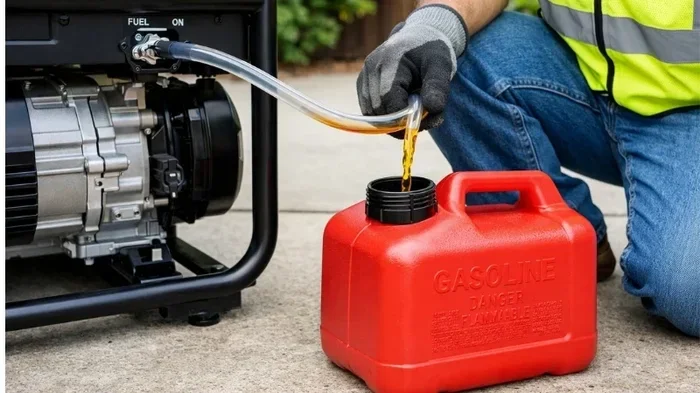
Step 4: Use the Siphon Pump to Extract Fuel
This is the main step of the process. Insert the siphon pump tube into the fuel tank. Push the other end into your fuel container.
For a hand-operated siphon pump, simply squeeze the bulb several times to start the flow. For a battery-powered fuel extractor, follow the manufacturer instructions. You will see fuel moving through the tube and into your container.
Keep the siphon tube pushed down into the tank as fuel levels drop. Tilt the generator slightly if needed to get every last drop. Most generators hold between 1 and 5 gallons, so plan accordingly for your workspace setup.
Pro tip: If you have a drain valve at the bottom of the tank, use that instead of siphoning. Simply open the valve, let the fuel flow into the pan, and close it when done. This is faster and less messy.
Step 5: Disconnect the Fuel Line and Drain the Carburetor
Even after draining the tank, fuel remains in the fuel line and carburetor. This residual fuel can go stale and cause starting problems later.
Locate the fuel line where it connects to the carburetor. Use your wrench or disconnect tool to carefully separate the line. Place a rag or small container underneath to catch the dripping fuel.
Some generators have a fuel bowl drain screw on the carburetor. If yours does, open it and let the remaining fuel drain out. This ensures that no old fuel sits in the carburetor bowl during storage.
Step 6: Remove and Replace the Fuel Filter
The fuel filter catches debris and sediment before fuel reaches the engine. Over time, it becomes clogged with gunk from old gasoline.
Use your wrench to remove the old fuel filter. Look at it closely. If it looks dark, discolored, or clogged, it definitely needs replacing. Install a new filter in the same position, making sure the flow direction matches the arrows on the filter.
Replacing the fuel filter during a fuel drain is a smart maintenance habit. It costs just a few dollars and keeps your fuel system clean.
Step 7: Inspect the Fuel Lines
While everything is disconnected, take a moment to inspect the fuel lines. Look for cracks, dry rot, or swelling. Rubber fuel lines deteriorate over time, especially when exposed to ethanol-blended fuels.
If you notice any damage, replace the fuel line before storing or using the generator again. A cracked fuel line can leak fuel, create a fire hazard, and cause your generator to run poorly.
Step 8: Clean Up and Properly Dispose of Old Fuel
Wipe down any spilled fuel with clean rags. Make sure your workspace is clean and free of fuel fumes before you move the generator.
Do not throw old gasoline in the trash or pour it down the drain. Take it to a local hazardous waste disposal center or a gas station that accepts used fuel. Many auto parts stores also have fuel recycling programs. Proper fuel disposal protects the environment and keeps you safe.
Common Mistakes People Make When Draining Gas
Even though draining fuel seems simple, people make mistakes that cause problems. Here are the most common ones to avoid.
Skipping the Carburetor Drain
Many people drain the tank and think they are done. But fuel left in the carburetor and fuel line will still go stale and cause starting issues. Always drain the carburetor bowl and fuel line as well.
Using the Wrong Container
Never store gasoline in containers not designed for fuel. Milk jugs, water bottles, and non-rated containers can leak or degrade. Always use a UL-rated or OSHA-approved fuel container.
Forgetting to Turn Off the Fuel Valve
If your generator has a fuel shutoff valve, make sure it is in the off position before you start working. Forgetting this step can lead to fuel spilling everywhere when you disconnect lines.
Not Working in a Ventilated Area
Fuel vapors are heavier than air and can accumulate in low spaces. Always work outdoors or in a very well-ventilated garage. Never work near water heaters, furnaces, or any ignition sources.
Pouring Old Fuel Back Into the Generator
Do not be tempted to pour old fuel back into the generator thinking it is still usable. Bad fuel will cause the same problems you just worked to avoid. Always dispose of it properly.
How to Store Your Generator After Draining the Fuel
Once you have drained the gas, proper storage keeps your generator in top shape until you need it again.
Store in a Cool, Dry Place
Heat and moisture are the enemies of stored generators. Keep your unit in a dry, temperature-controlled space. A garage or storage shed works well as long as it is not prone to flooding or extreme temperature swings.
Cover the Generator
Use a fitted generator cover or a heavy-duty tarp to keep dust, debris, and moisture off the unit. This protects the exterior and keeps critters from nesting inside the exhaust or air intake.
Maintain the Battery
If your generator has an electric start, the battery can drain over time. Use a battery maintainer or trickle charger to keep it charged during storage. A dead battery means you will have to jump-start or replace it when you need the generator most.
Run the Generator Briefly Before Use
When you take the generator out of storage, add fresh fuel and run it for about 10 to 15 minutes. This circulates clean fuel through the system and confirms everything is working properly before you need it in an emergency.
When to Drain Gas vs. Use Fuel Stabilizer
Not every situation requires a full fuel drain. Here is how to decide which approach is best for your situation.
| Situation | Drain Gas | Use Stabilizer |
|---|---|---|
| Storage longer than 3 months | Recommended | Not enough protection |
| Storage for 1 to 3 months | Optional | Recommended |
| Fuel has already gone bad | Required | Will not fix bad fuel |
| Preparing for seasonal storage | Recommended | Good backup step |
| Generator in regular use | Not needed | Recommended |
For most homeowners, a combination approach works best. Drain the fuel for long-term storage, and use stabilizer for shorter storage periods or for fuel you keep in a separate container.
Expert Tips for Better Generator Fuel Maintenance
Here are some extra tips from experienced generator users and technicians that can make a big difference.
- Use fresh fuel every time: Buy gasoline from busy gas stations where the fuel turns over quickly. Avoid gas stations that look rarely used.
- Label your fuel containers: Write the date you filled the container on it. Old fuel that is more than 6 months old should be properly disposed of.
- Keep a fuel maintenance log: Note when you drain fuel, replace filters, and perform other maintenance tasks. This helps you stay on track.
- Check your owner manual: Different generator brands have slightly different fuel systems. Your manual will show you exactly where the drain plug, fuel filter, and carburetor are located.
- Consider a fuel shutoff valve upgrade: If your generator does not have one, adding a fuel shutoff valve makes future maintenance much easier.
These small habits add up over time. They keep your generator reliable and extend its lifespan by years.
Frequently Asked Questions
Can I use a turkey baster to drain gas from my generator?
Yes, a turkey baster or similar manual extractor can work for small amounts of fuel. It is not the most efficient method for a full tank, but it is fine for removing fuel from the carburetor bowl or for small leftover amounts. Just make sure the baster is clean and has not been used for food.
How often should I drain gas from my generator?
You should drain the fuel before any storage period longer than 30 days. If you use your generator regularly, drain and refill with fresh fuel at least once every 3 to 6 months. This keeps the fuel system clean and prevents stale fuel problems.
What happens if I run my generator on old gas?
Old gasoline can cause rough idling, hard starting, engine stalling, and even permanent carburetor damage. The varnish-like residue left behind by degraded fuel clogs small passages in the carburetor and restricts fuel flow. In worst cases, you may need a full carburetor rebuild or replacement.
Can I leave gas in my generator during winter storage?
It is not recommended. Gasoline degrades during winter months, and the resulting residue can clog your fuel system. Always drain the fuel or add a high-quality fuel stabilizer before storing your generator for the winter.
Is it safe to drain gas from a generator indoors?
No, always drain fuel outdoors or in a very well-ventilated area. Gasoline vapors are flammable and can be dangerous in enclosed spaces. Work on a level surface away from any ignition sources, and keep a fire extinguisher nearby just in case.
Can I reuse the drained gasoline?
Drained gasoline can be reused if it has not been contaminated with water, dirt, or oil. Strain it through a clean cloth and store it in a proper fuel container. However, if the fuel has been sitting for more than 6 months or looks discolored, it is best to dispose of it properly rather than risk engine damage.
Final Thoughts
Draining gas from your generator is one of the simplest yet most impactful maintenance tasks you can do. It takes just 15 to 30 minutes and protects your engine from the damage that stale fuel causes. Whether you are preparing for seasonal storage or troubleshooting a fuel problem, following the steps in this guide ensures you do the job right.
Remember to gather your tools, work in a safe and ventilated space, and dispose of old fuel properly. Take care of your fuel system, and your generator will start reliably every single time you need it. Make fuel maintenance a regular habit, and your generator will reward you with years of dependable performance.