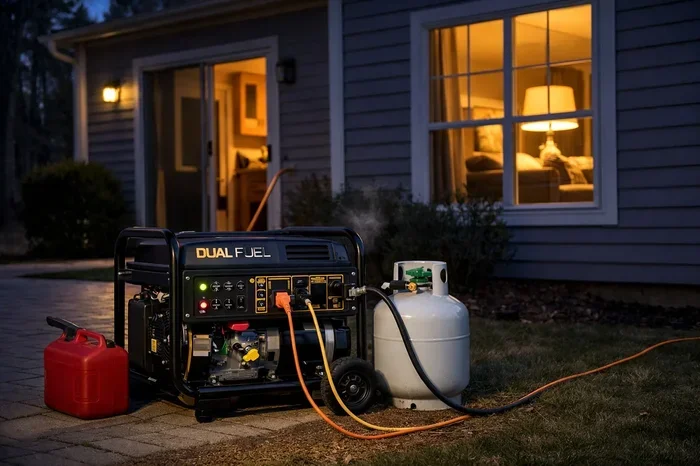
Dual Fuel Generator The Smart Way To Power Your Home
A dual fuel generator lets you run on gasoline or propane, giving you flexibility when the grid fails. These machines save money, extend runtime, and keep your home powered during emergencies. We break down how they work, what to look for, and which models fit different needs.
A dual fuel generator is one of the smartest investments you can make for your home. When the power goes out, you want a reliable machine that keeps the lights on, the fridge running, and the furnace humming. A generator that runs on two fuels gives you exactly that kind of freedom and peace of mind.
Unlike single-fuel models, a dual fuel generator lets you choose between gasoline and propane. This means you are never stuck waiting for fuel during a long outage. You also get better runtime, lower costs, and a cleaner burn. Whether you live in a city apartment or a rural home, this type of power solution makes a lot of sense.
In this guide, we will walk you through everything you need to know. We will cover how dual fuel generators work, what makes them different from other types, and how to pick the right one for your home. By the end, you will feel confident about your choice.
Key Takeaways
- Fuel Flexibility: Switch between gasoline and propane based on availability and cost.
- Extended Runtime: Propane burns cleaner and lasts longer than gasoline during outages.
- Cost Savings: Using propane can cut fuel expenses significantly over time.
- Emergency Ready: A dual fuel generator ensures you always have backup power no matter the situation.
- Cleaner Burning: Propane produces fewer emissions than gasoline, making it eco-friendlier.
- Easy Switching: Most models let you toggle fuels in seconds without special tools.
- Smart Investment: A dual fuel generator adds resale value and versatility to your home setup.
📑 Table of Contents
- What Is a Dual Fuel Generator?
- Why Choose a Dual Fuel Generator for Your Home?
- How to Choose the Right Dual Fuel Generator
- Dual Fuel Generator Maintenance Tips
- Dual Fuel Generator vs. Single Fuel Generator
- Common Mistakes to Avoid with Dual Fuel Generators
- Expert Tips for Getting the Most Out of Your Dual Fuel Generator
- Final Thoughts
What Is a Dual Fuel Generator?
A dual fuel generator is a portable or standby machine that runs on two different fuels. Most commonly, these are gasoline and propane. Some models also support natural gas, but gasoline-propane setups are the most popular for homeowners.
The engine is built to switch between fuels seamlessly. You do not need to stop the machine or make major adjustments. A simple turn of a valve or switch gets you from one fuel source to another. This design gives you options that a single-fuel generator simply cannot match.
How Does It Work?
Inside the engine, a regulator controls the fuel flow. When you switch from gasoline to propane, the regulator adjusts the air-fuel mixture. This keeps the engine running smoothly on either fuel. The process is automatic on most modern units.
Gasoline gives you high power output and easy availability. Propane burns cleaner and stores for longer without going bad. Together, these fuels create a balanced system that covers all your needs. You get the best of both worlds with every start.
Why Choose a Dual Fuel Generator for Your Home?
More homeowners are choosing dual fuel generators over traditional single-fuel models. There are clear reasons for this trend. Let us look at the biggest advantages.
Fuel Flexibility
The number one reason people buy a dual fuel generator is flexibility. Gasoline is easy to find at any gas station. Propane can be stored in tanks for months or even years. When an emergency hits, you can use whichever fuel is available.
This flexibility also helps during supply shortages. If gasoline prices spike or stores run dry, you simply switch to propane. You stay powered up while others scramble for fuel.
Longer Runtime
Propane burns slower and more evenly than gasoline. A dual fuel generator running on propane can last significantly longer on a single tank. For extended outages, this extra runtime is a game changer.
You can also connect larger propane tanks for even longer sessions. A standard 20-pound tank can power a mid-sized unit for over a day. That is a lot of comfort during a storm or grid failure.
Lower Fuel Costs
Propane is often cheaper than gasoline per unit of energy. Over time, using propane as your primary fuel can save you real money. For households that run generators frequently, these savings add up fast.
You can also buy propane in bulk during off-seasons. Storing extra propane is safe and straightforward. This makes budgeting for power backup much easier.
Cleaner Burning Fuel
Propane produces fewer harmful emissions than gasoline. It burns cleaner and leaves less residue in the engine. This means less maintenance and a longer lifespan for your dual fuel generator.
If you care about the environment, propane is the greener choice. It releases less carbon monoxide and other pollutants. You get reliable power without the heavy environmental footprint.
How to Choose the Right Dual Fuel Generator
Not all dual fuel generators are created equal. Choosing the right one depends on your power needs, budget, and home setup. Here is what to consider before you buy.
Determine Your Power Needs
Start by listing the essential appliances you want to run during an outage. A refrigerator, a few lights, and a furnace fan need around 3,000 to 5,000 watts. A dual fuel generator in the 5,000 to 7,500-watt range handles most households well.
If you want to power your entire house, look at standby models. These units connect directly to your electrical panel. They kick on automatically when the grid goes down. For most families, though, a portable dual fuel generator is the practical choice.
Consider Fuel Availability in Your Area
Think about what fuels are easy to get where you live. In rural areas, propane delivery is common and affordable. In cities, gasoline is everywhere. Your local fuel landscape should guide your decision.
Also consider storage space. Propane tanks take up more room than gasoline cans. Make sure you have a safe, ventilated spot for fuel storage. This keeps your home secure and your generator ready to go.
Check the Generator Runtime
Runtime tells you how long the unit runs on a full tank. Look for a dual fuel generator that offers at least 10 to 12 hours on propane at half load. Longer runtime means fewer refueling interruptions during long outages.
Some high-end models run for 20 hours or more. These are ideal for areas prone to extended power disruptions. Check the runtime specs carefully before you commit.
Look for Easy Fuel Switching
The best dual fuel generators let you switch fuels in seconds. Look for models with a simple valve or dial system. Avoid units that require tools or complex procedures to change fuels.
Test the switching mechanism before you buy if possible. You want something that works smoothly, even in low light or stressful conditions. A simple, reliable switch makes all the difference.
Noise Level Matters
Nobody wants a generator that sounds like a jet engine. Look for units with decibel ratings under 65 dB for quiet operation. Inverter dual fuel generators are especially quiet and produce clean power for sensitive electronics.
Place your generator at least 20 feet from your home. This reduces noise inside and keeps exhaust fumes away from windows. A quiet, well-placed generator keeps everyone comfortable.
Dual Fuel Generator Maintenance Tips
Keeping your dual fuel generator in top shape is simple with regular care. A well-maintained unit runs better, lasts longer, and starts reliably when you need it most.
Regular Oil Changes
Change the oil every 50 to 100 hours of use. Fresh oil keeps the engine lubricated and cool. Use the oil type recommended by the manufacturer for best results.
Check the oil level before every use. Low oil can damage the engine quickly. Keep extra oil on hand so you are always ready.
Spark Plug Care
Inspect the spark plug every season. A worn spark plug causes hard starts and poor performance. Clean the electrode or replace it if you see buildup or damage.
This small task makes a big difference. A clean spark plug ensures reliable ignition on both gasoline and propane. It is one of the easiest ways to keep your generator running strong.
Fuel System Maintenance
Stale fuel causes starting problems. If you store your dual fuel generator for long periods, use fuel stabilizer. This keeps gasoline fresh for up to 12 months.
For propane, check the hose connections for leaks. A simple soapy water test reveals any leaks quickly. Bubbles form at the leak point if there is a problem. Fix leaks immediately for safety.
Air Filter Cleaning
Clean or replace the air filter every 25 to 50 hours. A dirty filter restricts airflow and reduces engine performance. This affects both fuel efficiency and power output.
Keep a spare air filter in your storage area. Swapping it out takes seconds and keeps the engine breathing freely. It is a tiny task with a big impact.
Dual Fuel Generator vs. Single Fuel Generator
How does a dual fuel generator compare to a gasoline-only or propane-only model? Let us look at the key differences.
Power Output Comparison
Single-fuel generators are often slightly more powerful at peak output. A gasoline-only unit may deliver maximum wattage more consistently. However, modern dual fuel generators come very close in performance.
For most household needs, the power difference is negligible. You can run all essential appliances on either type. The flexibility of dual fuel far outweighs any small power gap.
Runtime and Fuel Efficiency
Here is where dual fuel generators really shine. Propane extends runtime significantly compared to gasoline alone. You get more hours of power per gallon of fuel.
Gasoline-only units burn through fuel faster and require more frequent refueling. Propane-only units need a separate tank setup. Dual fuel gives you the best runtime with the least hassle.
Cost Comparison
A dual fuel generator costs more upfront than a single-fuel model. However, the savings on fuel over time make up for it. You can choose the cheaper fuel at any given moment.
Single-fuel units are simpler and sometimes less expensive to maintain. But the added value of fuel flexibility makes dual fuel the smarter long-term investment for most homeowners.
| Feature | Dual Fuel Generator | Single Fuel Generator |
|---|---|---|
| Fuel Options | Gasoline + Propane | One fuel only |
| Runtime (Propane) | Up to 20+ hours | N/A |
| Fuel Cost Savings | High | Moderate |
| Emissions | Lower (on propane) | Higher |
| Upfront Cost | Higher | Lower |
| Maintenance | Slightly more | Simpler |
| Fuel Flexibility | Excellent | None |
Common Mistakes to Avoid with Dual Fuel Generators
Even the best dual fuel generator can cause problems if you use it wrong. Here are the most common mistakes and how to avoid them.
Mixing Fuels Incorrectly
Never mix gasoline and propane in the same tank. They are completely different fuels with different burning properties. Always switch between them using the designated valve or switch.
Read your owner manual carefully. Each model has specific instructions for fuel switching. Following these steps keeps your engine safe and running smoothly.
Ignoring Carbon Monoxide Safety
All generators produce carbon monoxide, including dual fuel generators. This gas is deadly and has no smell or color. Never run a generator indoors or in enclosed spaces.
Place your unit outside at least 20 feet from doors and windows. Use a carbon monoxide detector near your home entrance. This simple step saves lives.
Overloading the Generator
Every dual fuel generator has a maximum wattage limit. Exceeding this limit can damage the unit and your appliances. Check the wattage of each device you plan to run.
Add up the total wattage and stay below the generator’s rating. If you are unsure, start with the most essential items and add more gradually. This protects both your generator and your electronics.
Skipping Regular Maintenance
It is easy to forget about your generator when you do not need it. But skipping maintenance leads to starting failures when you need power most. Stick to a regular maintenance schedule.
Run the generator for 15 to 20 minutes every few months. This keeps the engine lubricated and ready to go. A little effort now prevents big headaches later.
Not Using Stabilizer for Stored Fuel
Gasoline goes bad in as little as 30 days without stabilizer. Old fuel clogs the carburetor and makes starting difficult. Always add fuel stabilizer if you plan to store fuel for more than two weeks.
For propane, check the tank valve and hose connections before each use. Fresh fuel and clean connections ensure reliable starts every time.
Expert Tips for Getting the Most Out of Your Dual Fuel Generator
Getting the most from your dual fuel generator is easier than you think. These expert tips help you maximize performance and longevity.
- Buy a Quality Inverter Model: Inverter dual fuel generators produce clean power safe for laptops, phones, and TVs.
- Keep a Fuel Log: Track how much fuel you use on each fuel type. This helps you plan purchases and budget costs.
- Store Propane Properly: Keep propane tanks upright and in a well-ventilated outdoor area. Never store them indoors or in direct sunlight.
- Use Extension Cords Wisely: Heavy-duty, outdoor-rated cords reduce power loss. Choose cords rated for the total wattage of your devices.
- Practice Before You Need It: Test your generator before storm season. A practice run ensures everything works and you know how to operate it.
- Invest in a Transfer Switch: A transfer switch makes connecting your generator to your home safer and easier. It prevents backfeed that can endanger utility workers.
These tips come from years of experience with home power systems. Follow them and your dual fuel generator will serve you reliably for many years. The small investment in preparation pays off big when the power goes out.
If you want to learn more about how generators are tested and rated, check out our generator testing guide for detailed insights into performance benchmarks and what to look for in quality units.
For those wondering about fuel consumption and costs, our article on how much natural gas a generator uses provides helpful comparisons that apply to propane as well.
Thinking about your overall backup power setup? Our guide on how big of a backup generator you need helps you size the right unit for your home and energy demands.
Finally, if you are curious about electrical generation in general, visit our electrical generator overview to understand the broader landscape of power generation options for homeowners.
Final Thoughts
A dual fuel generator is truly the smart way to power your home. It gives you freedom, flexibility, and reliability when you need it most. Whether you face a short outage or a multi-day storm, this type of generator keeps your household running smoothly.
The ability to switch between gasoline and propane sets dual fuel generators apart from single-fuel models. You get longer runtime, lower costs, and cleaner burning. These machines are an investment in your home’s resilience and your family’s comfort.
Take the time to choose the right size, maintain your unit regularly, and follow safety guidelines. A well-chosen and well-maintained dual fuel generator becomes a trusted part of your home for years to come. Power up with confidence and never worry about losing electricity again.
Frequently Asked Questions
What is the main advantage of a dual fuel generator?
The main advantage is fuel flexibility. You can switch between gasoline and propane, giving you options no matter the situation. This flexibility means longer runtime, lower costs, and reliable power when you need it most.
Can you run a dual fuel generator on propane all the time?
Yes, you can run a dual fuel generator on propane continuously. Propane burns cleaner and lasts longer than gasoline. Just make sure your tank is properly connected and you have enough fuel for your needs.
Is a dual fuel generator louder than a single fuel generator?
Not necessarily. Noise level depends on the model and its design. Many dual fuel generators are just as quiet as single-fuel units, especially inverter models. Look for units rated under 65 dB for the quietest operation.
How long does propane last in a dual fuel generator?
A standard 20-pound propane tank can power a mid-sized unit for 10 to 20 hours depending on the load. Larger tanks extend this runtime significantly. Always check your generator’s fuel consumption rate for accurate estimates.
Are dual fuel generators safe for sensitive electronics?
Inverter dual fuel generators produce clean, stable power safe for laptops, phones, and TVs. Conventional models may not be as safe for sensitive devices. Always check your unit’s power quality specs before connecting electronics.
How do I switch between gasoline and propane?
Switching is simple on most models. Just turn the fuel valve to the desired source and restart the engine. Some units allow you to switch while running. Always refer to your owner manual for model-specific instructions.