Generator Power Cord How To Choose The Perfect Match
Choosing the right generator power cord is essential for safe and efficient power delivery. This guide walks you through cord types, gauge sizes, lengths, and plug configurations so you can match your generator power cord to your specific needs. Whether you own a portable or standby unit, the wrong cord can cause overheating, power loss, or serious safety hazards.
A generator power cord might look like a simple piece of cable, but it plays a huge role in how safely and effectively your generator works. Think of it as the bridge between your generator and everything you want to power. Get this bridge wrong, and you risk wasted energy, damaged appliances, or even dangerous electrical fires.
This guide breaks down everything you need to know. From understanding cord gauges and plug types to choosing the right length and weather rating, we cover it all. By the end, you will feel confident picking the perfect generator power cord for your setup.
## What Is a Generator Power Cord?
A generator power cord is the cable that connects your generator to your home, tools, or appliances. It carries electricity from the generator’s output to whatever needs power. These cords come in many shapes, sizes, and ratings.
Not all cords are the same. A cord built for a small portable generator looks very different from one designed for a heavy-duty standby unit. The key differences boil down to four main factors.
### Gauge and Thickness
The gauge refers to the thickness of the internal copper wires. Lower gauge numbers mean thicker wires. Thicker wires can carry more electrical current safely. A 10-gauge cord handles more power than a 16-gauge cord.
### Length
Cord length affects voltage drop. The longer the cord, the more energy gets lost along the way. Short cords deliver power more efficiently than long ones.
### Plug Configuration
Generators use different plug shapes depending on their size and output. Common types include NEMA L14-20, NEMA L14-30, and NEMA 5-20. Each plug fits a specific outlet type.
### Insulation and Rating
The outer jacket of the cord protects the inner wires. Outdoor cords need thick, weather-resistant jackets. Indoor cords can be thinner and lighter.
## How Generator Power Cords Work
Understanding the basics of how a generator power cord delivers electricity helps you make smarter choices. The cord carries alternating current (AC) from the generator to your devices. The voltage and amperage depend on your generator’s output capacity.
Most portable generators produce 120/240 volts. The cord splits this power into separate hot wires, a neutral wire, and a ground wire. Together, these wires form a complete electrical circuit.
### The Role of Amperage
Amperage, or amps, measures how much electrical current flows through the cord. A 30-amp cord carries more power than a 20-amp cord. Matching the cord’s amperage rating to your generator’s output is critical.
If you force too much current through a low-rated cord, it overheats. This can melt the insulation and start a fire. Always check both the generator and cord ratings before connecting them.
### Voltage Drop Explained
Voltage drop happens when electricity loses strength over a long cord. Think of it like water pressure dropping in a long garden hose. A 100-foot cord loses more voltage than a 25-foot cord carrying the same load.
To minimize voltage drop, use the shortest cord that fits your needs. If you must use a long cord, go up one gauge size to compensate.
## Types of Generator Power Cords
Not every generator cord fits every situation. Different types serve different purposes. Here is a breakdown of the most common options you will encounter.
### Portable Generator Cords
These cords connect portable generators to appliances directly. They usually have a generator-side plug and one or more household-style outlets. Portable cords are typically 10 to 25 feet long.
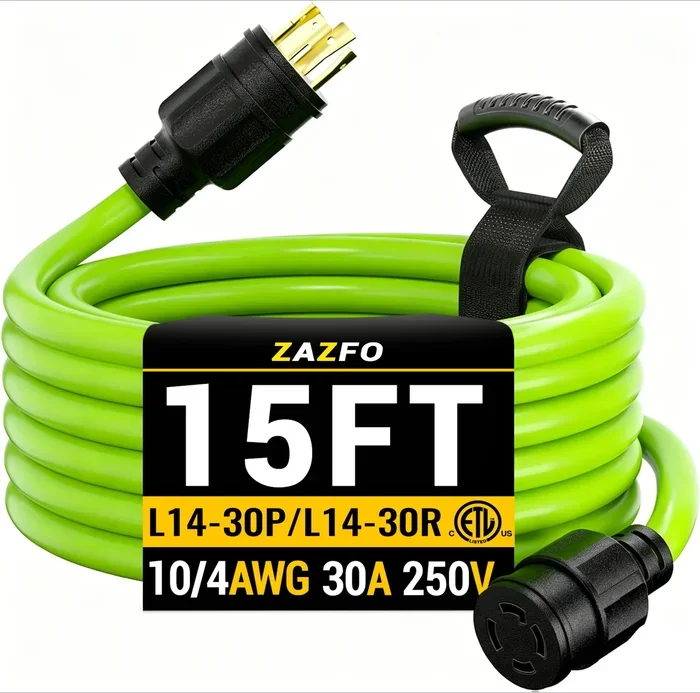
Many portable generator cords use NEMA L14-20 or L14-30 plugs. These lock into the generator outlet and prevent accidental disconnections. They are perfect for camping trips, tailgating, or powering tools on a job site.
### Inlet Box Cords
An inlet box cord connects your generator to a permanent inlet installed on your home’s exterior. This setup lets you power your whole house through a transfer switch. Inlet box cords are heavy-duty and designed for extended use.
These cords typically feature NEMA L14-30 or NEMA CS6375 connectors. They are thicker and more robust than standard portable cords. Many homeowners prefer this setup for backup power during storms.
### Extension Cords for Generators
Standard extension cords work in a pinch but are not ideal for generator use. They often lack the proper grounding and amperage rating. If you must use an extension cord, choose one rated for outdoor use and heavy loads.
Look for cords labeled “SJTW” or “STW.” These ratings indicate the cord can handle wet conditions and tough environments. Never use indoor-only cords outdoors with a generator.
### Multi-Outlet Generator Cords
Some generator cords feature multiple outlets built into one cable. This lets you power several devices from a single generator connection. They are convenient for running a fridge, sump pump, and lights at the same time.
These cords usually come with built-in circuit breakers. The breaker trips if the total load exceeds the cord’s capacity. This adds an extra layer of protection.
## How to Choose the Right Generator Power Cord
Picking the right cord involves matching a few key specs to your generator and your power needs. Here is a step-by-step guide to help you decide.
### Step 1: Check Your Generator’s Output
Look at the label on your generator or read the owner’s manual. Find the maximum amperage and voltage it produces. This tells you the minimum cord rating you need.
For example, a generator rated at 30 amps and 240 volts needs a cord rated for at least 30 amps. Using a 20-amp cord with a 30-amp generator is dangerous and can cause overheating.
### Step 2: Determine the Cord Length You Need
Measure the distance between your generator and the devices or inlet box you plan to power. Add a few extra feet for flexibility. Remember, shorter is almost always better for efficiency.
If you need to run a cord longer than 50 feet, consider upgrading the gauge size. A 10-gauge cord at 100 feet performs better than a 12-gauge cord at the same length.
### Step 3: Choose the Correct Gauge
Here is a quick reference for matching gauge to amperage and length.
| Cord Length | 20 Amp Load | 30 Amp Load | 40 Amp Load |
|—|—|—|—|
| Up to 25 feet | 12 gauge | 10 gauge | 8 gauge |
| 25 to 50 feet | 10 gauge | 8 gauge | 6 gauge |
| 50 to 100 feet | 8 gauge | 6 gauge | 4 gauge |
This table helps you avoid voltage drop and overheating. Always stay within the recommended gauge for your load and length combination.
### Step 4: Match the Plug Type
Check the plug on your generator and the inlet or outlet on your appliance. They must match. Common generator plug types include:
– NEMA L14-20 (20 amp, 120/240V)
– NEMA L14-30 (30 amp, 120/240V)
– NEMA CS6375 (50 amp, 240V)
– NEMA 5-20 (20 amp, 120V standard)
If your generator has a NEMA L14-30 plug, buy a cord with that same plug on the generator end. The other end should match your destination outlet or inlet box.
### Step 5: Consider Weather Conditions
If you use your generator outdoors, invest in a weatherproof cord. Look for jackets rated SJTW or STW. These materials resist moisture, UV rays, and temperature extremes.
For winter use, choose cords rated for cold temperatures. Standard rubber jackets can become stiff and crack in freezing weather. Cold-rated cords stay flexible and safe.
## Safety Tips for Using Generator Power Cords
A generator power cord handles serious electrical loads. Treat it with respect and follow these safety guidelines every time.
### Always Inspect Before Use
Before each use, visually inspect the entire cord. Look for cuts, frayed wires, cracked insulation, or bent prongs. Even a small damaged area can cause sparks or electrocution.
If you find any damage, replace the cord immediately. Do not try to tape over exposed wires. It is not a safe fix.
### Never Daisy-Chain Cords
Plugging one extension cord into another is called daisy-chaining. This practice creates excessive heat buildup and is a leading cause of generator cord fires. Use a single cord rated for your full load instead.
If you need more length, buy a longer cord rather than connecting two shorter ones together.
### Keep Cords Dry and Elevated
Water and electricity are a dangerous combination. Keep your generator power cord off wet ground and away from puddles. Use cord covers or hang the cord off the ground when possible.
For outdoor setups, consider using a cord bridge or ramp to protect the cord from foot traffic and vehicles. Stepping on a cord can damage the insulation without showing visible signs.
### Use a Transfer Switch
A transfer switch connects your generator to your home’s electrical panel safely. It prevents backfeeding, which sends electricity backward through utility lines and can kill line workers.
A transfer switch also lets you use inlet box cords properly. This setup is safer and more convenient than running cords through windows or doors.
### Store Cords Properly
When not in use, store your cords coiled loosely in a dry, shaded area. Tight coils trap heat and can damage the internal wiring over time. Hang cords on hooks or store them in a dedicated cord reel.
Before storing, make sure the cord is completely dry. Moisture trapped in a coil can lead to mold and corrosion of the copper inside.
## Common Mistakes People Make With Generator Power Cords
Even experienced users make mistakes. Here are the most common errors and how to avoid them.
### Using the Wrong Gauge
Many people buy a cord based on price or availability rather than the correct gauge. A thin cord handling a heavy load will overheat quickly. Always match the gauge to your generator’s amperage output.
### Ignoring Voltage Drop
Long cords are convenient but they reduce the power reaching your appliances. Tools and motors may run sluggishly or overheat when they do not receive full voltage. Keep cord length as short as practical.
### Overloading the Cord
Plugging too many high-wattage devices into one cord is a common mistake. Add up the wattage of all connected devices and compare it to the cord’s rating. If you exceed the rating, the cord will overheat.
### Skipping the Ground Check
Three-prong cords include a ground wire for safety. Never use a cord with a missing or damaged ground pin. The ground wire protects you from electrical shock if a fault occurs.
### Buying Cheap, Unrated Cords
Budget cords often use thinner copper and lower-quality insulation. They may not meet safety standards. Invest in cords from reputable brands with clear amperage and gauge ratings printed on the jacket.
## Expert Tips for Getting the Most From Your Generator Power Cord
Experienced generator users follow a few extra habits that make a big difference. Here are some tips from the pros.
### Label Your Cords
If you own multiple generators or cords, label each one clearly. This prevents accidental mismatches and saves time during setup. Use colored tags or permanent markers on the plug ends.
### Keep a Spare Cord
Cords get damaged over time, especially with frequent outdoor use. Having a spare cord on hand means you are never stuck without power. Store the spare in a dry, accessible location.
### Upgrade to a Heavier Cord When in Doubt
If you are unsure whether your current cord is adequate, upgrade. A heavier cord costs a little more but provides a safety margin. It is always better to have more capacity than you need.
### Clean Connectors Regularly
Dirt, rust, and corrosion build up on plug connectors over time. Wipe them down with a dry cloth before each use. Clean connections ensure a secure fit and reduce the risk of arcing.
### Pair Your Cord With a Quality Generator
Your cord is only as good as the generator it connects to. Regular maintenance and testing keep your generator running safely. Check out our generator testing guide for tips on keeping your unit in top shape.
## Conclusion
Choosing the right generator power cord comes down to understanding your generator’s output, your cord length needs, and the safety ratings that matter. Match the gauge to the amperage, pick the right plug type, and never skip weatherproofing for outdoor use.
A quality cord protects your appliances, your home, and your family. Take the time to choose wisely, inspect regularly, and store properly. The right generator power cord makes your generator safer, more efficient, and ready to deliver power whenever you need it most.
Start by checking your generator’s label today. Compare those numbers to the cord specs in this guide. You will walk away with the confidence to make the best choice for your power setup.
Key Takeaways
- Right Gauge Matters: The cord gauge directly affects how much power flows safely to your appliances.
- Length Impacts Performance: Longer cords create more resistance, which can reduce power delivery and cause voltage drop.
- Weatherproofing Is Key: Outdoor generator use demands cords rated for wet and rugged conditions.
- Match the Plug Type: Generator and appliance plug types must align for a secure and safe connection.
- Safety Features Save Lives: Grounding, surge protection, and proper amperage ratings prevent fires and electrocution risks.
- Test Before You Trust: Always inspect and test your generator power cord before each use to catch damage early.
Frequently Asked Questions
Can I use a regular extension cord with my generator?
It is not recommended. Regular extension cords often lack the proper amperage rating, grounding, and weatherproofing needed for generator use. Always use a cord specifically designed or rated for generator applications to stay safe.
How do I know what gauge cord I need for my generator?
Check your generator’s maximum amperage output on the label or manual. Use a lower gauge number (thicker wire) for higher amperage loads. Refer to the gauge table in this article for quick matching based on your load and cord length.
What happens if my generator power cord is too long?
A longer cord creates more electrical resistance, which causes voltage drop. This means your appliances receive less power than they need. Tools may run poorly, and motors can overheat. Keep the cord as short as your setup allows.
Is it safe to run a generator power cord through a window or door?
It is not ideal. Running cords through openings can damage the insulation and create fire hazards. A safer approach is to use an inlet box installed on your home’s exterior with a proper transfer switch.
What does SJTW mean on a generator cord?
SJTW stands for Junior Service, Weatherproof, and Thermoplastic. It means the cord is rated for outdoor use and can handle moisture and temperature changes. Look for this rating when buying a cord for outdoor generator use.
How often should I replace my generator power cord?
Inspect your cord before every use and replace it at the first sign of damage. With proper storage and care, a quality cord can last several years. However, frequent outdoor use may shorten its lifespan, so stay vigilant.