how to make primitive tools for survival and camping
Learning how to make primitive tools is one of the most valuable survival and camping skills you can develop. This guide walks you through everything from choosing the right natural materials to crafting your own knives, fire starters, and digging tools. Whether you are a seasoned outdoors enthusiast or a complete beginner, these primitive tool making techniques will boost your survival skills and self-reliance in the wilderness.
When you think about surviving in the wild, your mind probably jumps to fire, shelter, and food. But there is something equally important that often gets overlooked: how to make primitive tools. Whether you are deep in the woods on a camping trip or facing an unexpected emergency, the ability to craft tools from natural materials can change everything. Primitive tools are simple, effective, and something every outdoor enthusiast should know how to build.
The good news is that making primitive tools does not require a workshop or fancy equipment. You need stones, sticks, cordage, and a little patience. This guide will take you step by step through the process. By the end, you will feel confident enough to craft your own handmade survival tools from scratch. Let us get into it.
Key Takeaways
- Primitive tools are essential backup gear: Knowing how to make primitive tools ensures you are never fully dependent on modern equipment during a camping trip or survival situation.
- Natural materials are everywhere: Stones, wood, bone, and plant fibers can all be turned into functional tools with basic techniques.
- Safety comes first: Always wear protective gear and follow proper tool-making steps to avoid injury.
- Practice before you need it: Rehearse making primitive tools at home so you are confident when you are out in the wild.
- Combine primitive and modern gear: The best survival kits include both handmade tools and reliable modern equipment like a backup generator for power needs.
- Primitive tool making builds confidence: Each project teaches patience, problem-solving, and resourcefulness that translate to other survival scenarios.
📑 Table of Contents
- Why Primitive Tools Matter for Survival and Camping
- Essential Materials for Making Primitive Tools
- Step-by-Step Guide to Making Primitive Tools
- Modern Tools vs Primitive Tools: What to Bring on Your Trip
- Common Mistakes When Making Primitive Tools
- Expert Tips for Mastering Primitive Tool Making
- Conclusion
Why Primitive Tools Matter for Survival and Camping
Modern gear is amazing. We have lightweight tents, high-tech water filters, and powerful stoves. But gear can break, get lost, or run out of battery. That is exactly where primitive tools shine. They do not need electricity, replacement parts, or store shelves. They work with what nature provides.
The Value of Self-Reliance in the Outdoors
There is a deep satisfaction that comes from building something with your own hands. When you craft a handmade survival tool, you are not just solving a problem. You are proving to yourself that you can adapt and thrive. This mindset is at the core of self-reliance and bushcraft skills.
Think about it this way. If your camping equipment fails on a multi-day trip, you do not want to be stuck. But if you know how to make primitive tools, you turn the environment around you into a resource. A sharp stone becomes a cutting tool. A sturdy stick becomes a digging implement. A bundle of vines becomes binding material. The possibilities are vast.
When Modern Tools Fail and Primitive Skills Save the Day
Gear failure happens more often than most people think. A knife blade snaps. A fire starter gets soaked. A water filter cracks. In these moments, primitive technology becomes your best friend. Knowing how to fashion a replacement tool from natural materials keeps you moving forward.
For those who also rely on modern power sources during camping trips, it helps to understand your equipment. For example, knowing how long your generator battery lasts helps you plan your power needs. But when the power is gone and the batteries are dead, primitive tools keep you going.
Essential Materials for Making Primitive Tools
Before you start crafting, you need to know what to look for. Nature provides an incredible toolkit if you know where to look. Here are the key materials you will need for most primitive tool projects.
Natural Resources You Can Find Almost Anywhere
The beauty of primitive tool making is that the materials are free and everywhere. Keep your eyes open for these essentials:
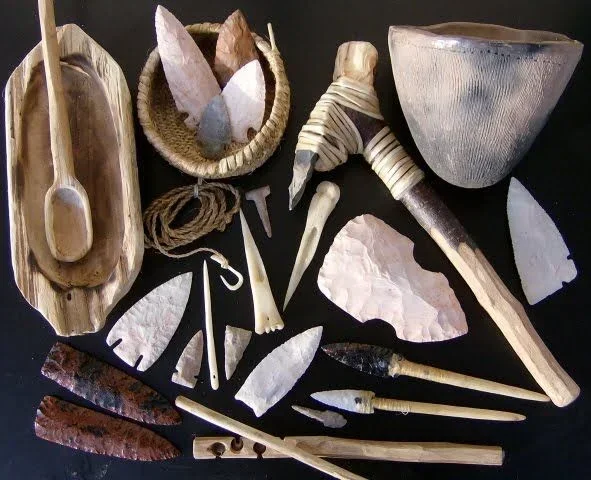
- Stones and rocks: Look for hard, dense rocks like flint, obsidian, quartz, or basalt. These are perfect for cutting edges and sharp points.
- Wood: Straight, sturdy branches work great for handles, spears, and digging sticks. Hardwood is best because it resists breaking.
- Cordage material: Bark fibers, plant stalks, and even nettle stems can be twisted into strong rope or binding material.
- Bone and antler: These make excellent awls, needles, and scraping tools. They are often found near animal trails or campsites.
- Resin and sap: Tree resin acts as a natural adhesive. It can hold stone blades to wooden handles.
Stones and Rocks for Cutting Tools
Not all rocks are created equal. For stone tool making, you want rocks that fracture in a predictable way. Flint and obsidian are the gold standard. They chip into incredibly sharp edges. If you cannot find flint, look for quartz or chert. These materials are widely available in many regions and work beautifully for DIY survival gear.
When selecting stones, look for ones that are uniform in shape and free of cracks. A rock with hidden fractures will break unpredictably. Tap the stone gently and listen for a clear, ringing sound. That is a good sign. Dull thuds mean the rock may be too brittle or full of internal flaws.
Step-by-Step Guide to Making Primitive Tools
Now for the fun part. Here are three essential primitive tools you can make with basic materials and techniques. Each one is practical, useful, and a great starting project.
Creating a Primitive Knife or Cutting Tool
A sharp cutting tool is the backbone of survival. You do not need a manufactured knife to cut rope, prepare food, or carve wood. A primitive knife made from stone works surprisingly well.
Here is how to do it:
- Find the right stone. Look for a flat piece of flint or obsidian about the size of your palm.
- Create a sharp edge. Use a harder rock or a piece of antler to chip away small flakes along one side. This process is called knapping.
- Shape the handle. Find a sturdy piece of hardwood. Carve a groove along the top edge to hold the stone blade.
- Secure the blade. Use cordage or tree resin to bind the stone into the groove. Wrap tightly and let the resin harden.
Your handmade cutting tool is now ready to use. It may not look pretty, but it will slice through rope, cut food, and carve wood effectively.
Building a Hand Drill for Fire Starting
Fire is non-negotiable in survival situations. A hand drill is one of the oldest and most reliable fire starting tools ever created. It requires no batteries, no fuel, and no modern parts.
Here is what you need and how to build it:
- Find a straight, dry stick. About 12 to 18 inches long and roughly the diameter of a pencil works best.
- Prepare a fire board. This is a flat piece of softwood like cedar or willow. Cut a small notch near the edge and carve a small depression next to it.
- Spin the drill. Place the stick in the depression on the fire board. Wrap a cordage loop around it. Push down and pull the cordage back and forth to spin the drill rapidly.
- Collect the ember. The friction creates heat. Fine dust will collect in the notch. Eventually, it will glow into an ember. Transfer it to a tinder bundle and blow gently to create a flame.
This takes practice. Do not get discouraged if it takes several attempts. Once you master the hand drill, you have a reliable fire starting tool that never runs out of batteries.
Crafting a Spear or Digging Stick
A spear serves double duty in the wild. It helps you hunt small game and fish. A digging stick helps you dig roots, tubers, and set traps. Both are simple to make.
For a spear:
- Find a straight, sturdy branch about 5 to 6 feet long.
- Sharpen one end by whittling it to a point.
- Harden the tip by slowly rotating it over a fire.
- For a fishing spear, carve several prongs at the end and bind them slightly apart with cordage.
For a digging stick:
- Choose a thick, strong branch.
- Carve one end into a chisel-like shape.
- Optionally, fire-harden the tip for extra durability.
Both of these DIY survival gear items are lightweight and incredibly functional. They are perfect additions to any outdoor survival kit.
Modern Tools vs Primitive Tools: What to Bring on Your Trip
You do not have to choose between modern and primitive. The smartest approach is to bring both. Modern tools offer convenience and reliability. Primitive tools offer backup capability and a deeper connection to the outdoors.
When to Use Each Approach
Here is a simple way to think about it. Use modern tools for tasks that need precision, speed, or power. Use primitive tools when you want to reduce your gear load, when modern gear fails, or when you simply want to practice primitive technology skills.
For example, if you need to process a large amount of wood, a modern saw is faster. But if you are in a situation where you have no saw, knowing how to craft a sharp stone blade or a hand axe from a shaped rock becomes invaluable.
Some campers like to bring a portable air compressor for inflating air mattresses or cleaning gear. If you go this route, learning how to use an air compressor properly ensures you get the most out of your modern equipment. But remember, an air compressor needs power. That is where primitive tools and survival skills fill the gap.
Building a Balanced Survival Kit
A well-rounded survival kit includes modern essentials and the knowledge to make handmade tools when needed. Here is a quick checklist:
- Modern knife and fire starter
- Water purification tablets or filter
- Tarp or lightweight tent
- Knowledge of how to make primitive tools for backup
- Understanding of how big of a backup generator you need if you rely on electrical power at base camp
- Basic cordage and binding materials
This balanced approach gives you the best of both worlds. You enjoy modern convenience while staying prepared for anything.
Common Mistakes When Making Primitive Tools
Even experienced tool making enthusiasts run into problems. Here are the most common mistakes and how to avoid them.
Using the Wrong Type of Rock
This is the number one mistake beginners make. Not every rock can be knapped into a sharp edge. Soft rocks like limestone or sandstone will crumble instead of chipping cleanly. Stick with hard, glassy rocks like flint, obsidian, or quartz for the best results in your primitive tool making projects.
Skipping the Handle
A sharp stone without a handle is dangerous. It cuts your hand instead of the material you are working on. Always take the time to shape a comfortable handle and secure the stone blade properly. A well-made handle improves safety and control.
Rushing the Process
Primitive tool making is not a race. Rushing leads to cracked stones, weak bindings, and poorly shaped tools. Take your time. Work slowly and deliberately. Each strike of the knapping stone should be intentional. The slower you go, the better your handmade tools will turn out.
Ignoring Safety
Stone knapping produces sharp flakes that can slice your fingers. Always wear thick gloves and eye protection. Work on a padded surface. Keep your hands behind the cutting edge at all times. Safety is not optional when making survival tools.
Expert Tips for Mastering Primitive Tool Making
Want to level up your primitive technology game? Here are some expert tips that make a real difference.
Start Simple and Build Up
Do not try to build a complex tool on your first attempt. Start with a simple cutting edge or a basic digging stick. Once you are comfortable with the fundamentals, move on to more advanced projects like stone axes or bone fish hooks. Each project builds skills that feed into the next one.
Study How Ancient Cultures Did It
People have been making primitive tools for thousands of years. There is a wealth of knowledge in ancient techniques. Watch videos, read books, and study the methods of traditional bushcraft skills practitioners. The more you learn, the better your results will be.
Practice in Your Backyard First
Do not wait until you are in a real survival situation to try this. Set up a practice station in your backyard or a local park. Gather materials and experiment. Make mistakes in a safe environment. Build muscle memory and confidence. When the time comes to use these skills for real, you will be ready.
Keep a Primitive Tool Making Kit Ready
Consider putting together a small kit with a few key items: a piece of flint, a chunk of hardwood, some cordage, and a small knife. Toss it in your backpack. This gives you the core materials to make primitive tools almost anywhere you go. It is lightweight, compact, and incredibly practical.
Conclusion
How to make primitive tools is a skill that everyone should have in their back pocket. It connects you to thousands of years of human ingenuity and self-reliance. Whether you are a seasoned camper or someone who just wants to be more prepared, primitive tool making delivers real value.
Start with the basics. Practice making a simple cutting tool or a hand drill. Build up to more complex projects over time. Pair your primitive skills with modern gear for the best of both worlds. And always remember that the most important tool you carry is your knowledge and your willingness to learn.
The wilderness does not care about your brand-name equipment. It rewards those who can adapt, improvise, and create. When you know how to make primitive tools, you carry that power with you wherever you go. Get out there, gather your materials, and start building.
Frequently Asked Questions
What are the easiest primitive tools to make for beginners?
A simple cutting tool made from a sharpened stone and a wooden handle is the easiest starting point. You can also build a basic digging stick or a hand drill for fire starting with minimal materials and practice.
Do I need special rocks to make primitive tools?
Yes, you want hard, dense rocks that fracture cleanly. Flint, obsidian, quartz, and chert are the best choices. Avoid soft rocks like limestone or sandstone, as they crumble instead of chipping into sharp edges.
Can primitive tools really replace modern camping gear?
Primitive tools work well as backups and for specific tasks, but they cannot fully replace modern gear for comfort and efficiency. The best approach is to bring modern essentials and know how to craft handmade survival tools if needed.
How long does it take to learn primitive tool making?
Basic tools like a stone knife or a digging stick can be made within a few hours of practice. More advanced tools like a hand drill or a stone axe may take several sessions to master. The key is consistent practice.
Is primitive tool making safe for kids?
With proper supervision and safety gear like gloves and eye protection, older kids can learn primitive tool making safely. Start with simple projects and always emphasize safety first.
What other skills complement primitive tool making for survival?
Fire starting, shelter building, water purification, and foraging all complement primitive tool making beautifully. Together, these survival skills create a well-rounded outdoor toolkit that works in any situation.