What Is the Best Whole Home Generator for Your Needs
Choosing the best whole home generator means matching the right size, fuel type, and brand to your household’s power needs. Whether you face frequent outages or just want peace of mind, a standby generator keeps your lights on, fridge running, and family comfortable. This guide breaks down everything you need to know to make a confident decision.
Power outages are more than just an inconvenience. They can spoil your food, shut down your heating system, and leave your family sitting in the dark. A whole home generator solves all of that. It keeps every circuit in your house running smoothly, no matter what happens outside.
But here is the thing. Not all generators are created equal. Some are too small. Some are too loud. And some cost way more than they should. That is exactly why we put together this guide. We want to help you find the best whole home generator for your specific situation. Whether you live in a cozy apartment or a sprawling farmhouse, the right backup power system makes all the difference.
By the end of this article, you will know how to size a generator correctly, compare fuel types, understand installation needs, and pick a brand you can trust. Let us get started.
Key Takeaways
- Right-sizing matters: A whole home generator should match your total electrical load to avoid overloads and wasted fuel.
- Natural gas and propane are top fuel choices: They offer long runtime and cleaner burning compared to diesel.
- Standby generators beat portable units: They kick in automatically and power your entire home, not just a few essentials.
- Installation and maintenance are key: Proper setup and regular upkeep ensure your generator runs reliably when you need it most.
- Brand reputation and warranty matter: Investing in a trusted brand saves you money and headaches over time.
- Budget wisely: Whole home generators range from a few thousand to over ten thousand dollars, so plan accordingly.
📑 Table of Contents
- What Is a Whole Home Generator?
- How to Choose the Right Size Whole Home Generator
- Types of Whole Home Generators
- Fuel Types: Which Is Best for Your Whole Home Generator?
- Top Whole Home Generator Brands to Consider
- Installation and Maintenance Tips
- How Much Does a Whole Home Generator Cost?
- Final Thoughts
What Is a Whole Home Generator?
A whole home generator is a permanent backup power system that automatically kicks on when your main power goes out. Unlike a portable unit that you wheel out and plug things into one at a time, a standby generator connects directly to your home’s electrical panel. It detects power loss within seconds and restores electricity to your entire house.
Think of it as an insurance policy for your comfort. You do not think about it when the power is on. But the moment things go dark, it has your back. Most whole home generators run on natural gas or liquid propane. Some models even use diesel fuel. The electrical generator technology inside them has come a long way, making them quieter, cleaner, and more efficient than ever before.
The size of the unit depends on how much power your home uses. A small cabin might need a 7-kilowatt model. A large family home with central air, electric heat, and multiple appliances could need 20 kilowatts or more. We will cover sizing in detail later in this guide.
How Does a Whole Home Generator Work?
Here is how simple the process is. When the grid power fails, a sensor in the generator detects the outage. Within about ten seconds, the generator starts up and the automatic transfer switch sends power to your home’s circuits. When grid power returns, the generator runs for a few minutes to cool down, then switches back and shuts off automatically.
You do not need to flip any switches or run extension cords. The whole process is hands-free. That is the biggest advantage of a whole home standby generator over a portable option.
How to Choose the Right Size Whole Home Generator
Sizing is the most important step in choosing a whole home generator. Get it wrong and you either end up with not enough power or you overspend on a unit that is bigger than you need. So how do you get it right?
Start by listing the essential appliances and systems in your home. Here is a quick list of common household loads:
- Refrigerator and freezer (1,200 to 2,500 watts)
- Central air conditioning (2,000 to 5,000 watts)
- Electric furnace or heat pump (5,000 to 10,000 watts)
- Water heater (4,000 to 5,500 watts)
- Lights and small electronics (1,000 to 2,000 watts)
- Well pump (1,000 to 3,000 watts)
- Sump pump (1,000 to 1,500 watts)
Add up the wattage of everything you want to run at the same time. Then multiply by 1.25 to account for startup surges. That number tells you the minimum kilowatt rating you need.
If you are not sure how to calculate this, a licensed electrician can perform a load analysis for your home. They will measure your actual power usage and recommend the perfect generator size. This is a smart move, especially if you are unsure.
What Size Generator Do You Really Need?
The answer depends on your lifestyle and your home. A backup generator that covers just the essentials might run 7 to 10 kilowatts. This keeps your fridge, a few lights, and your furnace going during an outage. It is a budget-friendly option that prevents the biggest headaches.
A full-house generator, on the other hand, covers everything. That includes air conditioning, the electric stove, the washer and dryer, and all the electronics you use daily. These units typically range from 15 to 25 kilowatts. The how big of a backup generator do I need question comes up a lot, and the answer really comes down to how much comfort you want to maintain during an outage.
Here is a simple way to think about it. Ask yourself what you absolutely cannot live without for more than a few hours. Make that your baseline. Then decide what extras you would love to have. That gives you a clear target for your generator size.
Types of Whole Home Generators
Not all generators work the same way. Understanding the different types helps you make a smart choice. Let us break them down.
Standby Generators
Standby generators are the gold standard for whole home backup power. They sit outside your home, permanently installed, and connected to your electrical panel and fuel supply. When the power goes out, they start automatically. When power returns, they shut off on their own.
These units are powerful, reliable, and convenient. They are the most popular choice for homeowners who want a seamless backup experience. Brands like Generac, Kohler, and Briggs & Stratton lead the market with strong standby options.
Portable Generators
Portable generators are smaller and more affordable. You store them and roll them out when needed. However, they require manual setup. You must connect them to your home or plug in individual appliances. They also run on gasoline, which means you need to keep fuel on hand.
Portable generators work well for occasional light use. But for a true whole home solution, they fall short. They are louder, less convenient, and cannot power an entire house at once. If you want real comfort during long outages, a standby unit is the way to go.
Inverter Generators
Inverter generators produce clean, stable power that is safe for sensitive electronics like laptops and smartphones. They are fuel-efficient and quieter than traditional generators. However, they are typically lower in wattage and better suited for camping trips or small backup needs rather than powering a full house.
Some modern standby generators include inverter technology. This gives you the best of both worlds: whole-home coverage with clean power output.
Fuel Types: Which Is Best for Your Whole Home Generator?
The fuel your generator uses affects everything from runtime to cost to environmental impact. Let us look at the most common options.
Natural Gas
Natural gas is the most popular fuel for whole home generators. It connects directly to your home’s gas line, so you never run out. You do not need to store fuel or make trips to the gas station. Natural gas generators are clean-burning, reliable, and cost-effective over the long term.
One thing to keep in mind: natural gas is a fossil fuel, and its price can fluctuate with market conditions. But for most homeowners, the convenience and endless supply make it the top choice.
Liquid Propane
Propane is another excellent option. It burns clean and is widely available. You store propane tanks on your property, so you are not dependent on a utility line. Propane has a long shelf life, which makes it great for emergency preparedness.
The downside is that you need to monitor your tank levels and refill them periodically. For homes that already use propane for heating or cooking, this is an easy and logical choice.
Diesel
Diesel generators are built for heavy-duty use. They are incredibly durable and can run for thousands of hours. However, they are louder, produce more emissions, and cost more upfront. Diesel fuel can also be harder to store long-term. For most residential homes, natural gas or propane is a better fit.
How Much Natural Gas Does a Generator Use?
This is a question many homeowners ask before buying. The answer depends on the generator’s size and your home’s load. A typical whole home generator uses between 2 and 4 cubic feet of natural gas per hour per kilowatt of load. A 15-kilowatt unit running at half load might consume around 15 to 20 cubic feet per hour.
For a detailed breakdown, check out our guide on how much natural gas a generator uses. It covers real-world usage estimates and helps you plan your fuel costs.
Top Whole Home Generator Brands to Consider
The brand you choose matters. A reliable manufacturer offers better durability, stronger warranties, and easier access to service and parts. Here are the top brands we recommend.
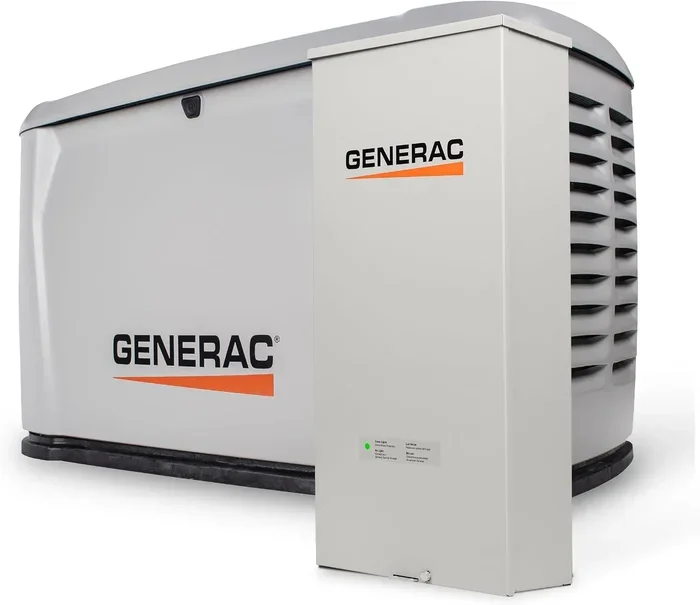
Generac
Generac is the most recognized name in residential backup power. Their units are affordable, widely available, and come with solid warranties. Generac offers a range of sizes from 9 to 24 kilowatts, making it easy to find a model that fits any home. They also offer smart features like Wi-Fi monitoring through their Mobile Link app.
Kohler
Kohler is a premium brand known for building exceptionally durable generators. Their residential standby units are powerful, quiet, and built to last for decades. Kohler generators tend to cost more upfront, but their long lifespan and strong resale value make them a solid investment.
Briggs & Stratton
Briggs & Stratton offers a great balance of price and quality. Their generators are reliable and come with good customer support. They are a popular choice for homeowners who want dependable performance without paying the premium price tag of top-tier brands.
Sun Joe
Sun Joe is well known for affordable outdoor power equipment. Their generator lineup includes portable and standby options that work well for smaller homes or budget-conscious buyers. If you are looking for a solid entry-level generator, Sun Joe is worth considering. You can explore their options at the Sun Joe Generator page on our site.
Installation and Maintenance Tips
Proper installation and regular maintenance are what separate a generator that lasts for years from one that breaks down when you need it most. Here is what you need to know.
Professional Installation
Always hire a licensed professional to install your whole home generator. The unit needs to be placed on a level concrete pad, connected to your gas line, wired to your electrical panel, and equipped with an automatic transfer switch. This is not a DIY project for most homeowners.
A professional installer will also ensure your generator meets local building codes and safety regulations. Many manufacturers require professional installation to keep the warranty valid.
Regular Maintenance
Like any major appliance, your generator needs routine care. Here are the key maintenance tasks:
- Oil changes: Change the oil every 100 to 200 hours of operation or at least once a year.
- Air filter replacement: Check and replace the air filter every six months or as needed.
- Spark plug inspection: Inspect and clean spark plugs annually.
- Fuel system check: Run the generator under load for at least 30 minutes monthly to keep the fuel system in good shape.
- Battery test: Test the battery and charging system yearly. A dead battery is the number one reason generators fail to start during an outage.
For more tips on keeping your generator in top shape, read our article on how long a generator battery lasts and learn what to expect from your unit’s battery over time.
Common Mistakes to Avoid
Many homeowners make avoidable mistakes with their generators. Here are a few to watch out for:
- Undersizing the unit: This is the most common mistake. A generator that is too small will overload and shut down when you need it most.
- Skipping regular exercise: Generators that sit unused for months can develop stale fuel and dead batteries. Run your unit under load regularly.
- Ignoring local permits: Many areas require permits for generator installation. Skipping this step can lead to fines or safety issues.
- Placing the unit too close to the house: Generators produce carbon monoxide. Install yours at a safe distance from windows, doors, and vents.
How Much Does a Whole Home Generator Cost?
Cost is a big factor in the decision-making process. Whole home generators range widely in price based on size, brand, and features.
Entry-level standby generators start around $2,000 to $3,000. Mid-range units with more features and higher capacity typically cost between $4,000 and $7,000. Premium models from top brands can run $8,000 to $15,000 or more, especially when you include professional installation.
Keep in mind that installation costs are separate from the unit price. Professional installation typically adds $1,000 to $3,000 depending on your location and the complexity of the setup. Fuel line work, electrical wiring, and concrete pad preparation all factor into the final cost.
While the upfront price can feel steep, think about what you are protecting. A single severe outage can cost hundreds of dollars in spoiled food, frozen pipes, and discomfort. A whole home generator pays for itself the first time it saves you from those losses.
Final Thoughts
Finding the best whole home generator comes down to understanding your home’s power needs, choosing the right fuel type, and investing in a trusted brand. There is no single “perfect” generator for everyone. The best one is the one that fits your home, your budget, and your lifestyle.
Start by calculating your power needs. Then decide between natural gas and propane. Pick a brand with a strong reputation and solid warranty. Finally, invest in professional installation and stick to a regular maintenance schedule. Follow these steps and you will have reliable backup power for years to come.
Power outages will happen. That is not a question of if but when. The homeowners who are prepared are the ones who ride out storms, heat waves, and grid failures with total confidence. A whole home generator gives you that peace of mind. And that is worth every penny.
Frequently Asked Questions
What size whole home generator do I need for a 2000 square foot house?
For a 2,000 square foot home, a generator in the 12 to 18 kilowatt range typically covers all essential and many non-essential circuits. The exact size depends on whether you have electric heat, central air, or other high-draw appliances. A licensed electrician can perform a load calculation to give you a precise recommendation.
Can a whole home generator run on propane instead of natural gas?
Yes, many standby generators are dual-fuel models that can run on either natural gas or liquid propane. Propane is a great option if your home does not have a natural gas line or if you prefer to store fuel on-site for emergency preparedness.
How often should I run my whole home generator?
You should exercise your generator at least once a month for 30 minutes under load. This keeps the engine lubricated, prevents stale fuel buildup, and ensures the battery stays charged. Most modern units have automatic exercise timers that handle this for you.
Is a whole home generator worth the investment?
Absolutely. A whole home generator protects your home from food spoilage, frozen pipes, and discomfort during extended outages. It also adds resale value to your property. For homeowners in areas prone to severe weather, it is one of the smartest investments you can make.
What is the difference between a standby generator and a portable generator?
A standby generator is permanently installed and powers your entire home automatically when the grid goes down. A portable generator is temporary, manual, and typically only powers a few appliances at a time. Standby generators are more expensive but far more convenient and capable.
How long does a whole home generator last?
With proper maintenance, a quality whole home generator can last 20 to 30 years or more. The engine and alternator are built for heavy-duty, long-term use. Regular oil changes, filter replacements, and annual inspections are the keys to maximizing lifespan.