25 Kw Generator The Complete Home Backup Power Guide
A 25 kw generator is a powerful standby unit that keeps your entire home running during outages. It handles essential circuits and heavy appliances with ease, making it one of the most popular choices for homeowners seeking reliable backup power. This guide covers everything from fuel types and installation to maintenance and cost considerations.
A 25 kw generator is a powerhouse for any homeowner who wants peace of mind during power outages. Whether a storm knocks out electricity for hours or days, this machine keeps your lights on, your fridge running, and your home comfortable. It is not just a luxury anymore. Backup power has become a necessity in many areas where outages are frequent and unpredictable.
In this guide, we break down everything you need to know about a 25 kw generator. From understanding how it works to choosing the right fuel type, we cover it all. You will learn what this machine can power, how much it costs, and what maintenance keeps it running smoothly. By the end, you will feel confident making the right decision for your home.
Key Takeaways
- A 25 kw generator can power most essential home systems, including HVAC, refrigeration, and lighting during an outage.
- Natural gas and propane are the two most common fuel options, each with distinct advantages for long-term use.
- Proper load calculation ensures you choose the right size without overspending or underpowered.
- Regular maintenance like oil changes and generator testing extends the lifespan significantly.
- Professional installation with an automatic transfer switch makes the system seamless and safe.
- The average cost ranges from $5,000 to $10,000, depending on brand and features.
- A 25 kw unit strikes the ideal balance between power output and fuel efficiency for most households.
📑 Table of Contents
- What Is a 25 Kw Generator and Why Does It Matter?
- How Does a 25 Kw Generator Work?
- What Can a 25 Kw Generator Power?
- Fuel Types for a 25 Kw Generator
- How to Choose the Right 25 Kw Generator
- Maintenance Tips to Keep Your 25 Kw Generator Running
- Cost Considerations for a 25 Kw Generator
- Final Thoughts on the 25 Kw Generator
What Is a 25 Kw Generator and Why Does It Matter?
A 25 kw generator produces 25,000 watts of electrical power. That is enough to run a large home comfortably. Most residential standby generators come in sizes from 7 kw to 20 kw. A 25 kw unit stands above the rest because it handles heavy loads with room to spare. Think of it as the difference between a compact car and a full-size SUV. Both get you moving, but one has more muscle.
Power outages are more common than many people realize. Storms, grid failures, and even planned outages can leave you in the dark for hours. A 25 kw standby generator kicks in automatically within seconds. You barely notice the switch. That means no food spoilage, no frozen pipes, and no sitting in the dark waiting for the utility company to restore power.
Who Needs a 25 Kw Generator?
Not every home needs this size. A small apartment might only need a 7 kw unit. But a 25 kw generator makes sense for several situations. Large homes with 2,000 square feet or more benefit greatly. Homes with electric heating or cooling also need more power. If you run a home office with multiple computers and servers, this size handles the load easily. Families who live in areas prone to hurricanes or ice storms will also appreciate the extra capacity.
Another great reason to choose a 25 kw unit is future-proofing. If you plan to add an electric vehicle charger or a hot tub, this generator has the headroom. It is better to have extra capacity than to wish you had more. A backup generator sizing guide can help you confirm the right fit for your specific situation.
How Does a 25 Kw Generator Work?
Understanding how a 25 kw generator works is simpler than you might think. At its core, it converts mechanical energy into electrical energy. A combustion engine burns fuel to create motion. That motion spins an alternator, which produces electricity. The whole process happens automatically when the power goes out.
Here is how the process works step by step:
- The generator monitors your electrical panel for power loss.
- When it detects an outage, the automatic transfer switch activates.
- The generator engine starts within seconds.
- Power flows to your home through the transfer switch.
- When utility power returns, the switch shifts back seamlessly.
- The generator runs for a cool-down period and shuts off.
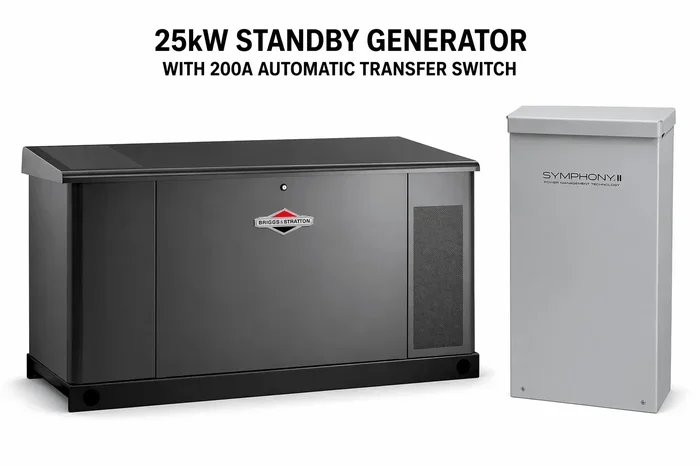
An automatic transfer switch is the brain behind the operation. It ensures your home never experiences a gap in power. You do not need to flip any breakers or run extension cords across your yard. The entire process is hands-free. This is what sets a standby electrical generator apart from a portable model you have to wheel out manually.
The Role of the Alternator
The alternator is the component that actually creates electricity. It uses magnets and copper coils to generate alternating current, or AC power. Your home runs on AC power, so this matches perfectly. A high-quality alternator in a 25 kw generator produces clean, stable power. This protects sensitive electronics like computers, TVs, and medical devices from voltage spikes.
What Can a 25 Kw Generator Power?
One of the most common questions homeowners ask is, “What will a 25 kw generator run?” The answer depends on your electrical setup, but it can handle most essentials and then some. A 25 kw unit provides roughly 100 amps of power at 240 volts. That is enough for a large home with several circuits running simultaneously.
Typical Loads a 25 Kw Generator Handles
Here is a breakdown of common household loads and what a 25 kw generator can manage:
- HVAC system (central air and furnace): 5,000 to 8,000 watts
- Refrigerator and freezer: 1,200 to 2,500 watts
- Water heater (electric): 4,000 to 4,500 watts
- Well pump: 1,500 to 2,500 watts
- Lighting (whole house): 1,000 to 2,000 watts
- Kitchen appliances (oven, dishwasher, microwave): 3,000 to 5,000 watts
- Electric vehicle charger (Level 2): 7,200 watts
- Home office equipment: 1,000 to 2,000 watts
As you can see, a 25 kw generator covers a lot of ground. You can run your HVAC, kitchen, and workspace all at the same time. That is a huge comfort during a long outage. The key is to plan your circuits carefully. Not every home needs to power everything at once, but having the option is valuable.
What a 25 Kw Generator Cannot Power
It is equally important to know the limits. A 25 kw generator is not meant for every single circuit in a massive mansion. If you have multiple electric vehicle chargers, a large pool system, and a whole-house electric heating system, you might need a bigger unit. Also, never try to backfeed your entire electrical panel without a proper transfer switch. That is dangerous and violates electrical codes.
Fuel Types for a 25 Kw Generator
Fuel choice is one of the most important decisions you make. It affects operating costs, runtime, and convenience. A 25 kw generator typically runs on natural gas, propane, or sometimes diesel. Each fuel has pros and cons. Let us break them down.
| Fuel Type | Pros | Cons |
|---|---|---|
| Natural Gas | Unlimited supply from utility line, clean burning, lower cost per hour | May not work during severe gas line damage, slightly less energy dense |
| Propane | Works off-grid, stores indefinitely, widely available | Requires tank storage, higher fuel cost per hour |
| Diesel | High energy density, durable, long runtime | Louder, more maintenance, fuel storage concerns |
Natural Gas: The Most Popular Choice
Natural gas is the go-to fuel for most 25 kw standby generators. It connects directly to your home’s gas line, so you never run out. You do not need to schedule fuel deliveries or swap tanks. The natural gas consumption for a 25 kw unit is moderate, typically around 200 to 250 cubic feet per hour at full load. That makes it very cost-effective for long outages.
Propane: Great for Off-Grid Situations
Propane is an excellent alternative if your home does not have a natural gas connection. You store propane tanks on your property, and the generator draws from them. A 25 kw generator running on propane uses roughly 3 to 5 gallons per hour at full load. Many homeowners install dual-fuel models that can switch between natural gas and propane. This gives you flexibility and peace of mind.
Diesel: Built for Heavy Duty
Diesel-powered 25 kw generators are less common for residential use but still a solid option. They offer excellent fuel efficiency and long engine life. However, they tend to be louder and require more maintenance. Diesel also has storage limitations, so it is best suited for homes that already store fuel for other purposes.
How to Choose the Right 25 Kw Generator
Not all 25 kw generators are created equal. Several factors determine which unit is best for your home. Taking the time to compare options saves money and prevents headaches down the road.
Brand Reputation and Warranty
Stick with reputable brands that have proven track records. Look for manufacturers that offer at least a 5-year limited warranty. Some premium brands extend coverage to 10 years on the engine. A strong warranty reflects confidence in the product. It also protects your investment if something goes wrong.
Noise Level
Generator noise matters, especially in residential neighborhoods. A loud 25 kw generator can disturb your family and your neighbors. Modern standby units operate between 60 and 70 decibels at 23 feet. That is about as loud as a normal conversation. Look for models with sound-attenuated enclosures if noise is a concern.
Automatic Transfer Switch Compatibility
Your generator needs a compatible automatic transfer switch (ATS). The ATS manages the switchover between utility power and generator power. Make sure the ATS matches your electrical panel’s amperage. A licensed electrician can help you choose the right one. Never attempt this installation yourself unless you are qualified.
Installation and Local Codes
Permits and local codes vary by location. Before purchasing a 25 kw generator, check with your city or county building department. Some areas require specific setback distances from property lines. Others have noise ordinances or fuel storage regulations. Working with a professional installer ensures everything meets code.
If you live in an area with frequent outages, connecting with local generator companies can help you find trusted installers and service providers in your region.
Maintenance Tips to Keep Your 25 Kw Generator Running
A 25 kw generator is an investment. Like any investment, it needs regular care to perform when you need it most. Skipping maintenance leads to poor performance and premature failure. A well-maintained generator can last 20 to 30 years or more.
Monthly Maintenance Tasks
- Run the generator for 30 minutes under load each month. This keeps the engine lubricated and tests the system.
- Check the fuel line and connections for leaks or corrosion.
- Inspect the battery and clean any corrosion off the terminals.
- Verify the automatic transfer switch is functioning correctly.
Annual Maintenance Tasks
- Change the engine oil and filter. Use the manufacturer-recommended grade.
- Replace the air filter and fuel filter.
- Inspect and clean the spark plugs.
- Check the coolant level and inspect hoses for cracks.
- Test the voltage output to ensure clean, stable power.
- Schedule a professional generator testing service if you are not comfortable doing it yourself.
Common Maintenance Mistakes to Avoid
Many homeowners make avoidable mistakes. Letting the generator sit for months without running it is the biggest one. Fuel can degrade and carburetors can clog. Another mistake is ignoring the battery. A dead battery means the generator will not start when you need it. Finally, never skip oil changes. Clean oil is the lifeblood of the engine, and dirty oil causes wear and tear.
Cost Considerations for a 25 Kw Generator
The cost of a 25 kw generator varies based on brand, fuel type, and features. On average, you can expect to pay between $5,000 and $10,000 for the unit itself. Installation adds another $1,500 to $3,000 depending on complexity. The total investment typically falls between $7,000 and $13,000.
Operating costs depend heavily on fuel prices and how often you run the generator. Natural gas is the most affordable fuel source for most homeowners. Propane costs more per hour but offers independence from the utility grid. Factor in fuel costs when calculating the long-term value of your purchase.
Keep in mind that a 25 kw generator can actually increase your home’s value. Buyers in areas prone to power outages look for homes with standby generators already installed. It is a selling point that sets your property apart. Many real estate agents confirm that backup power adds perceived value and buyer confidence.
Final Thoughts on the 25 Kw Generator
A 25 kw generator is one of the best investments a homeowner can make. It provides reliable backup power, protects your appliances, and keeps your family comfortable during outages. Whether you choose natural gas or propane, this size unit handles most residential needs with ease. The key is to plan carefully, choose a reputable brand, and commit to regular maintenance.
Take time to assess your power needs. Consider your home size, fuel availability, and local climate. If you are still unsure, consult a licensed electrician or a local generator installation company. They can help you size the system correctly and ensure a safe, code-compliant setup.
Power outages do not wait for a convenient moment. They happen at the worst possible times. Having a 25 kw generator means you are ready. Your home stays running, your family stays safe, and you stay comfortable no matter what the grid throws at you.
Frequently Asked Questions
How much fuel does a 25 kw generator use per hour?
A 25 kw generator uses about 200 to 250 cubic feet of natural gas per hour at full load. On propane, it burns roughly 3 to 5 gallons per hour. Actual consumption varies based on the load you are running. Running at partial load uses less fuel than running at full capacity.
Can a 25 kw generator power a central air conditioner?
Yes, a 25 kw generator can power a central air conditioner along with most other household essentials. A central AC unit typically draws 3,000 to 5,000 watts. That leaves plenty of capacity for your fridge, lights, and other circuits. Plan your load carefully to avoid overloading the system.
Do I need a permit to install a 25 kw generator?
Most jurisdictions require a permit for standby generator installation. Permit requirements vary by city and county. A licensed electrician or installer usually handles the permit process for you. Always check with your local building department before starting the installation.
How long does a 25 kw generator last?
With proper maintenance, a 25 kw generator can last 20 to 30 years. The engine and alternator are built for heavy-duty residential use. Regular oil changes, filter replacements, and monthly test runs all contribute to a longer lifespan. Neglecting maintenance significantly shortens the unit’s life.
Is a 25 kw generator too big for a small home?
It can be, if you only need to power a few essentials. A small home with a gas furnace and basic appliances might do fine with a 10 to 15 kw unit. However, a 25 kw generator offers future flexibility. If you plan to add electric heating, an EV charger, or other high-draw appliances, the extra capacity is worth it.
What is the difference between a 25 kw generator and a portable generator?
A 25 kw standby generator connects permanently to your home and turns on automatically. A portable generator is movable and requires manual setup. Standby units also run on natural gas or propane, while portable models typically use gasoline. The standby option is far more convenient and safer for long-term backup power.