what opens and closes valves in a reciprocating compressor
The valves in a reciprocating compressor are opened by pressure differences created by the piston’s movement and closed by spring force or gravity. The suction valve lets gas into the cylinder, while the discharge valve pushes it out at high pressure. Understanding these components helps you maintain compressor efficiency and avoid costly breakdowns.
This is a comprehensive guide about what opens and closes the valves in a reciprocating compressor.
Key Takeaways
- Valves operate on pressure differentials: The piston creates low pressure on the suction side and high pressure on the discharge side, which opens and closes each valve automatically.
- Two main valve types exist: Suction valves and discharge valves each play a distinct role in the compression cycle.
- Spring tension matters: Valve springs control how quickly valves open and close, directly affecting compressor performance.
- Common problems include wear and debris: Stuck or damaged valves reduce efficiency and can cause complete compressor failure.
- Regular maintenance extends valve life: Simple inspections and cleaning can prevent most valve-related issues.
- Valve design varies by compressor type: Reed valves, poppet valves, and plate valves each suit different applications.
[FEATURED_IMAGE_PLACEHOLDER]
How Reciprocating Compressors Work
A reciprocating compressor uses a piston that moves back and forth inside a cylinder. This motion compresses gas and moves it through the system. The entire process depends on precise timing. And that timing starts with the valves.
When the piston moves down, it creates a low-pressure area inside the cylinder. This draws fresh gas in through the suction valve. When the piston moves up, it compresses the gas until the pressure exceeds the discharge valve’s threshold. Then the gas exits through the discharge valve.
This cycle repeats hundreds or thousands of times per minute. Every single cycle relies on valves opening and closing at exactly the right moment. If even one valve malfunctions, the entire compressor loses efficiency. That is why understanding what opens and closes these valves is so important.
The basic components of a reciprocating compressor include the piston, connecting rod, crankshaft, cylinder, valve plate, and valve springs. Each part plays a role in the compression process. But the valves are the gatekeepers. They control the flow direction and ensure gas moves where it should.
The Role of Valves in Compressor Operation
Valves in a reciprocating compressor are not powered by motors or external controls. They operate entirely through mechanical forces. Specifically, they respond to pressure changes inside the cylinder. This self-acting design is what makes reciprocating compressors so reliable.
There are two primary valves in every reciprocating compressor. The suction valve allows gas to enter the cylinder. The discharge valve releases compressed gas out of the cylinder. Both valves must open and close smoothly for the compressor to work correctly.
Pressure differential is the key concept here. When the pressure on one side of a valve exceeds the pressure on the other side, the valve opens. When the pressure equalizes or reverses, the valve closes. This happens naturally without any electronic control.
Suction Valve Operation
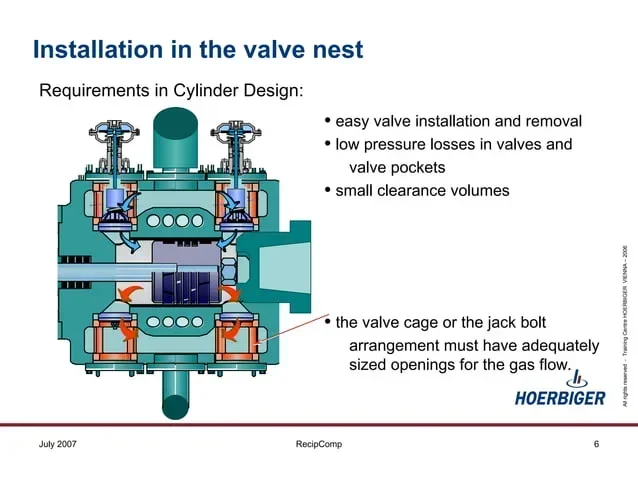
The suction valve sits at the top or side of the cylinder. When the piston moves downward, the pressure inside the cylinder drops below the intake pressure. This pressure difference pushes the suction valve open. Fresh gas rushes into the cylinder.
Once the piston reaches the bottom of its stroke and starts moving up, the pressure inside the cylinder rises. When it exceeds the intake pressure, the suction valve closes. This seals the cylinder so the gas can be compressed.
The suction valve spring adds extra force to ensure a tight seal. A weak spring can cause the valve to chatter. This leads to lost compression and reduced efficiency. Regular inspection of valve springs should be part of every maintenance routine.
Discharge Valve Operation
The discharge valve works in the opposite direction. When the piston compresses the gas to a pressure higher than the system’s output pressure, the discharge valve opens. The compressed gas flows out of the cylinder and into the discharge line.
When the piston begins its downward stroke, the pressure inside the cylinder drops. The discharge valve closes to prevent compressed gas from flowing back into the cylinder. This backflow prevention is critical for maintaining system pressure.
The discharge valve faces the most stress in the entire compression cycle. It handles the highest pressures and temperatures. This makes it the most prone to wear and failure. Keeping discharge valves in good condition should be a top priority.
What Opens the Valves in a Reciprocating Compressor
The answer is simple: pressure differences open the valves. But the mechanics behind this are fascinating. Let us break down exactly what happens during each phase of the compression cycle.
When the crankshaft rotates, it moves the piston through the cylinder. The connecting rod transfers rotational motion into linear motion. As the piston travels downward on the suction stroke, it expands the volume inside the cylinder. This expansion lowers the pressure below the intake pressure.
The higher pressure on the outside pushes against the valve disc. This force overcomes the valve spring tension and opens the valve. Gas flows through the open valve into the cylinder.
On the discharge stroke, the piston moves upward. This compresses the gas inside the cylinder. The pressure builds until it exceeds the pressure in the discharge line. At that point, the discharge valve opens and the compressed gas exits.
Several factors influence how easily valves open:
- Valve spring tension: Stronger springs require more pressure to open the valve. This can delay valve response.
- Piston speed: Faster piston movement creates quicker pressure changes, which affects valve timing.
- Gas viscosity: Thicker gases require more force to push through open valves.
- Valve size and design: Larger valves open more easily but may not seal as tightly.
- Cylinder diameter: A wider cylinder creates more volume change per stroke, affecting pressure buildup.
Some compressors use reed valves made from thin metal strips. These are common in small reciprocating compressors. Reed valves open very easily because they are flexible. They close quickly when pressure reverses. Other compressors use poppet valves with heavier valve discs and stronger springs. Each design has its own opening characteristics.
What Closes the Valves in a Reciprocating Compressor
Closing the valves is just as important as opening them. A valve that does not close fully will leak. This leakage reduces compressor efficiency and can cause serious damage over time.
Valve springs are the primary mechanism that closes the valves. When the pressure differential reverses, the spring pushes the valve disc back onto its seat. This creates a tight seal that prevents gas from flowing backward.
The Role of Valve Springs
Every valve in a reciprocating compressor has a spring. The spring sits on top of or behind the valve disc. When pressure pushes the valve open, the spring compresses. When pressure drops or reverses, the spring expands and pushes the valve closed.
Spring tension must be carefully calibrated. If the spring is too weak, the valve will not close fully. Gas will leak back, reducing compression efficiency. If the spring is too strong, the valve may not open fully. This restricts flow and forces the compressor to work harder.
Valve springs wear out over time. Metal fatigue can cause a spring to weaken or break. Corrosion from moisture in the compressed gas can also affect spring performance. This is why spring inspection should happen during every scheduled maintenance check.
Gravity and Gas Forces
In some vertical compressor designs, gravity helps close the valves. The weight of the valve disc itself presses the valve shut when pressure is equalized. This is common in large industrial compressors where gravity-assisted closing reduces spring wear.
Gas forces also play a role in valve closure. When the piston changes direction, the gas pressure shifts rapidly. This sudden pressure change helps push the valve disc onto its seat. The combination of spring force, gravity, and gas dynamics ensures a reliable seal.
Valve Seat Design
The valve seat is the surface where the valve disc rests when closed. A smooth, clean valve seat is essential for a proper seal. Over time, debris, moisture, and metal particles can damage the seat surface.
A damaged valve seat causes leakage even when the valve is fully closed. The gas simply passes through the gap. This is one of the most common reasons compressors lose pressure over time. Replacing or resurfacing the valve seat can often restore full compressor performance.
Common Valve Problems and How to Fix Them
Valve problems are among the most frequent issues in reciprocating compressors. Fortunately, most valve problems show clear warning signs. Catching these signs early can prevent expensive repairs.
Signs of Valve Failure
Watch for these common symptoms of failing compressor valves:
- Reduced compression pressure: The compressor cannot reach its target pressure.
- Excessive cycling: The compressor turns on and off more frequently than normal.
- Unusual noises: Knocking, rattling, or hissing sounds from the cylinder area.
- Overheating: The compressor runs hotter than usual during operation.
- Increased power consumption: The motor draws more amps than normal.
- Oil contamination in discharge air: Oil passes through damaged valves into the output.
What Causes Valve Damage?
Several factors contribute to premature valve failure. Understanding these causes helps you prevent them:
- Wear and tear: Normal use gradually erodes valve surfaces. This is inevitable but can be slowed with proper maintenance.
- Debris contamination: Dirt, metal particles, or other debris can wedge between the valve and seat. This prevents a proper seal.
- Moisture corrosion: Water in the compressed gas can rust valve components over time.
- Spring fatigue: Repeated compression cycles weaken valve springs gradually.
- Improper installation: Valves installed incorrectly may not seat properly from the start.
- Operating beyond limits: Running the compressor at pressures or temperatures beyond its design specifications accelerates wear.
Fixing and Replacing Valves
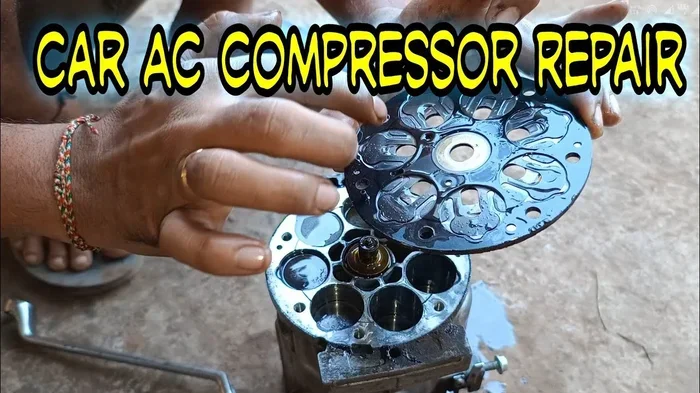
Minor valve issues can often be fixed with cleaning and adjustment. Remove the valve plate and inspect the valve disc and seat. Use a soft brush to clear any debris. Check the valve spring for signs of weakening or damage.
If the valve disc is scored or warped, replacement is the best option. Most compressor manufacturers sell valve kits that include the valve disc, spring, and seat. Replacing the entire kit ensures all components are in matching condition.
For serious damage, consult a professional compressor technician. Attempting to repair severely damaged components can lead to further problems. A qualified technician can assess whether the entire valve plate or cylinder head needs replacement.
Remember that a well-maintained compressor runs more efficiently and lasts longer. Regular valve inspection should be part of your standard maintenance schedule. This simple habit can save you from unexpected downtime and costly repairs.
Valve Types Used in Reciprocating Compressors
Not all compressor valves are the same. Different designs suit different applications. Understanding the options helps you choose the right compressor for your needs.
Reed Valves
Reed valves are thin metal strips that flex open when pressure pushes them. They are common in small household and portable compressors. Reed valves open with very little pressure and close quickly. Their simple design makes them inexpensive and easy to replace.
The downside is that reed valves can fatigue over time. The metal loses its flexibility after thousands of cycles. However, replacement reed valves are widely available and affordable.
Poppet Valves
Poppet valves use a heavier disc that lifts off a precision-machined seat. They are common in larger industrial compressors. Poppet valves handle higher pressures and temperatures better than reed valves. The stronger spring tension ensures a reliable seal under demanding conditions.
Poppet valves are more durable but also more expensive to replace. They require precise machining of the valve seat for proper sealing. This makes professional installation recommended for poppet valve replacements.
Plate Valves
Plate valves are essentially valve plates with multiple openings. They are used in high-volume industrial compressors. The plate design allows for greater airflow capacity. Multiple valves can be arranged on a single plate for balanced operation.
Plate valves are more complex to manufacture and maintain. But they offer excellent performance for continuous-duty applications. Large manufacturing facilities and industrial plants often rely on plate valve compressors.
Tips for Extending Valve Life
Valves are wear items. They will eventually need replacement. But you can significantly extend their lifespan with proper care. Follow these practical tips to get the most out of your compressor valves.
- Keep intake air clean: Use proper air filters and replace them regularly. Clean intake air prevents debris from entering the cylinder and damaging valve surfaces.
- Drain moisture regularly: Condensation inside the compressor can cause corrosion. Drain the tank and check for moisture buildup after every use.
- Monitor operating temperatures: Excessive heat accelerates valve wear. Ensure proper ventilation around the compressor and check that cooling systems are functioning.
- Follow the manufacturer’s maintenance schedule: The manufacturer knows the valve specifications best. Stick to their recommended inspection intervals and replacement timelines.
- Use the right oil: If your compressor requires oil, use the grade recommended by the manufacturer. Wrong oil can cause sludge buildup that affects valve operation.
- Check valve springs during every service: Even if the springs look fine, measure their tension periodically. A weak spring is an early warning sign of valve problems.
- Avoid short cycling: Frequent on-off cycling puts extra stress on valves. Let the compressor run for adequate cycles before shutting it down.
These simple habits add up over time. A compressor with well-maintained valves runs cooler, uses less energy, and delivers consistent pressure. The small effort you put into valve care pays off in reliability and longevity.
Conclusion
The valves in a reciprocating compressor are essential components that control the flow of gas through the system. Pressure differentials open the valves, while valve springs, gravity, and gas forces close them. The suction valve draws gas into the cylinder, and the discharge valve releases compressed gas out.
Understanding how these valves work empowers you to maintain your compressor better. You can spot early warning signs of valve problems and take action before a small issue becomes a major repair. Regular inspection, clean intake air, and proper moisture management go a long way toward keeping your valves in top shape.
Whether you operate a small shop compressor or a large industrial unit, valve maintenance should never be overlooked. The valves are the heart of the compression process. Keep them healthy, and your compressor will serve you reliably for years to come.
Frequently Asked Questions
What causes compressor valves to fail?
Compressor valves fail due to wear, debris contamination, corrosion, spring fatigue, or operating beyond the manufacturer’s specifications. Regular maintenance and clean intake air can significantly reduce the risk of valve failure.
Can I run my reciprocating compressor with a bad valve?
You can run a compressor with a bad valve, but it will lose efficiency and may cause further damage. A leaking valve reduces compression pressure and forces the motor to work harder. It is best to replace faulty valves as soon as possible.
How often should compressor valves be inspected?
Compressor valves should be inspected at least once every 500 to 1,000 operating hours. For heavy-use applications, more frequent inspections are recommended. Check your owner’s manual for the manufacturer’s specific maintenance schedule.
What is the difference between a suction valve and a discharge valve?
The suction valve allows gas to enter the cylinder during the intake stroke. The discharge valve releases compressed gas out of the cylinder during the compression stroke. Both valves operate based on pressure differentials but serve opposite functions in the compression cycle.
Are reed valves better than poppet valves?
Reed valves are simpler and more affordable, making them ideal for small compressors. Poppet valves handle higher pressures and temperatures better, making them suitable for industrial applications. The best valve type depends on your compressor’s intended use and operating conditions.
How much does it cost to replace compressor valves?
The cost varies depending on the compressor type and valve design. Reed valve replacements are usually affordable and easy to do yourself. Poppet and plate valve replacements may require professional service and can cost more. Always check with your compressor manufacturer for specific pricing.