How to Check Your Air Conditioner Compressor Properly
Checking your air conditioner compressor is essential for maintaining a cool and comfortable home. This guide walks you through simple steps to test your AC compressor, spot early warning signs, and avoid costly repairs. You will learn how to check compressor pressure, test the relay, and diagnose common problems safely.
Your air conditioner compressor is the heart of your cooling system. Without it, your AC unit simply cannot cool your home. When the compressor starts to fail, you notice warm air blowing from the vents, strange noises, or higher energy bills. Learning how to check air conditioner compressor health early can save you hundreds of dollars in repair costs. This guide gives you clear, practical steps to test your compressor like a pro. Whether you are a homeowner or a renter, these tips will help you keep your cooling system running strong all summer long.
Many people ignore their AC compressor until something goes terribly wrong. By then, the repair bill can be shocking. A simple check-up every few months can extend the life of your unit significantly. You do not need to be an HVAC expert to perform basic diagnostics. With the right tools and a little patience, you can identify problems early. Let us walk through everything you need to know about checking your air conditioner compressor properly.
Key Takeaways
- Visual inspection is the first and easiest way to spot compressor problems before they get worse.
- Testing compressor pressure with a manifold gauge set helps you determine if the unit is functioning correctly.
- Checking the compressor relay and capacitor can reveal electrical issues that prevent the unit from starting.
- Listening for unusual noises like grinding or clicking gives you early clues about mechanical failure.
- Measuring refrigerant levels is critical because low charge often causes compressor damage over time.
- Knowing when to call a professional saves you money and prevents dangerous DIY mistakes.
📑 Table of Contents
Why Checking Your AC Compressor Matters
The compressor plays a vital role in the refrigeration cycle. It pressurizes the refrigerant and moves it through the system. When the compressor works well, your home stays cool and comfortable. When it starts to fail, the entire cooling process breaks down. Regular checks help you catch small issues before they turn into big problems.
Here are some reasons why compressor maintenance matters:
- Cost savings: Catching problems early prevents expensive compressor replacement costs.
- Energy efficiency: A healthy compressor uses less electricity, which lowers your bills.
- Comfort: A working compressor keeps your home at the right temperature.
- Longevity: Regular maintenance can add years to your AC unit’s lifespan.
- Safety: Faulty compressors can pose electrical and fire risks if ignored.
How Often Should You Check the Compressor?
You should inspect your compressor at least twice a year. The best times are before summer and before winter. If you live in a hot climate, checking it more often makes sense. Pay extra attention during peak cooling season when the unit works hardest. A quick visual check once a month can also help you notice changes early.
Tools You Need to Check the Compressor
Before you start, gather the right tools. Having everything ready makes the process smoother and safer. You do not need expensive equipment for basic checks. Here is a simple list of what you will need.
- Multimeter: For testing electrical connections and voltage.
- Manifold gauge set: For checking refrigerant pressure levels.
- Screwdriver set: For removing access panels safely.
- Flashlight: For inspecting hard-to-see areas.
- Thermometer: For measuring temperature differences.
- Safety gloves and goggles: For protecting yourself during inspection.
You can find most of these tools at any hardware store. A basic multimeter costs under thirty dollars. The manifold gauge set is a bit more expensive but very useful for pressure testing. If you plan to do regular HVAC maintenance, investing in these tools is well worth it.
Step-by-Step Guide to Check Your Air Conditioner Compressor
Now let us get into the hands-on part. Follow these steps carefully to check your compressor properly. Always turn off the power before you open any panels. Safety comes first. If at any point you feel unsure, it is perfectly fine to call a professional.
Step 1: Turn Off the Power
Start by switching off the AC unit at the thermostat. Then go to your electrical panel and turn off the breaker that powers the outdoor unit. This is a critical safety step. Never work on a live compressor. Even when the unit is off, capacitors can hold a charge. Use caution at all times.
Step 2: Remove the Access Panels
Use your screwdriver to remove the outer panels of the outdoor unit. Set the screws aside in a safe place. Once the panels are off, you will have a clear view of the compressor and its components. Look around carefully before touching anything. Check for any obvious signs of damage or wear.
Step 3: Perform a Visual Inspection
A visual inspection can reveal a lot about compressor health. Look for these key indicators:
- Oil leaks: Oil spots around the compressor mean something is wrong.
- Corrosion: Rust or green buildup on wires and connections signals moisture damage.
- Damaged wiring: Frayed or burnt wires need immediate attention.
- Debris buildup: Dirt and leaves around the unit can block airflow.
- Bulging or swelling: A deformed compressor housing is a serious red flag.
Take your time with this step. Sometimes the smallest visual clue can point to a big problem. Use your flashlight to look into tight spaces. A clean, well-maintained compressor usually runs better than a dirty one.
Step 4: Check the Compressor Relay
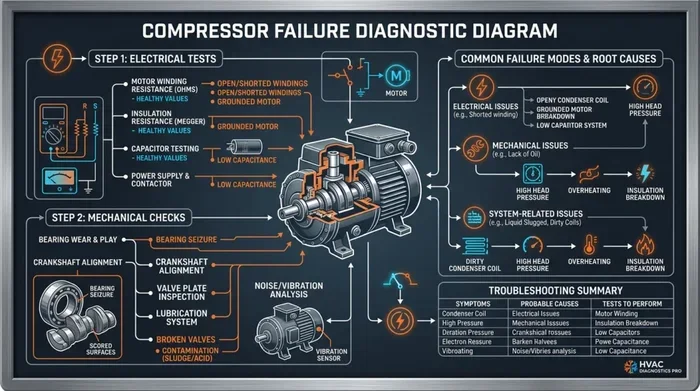
The compressor relay sends electrical power to the compressor. When it fails, the compressor will not start. You can test the relay using your multimeter. First, locate the relay near the compressor. It usually looks like a small black box with wiring connected to it. Remove the relay carefully and set your multimeter to the continuity setting. Test the terminals to see if the relay is completing the circuit properly. If there is no continuity, the relay needs replacement.
Step 5: Test the Start Capacitor
The start capacitor gives the compressor the extra boost it needs to kick on. A failing capacitor is one of the most common reasons compressors will not start. Use your multimeter to check the capacitor voltage. Always discharge the capacitor before testing it. A capacitor that reads below its rated value should be replaced. This is a simple fix that many homeowners can handle on their own.
Step 6: Measure Refrigerant Pressure
Checking refrigerant pressure tells you a lot about compressor performance. Attach your manifold gauge set to the service ports on the outdoor unit. The high-side port is usually the smaller one, and the low-side port is the larger one. Compare your readings to the manufacturer specifications. Low pressure on both sides can indicate a refrigerant leak. High pressure on the high side might mean the compressor is struggling to pump properly.
If you are not comfortable working with refrigerant, this is a step best left to a licensed HVAC technician. Refrigerant handling requires special certification in many areas. However, understanding what the readings mean helps you have better conversations with your repair technician.
Step 7: Listen and Feel for Warning Signs
Your senses are powerful diagnostic tools. When the compressor is running, stand near the outdoor unit and listen carefully. A healthy compressor makes a steady humming sound. Any of the following sounds should concern you:
- Grinding: This suggests worn internal bearings or mechanical failure.
- Clicking: Repeated clicking can mean a faulty relay or control board.
- Hissing: Hissing often indicates a refrigerant leak.
- Buzzing without starting: The compressor is trying to start but cannot.
Also, feel the temperature of the compressor housing. It should be warm but not extremely hot to the touch. If the unit feels burning hot, the compressor is likely overheating. Overheating can be caused by low refrigerant, dirty coils, or electrical issues.
Common AC Compressor Problems and What They Mean
Understanding common compressor problems helps you diagnose issues faster. Here are the most frequent problems homeowners face with their air conditioning compressor.
| Problem | Symptoms | Possible Cause |
|---|---|---|
| Compressor will not start | No cool air, unit silent or clicking | Failed relay, bad capacitor, or electrical issue |
| Compressor overheats | Unit shuts off after a few minutes | Low refrigerant, dirty coils, or blocked airflow |
| Compressor runs but does not cool | Warm air from vents, unit running constantly | Refrigerant leak or compressor internal failure |
| Compressor makes loud noises | Grinding, rattling, or banging sounds | Worn internal parts or loose components |
| Compressor cycles on and off frequently | Short cooling cycles, uneven temperatures | Thermostat issue, low refrigerant, or electrical problem |
Each problem has a different root cause. Some are simple fixes, while others require professional attention. The table above gives you a quick reference guide for common issues. Use it alongside the diagnostic steps earlier in this article for a thorough compressor check.
When Low Refrigerant Causes Compressor Issues
Low refrigerant is one of the leading causes of compressor failure. When the refrigerant level drops too low, the compressor has to work harder to cool your home. This extra strain causes overheating and eventual breakdown. If you suspect a refrigerant leak, it is important to address it quickly. A professional can locate the leak, repair it, and recharge the system to the proper level.
How to Prevent Compressor Problems
Prevention is always better than repair. A few simple habits can keep your compressor healthy for years. Here are some easy tips to follow.
- Change your air filter regularly: A clogged filter restricts airflow and makes the compressor work harder.
- Keep the outdoor unit clean: Remove leaves, dirt, and debris from around the unit at least once a month.
- Schedule professional maintenance: A yearly HVAC tune-up catches small problems before they grow.
- Check your thermostat settings: Avoid setting the thermostat too low, which strains the compressor.
- Ensure proper insulation: Good insulation reduces the cooling load on your AC system.
Taking care of your compressor does not require a lot of time or money. Small efforts add up to big savings over the years. A well-maintained compressor can last fifteen to twenty years, while a neglected one may fail in half that time.
Can You Run Your AC Compressor on a Generator?
Some homeowners use generators to power their AC units during outages or in off-grid situations. If you are considering this, it is important to match the generator size to your cooling needs. For a standard central AC unit, you need a generator with enough wattage to handle the compressor startup surge. Check out our guide on how big of a generator do I need for my camper for helpful sizing tips that also apply to home AC units. Similarly, if you are dealing with a smaller window unit or RV setup, our article on what size generator for 30 amp rv air conditioner offers useful guidance on matching power supply to compressor demands.
Running an AC compressor on an undersized generator can cause the compressor to short-cycle and eventually fail. Always check the starting watts required by your specific AC unit. A properly sized generator ensures smooth compressor operation without damage.
When to Call a Professional
Not every compressor problem is a DIY fix. Some issues require the expertise of a licensed HVAC technician. You should call a professional if you notice any of the following:
- The compressor is making loud grinding or banging noises.
- The unit trips the breaker repeatedly.
- You can see liquid leaking from the compressor.
- The refrigerant pressure readings are significantly off.
- The compressor has been running hot for an extended period.
Attempting complex repairs without the right knowledge can be dangerous. Electrical work inside an AC unit carries real risks. A qualified technician has the training and tools to diagnose and fix problems safely. They can also spot issues you might miss during a basic check. Investing in professional help when needed protects both your home and your budget.
If you are curious about the average cost of replacing a compressor, our article on how much does a home generator cost provides useful context for understanding major HVAC equipment investment costs. While that article focuses on generators, the cost principles for large home systems apply similarly to compressor replacement.
Final Thoughts on Checking Your AC Compressor
Checking your air conditioner compressor regularly is one of the best things you can do for your home comfort. A little effort goes a long way toward preventing unexpected breakdowns and costly repairs. By following the steps in this guide, you can identify problems early and take action before they get worse. Remember to always prioritize safety, use the right tools, and know your limits. Whether you handle basic checks yourself or rely on a professional, staying proactive about compressor health keeps your home cool and your energy bills manageable.
Take a few minutes today to inspect your compressor. You might catch a small issue that saves you a big headache tomorrow. Your AC compressor works hard for you every day. A little attention and care will keep it running smoothly for many years to come.
Frequently Asked Questions
How do I know if my AC compressor is bad?
Common signs of a failing compressor include warm air from the vents, unusual noises like grinding or clicking, frequent tripping of the circuit breaker, and the unit running constantly without cooling your home. If you notice any of these symptoms, it is time to check your compressor more thoroughly.
Can I check my AC compressor myself?
Yes, you can perform basic checks like visual inspection, listening for noises, and testing electrical components with a multimeter. However, refrigerant pressure testing and complex electrical repairs should be left to a licensed professional. Always prioritize safety when working around your AC unit.
What causes an AC compressor to fail?
Common causes include low refrigerant levels, electrical issues, overheating, dirty coils, and age-related wear. Lack of regular maintenance also accelerates compressor failure. Keeping your system clean and well-maintained significantly reduces the risk of premature compressor breakdown.
How much does it cost to replace an AC compressor?
Compressor replacement costs typically range from one thousand to three thousand dollars, depending on the unit size and model. Labor costs add to the total expense. Getting a professional diagnosis first helps you understand whether a full replacement is necessary or if a simpler repair will do the job.
How long does an AC compressor last?
A well-maintained AC compressor typically lasts between fifteen and twenty years. However, heavy use, poor maintenance, and refrigerant leaks can shorten its lifespan significantly. Regular professional tune-ups help maximize the compressor’s longevity and performance over time.
Is it safe to run a compressor with low refrigerant?
No, running a compressor with low refrigerant is very dangerous for the unit. Low charge causes the compressor to overwork, leading to overheating and eventual mechanical failure. If you suspect low refrigerant, have a professional inspect and recharge the system before running the unit again.
=== CONCLUSION ===
Checking your air conditioner compressor does not have to be complicated or intimidating. With the right tools and a systematic approach, you can identify most common problems early. From visual inspections to pressure testing, each step brings you closer to understanding your compressor’s health. Regular checks save money, improve efficiency, and keep your home comfortable all year round. Start applying these tips today and enjoy the peace of mind that comes with a well-maintained cooling system.