Why Is My Compressor Freezing Up And What Causes It
Your compressor can freeze up due to several common issues, including low refrigerant levels, dirty evaporator coils, clogged air filters, and faulty expansion valves. Understanding these root causes helps you fix the problem fast and avoid costly repairs. This guide walks you through every major cause, practical fix, and prevention tip to keep your cooling system running smoothly all year long.
There is nothing more frustrating than walking up to your outdoor unit on a hot day and finding it completely covered in ice. If you have ever asked yourself, why is my compressor freezing up, you are not alone. This is one of the most common complaints homeowners have about their cooling systems, and it can happen to any type of HVAC equipment.
A frozen compressor means your system has stopped cooling properly. In some cases, the entire unit shuts down. In others, ice builds up slowly over days until the system can no longer function. Either way, the result is the same: discomfort, higher energy bills, and potentially expensive repair costs.
The good news is that most causes of a frozen compressor are easy to identify and fix. You do not need to be an HVAC expert to understand what is going on. This guide breaks down every major cause, gives you step-by-step fixes, and shares prevention tips that will keep your system running strong for years to come.
Whether you are dealing with a frozen compressor coil right now or want to prevent it from happening, this article has everything you need. Let us dive in.
Key Takeaways
- Low refrigerant is the #1 cause: When your refrigerant charge drops, pressure falls and temperatures drop below freezing at the evaporator coil.
- Dirty coils and clogged filters block airflow: Restricted airflow causes moisture to freeze on the evaporator, leading to ice buildup over time.
- Faulty expansion valves create pressure imbalances: A stuck or broken valve lets too much refrigerant flow, causing the coil to freeze.
- Cold weather and poor insulation make it worse: Outdoor units in cold climates can freeze up fast without proper compressor insulation and covers.
- DIY fixes work for simple causes: Replacing filters, cleaning coils, and checking for airflow blockages are easy steps anyone can do.
- Call a pro for refrigerant leaks and electrical issues: These require licensed technicians with proper tools and certifications.
- Prevention saves money: Regular compressor maintenance, filter changes, and annual inspections keep your system running efficiently.
📑 Table of Contents
Understanding What Happens When Your Compressor Freezes Up
Before we look at causes, it helps to understand what is actually happening inside your system. Your compressor is the heart of your cooling system. It pumps refrigerant through the indoor and outdoor units, absorbing heat from your home and releasing it outside.
When everything works correctly, the refrigerant flows smoothly at the right pressure. But when something disrupts that balance, the evaporator coil temperature drops below freezing. Moisture in the air that passes over the coil turns to ice. Over time, that ice builds up and restricts airflow even more, creating a cycle that gets worse and worse.
This is why early detection matters. A small amount of frost can turn into a solid block of ice within hours if the root cause is not addressed. The key is to catch the problem early and act fast.
Common Signs Your Compressor Is Freezing
How do you know if your compressor is freezing up before it becomes a total shutdown? Watch for these warning signs:
- Ice visible on the copper lines or outdoor unit
- Warm air coming from your vents instead of cool air
- The system runs constantly but does not cool your home
- Water pooling around the indoor unit or outdoor base
- Unusual hissing or bubbling sounds from the compressor parts
- Higher than normal energy bills with no change in usage
If you notice any of these signs, turn off your system and let the ice melt completely before inspecting further. Running a frozen system can damage the compressor motor and lead to a much bigger repair bill.
Common Causes Of A Freezing Compressor
Several factors can cause your compressor to freeze up. Some are simple and cheap to fix. Others require professional attention. Let us go through each one in detail.
Low Refrigerant Levels
The most common reason a compressor freezes up is low refrigerant. Your system relies on a specific amount of refrigerant to operate correctly. When the level drops, the pressure inside the system falls. Lower pressure means lower temperatures at the evaporator coil. Eventually, the coil gets cold enough to freeze the moisture in the air.
Refrigerant does not get used up over time. If your level is low, you have a refrigerant leak somewhere in the system. This could be in the copper lines, the evaporator coil, the condenser unit, or at any of the connection points.
Signs of a refrigerant leak include:
- Hissing or bubbling sounds near the refrigerant lines
- Oily residue on copper pipes or fittings
- Gradual loss of cooling performance over weeks
- Ice forming on the suction line (the larger copper pipe)
Fixing a refrigerant leak requires a licensed technician. They will locate the leak, repair or replace the damaged part, and recharge the system with the correct amount of refrigerant. Never try to add refrigerant yourself. Improper charging can damage your compressor and void your warranty.
Dirty Evaporator Coil
Your evaporator coil sits inside your home, usually above the furnace or air handler. As warm air passes over it, the coil absorbs heat and moisture. Over time, dust and dirt accumulate on the coil surface. This buildup acts like a blanket, trapping cold air against the coil and causing ice buildup.
A dirty evaporator coil also restricts airflow. When less air passes over the coil, the coil gets colder because it is not receiving enough warm air to balance the process. This creates the perfect conditions for freezing.
You can clean a mildly dirty coil yourself with a no-rinse coil cleaner spray. For heavily soiled coils, a professional cleaning is the best option. During your annual compressor maintenance visit, ask your technician to inspect and clean the evaporator coil.
Clogged Air Filter
This is the simplest cause and the easiest to fix. When your air filter gets clogged with dust and debris, airflow through the system drops significantly. Just like a dirty evaporator coil, restricted airflow causes the evaporator to get too cold and freeze up.
Most HVAC experts recommend changing your air filter every 1 to 3 months. If you have pets, live in a dusty area, or use your system heavily during summer, you may need to change it more often. A clean filter is one of the cheapest and most effective ways to prevent compressor freezing.
Quick tip: Keep spare filters on hand so you can swap them out immediately when you notice reduced airflow.
Faulty Expansion Valve
The expansion valve controls the flow of refrigerant into the evaporator coil. It regulates pressure and ensures the right amount of refrigerant enters the coil at the right time. When the valve malfunctions, it can let too much refrigerant flow through the system.
Too much refrigerant in the evaporator coil causes the temperature to drop below freezing. The result is ice forming on the coil and eventually spreading to the compressor itself.
Expansion valve problems are not always easy to spot on your own. A technician can test the valve with pressure gauges and determine whether it needs adjustment or replacement. This is a common issue in older systems where parts have worn out over time.
Cold Weather And Poor Insulation
Here is something many people do not expect: your compressor can freeze up in cold weather, even when you are not running the cooling system. If outdoor temperatures drop below 60 degrees Fahrenheit and your system is running in heat mode, the condenser unit can accumulate frost and ice.
Poor insulation around the refrigerant lines makes this worse. Exposed copper lines in unheated spaces lose heat quickly, and moisture in the air condenses and freezes on the surface. This is especially common in northern climates or in homes with poorly insulated attics and crawl spaces.
Proper compressor insulation and weather covers can help prevent cold weather freezing. Make sure your outdoor unit is protected from direct exposure to cold winds and snow buildup.
How To Tell If Your Compressor Is Freezing Up
Diagnosing a frozen compressor starts with a simple inspection. Here is what to look for and how to confirm the problem.
First, turn off your system and let the ice melt completely. This usually takes 1 to 3 hours depending on how much ice has built up. Do not try to chip the ice away. You could damage the coils or other delicate components.
Once the system is thawed, inspect the following areas:
- Outdoor unit: Look for ice on the condenser coil, refrigerant lines, and the compressor housing.
- Indoor unit: Check the evaporator coil for frost or ice buildup. You may need to remove the access panel to see it clearly.
- Air filter: Hold it up to a light source. If you cannot see light through it, it is clogged and needs replacing.
- Copper lines: The suction line (larger pipe) should feel warm or room temperature. If it is cold to the touch or covered in frost, you likely have a refrigerant issue.
After your visual inspection, run the system for 15 to 20 minutes and monitor the temperatures. If the warm air from your vents feels lukewarm or the ice starts forming again, you have confirmed the problem and can move on to fixing it.
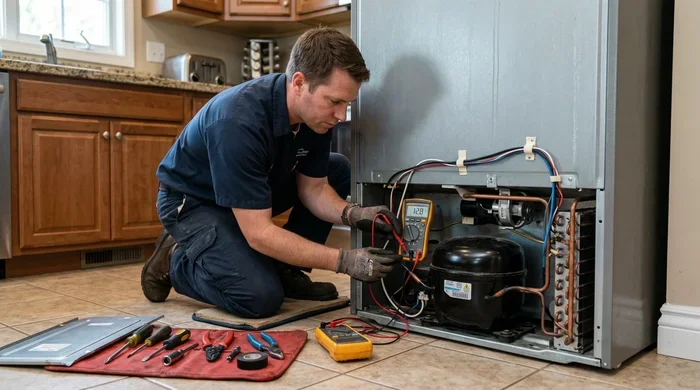
Sometimes the issue is not immediately obvious. In those cases, a compressor troubleshooting session with a professional technician can pinpoint the exact cause. They have specialized tools like pressure gauges, leak detectors, and thermal cameras that can reveal hidden problems.
Step By Step Fixes For A Frozen Compressor
Once you have identified the cause, it is time to fix the problem. Some fixes are DIY friendly. Others require a professional. Here is how to handle each scenario.
Quick Fixes You Can Do Yourself
Before you call a technician, try these simple steps that resolve many freezing issues:
- Turn off the system and let it thaw completely. This is the most important first step. Running a frozen system can burn out the compressor motor.
- Replace the air filter. A fresh filter restores proper airflow immediately. This single step fixes many freezing problems.
- Check for blocked vents and registers. Make sure furniture, curtains, or boxes are not blocking air returns or supply vents throughout your home.
- Clean the evaporator coil. Use a no-rinse coil cleaner spray available at most hardware stores. Spray it directly onto the coil and let it drip into the drain pan.
- Clear debris around the outdoor unit. Remove leaves, dirt, grass clippings, and any other obstructions within two feet of the condenser.
If these steps do not resolve the issue, the problem is likely deeper and requires professional diagnosis.
When To Call A Professional
Some compressor problems are beyond DIY fixes. Call a licensed HVAC technician if you experience any of the following:
- You can see ice on the refrigerant lines after the system has thawed
- Your system freezes up again shortly after fixing the filter and airflow
- You hear unusual sounds like gurgling, hissing, or banging
- The system blows warm air even after a full thaw and filter change
- You suspect a refrigerant leak or electrical issue
A professional will perform a full compressor troubleshooting process. This includes checking refrigerant pressure, testing electrical components, inspecting the expansion valve, and verifying proper airflow throughout the system. They can also advise whether your unit needs replacement parts or a full system upgrade.
For homeowners who rely on backup power during outages, it is worth noting that using the wrong size generator can stress your HVAC system and contribute to compressor problems. If you are considering a backup power setup, check out how big of a generator you need for your camper for sizing guidance that also applies to home HVAC units. Similarly, if you are shopping for a home backup generator, understanding costs helps you make smart decisions. You can explore how much a generator for a 2 bedroom home costs to budget appropriately.
Preventing Future Freezing Problems
Prevention is always better than repair. A little regular maintenance goes a long way toward keeping your compressor free of ice and your cooling system running efficiently.
Create A Maintenance Schedule
Set up a seasonal maintenance routine that includes these tasks:
- Change air filters every 1 to 3 months
- Clean the evaporator and condenser coils annually
- Check refrigerant lines for insulation and damage twice a year
- Schedule a professional inspection before each cooling season
- Keep the area around the outdoor unit clear of debris year-round
Regular maintenance catches small problems before they turn into freezing disasters. It also extends the lifespan of your compressor and improves your system’s overall efficiency.
Monitor Your System Closely
Pay attention to how your system performs throughout the year. If you notice any drop in cooling performance, strange noises, or reduced airflow, investigate immediately. Catching a problem early often means a simple fix instead of a major repair.
Consider installing a smart thermostat or monitoring device that alerts you to unusual temperature patterns. These tools can detect airflow issues and refrigerant problems before they cause ice buildup.
Protect Your Outdoor Unit
Your outdoor condenser unit works hard year-round. In winter, it is exposed to cold temperatures, moisture, and debris. A proper cover or shelter can protect the unit from elements that contribute to freezing problems.
However, never cover the unit completely during the cooling season. The outdoor unit needs unobstructed airflow to operate correctly. Use a cover only during the off-season and remove it before you start cooling.
If you are dealing with air quality issues in your home that could affect your HVAC system, an air purification solution like a What Is An Ozone Generator guide can help you understand how to manage indoor air contaminants that may contribute to coil buildup and system strain.
How Power Supply Issues Can Affect Your Compressor
An often overlooked cause of compressor freezing is inconsistent or inadequate power supply. Your compressor relies on a stable electrical connection to maintain proper pressure and refrigerant flow. Voltage fluctuations, weak circuits, and undersized electrical connections can all cause the compressor to work harder than it should.
When a compressor struggles due to power issues, it may not cycle refrigerant properly. This creates pressure imbalances that lead to freezing. If you live in an area with frequent power fluctuations or you rely on a generator for backup, the quality and size of your power source matters greatly.
For homeowners exploring generator options, understanding the cost of quality units helps you make informed decisions. Check out how much a Generac generator costs to get a sense of what a reliable backup power source for your HVAC system might run you. Investing in the right power setup protects not just your compressor but your entire cooling system.
Also, if you are setting up a generator for a smaller space like a workshop or a two-car garage, proper sizing is critical. A generator that is too small will cause your compressor to short-cycle and eventually freeze up. Visit how much a generator for a 2 car garage costs for practical sizing and budgeting advice that keeps your system running smoothly.
Key Takeaways
Let us quickly recap the most important points from this guide:
- Low refrigerant and leaks are the top cause of compressor freezing and require professional repair.
- Dirty coils and clogged filters restrict airflow and are the easiest problems to fix at home.
- Faulty expansion valves disrupt refrigerant flow and need a technician to diagnose and replace.
- Cold weather and poor insulation can cause freezing even when you are not actively cooling.
- Regular maintenance including filter changes and annual inspections prevents most freezing problems.
- Power supply issues from inadequate generators or voltage problems can stress your compressor and lead to freezing.
- Act early at the first sign of ice buildup to avoid costly compressor damage and system failure.
Conclusion
Now you know the answer to why is my compressor freezing up. Whether the cause is low refrigerant, a dirty coil, a clogged filter, or a power supply issue, the key is to act quickly. The longer you let a frozen compressor run, the more damage it can do to your entire cooling system.
Start with the simple fixes: replace your filter, clear your vents, and let the ice melt completely. If the problem persists, do not hesitate to call a professional. A licensed technician can diagnose hidden issues like refrigerant leaks, faulty expansion valves, and electrical problems that you cannot see or fix on your own.
Prevention is your best long-term strategy. A regular maintenance routine, proper insulation, and a reliable power setup will keep your compressor running smoothly for many years. Your cooling system works hard for you, especially during the hottest months of the year. Give it the care and attention it deserves, and it will keep your home comfortable no matter how high the temperature climbs.
Take action today. Check your filter, inspect your coils, and schedule your next maintenance visit. Your compressor will thank you with reliable, efficient cooling all season long.
Frequently Asked Questions
Can a clogged air filter really cause my compressor to freeze up?
Yes, absolutely. A clogged filter restricts airflow over the evaporator coil. Without enough warm air passing over the coil, the temperature drops below freezing and moisture turns to ice. This is the most common and easiest cause to fix. Simply replacing your filter can resolve the freezing problem in many cases.
How long does it take for a frozen compressor to thaw?
It typically takes 1 to 3 hours for a frozen compressor to thaw completely, depending on how much ice has built up. Turn off the system and let it defrost naturally. Do not use heat guns or sharp objects to speed up the process, as this can damage the coils and other components.
Is it safe to run my AC if the compressor is frozen?
No, it is not safe. Running a frozen compressor puts extra strain on the motor and can cause permanent damage. The ice restricts airflow and forces the compressor to work harder, which can lead to overheating and eventual motor failure. Always turn the system off and let it thaw completely before restarting.
How much does it cost to repair a frozen compressor?
The cost varies widely depending on the cause. A simple filter replacement costs under $50. Cleaning a dirty evaporator coil might run $100 to $300. Refrigerant leak repairs can range from $200 to $1,500 or more depending on the location and severity of the leak. Always get a quote from a licensed technician before committing to a repair.
Can cold weather cause a compressor to freeze even in summer?
Yes, cold weather can cause freezing issues even during summer if your system is running in heat mode or if your refrigerant lines are poorly insulated. Outdoor temperatures below 60 degrees can cause moisture to freeze on the condenser unit. Proper insulation and covers help prevent this type of cold weather freezing.
What should I do if my compressor keeps freezing up after I fix the filter?
If the problem persists after replacing the filter, the issue is likely deeper. You may have a refrigerant leak, a faulty expansion valve, or a dirty evaporator coil that needs professional cleaning. Call a licensed HVAC technician for a thorough inspection and diagnosis. Continuing to run the system without addressing the root cause will only cause more damage over time.