Atlas Copco Compressor Parts You Need to Know About
Atlas Copco compressor parts keep your compressed air systems running smoothly and efficiently. Whether you need replacement filters, valves, or full compressor components, knowing the right parts makes a huge difference. This guide walks you through everything from essential components to buying tips and maintenance best practices.
Atlas Copco compressor parts are the building blocks of reliable compressed air systems. If you run an industrial facility, a workshop, or any operation that depends on compressed air, you already know how important it is to keep your equipment in top shape. The right Atlas Copco compressor parts make all the difference between smooth operations and unexpected downtime.
In this guide, we will walk you through everything you need to know about Atlas Copco compressor parts. We will cover the essential components you should know about, how to choose the right ones, and practical tips for keeping your compressor running at its best. Whether you are a seasoned technician or a business owner looking to learn more, this article has you covered.
Compressed air systems power countless tools and processes across industries. From manufacturing plants to construction sites, the demand for reliable air compressor maintenance never stops. Understanding your Atlas Copco compressor parts is the first step toward smarter decisions and better equipment performance.
Key Takeaways
- Genuine Atlas Copco parts ensure compatibility, safety, and long-term performance for your compressor.
- Regular maintenance of key components like filters, valves, and seals prevents costly breakdowns.
- Knowing when to replace parts versus repair them saves time and money.
- Buying from authorized suppliers guarantees quality and preserves your compressor warranty.
- Understanding your compressor model helps you find the exact replacement parts faster.
- Proper installation of Atlas Copco compressor parts extends equipment life significantly.
📑 Table of Contents
- What Are Atlas Copco Compressor Parts?
- Essential Atlas Copco Compressor Parts Every User Should Know
- How to Choose the Right Atlas Copco Compressor Parts
- Tips for Maintaining Atlas Copco Compressor Parts
- Common Atlas Copco Compressor Parts Problems and Solutions
- Where to Buy Genuine Atlas Copco Compressor Parts
- How Proper Parts Improve Compressor Efficiency
- Key Takeaways
- Conclusion
What Are Atlas Copco Compressor Parts?
Atlas Copco compressor parts refer to every component that makes up an Atlas Copco air compressor system. These parts range from small filters and seals to larger elements like compression chambers and control units. Each part plays a specific role in delivering clean, pressurized air for your operations.
Atlas Copco is a global leader in compressed air systems. Their compressors are known for durability, energy efficiency, and smart design. But even the best machines need replacement parts over time. Understanding what goes into your compressor helps you maintain it properly and avoid unexpected failures.
Why Genuine Atlas Copco Parts Matter
Using genuine Atlas Copco parts is one of the smartest investments you can make. Aftermarket or generic parts might seem cheaper at first, but they often lead to bigger problems down the road. Here is why original parts are worth it:
- Perfect fit and compatibility: Genuine parts are designed specifically for your compressor model.
- Warranty protection: Using non-genuine parts can void your compressor warranty.
- Consistent performance: Original components maintain the efficiency standards Atlas Copco is known for.
- Safety assurance: Genuine parts meet strict safety and quality testing requirements.
- Longer equipment life: Quality parts reduce wear on other components of your system.
When you invest in Atlas Copco service parts, you are investing in the longevity of your entire compressed air setup. Skimping on parts might save a few dollars today, but it costs much more in repairs and downtime later.
Essential Atlas Copco Compressor Parts Every User Should Know
Every Atlas Copco air compressor has core components that need attention over time. Let us break down the most important compressor components you should be familiar with.
Air End Components
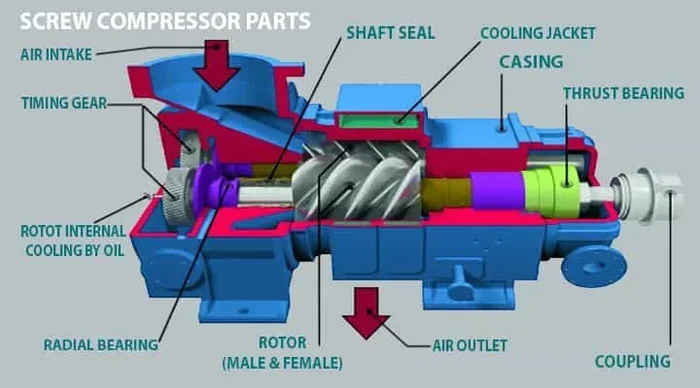
The air end is the heart of any rotary screw compressor. This is where the actual compression happens. Key air end components include:
- Rotors: These are the twisted metal shafts that spin and compress air. They take a lot of wear over time.
- Bearings: Bearings support the rotors and keep them spinning smoothly. Worn bearings cause vibration and noise.
- Seals and gaskets: These prevent air leaks. Even a small seal failure can reduce compressor efficiency by a noticeable amount.
- Oil separator: This part removes oil from the compressed air. A clogged oil separator means poor air quality and potential system damage.
Filters and Fluids
Air compressor filters and lubricants are essential for clean, efficient operation. Dirty filters force your compressor to work harder, which wastes energy and shortens its lifespan. Here are the key filter types:
- Air intake filter: This catches dust and debris before they enter the compression chamber.
- Oil filter: This keeps contaminants out of the compressor oil, protecting internal parts.
- Separator filter: This removes oil mist from the output air, ensuring clean compressed air reaches your tools.
- Refrigerant filter (for refrigerated dryers): If your system includes a dryer, this filter keeps the refrigerant loop clean.
Regularly replacing these filters is one of the simplest ways to maintain compressor efficiency. Most Atlas Copco compressors have indicator lights or timers that tell you when a filter needs changing. Do not ignore these alerts.
Valves and Controls
Compressor valves control the flow of air and oil within your system. These parts open and close many times every minute, so they experience significant wear. Common valve types include:
- Inlet valve: Controls the amount of air entering the compression chamber.
- Minimum pressure valve: Ensures a minimum pressure level is maintained in the system.
- Safety valve: Releases excess pressure to prevent dangerous overpressure situations.
- Control valve: Regulates compressor output based on demand, saving energy when full capacity is not needed.
Faulty valves are a common cause of compressor repair needs. If you notice pressure drops, unusual noises, or your compressor cycling on and off too frequently, valve issues could be the culprit.
Drive Systems and Motors
The drive system connects the motor to the compressor element. Atlas Copco compressor parts in this category include drive belts, couplings, and gear systems. Electric motors are the most common power source, but some models use diesel engines for mobile applications.
Keeping your drive system well-maintained means fewer breakdowns and smoother operation. Check belt tension regularly, and listen for any unusual sounds that might indicate wear in the coupling or gears.
How to Choose the Right Atlas Copco Compressor Parts
Selecting the correct Atlas Copco compressor parts is not always straightforward. With so many models and configurations, finding the right part can feel overwhelming. Here is how to make the process easier.
Know Your Compressor Model
Before you buy any part, identify your compressor model number. This information is usually on a nameplate attached to the compressor unit. The model number tells you exactly which parts are compatible with your machine. Using the wrong part can cause damage or void your warranty.
Keep a record of your compressor specifications, including:
- Model number and serial number
- Motor power rating
- Air delivery capacity
- Operating pressure range
Check Part Numbers and Cross-References
Every genuine Atlas Copco spare part has a unique part number. You can find replacement part numbers in your compressor manual or through Atlas Copco’s online parts catalog. If you are unsure, contact an authorized Atlas Copco distributor. They can look up the correct part using your model and serial number.
Consider Lifecycle Cost, Not Just Price
The cheapest compressor replacement parts are not always the best value. A low-cost part that fails quickly will cost you more in labor, downtime, and additional replacements. Look at the total cost of ownership when choosing parts for your compressed air system.
Genuine parts often come with their own warranty, which adds another layer of protection. When you compare prices, factor in the expected lifespan and performance of each part.
Consult with Experts
If you are not sure which parts you need, reach out to professionals. Many suppliers of Atlas Copco service parts offer expert guidance to help you find the right components. They can also advise on upgrades or improvements that might boost your system’s performance.
Tips for Maintaining Atlas Copco Compressor Parts
Proper maintenance is the single best way to extend the life of your Atlas Copco compressor parts. A well-maintained compressor runs more efficiently, uses less energy, and needs fewer repairs. Here are practical tips that make a real difference.
Follow the Maintenance Schedule
Atlas Copco provides detailed maintenance schedules for every compressor model. These schedules specify when to inspect, clean, and replace each component. Sticking to this schedule is the foundation of good air compressor maintenance. Key maintenance intervals include:
- Daily: Check the oil level, drain condensate, and listen for unusual sounds.
- Weekly: Inspect intake filters and check for air leaks in the system.
- Monthly: Check belt tension (if applicable) and inspect safety valves.
- Quarterly: Replace oil filters and check separator element condition.
- Annually: Perform a comprehensive service including air end inspection and fluid replacement.
Keep Records of All Maintenance
Maintaining a log of every service, part replacement, and repair helps you track your compressor’s health over time. If a part fails unexpectedly, your maintenance records can reveal patterns or underlying issues. This information is also valuable when selling equipment or claiming warranty service.
Monitor Air Quality and Pressure
Changes in air quality or pressure often signal problems with compressor components. If your air output drops or your tools are not performing as they should, check the filters, valves, and separator elements. Early detection of issues prevents small problems from becoming expensive repairs.
Keep a Stock of Critical Spare Parts
Having essential Atlas Copco compressor parts on hand reduces downtime when something fails. Consider keeping the following items in your spare parts inventory:
- Air intake filters
- Oil filters
- Separator elements
- Common seals and gaskets
- Drive belts
This is especially important for operations that cannot afford any interruption in compressed air supply.
Common Atlas Copco Compressor Parts Problems and Solutions
Even well-maintained compressors experience issues. Knowing the common problems and their solutions helps you respond quickly and keep your operations running.
Low Pressure Output
If your compressor is not delivering enough pressure, the cause is often a clogged filter, a worn separator element, or a leaking seal. Start by checking and replacing the intake filter and oil filter. If the problem persists, inspect the air end seals and valves for wear.
Excessive Noise or Vibration
Unusual noise usually points to worn bearings, loose components, or damaged rotors in the air end. Do not ignore these signs. Continued operation with excessive vibration can damage other parts of the system and lead to costly repairs. Shut down the compressor and inspect it thoroughly.
Oil Contamination in Output Air
If you notice oil in your compressed air, the oil separator is likely failing. Other possible causes include worn piston rings (in reciprocating models) or damaged seals. Replacing the separator element and checking for additional damage usually resolves this issue.
Frequent Cycling
A compressor that turns on and off too often may have a faulty control valve or pressure switch. This constant cycling wastes energy and puts extra stress on the motor. Inspect the control system and replace any defective components to restore normal operation.
Overheating
Overheating is a serious issue that can damage your compressor if not addressed quickly. Common causes include low oil levels, clogged oil filters, blocked cooling fins, or a malfunctioning fan. Check the oil level and filter first, then inspect the cooling system for blockages or damage.
Where to Buy Genuine Atlas Copco Compressor Parts
Finding the right Atlas Copco compressor parts is easier when you know where to look. Here are the best sources for genuine components.
Authorized Atlas Copco Distributors
The most reliable source for genuine Atlas Copco parts is an authorized distributor. These partners have direct access to Atlas Copco’s parts inventory and can guarantee authenticity. They also offer expert advice on compatibility and installation.
Atlas Copco’s Official Online Parts Portal
Atlas Copco offers an online parts portal where you can search for parts by model number or keyword. This is a convenient option if you know exactly what you need. The portal also provides detailed specifications and diagrams for each part.
Certified Service Partners
Atlas Copco certified service partners can supply and install compressor replacement parts on your behalf. This is a great option if you prefer professional installation and want the added assurance of a service warranty.
Things to Avoid When Buying Parts
Not all sellers are trustworthy. Avoid these common pitfalls when purchasing compressor accessories and parts:
- Unverified online marketplaces: Counterfeit parts are a real problem. If a deal seems too good to be true, it probably is.
- Sellers who cannot provide proof of authenticity: Always ask for documentation that confirms the parts are genuine.
- Generic parts without proper specifications: These may not meet the precision standards required by your Atlas Copco compressor.
How Proper Parts Improve Compressor Efficiency
Using the right Atlas Copco compressor parts does more than just keep your machine running. It actively improves the efficiency of your entire compressed air system. Efficient compressors use less energy, produce lower operating costs, and deliver better performance.
For example, a clean air compressor filter allows more air to flow through with less resistance. This means the motor does not have to work as hard, which reduces energy consumption. Similarly, a well-functioning oil separator ensures that your output air is clean and dry, which protects your downstream tools and equipment.
Replacing worn compressor valves restores proper pressure regulation, which prevents energy waste from over-compression. Each compressor component you maintain properly contributes to the overall efficiency of your system.
Over time, these efficiency gains add up to significant savings on energy bills and reduced maintenance costs. This is why investing in quality Atlas Copco service parts pays for itself many times over.
Key Takeaways
- Genuine Atlas Copco parts ensure compatibility, safety, and long-term performance for your compressor.
- Regular maintenance of key components like filters, valves, and seals prevents costly breakdowns.
- Knowing when to replace parts versus repair them saves time and money.
- Buying from authorized suppliers guarantees quality and preserves your compressor warranty.
- Understanding your compressor model helps you find the exact replacement parts faster.
- Proper installation of Atlas Copco compressor parts extends equipment life significantly.
Conclusion
Atlas Copco compressor parts are the foundation of reliable, efficient compressed air systems. From air end components and filters to valves and drive systems, every part plays a vital role in keeping your operations running smoothly. Understanding these parts empowers you to make better maintenance decisions, choose the right replacements, and avoid costly downtime.
Investing in genuine Atlas Copco compressor parts and following a consistent maintenance schedule pays off in the long run. Your compressor works harder for you every day, and it deserves quality parts and proper care in return. Take the time to learn your equipment, stock essential spares, and partner with trusted suppliers for all your compressor repair parts needs.
When you prioritize the right parts and regular upkeep, your Atlas Copco air compressor will deliver strong performance for years to come. Start today by reviewing your current parts inventory and scheduling your next maintenance check. Your compressor and your bottom line will thank you.
Frequently Asked Questions
What are the most common Atlas Copco compressor parts that need regular replacement?
The most commonly replaced parts include air intake filters, oil filters, separator elements, and drain valves. These consumable parts wear out over time and should be replaced according to Atlas Copco’s maintenance schedule. Regular replacement of these parts keeps your compressor running efficiently and prevents damage to more expensive components.
How can I tell if my Atlas Copco compressor part needs replacing?
Signs that a part needs replacement include reduced air pressure, unusual noises, increased energy consumption, oil in the output air, and frequent cycling. Your compressor’s indicator lights and maintenance alerts also provide helpful signals. Regular inspections and monitoring help you catch issues before they lead to major failures.
Can I use aftermarket parts instead of genuine Atlas Copco parts?
While aftermarket parts are available, using genuine Atlas Copco parts is strongly recommended. Aftermarket parts may not meet the same quality and precision standards, which can affect performance and void your warranty. Genuine parts are designed specifically for your compressor model and come with their own quality assurance.
How often should I service my Atlas Copco compressor?
Service intervals depend on your compressor model and how heavily you use it. Most Atlas Copco compressors require basic daily checks, weekly inspections, and comprehensive annual service. Always refer to your compressor’s maintenance manual for the manufacturer’s recommended schedule. Following this schedule is the best way to prevent unexpected breakdowns.
Where can I find the right part number for my Atlas Copco compressor?
You can find part numbers in your compressor’s user manual, on the Atlas Copco online parts portal, or by contacting an authorized Atlas Copco distributor. Having your compressor model and serial number ready makes the search process much faster. Authorized distributors can also help you identify the correct part if you are unsure.
What should I do if an Atlas Copco compressor part is discontinued?
If a part has been discontinued, contact an authorized Atlas Copco service partner for assistance. They may have updated part numbers or compatible alternatives. In some cases, Atlas Copco offers conversion kits or retrofit solutions for older compressor models. Never use incompatible parts as a substitute, as this can cause damage or safety issues.