What Size Generator for a 30 Amp RV Air Conditioner
Choosing the right size generator for a 30 amp RV air conditioner depends on starting and running wattage. Most 30 amp RV AC units need between 2000 and 4000 watts to run smoothly. This guide breaks down everything you need to know about generator size for 30 amp RV AC, including wattage calculations, top picks, and practical tips.
There is nothing worse than arriving at a campsite on a hot summer day and finding out your generator for RV AC is too small. Your air conditioner won’t kick on, and you are stuck sweating through the afternoon. If you own a 30 amp RV and are wondering what size generator you need for your air conditioner, you are in the right place.
This guide covers everything you need to know about what size generator for 30 amp RV air conditioner. We will break down wattage requirements, explain starting versus running power, and help you pick the right portable generator for RV trips. Whether you are a full-time RVer or a weekend camper, this article will give you the answers you need.
Let us dive in and make sure your next camping trip stays cool and comfortable.
Key Takeaways
- Know your wattage: A 30 amp RV AC typically needs 1500 to 2000 watts running and 2000 to 3000 watts starting.
- Size matters: A 3000 to 4000 watt generator is the sweet spot for most 30 amp RV air conditioners.
- Starting vs running wattage: Always account for surge wattage, which is higher than the continuous draw.
- Inverter generators are best: They provide clean power, run quietly, and are fuel efficient for RV use.
- Avoid common mistakes: Don’t overload your generator, and always check your RV’s power requirements first.
- Soft start kits help: They reduce the starting wattage demand and protect your generator.
- Runtime counts: Choose a generator with good fuel efficiency for longer off-grid camping trips.
📑 Table of Contents
- Understanding Your 30 Amp RV Air Conditioner Power Needs
- How to Calculate the Right Generator Size
- Best Generator Sizes for a 30 Amp RV Air Conditioner
- Starting Wattage vs Running Wattage Explained
- Top Generator Picks for Your 30 Amp RV
- Tips for Running Your Generator Safely with an RV AC
- Final Thoughts
Understanding Your 30 Amp RV Air Conditioner Power Needs
Before you buy any RV generator, you need to understand what your 30 amp RV air conditioner actually demands. Not all AC units are the same, and the power needs can vary based on the BTU rating and the age of your unit.
How Much Power Does a 30 Amp RV AC Actually Use?
A typical RV air conditioner rated for a 30 amp service draws between 12 and 16 amps when running. That translates to roughly 1440 to 1920 watts of continuous running wattage. But that is only half the story.
When your AC compressor kicks on, it needs a much bigger burst of power. This is called starting wattage or surge wattage. The starting draw can be 2 to 3 times higher than the running draw. So your AC might need 3000 to 4500 watts for just a few seconds when it starts up.
Here is a quick breakdown of common RV air conditioner BTU sizes and their power needs:
- 13,500 BTU AC: 1200 to 1600 watts running, 2500 to 3000 watts starting
- 15,000 BTU AC: 1500 to 2000 watts running, 3000 to 3500 watts starting
- 13,500 BTU with soft start: 1200 to 1600 watts running, 1800 to 2200 watts starting
As you can see, the air conditioner power consumption varies quite a bit. This is why choosing the right RV generator size is so important.
What Is a 30 Amp RV Electrical System?
A 30 amp RV service provides 120 volts of power on a single leg. The maximum continuous load is 30 amps, which equals 3600 watts. This is the standard power hookup you will find at most campgrounds.
When you are plugged into shore power, your RV power management system handles the load distribution. But when you are boondocking or dry camping, you rely entirely on your generator for RV. That is when knowing your exact power needs becomes critical.
How to Calculate the Right Generator Size
Figuring out the right generator size for 30 amp RV air conditioner is simpler than it sounds. You just need to account for two key numbers: running wattage and starting wattage.
Running Wattage vs Starting Wattage
Running wattage is the continuous power your AC needs to keep your RV cool. Starting wattage is the extra power needed for a few seconds when the compressor kicks on. Your generator must handle both.
Here is a simple rule of thumb:
- Find the running wattage of your AC unit (check the label or manual).
- Add the starting wattage (usually listed on the unit or in the specs).
- Add any other appliances you plan to run at the same time.
- Choose a generator that exceeds that total by at least 10 to 20 percent.
For most 30 amp RV air conditioner setups, a generator rated at 3000 to 4000 watts will do the job. This gives you enough headroom for the starting surge and a few other loads like lights or a microwave.
Using a Wattage Calculator for RV AC
If you want to be precise, use a wattage calculator. Many websites and apps let you input your AC model and get exact numbers. You can also use a simple formula:
Watts = Volts x Amps
For example, if your AC draws 14 amps at 120 volts, that is 1680 watts running. If the starting wattage is 2.5 times the running draw, you need 4200 watts for a brief moment. A 4000 to 4500 watt generator will cover this easily.
Quick Tip: Always check the label on your AC unit or the owner’s manual for exact wattage numbers. Do not guess. Guessing can lead to a generator that trips or fails to start your AC.
Best Generator Sizes for a 30 Amp RV Air Conditioner
Not all generators are created equal. The right generator size for RV air conditioner depends on your specific unit, your power needs, and how you camp. Let us look at the most common options.
3000-Watt Generators
A 3000 watt generator works well for a 13,500 BTU RV air conditioner with a soft start feature. It can handle the running load comfortably and provide enough surge power for most units.
Best for: Solo campers, couples, or anyone running a single AC unit with minimal other loads.
Pros:
- Lightweight and easy to transport
- Good fuel efficiency
- Quieter than larger models
Cons:
- May struggle with older AC units that have high starting wattage
- Less room for running other appliances at the same time
3500-Watt Generators
The 3500 watt range is often called the sweet spot for RV generator size. It handles most 13,500 and 15,000 BTU AC units with ease. You also have some extra capacity for a microwave, coffee maker, or phone chargers.
Best for: Most 30 amp RV setups, especially full-time travelers who need reliable power.
Pros:
- Handles most AC units without issues
- Enough power for multiple appliances
- Good balance of size, weight, and output
Cons:
- Slightly heavier than 3000 watt models
- May still struggle with two AC units running at once
4000-Watt Generators
If you have a 15,000 BTU AC or an older unit with high surge wattage, a 4000 watt generator gives you plenty of breathing room. It also handles two AC units or heavy loads like an electric water heater.
Best for: Larger RVs, dual AC setups, or anyone who wants maximum reliability.
Pros:
- Handles almost any RV AC unit
- Room for multiple appliances
- Great for hot climates where AC runs constantly
Cons:
- Heavier and bulkier
- Higher fuel consumption
- Louder than smaller models
Starting Wattage vs Running Wattage Explained
This is one of the most important concepts in RV power requirements. Many people buy a generator based only on running wattage and then wonder why their AC won’t start. Let us clear this up.
Why Starting Wattage Matters
Every compressor-based appliance needs extra power to get the motor moving. Think of it like pushing a heavy shopping cart. The first push takes the most effort. Once it is moving, it takes less effort to keep it going.
The same goes for your RV air conditioner. The compressor needs a big burst of energy to start. This surge wattage lasts only a few seconds, but your generator must be able to deliver it. If it cannot, the generator will shut down or the AC will never start.
This is why a generator rated at 2000 running watts might not work for a 13,500 BTU AC, even though the running draw is only 1500 watts. The starting surge could be 3000 watts, which overwhelms the generator.
Soft Start Kits for RV AC Units
A soft start kit is a small device that reduces the starting wattage demand of your AC. It slowly ramps up the compressor instead of hitting it with full power all at once.
Why consider a soft start kit?
- Reduces starting wattage by up to 50 percent
- Allows you to use a smaller generator for RV AC
- Extends the life of your compressor
- Reduces strain on your generator fuel consumption during startup
Popular soft start options include the Micro-Air EasyStart and the Dometic SoftStart. They are relatively affordable and easy to install. If you are trying to downsize your generator, a soft start kit is one of the best investments you can make.
Expert Insight: Many RV experts recommend pairing a soft start kit with a 3000 to 3500 watt generator. This combination gives you reliable AC power without the bulk and fuel cost of a larger unit.
Top Generator Picks for Your 30 Amp RV
Now that you understand the power needs, let us look at the types of generators that work best for 30 amp RV air conditioner setups.
Portable Generators
Portable generators are the most common choice for RV owners. They come in various sizes and price points. You can find a solid 3000 to 4000 watt portable generator for between $300 and $800.
Best for: Campers who want affordable power and do not mind a bit of noise.
Top brands to consider:
- Honda EU3000iS
- Champion 3400-Watt Dual Fuel
- Westinghouse iGen4500
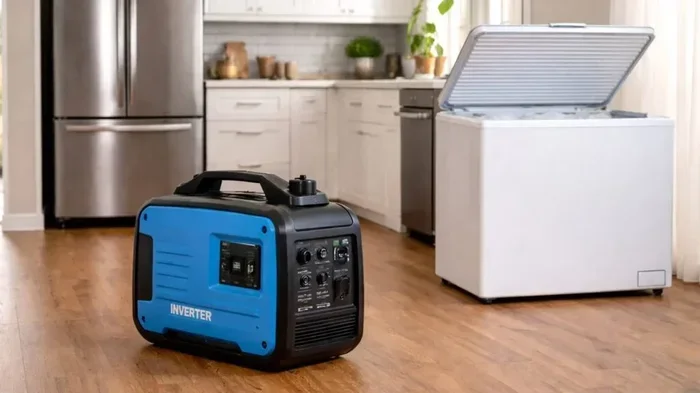
Inverter Generators
Inverter generators are the gold standard for quiet generator for RV use. They produce clean, stable power that is safe for sensitive electronics. They are also more fuel efficient than conventional generators.
Best for: Campers who value quiet operation, clean power, and fuel efficiency.
Top brands to consider:
- Honda EU2200i (for smaller AC units)
- Honda EU3000iS (for most 30 amp setups)
- Yamaha EF2400iSHC
If you want the best generator for RV AC performance with minimal noise, an inverter generator is the way to go.
Dual Fuel Generators
A dual fuel generator can run on both gasoline and propane. This gives you flexibility at the campsite. Propane is often cheaper and stores longer than gasoline.
Best for: Long-term campers who want fuel flexibility and extended generator runtime.
Top brands to consider:
- Champion 3400-Watt Dual Fuel
- DuroMax XP4400EH
- Westinghouse iGen4500DF
Tips for Running Your Generator Safely with an RV AC
Using a generator for RV AC is straightforward, but there are some important safety and efficiency tips to keep in mind.
Generator Runtime and Fuel Tips
Nobody wants to run out of fuel in the middle of a hot afternoon. Here are some tips to maximize your generator runtime:
- Choose a fuel-efficient model: Inverter generators use less fuel than conventional ones.
- Size your generator correctly: An oversized generator wastes fuel. An undersized one will overwork.
- Use a fuel stabilizer: If you store fuel for more than 30 days, add a stabilizer to prevent gum buildup.
- Keep the tank full: Condensation can form in an empty tank, which can clog your fuel system.
A typical 3000 to 4000 watt generator will run for 8 to 14 hours on a full tank at 25 to 50 percent load. That is usually enough for a full night of AC use.
Common Mistakes to Avoid
Here are some mistakes that even experienced RV owners make when choosing and using a portable generator for RV:
- Ignoring starting wattage: Always check the surge rating, not just the running rating.
- Overloading the generator: Running too many appliances at once can trip the generator or damage your AC.
- Using the wrong extension cord: Use a heavy-duty, outdoor-rated cord rated for your generator’s amperage.
- Skipping regular maintenance: Change the oil, check the air filter, and run the generator periodically.
- Placing the generator too close: Keep it at least 10 feet from your RV to avoid carbon monoxide buildup.
- Not checking your RV’s power requirements: Every RV is different. Always verify your specific needs before buying.
Common Mistake: Many people buy a generator based only on the running wattage of their AC. They forget about the starting surge, and then the generator fails to start the AC on the first hot day of the season. Always plan for the starting wattage.
Final Thoughts
Finding the right generator size for 30 amp RV air conditioner does not have to be complicated. The key is to understand your AC’s power needs, account for starting wattage, and choose a generator that gives you enough headroom.
For most 30 amp RV setups, a 3000 to 4000 watt generator is the best choice. It handles the running load, delivers the starting surge, and leaves room for other appliances. If you want to save fuel and reduce noise, consider pairing your AC with a soft start kit and an inverter generator.
Take the time to check your AC’s specs, calculate your total power needs, and choose a generator for RV AC that fits your lifestyle. Your future self will thank you when you are relaxing in a cool, comfortable RV on a 95-degree afternoon.
Stay cool out there, and happy camping!
Frequently Asked Questions
Can a 2000 watt generator run a 30 amp RV air conditioner?
A 2000 watt generator might work for a 13,500 BTU AC with a soft start kit, but it will be cutting it close. Most experts recommend at least a 3000 watt generator to handle the starting surge safely. Always check your specific AC unit’s wattage before deciding.
What is the difference between running wattage and starting wattage?
Running wattage is the continuous power your AC needs to stay cool. Starting wattage is the extra burst of power needed for a few seconds when the compressor kicks on. Starting wattage is usually 2 to 3 times higher than running wattage, and your generator must handle both.
Can I run my RV air conditioner on a generator all night?
Yes, most generators can run an RV AC all night as long as they are properly sized. A 3000 to 4000 watt generator with a full tank typically runs for 8 to 14 hours. Just make sure you have enough fuel and place the generator safely away from your RV.
Is an inverter generator better for RV air conditioning?
Yes, inverter generators are generally better for RV air conditioner use. They produce clean, stable power that protects sensitive electronics. They are also quieter and more fuel efficient than conventional generators, which makes them ideal for camping.
Do I need a soft start kit for my RV AC?
A soft start kit is not required, but it is highly recommended. It reduces the starting wattage demand by up to 50 percent, which means you can use a smaller generator. It also reduces wear and tear on your AC compressor and saves fuel.
How do I know if my generator is too small for my RV AC?
If your generator trips, shuts off, or fails to start the AC when it kicks on, it is likely too small. Other signs include dimming lights when the AC starts or the generator making unusual noises. Always match your generator to the starting wattage of your AC unit.
=== CONCLUSION ===
Choosing the right generator for 30 amp RV air conditioner comes down to understanding your power needs and picking a unit that handles both running and starting wattage. A 3000 to 4000 watt generator is the go-to choice for most 30 amp RV owners, and pairing it with a soft start kit can make a big difference.
Remember to check your AC specs, consider your fuel needs, and avoid the common mistakes that trip up so many campers. With the right RV generator size, you will stay cool and comfortable no matter where the road takes you. Invest the time now, and your future self will enjoy every worry-free camping trip.