How to Power Your House With a Generator Safely and Easily
Learning how to power your house with a generator doesn’t have to be complicated or dangerous. This guide walks you through everything from choosing the right size unit to installing a transfer switch and staying safe during operation. Whether you face frequent outages or want peace of mind, you will find clear, practical steps to keep your home running smoothly.
Power outages can strike without warning. Storms, equipment failures, and grid overloads all leave thousands of homes in the dark every year. If you have ever sat through a long blackout, you know how frustrating and even dangerous it can be.
The good news is that a generator can change everything. It keeps your lights on, your fridge running, and your family comfortable no matter what happens outside. But knowing how to power your house with a generator safely and easily requires more than just buying a machine and plugging it in.
This guide breaks down every step you need to follow. From sizing your unit correctly to handling fuel safely, you will find everything in one place. Let us walk through it together.
Key Takeaways
- Know your power needs first: Calculate your essential loads before buying any unit to avoid overspending or underpowering.
- Choose between portable and standby generators: Each type has pros and costs. Standby units offer automatic start, while portable options are more affordable.
- Always use a transfer switch: This keeps your home wiring safe and prevents backfeeding, which can endanger utility workers.
- Follow all safety rules: Never run a generator indoors, keep it dry, and use carbon monoxide detectors nearby.
- Maintain your generator regularly: Oil changes, fuel management, and load testing extend its life and reliability.
- Avoid common mistakes: Overloading, neglecting maintenance, and skipping the transfer switch are the top errors homeowners make.
📑 Table of Contents
Understanding Your Power Needs
Before you buy anything, you need to know what you want to power. This step matters more than most people realize. Choosing the wrong size leads to frustration, wasted money, and potential safety risks.
Make a List of Essential Appliances
Start by writing down the devices you absolutely need during an outage. Most households share a similar list:
- Refrigerator and freezer
- Lights in key rooms
- Heating or cooling system
- Wi-Fi router and modem
- Medical equipment
- Sump pump
- Microwave or cooking appliance
Once you have your list, check the wattage label on each device. Add them up. This gives you your baseline generator wattage requirement. Remember that some appliances draw extra power when starting up, so always account for that surge.
Calculate Your Total Wattage
Here is a simple way to do the math. Find the running watts for each appliance. Then find the starting watts for the one that needs the most power. Add the starting watts to the running watts of everything else. The result is your total demand.
For example, a refrigerator might need 700 running watts and 2,200 starting watts. A few lights and a router add another 500 watts. That puts you around 2,700 watts total. A portable generator in the 3,000 to 4,000-watt range would handle this easily.
If you want to power your entire home, including air conditioning and electric stoves, you will need a much larger system. That is where a whole house generator comes into play. These units typically range from 7,000 to 24,000 watts or more.
Choosing the Right Generator for Your Home
Not all generators are the same. Different types serve different purposes. Picking the right one depends on your budget, your power needs, and how much effort you want to put in.
Portable Generators
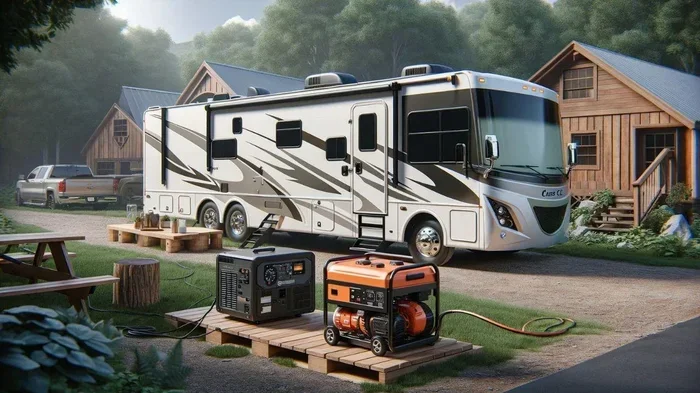
A portable generator is the most affordable option. You can move it around, store it easily, and set it up in minutes. Most portable units run on gasoline, though some use propane or dual fuel.
Here are the main benefits:
- Lower upfront cost, usually between $500 and $2,500
- Easy to transport and store
- Great for powering essential circuits only
- No permanent installation required
The downside is that you must run extension cords from the generator into your home. This works but is not as convenient as a built-in system. You also need to refuel it manually and monitor it closely.
Standby Generators
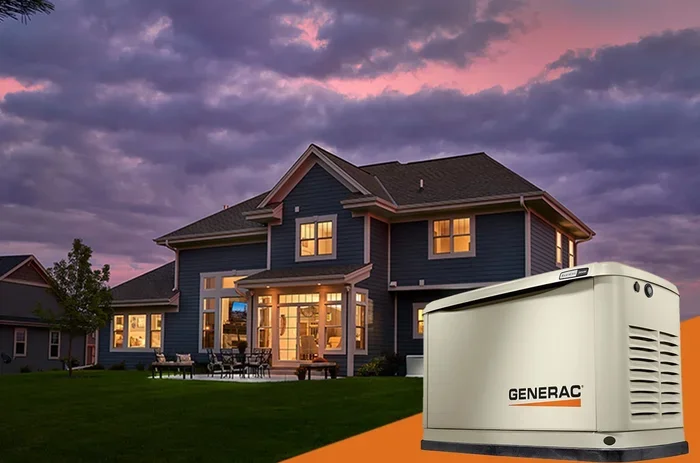
A standby generator is a permanent installation outside your home. It connects directly to your electrical panel and kicks on automatically when the power goes out. These units run on natural gas or propane.
Here is why many homeowners love them:
- Automatic start within seconds of an outage
- Powers the entire home without extension cords
- Professional installation ensures safety
- Higher resale value for your property
Standby units cost more, typically between $3,000 and $15,000 for the unit alone. Installation adds another $1,000 to $5,000 depending on complexity. But for many families, the convenience and safety are well worth it.
Inverter Generators
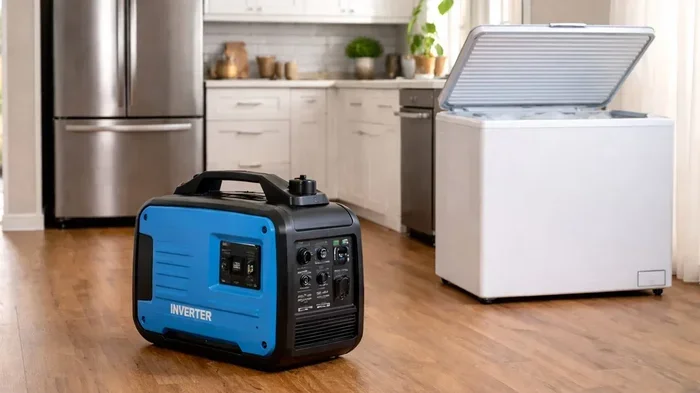
An inverter generator produces cleaner power than standard portable units. It converts AC power to DC and back to AC, resulting in a stable current. This makes it safe for sensitive electronics like laptops, phones, and TVs.
Inverter models are also quieter and more fuel-efficient. They are a great choice if you need backup power for a few key devices without the bulk of a larger unit.
Comparison Table
| Feature | Portable | Standby | Inverter |
|---|---|---|---|
| Cost Range | $500 – $2,500 | $3,000 – $15,000 | $800 – $3,000 |
| Power Output | 2,000 – 10,000W | 7,000 – 24,000W | 1,000 – 7,000W |
| Automatic Start | No | Yes | No |
| Fuel Type | Gasoline/Propane | Natural Gas/Propane | Gasoline |
| Installation | None | Professional | None |
| Best For | Essential loads | Whole house | Electronics |
Installing a Transfer Switch
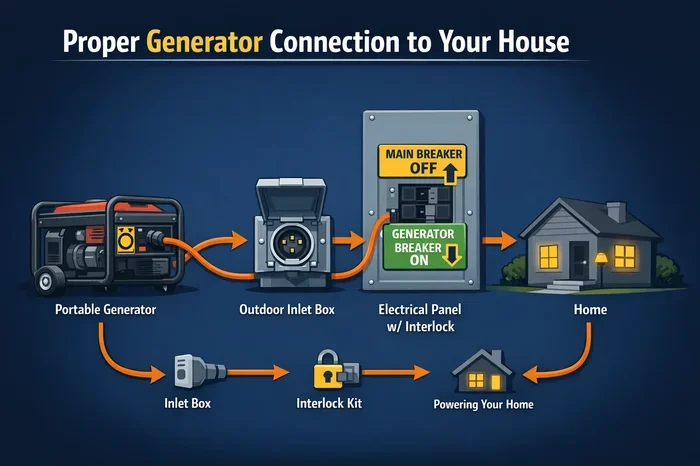
This is the most important safety step in the entire process. A transfer switch connects your generator to your home’s electrical panel safely. Without one, you risk backfeeding electricity into the utility grid, which can kill line workers.
What Is a Transfer Switch?
A transfer switch is a device that sits between your generator and your electrical panel. It allows you to switch your home’s power source from the grid to the generator and back again. It does this in a controlled, safe way.
There are two main types:
- Manual transfer switch: You flip a switch by hand to select the generator source. These are simple and affordable.
- Automatic transfer switch: This detects a power outage and switches to the generator on its own. Standby generators always use this type.
Why You Cannot Skip This Step
Some people try to run a generator by plugging it directly into a wall outlet. This is called backfeeding, and it is extremely dangerous. Electricity flows backward through your wiring and onto the power lines outside. A utility worker fixing a downed line could be electrocuted because of this.
A transfer switch prevents all of that. It isolates your home from the grid when the generator is running. This protects you, your family, and your neighbors.
Hiring a Professional vs. DIY
Installing a transfer switch involves working with your home’s main electrical panel. This is not a beginner DIY project. Unless you are a licensed electrician, you should hire a professional for this job.
A licensed electrician will:
- Assess your electrical panel capacity
- Install the transfer switch correctly
- Ensure all wiring meets local codes
- Obtain any required permits
Expect to pay between $500 and $1,500 for professional installation. It is money well spent for the safety it provides.
Safe Generator Operation
Once your generator is connected, safe operation becomes your top priority. Generators produce electricity, carbon monoxide, and heat. All three can be dangerous if not handled properly.
Never Run a Generator Indoors
This rule cannot be stated enough. Never run a generator inside your home, garage, or any enclosed space. Generators produce carbon monoxide, which is a colorless, odorless gas that can kill within minutes.
Even with doors and windows open, carbon monoxide can build up quickly. Place your generator outside, at least 20 feet from any window, door, or vent.
Keep It Dry and Protected
Water and electricity are a deadly combination. Always keep your generator on a dry surface. Use a generator tent or canopy if rain is expected, but never cover it while it is running.
Make sure your hands are dry before touching the unit. Avoid operating it in flooded areas or on wet ground.
Use the Right Extension Cords
If you are using a portable generator, your extension cords matter. Use heavy-duty, outdoor-rated cords that are rated for the wattage you need.
Look for cords with:
- Proper gauge (12 or 10 gauge for high-wattage devices)
- Three-prong grounded plugs
- Weather-resistant jackets
- Length appropriate for your needs (shorter is better for efficiency)
Never daisy-chain extension cords. Plug devices directly into the generator whenever possible.
Install Carbon Monoxide Detectors
Even with proper placement, it is smart to have carbon monoxide detectors in your home. Place them near sleeping areas and on every floor. Test them monthly and replace the batteries twice a year.
If your detector goes off while the generator is running, shut it off immediately and move to fresh air. Call emergency services if anyone feels dizzy, nauseous, or confused.
Fuel Safety
Generators run on flammable fuel. Handle it with care:
- Store fuel in approved containers away from living areas
- Let the engine cool before refueling
- Never add fuel near an open flame or hot engine
- Keep a fire extinguisher nearby
- Follow the manufacturer’s fuel recommendations
Maintenance Tips to Keep Your Generator Running
A generator that sits unused for months can fail when you need it most. Regular maintenance keeps your unit reliable and extends its lifespan significantly.
Run It Regularly
Start your generator at least once a month and let it run for 15 to 20 minutes. This keeps the engine lubricated and the battery charged. It also gives you a chance to spot any problems early.
Change the Oil
Most generators need an oil change after the first 20 to 30 hours of use, and then every 100 hours or so after that. Use the oil type recommended in your owner’s manual.
Keep extra oil on hand so you can top off as needed during extended outages.
Check the Air Filter and Spark Plug
A dirty air filter reduces engine performance. Inspect it monthly and clean or replace it as needed. The spark plug should also be checked periodically. A worn spark plug causes hard starts and poor performance.
Manage Fuel Properly
Gasoline degrades over time. Old fuel can clog carburetors and cause starting problems.
Follow these fuel tips:
- Use fresh gasoline, ideally within 30 days
- Add a fuel stabilizer if storing for more than two weeks
- Drain the tank if storing the unit for an extended period
- Keep fuel stored in a cool, ventilated area
Load Management
Do not plug in every appliance at once. Start with the most essential devices and add others gradually. This prevents overloading the generator and tripping its breaker.
Think of it like this: your generator has a limit. Stay well under that limit for the best performance and longest runtime.
Common Mistakes People Make
Even well-meaning homeowners make mistakes when setting up their backup power. Knowing what to avoid saves time, money, and potentially lives.
Skipping the Transfer Switch
This is the number one mistake. Some people connect a generator directly to their home wiring using a “suicide cord.” This is illegal in many areas and incredibly dangerous. Always use a proper transfer switch.
Undersizing the Generator
Buying a unit that is too small leads to overloads. The generator trips its breaker constantly, or worse, damages your appliances. Always calculate your total wattage before purchasing.
Ignoring Noise Complaints
Generators can be loud, especially portable models. If you live in a neighborhood, consider your neighbors. Place the generator as far from property lines as possible. Some modern inverter generators run much quieter than traditional models.
Forgetting to Test Before You Need It
A generator that has not been tested in six months may not start when the power goes out. Regular testing and maintenance prevent this headache.
Neglecting Weather Protection
Running a generator in the rain or snow creates electrocution risks. Always provide proper shelter while keeping ventilation clear.
Expert Insights
Professional electricians and generator technicians agree on a few key points that every homeowner should know.
First, invest in a quality unit from a reputable brand. Cheap generators may save money upfront but often produce unstable power that can damage your electronics. Look for units with built-in voltage regulators and automatic idle control.
Second, consider your fuel source carefully. Natural gas is convenient because it connects directly to your home’s gas line, so you never run out mid-outage. Propane has a longer shelf life than gasoline. Each fuel type has trade-offs, so choose based on your situation.
Third, think about your generator runtime. A larger fuel tank means longer runtimes between refills. For extended outages, this can make a big difference in comfort and safety.
Finally, do not wait until an emergency to figure things out. Read your owner’s manual thoroughly, practice setup, and make sure every adult in your household knows how to operate the generator safely.
Quick Tips for Success
Here are some fast tips to keep in mind:
- Label your generator cords so you know which goes where
- Keep a log of maintenance tasks and dates
- Store your owner’s manual in an easy-to-find place
- Have spare fuses, oil, and fuel on hand
- Test your generator before storm season each year
- Keep a flashlight and battery-powered radio as backup
- Inform your neighbors if you plan to run a generator for extended periods
Conclusion
Knowing how to power your house with a generator safely and easily gives you confidence during any outage. You protect your family, your food, and your comfort when the grid goes down.
The key steps are clear. Size your unit correctly, install a proper transfer switch, follow all safety rules, and maintain your generator regularly. Avoid the common mistakes that trip up even experienced homeowners.
A generator is an investment in your home’s resilience. Whether you choose a compact portable generator or a full-size whole house generator, the right setup makes all the difference. Take the time now to prepare, and you will be glad you did when the next storm hits.
Start today. Calculate your power needs, research your options, and reach out to a licensed electrician if needed. Your future self will thank you.
Frequently Asked Questions
What size generator do I need to power my whole house?
It depends on your total wattage needs. Most homes need a standby generator between 7,000 and 12,000 watts to cover essential circuits. For full-home coverage including HVAC and electric appliances, you may need 15,000 to 24,000 watts. Calculate your essential loads first to find the right size.
Can I run a generator in my garage?
No. Even with the garage door open, carbon monoxide can build up to deadly levels. Always place your generator outside, at least 20 feet from your home, with exhaust pointing away from windows and vents.
How long can a generator run continuously?
Runtime depends on the fuel tank size and load. Most portable generators run 8 to 12 hours on a full tank. Standby units can run for days as long as they have a continuous fuel supply from a natural gas line or large propane tank.
Do I need an electrician to install a generator?
Yes for standby generators and transfer switches. A licensed electrician ensures proper wiring, code compliance, and safety. Portable generators can be used without professional help, but you should still follow all safety guidelines carefully.
What is the difference between running watts and starting watts?
Running watts are the continuous power needed to keep an appliance running. Starting watts are the extra power needed for a few seconds when the appliance first turns on. Motorized devices like refrigerators and air conditioners need higher starting watts than other appliances.
How do I keep my generator ready for emergencies?
Run it for 15 to 20 minutes at least once a month. Change the oil as recommended, keep fresh fuel on hand with stabilizer, and test your carbon monoxide detectors regularly. Store the owner’s manual in an accessible place so you can reference it quickly when needed.

One Comment