How to Find the Best Backup Generator for Your Home
Finding the best backup generator means understanding your power needs, fuel options, and budget. This guide walks you through every step, from sizing your unit to choosing between standby and portable models. You will learn what features matter most and how to avoid costly mistakes. By the end, you will feel confident picking the right backup power solution for your household.
A power outage can strike without warning. Storms, equipment failures, or grid overloads can leave your home dark and uncomfortable. That is where a reliable backup generator changes everything. Having the right unit means your lights stay on, your food stays cold, and your family stays safe.
But with so many options on the market, choosing the best backup generator can feel overwhelming. How do you know which size you need? Which fuel type makes sense? What features actually matter? This guide answers all of those questions and more. We break down everything you need to know in plain, simple language.
Whether you live in a small apartment or a large house, this guide helps you make a smart decision. We cover portable options, whole-house systems, and everything in between. Let us dive in and find your perfect home backup power setup.
Key Takeaways
- Match generator size to your actual power needs: calculating wattage prevents overspending and underperformance.
- Standby generators offer automatic backup: they kick in within seconds of a power outage without manual intervention.
- Fuel type affects cost and convenience: natural gas, propane, and diesel each have unique trade-offs.
- Installation and maintenance matter: proper setup extends generator life and ensures safety.
- Budget wisely: factor in purchase price, fuel costs, and long-term upkeep when choosing.
- Read real user reviews: they reveal reliability issues that specs alone won’t show.
📑 Table of Contents
Understanding Your Power Needs
Before you shop, you need to know what you are powering. This step determines everything else. A mismatched generator leads to frustration and wasted money.
Calculate Your Essential Load
Start by listing the appliances and devices you need during an outage. Most homeowners prioritize the essentials:
- Refrigerator and freezer
- Lights in key rooms
- Heating or cooling system
- Medical equipment
- Internet router and modem
- Sump pump
Check the wattage label on each device. Add them up to get your total starting and running watts. This number tells you the generator capacity you need. Always add a buffer of about 20 percent for safety.
Starting vs. Running Watts
Here is something many people miss. Some devices need more power to start than to run. A refrigerator compressor, for example, draws extra wattage when it kicks on. This is called starting wattage. Running wattage is what the device uses once it is on.
Make sure your backup power system can handle both numbers. If you only look at running watts, you may end up with a unit that trips and shuts down. This is one of the most common mistakes homeowners make.
Types of Backup Generators
Not all generators work the same way. Different types serve different purposes. Understanding the main categories helps you narrow your search.
Standby Generators
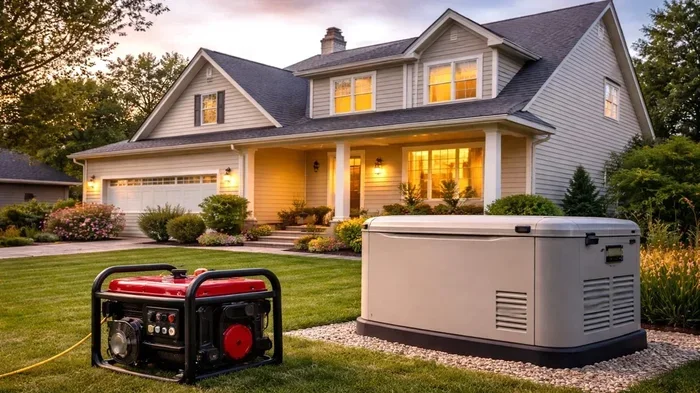
A standby generator is the gold standard for home backup. These units sit outside your home and connect directly to your electrical system. When the power goes out, an automatic transfer switch detects the outage and starts the generator within seconds.
You do not need to flip any switches or run extension cords. The system handles everything automatically. Standby units run on natural gas or propane and can power your entire house. They are more expensive upfront but offer unmatched convenience.
If you want a truly hands-off home backup power experience, a standby unit is the way to go. Many homeowners consider this the best backup generator option for permanent installations.
Portable Generators
Portable generators are smaller, cheaper, and more flexible. You can move them around and use them for camping or tailgating too. They run on gasoline, propane, or sometimes dual fuel.
The trade-off is that you must set them up manually each time. You also need to run extension cords into your home. Most portable units cannot power an entire house. They work best for essential circuits and key appliances.
If your budget is tight or you only need backup for a few devices, a portable electrical generator is a solid choice. Just be sure to never run one indoors. Carbon monoxide from gasoline generators can be deadly in enclosed spaces.
Inverter Generators
Inverter generators produce clean, stable power. They adjust engine speed to match the load, which saves fuel and reduces noise. These units are great for sensitive electronics like laptops and phones.
They tend to be more expensive per watt than standard portables. But if you need quiet, efficient power for electronics, they are worth the investment.
Fuel Types and Their Pros and Cons
The fuel your generator uses affects everything from cost to convenience. Here is a detailed look at each option.
Natural Gas
Natural gas is the most popular fuel for standby generators. It connects to your existing gas line, so you never run out mid-outage. The natural gas generator cost is reasonable over time because you do not need to store fuel.
On the downside, natural gas produces less energy per unit than propane. During extreme cold, supply can sometimes be interrupted. Still, for most homeowners, natural gas is the most practical choice.
Propane
Propane burns cleaner than gasoline and stores indefinitely. You can keep tanks on hand and swap them out as needed. A propane generator is excellent for long outages in rural areas.
The downside is that propane has lower energy density. You will burn through tanks faster than you might expect. Storage also requires proper handling and space.
Diesel
Diesel generators are built for heavy-duty use. They are common in commercial settings but also work well for large homes. Diesel fuel has a long shelf life and high energy output.
The main drawbacks are noise, emissions, and higher fuel costs. Diesel units also tend to be heavier and more expensive. For most residential homes, diesel is overkill.
Gasoline
Gasoline is the most accessible fuel. You can buy it at any gas station. Most portable generators run on gasoline.
However, gasoline degrades quickly. It can go bad in as little as 30 days. This means you need to rotate your fuel supply regularly. Gasoline generators also produce more emissions and noise.
Sizing Your Generator: What You Need to Know
Getting the right size is the single most important decision. Too small and you will overload the system. Too big and you waste money on unused capacity.
Small Generators (3,000 to 5,000 Watts)
These units handle basic essentials. They can run a refrigerator, a few lights, and your phone chargers. They are perfect for apartments, small homes, or minimal backup needs.
A small portable generator costs between $500 and $1,500. They are lightweight and easy to store. The trade-off is limited runtime and capacity.
Medium Generators (5,000 to 10,000 Watts)
Mid-size units can handle more appliances simultaneously. You can run a refrigerator, furnace blower, sump pump, and a few lights all at once. These are the sweet spot for most families.
Expect to pay $1,500 to $4,000 for a quality medium unit. They offer a good balance of power, portability, and price.
Large Generators (10,000 to 20,000+ Watts)
Large standby units can power your entire home. They handle central air conditioning, electric water heaters, and multiple circuits simultaneously. These are the whole-house generators that keep everything running during extended outages.
Costs range from $4,000 to $15,000 or more, including installation. But for homeowners in areas prone to long outages, the peace of mind is worth every penny.
Quick Tips for Sizing
- Add up the wattage of all essential devices.
- Multiply the starting watts by 1.5 for safety.
- Choose a unit with at least 20 percent extra capacity.
- Consider future needs, like an electric vehicle charger.
- Consult a professional if you are unsure.
Key Features to Look For
Not all generators are created equal. Some models include features that make a huge difference in daily use. Here are the ones worth paying attention to.
Automatic Transfer Switch
An automatic transfer switch is a must-have for standby units. It detects power loss and starts the generator without you lifting a finger. This feature is what separates a true backup system from a portable unit you have to manually set up.
Runtime and Fuel Tank Size
Runtime tells you how long the generator can run on a full tank. Longer runtime means fewer refills during extended outages. Look for units that offer at least 8 to 12 hours on a single tank at half load.
Some models include fuel gauges and low-oil shutdowns. These safety features protect both the unit and your home.
Noise Level
Generators can be loud. Inverter models run the quietest, often below 60 decibels. Standard portables and standby units are louder but still manageable. Check the decibel rating before you buy, especially if you have close neighbors.
Parallel Capability
Some portable generators can be linked together in parallel. This doubles your power output without buying a larger unit. It is a clever option if your needs grow over time.
Remote Monitoring
Higher-end standby models offer Wi-Fi connectivity and app-based monitoring. You can check fuel levels, runtime, and power output from your phone. This feature adds convenience and helps with generator maintenance tracking.
Cost Breakdown and Budgeting
Understanding the full cost of ownership helps you plan your budget. The purchase price is only part of the equation.
| Generator Type | Average Cost (Unit Only) | Installation Cost | Annual Maintenance |
|---|---|---|---|
| Portable Gasoline | $500 – $1,500 | $0 (DIY) | $50 – $100 |
| Portable Propane | $800 – $2,000 | $0 (DIY) | $50 – $150 |
| Standby Natural Gas | $3,000 – $8,000 | $1,500 – $5,000 | $150 – $300 |
| Standby Propane | $3,500 – $10,000 | $1,500 – $5,000 | $150 – $300 |
| Whole-House Diesel | $8,000 – $15,000 | $2,000 – $6,000 | $200 – $400 |
Keep in mind that fuel costs add up over time. If you are curious about fuel consumption, you can check how much natural gas a generator uses to estimate your monthly expenses.
Also factor in the cost of any permits or inspections required in your area. Some jurisdictions require professional generator installation and annual safety checks. These costs vary widely by location.
Common Mistakes to Avoid
Even the best-informed buyers sometimes make errors. Here are the most common mistakes and how to avoid them.
Undersizing the Generator
The biggest mistake is buying a unit that is too small. It may seem to work at first, but the moment you add a few appliances, it overloads. Always calculate your total needs and add a buffer.
Ignoring Maintenance
A generator sitting unused for months can develop problems. Fuel degrades, oil breaks down, and batteries lose charge. Regular generator maintenance keeps the unit ready when you need it most.
Skipping the Transfer Switch
Some homeowners try to wire a generator directly into their panel without a transfer switch. This is dangerous and often illegal. A transfer switch prevents backfeeding, which can endanger utility workers. Always install a proper automatic transfer switch or consult a licensed electrician.
Forgetting About Ventilation
Generators produce carbon monoxide, a silent and deadly gas. Never run a generator indoors, in a garage, or near windows. Always place portable units outdoors in a well-ventilated area.
Not Reading the Warranty
Warranties vary widely between brands. Some cover only parts, while others include labor. Read the fine print before you buy. A strong warranty can save you hundreds in repair costs.
Expert Insights and Final Recommendations
After reviewing dozens of models and speaking with industry professionals, here is what we recommend.
For most homeowners looking for the best backup generator, a standby natural gas unit in the 7,000 to 12,000 watt range hits the sweet spot. It covers essential circuits and most appliances without breaking the bank. Brands like Generac, Briggs & Stratton, and Kohler consistently earn high marks for reliability.
If you are on a tight budget, a mid-size portable propane generator offers excellent value. You get decent runtime and enough power for the essentials at a fraction of the cost of a standby system.
For those in areas with frequent or prolonged outages, investing in a whole-house standby unit is the smart long-term move. The convenience and peace of mind far outweigh the higher upfront cost.
No matter which type you choose, proper generator installation and regular maintenance are non-negotiable. Schedule professional inspections annually. Change the oil and filters as recommended by the manufacturer. Keep fuel fresh and store it safely.
Finally, test your generator regularly. Run it for 15 to 20 minutes every month, even when the power is on. This keeps the engine lubricated and ensures it starts when you need it most. A well-maintained backup power system will serve you reliably for many years.
The best backup generator is the one that fits your specific needs, budget, and home setup. Take the time to do your research, calculate your power requirements, and choose a reputable brand. Your future self will thank you the next time the lights go out.
Start by reviewing our guide on how big of a backup generator do I need if you are still unsure about sizing. And for general guidance on electrical generator options, check out our electrical generator resource page.
Remember, the right backup generator is not a luxury. It is a practical investment in your home’s safety and comfort. Power outages are not a matter of if, but when. Be prepared, and you will never have to face the dark unprepared.
Frequently Asked Questions
What is the best backup generator for a 2000 square foot home?
For a 2,000 square foot home, a standby generator in the 7,000 to 10,000 watt range typically covers all essential circuits. This size can handle your refrigerator, furnace, lights, and a few other key appliances simultaneously. If you need to power your entire home including central air, consider a unit in the 12,000 to 15,000 watt range.
How long does a backup generator last?
A well-maintained standby generator can last 20 to 30 years or more. Portable units typically last 10 to 15 years with proper care. Regular maintenance, including oil changes and filter replacements, significantly extends the lifespan of any home backup power system.
Can I install a backup generator myself?
Portable generators can be set up by homeowners without professional help. However, standby generators require professional generator installation due to electrical wiring, gas line connections, and permit requirements. Always check local codes and hire a licensed professional for permanent installations.
How much does it cost to run a backup generator?
Operating costs depend on fuel type and runtime. Natural gas standby units typically cost $20 to $50 per day of continuous use. Propane units burn through fuel faster and may cost more. To understand fuel consumption better, you can read about how much natural gas a generator uses on our resource page.
What is the difference between a standby and portable generator?
A standby generator is permanently installed outside your home and turns on automatically during outages. A portable generator is temporary, requires manual setup, and runs on gasoline or propane. Standby units cost more but offer far greater convenience and whole-home coverage.
Do I need a transfer switch with my generator?
Yes, a transfer switch is essential for safety. It prevents backfeeding electricity into utility lines, which can be fatal for workers. It also ensures your generator powers only the circuits you want. Always use a proper automatic transfer switch with any permanent generator installation.
=== CONCLUSION ===
Finding the best backup generator does not have to be complicated. Start by understanding your power needs, then explore the different types and fuel options available. Consider your budget, your home size, and how long outages typically last in your area. Each of these factors plays a role in making the right choice.
Take action today. Review the sizing guidelines, compare fuel types, and think about the features that matter most to your household. A reliable backup power solution gives you peace of mind no matter what the weather brings. You will be glad you invested in the right unit when the next outage hits.