How Long Does It Take To Install A Generac Generator
The installation time for a Generac generator varies based on the type, ranging from 4 to 20 hours. Portable Generac units are quick to set up, while standby generators require more involved work like wiring and transfer switch setup. Understanding the process helps you plan and avoid common delays.
So, you just bought a Generac generator. Smart move. Whether you need backup power for your home or a reliable source for your job site, a Generac unit is a solid choice. But one question keeps popping up: how long does it take to install a Generac generator?
The honest answer is, it depends. A small portable generator can be ready to go in a few hours. A large standby unit that powers your entire home? That could take a couple of days. In this article, we break down the timeline for every type of Generac setup. You will learn about each step, what affects the clock, and how to avoid common pitfalls. Let us get into it.
Key Takeaways
- Portable Generac generators: Installation typically takes 2 to 4 hours with basic setup.
- Standby Generac generators: Professional installation usually requires 1 to 3 days depending on complexity.
- Transfer switch setup: This step adds significant time to the whole process.
- Permits and inspections: Local regulations can add extra days to your timeline.
- Proper placement: A level concrete pad and correct distance from your home are essential.
- DIY vs. professional: Hiring a pro saves time and ensures safety compliance.
📑 Table of Contents
- How Long Does It Take to Install a Generac Generator?
- Factors That Affect Generac Generator Installation Time
- Portable Generac Generator Installation: Step by Step
- Standby Generac Generator Installation: Step by Step
- Portable vs Standby Generator Installation Time
- Common Mistakes to Avoid During Generator Installation
- Expert Tips for a Smooth Generac Generator Installation
- How Long Does Generator Maintenance Take After Installation?
- How Much Does Generac Generator Installation Cost?
- Final Thoughts on Generac Generator Installation Time
How Long Does It Take to Install a Generac Generator?
The short answer is anywhere from 4 hours to 3 days. But the real answer is more nuanced. The type of generator you buy plays a huge role. A portable Generac generator is much simpler to set up than a standby Generac generator. Let us look at the general timelines.
For a portable Generac unit, expect about 2 to 4 hours. This includes unboxing, placing the unit, connecting fuel, and running a test. If you have a small portable model under 3,500 watts, you could be up and running in under 2 hours. Larger portable units with more features might take a bit longer.
For a standby Generac generator, plan for 1 to 3 days. This type of whole house generator requires a permanent setup. You need a concrete pad, fuel line connection, electrical wiring, and a transfer switch. Each of these steps takes time and care. Rushing through them is a recipe for problems later on.
Here is a quick look at the average timelines:
- Portable Generac (under 3,500W): 2 to 4 hours
- Portable Generac (3,500W to 7,500W): 4 to 6 hours
- Standby Generac (small, 7kW to 10kW): 1 to 2 days
- Standby Generac (large, 10kW to 24kW): 2 to 3 days
- Standby Generac with complex wiring: 3+ days
These numbers assume everything goes smoothly. But as we will see, many factors can speed up or slow down the process.
Factors That Affect Generac Generator Installation Time
Not every installation is the same. Several factors can stretch or shrink your timeline. Understanding these helps you set realistic expectations and plan better.
Type of Generator
This is the biggest factor. A portable generator setup is straightforward. You set it up, fuel it up, and plug things in. A standby generator installation involves permanent connections to your home’s electrical system and gas supply. The standby route takes more time by nature.
Location and Placement
Where you put your generator matters a lot. If you already have a concrete pad for generator ready, you save a full day. If not, you need to pour one and let it cure. The distance from your electrical panel also matters. A shorter run means less wiring and faster completion.
Local building codes also dictate placement. Most areas require the generator to be a certain distance from windows, doors, and property lines. Check these rules early so you do not get surprises.
Electrical and Fuel Connections
Connecting your generator to your home’s electrical panel is a big step. If your panel is modern and compatible, this goes faster. Older panels might need upgrades first. The same goes for fuel connections. Natural gas generators hook up to your existing gas line, which is usually quick. Propane units need a tank installed, which adds time.
Permits and Inspections
Most cities require a generator permit for standby installations. Getting the permit can take a few days to a few weeks. After installation, a city inspector must approve the work. This adds waiting time that is out of your hands. Always check with your local building department first.
Experience Level
If you are a seasoned DIYer, you might finish faster. But generator installation involves electrical and gas work. Mistakes can be dangerous. Hiring a licensed professional often saves time because they know the codes and work efficiently. A pro also ensures your Generac warranty stays valid.
Portable Generac Generator Installation: Step by Step
Portable Generac units are the easiest to install. They do not require permanent connections. Here is what the process looks like.
Step 1: Unbox and Inspect
Take the generator out of the box. Check for any shipping damage. Lay out all the parts and verify everything is included. Read the owner’s manual. It takes about 15 minutes but saves you headaches later.
Step 2: Choose a Level Surface
Place the generator on a flat, stable surface. Never run a portable generator indoors or in a garage. Carbon monoxide is deadly. A level outdoor spot about 20 feet from your home is ideal. This step takes about 10 minutes.
Step 3: Connect Fuel
Fill the tank with the right fuel. Most portable Generac units run on gasoline. Some models support propane or natural gas with optional kits. This step takes 5 to 10 minutes.
Step 4: Wire and Test
Plug your essential appliances directly into the generator or use a transfer switch. Start the unit and let it run for a few minutes. Check the voltage output with a multimeter. This step takes about 30 minutes.
Total time for a portable setup: 2 to 4 hours. Simple and fast.
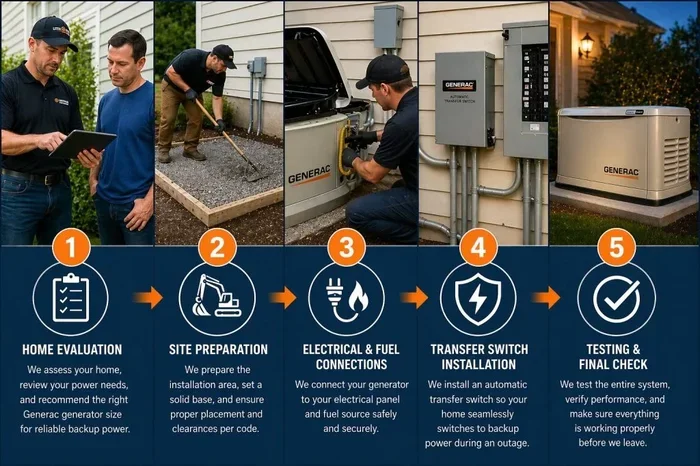
Standby Generac Generator Installation: Step by Step
Standby generators are a bigger project. They power your home automatically during outages. Here is what the full process looks like.
Step 1: Prepare the Site
The first step is getting the site ready. This means pouring a concrete pad or setting a mounting bracket. The pad needs to be level and strong enough to hold the unit. If the pad is not ready, this step alone can take a day or more, depending on curing time.
Quick Tip: Have the pad poured at least 48 hours before installation day. This gives it time to set properly.
Step 2: Install the Transfer Switch
A transfer switch is a critical piece of equipment. It connects your generator to your home’s electrical panel safely. Without it, you risk backfeeding power into the grid, which is dangerous and illegal in most areas.
The electrician will install the transfer switch on your main panel. This involves turning off power, running new wires, and connecting the switch. For most homes, this takes 3 to 5 hours.
Step 3: Connect Fuel Lines
If your Generac unit runs on natural gas, the plumber or technician connects it to your existing gas line. For propane models, a tank needs to be in place and connected. Fuel line work usually takes 2 to 4 hours depending on the distance and complexity.
Step 4: Place and Secure the Generator
The unit is lifted onto the pad and secured. The technician connects the electrical wiring from the transfer switch to the generator. They also set up the exhaust venting system. This step takes about 2 to 3 hours.
Step 5: Test and Inspect
Once everything is connected, the system gets tested. The technician runs the generator, checks voltage, and verifies automatic startup. Then, if required, they call for a city inspection. The test run takes 1 to 2 hours. The inspection wait time varies.
Total time for a standby setup: 1 to 3 days. Much more involved, but the result is automatic backup power for your entire home.
Portable vs Standby Generator Installation Time
Let us put the two options side by side. This comparison helps you understand the real difference in setup effort and time.
| Factor | Portable Generac | Standby Generac |
|---|---|---|
| Average Install Time | 2 to 4 hours | 1 to 3 days |
| Professional Help Needed | Rarely | Always recommended |
| Electrical Wiring | Minimal (plug-in) | Full panel connection |
| Fuel Connection | Built-in tank | Gas line or propane tank |
| Permit Required | Usually no | Usually yes |
| Automatic Start | No | Yes |
| Concrete Pad Needed | No | Yes |
| Overall Complexity | Low | High |
As you can see, the portable route is much faster and simpler. But a standby generator offers something a portable one cannot: automatic, whole-home backup power. When the grid goes down, your standby unit kicks on within seconds. No manual setup required.
Common Mistakes to Avoid During Generator Installation
Even with a clear plan, mistakes happen. Here are the most common ones and how to dodge them.
Skipping the Permit
Some homeowners skip getting a permit to save time. This is a big mistake. Unpermitted work can lead to fines, forced removal, and insurance problems. Always check with your local building department before you start.
Wrong Generator Placement
Placing the generator too close to your home is dangerous. Exhaust fumes contain carbon monoxide. Keep the unit at least 20 feet from doors, windows, and vents. Also, check local noise ordinances. A generator that is too close can bother your neighbors.
Ignoring the Transfer Switch
Never plug a standby generator directly into a wall outlet. This is called backfeeding, and it is extremely dangerous. It can electrocute utility workers and damage your electrical system. Always use a proper transfer switch.
Underestimating Fuel Needs
Make sure your fuel source can support the generator’s runtime needs. A natural gas line usually handles this fine. But if you use propane, check that your tank is large enough. A small tank will run dry during a long outage.
Not Hiring a Professional
DIY is great for many projects. But generator installation involves electrical and gas work. Mistakes here can be life-threatening. A licensed professional ensures safety, code compliance, and keeps your Generac warranty intact.
Expert Tips for a Smooth Generac Generator Installation
Want to make the process as fast and smooth as possible? Follow these tips from experienced installers.
Plan Ahead
Before you buy, measure your available space. Check your electrical panel type. Confirm your fuel source is compatible. This prep work prevents delays on installation day.
Buy All Accessories First
Get the transfer switch, fuel lines, and mounting hardware before the generator arrives. Having everything on hand keeps the crew moving without pauses.
Schedule During Good Weather
Generator installation is an outdoor job. Rain, snow, or extreme heat can slow things down. Pick a clear, mild day for the best results.
Stay Available
If you are doing any of the work yourself, be on site. Answering questions and making quick decisions keeps the timeline on track.
Get a Post-Installation Walkthrough
After the install is done, ask the technician to walk you through the system. Learn how to start it manually, check the oil, and monitor fuel levels. This knowledge is invaluable when you need the unit most.
How Long Does Generator Maintenance Take After Installation?
Installation is just the beginning. Regular maintenance keeps your Generac unit running reliably. The good news is, maintenance is quick and easy.
For portable generators, a quick check every few months is enough. Inspect the oil level, clean the air filter, and run the unit for 15 minutes monthly. This takes about 30 minutes per session.
Standby generators need a more structured maintenance schedule. Most manufacturers recommend professional service once a year. This includes oil changes, filter replacements, and system diagnostics. A yearly service visit takes about 1 to 2 hours.
Regular maintenance extends the lifespan of your generator significantly. It also ensures the unit starts immediately when you need it most. Think of it as an insurance policy for your home backup power system.
How Much Does Generac Generator Installation Cost?
Cost is always a factor. The price varies widely based on the generator size and installation complexity.
Portable Generac generators cost between $500 and $3,000 for the unit itself. Installation is usually minimal, often under $200 if you hire someone. Many homeowners handle the setup themselves.
Standby Generac generators range from $2,000 to $10,000 for the unit. Professional installation adds $2,000 to $5,000 depending on electrical and gas work. Transfer switches, concrete pads, and permits all factor into the final cost.
While the upfront cost of a standby system is higher, the convenience and automatic operation make it worth it for many homeowners. You get peace of mind knowing your home stays powered no matter what.
Final Thoughts on Generac Generator Installation Time
So, how long does it take to install a Generac generator? The answer ranges from a few hours for a portable unit to a couple of days for a standby system. The key is knowing what you are getting into before you start.
Portable generators are fast and simple. They are great for temporary power needs and job sites. Standby generators take more effort but deliver automatic, whole-home protection. Both options serve a real purpose and add value to your home.
Whatever route you choose, take the time to plan properly. Get the right permits. Use a qualified installer. And never skip the maintenance. A well-installed Generac generator will serve you reliably for years to come. The power and peace of mind it provides is well worth the effort you put in upfront.
Now that you know the timeline and process, you are ready to take the next step. Whether you grab a portable unit today or plan a full standby installation, you are making a smart move for your home and your family.
Frequently Asked Questions
Can I install a Generac generator myself?
Yes, you can install a portable Generac generator yourself since it requires no permanent connections. However, standby generators involve electrical and gas work that should be handled by a licensed professional. DIY standby installation can void your warranty and create safety hazards.
Do I need a permit to install a Generac generator?
Most cities require a permit for standby generator installations. Portable generators usually do not need a permit since they are temporary and not permanently connected. Always check with your local building department to confirm the requirements in your area.
What is the fastest way to install a Generac generator?
The fastest way is to buy a portable Generac model and set it up yourself on a level outdoor surface. For standby units, having a pre-poured concrete pad and all accessories ready speeds things up significantly. Hiring a professional installer also reduces delays from mistakes or code violations.
How far should a Generac generator be from my house?
Generac recommends placing the generator at least 20 feet from your home. This distance keeps exhaust fumes, including carbon monoxide, safely away from windows and doors. Always check your local codes as some areas require greater distances.
Does Generac offer professional installation services?
Yes, Generac partners with authorized dealers and installers across the country. Many dealers offer full-service installation that includes site prep, electrical work, and permitting. You can find a certified installer through the Generac website or by contacting your local dealer.
How long does a Generac generator last with proper maintenance?
A well-maintained Generac generator can last 20 to 30 years or more. Standby units typically run 500 to 1,000 hours per year during outages. Following the recommended maintenance schedule keeps the unit running efficiently and extends its lifespan significantly.