The Ultimate Guide to Rotary Screw Air Compressor Oil
Rotary screw air compressor oil plays a vital role in keeping your compressor cool, lubricated, and running efficiently. Choosing the right oil type and following proper change intervals can extend the life of your equipment and save you money on repairs. This guide covers everything you need to know, from oil types and benefits to common mistakes and expert tips.
This is a comprehensive guide about rotary screw air compressor oil.
Key Takeaways
- Right oil matters: Using the correct rotary screw air compressor oil prevents wear, reduces heat, and improves efficiency.
- Synthetic vs. mineral: Synthetic oils last longer and perform better in extreme temperatures than mineral-based options.
- Change intervals are critical: Most manufacturers recommend changing oil every 2,000 to 8,000 hours depending on the oil type and operating conditions.
- Oil carryover affects air quality: Poor oil separation can contaminate your compressed air and damage downstream equipment.
- Compatibility is key: Always check your compressor manual before selecting an oil to ensure proper fit and performance.
[FEATURED_IMAGE_PLACEHOLDER]
What Is Rotary Screw Air Compressor Oil?
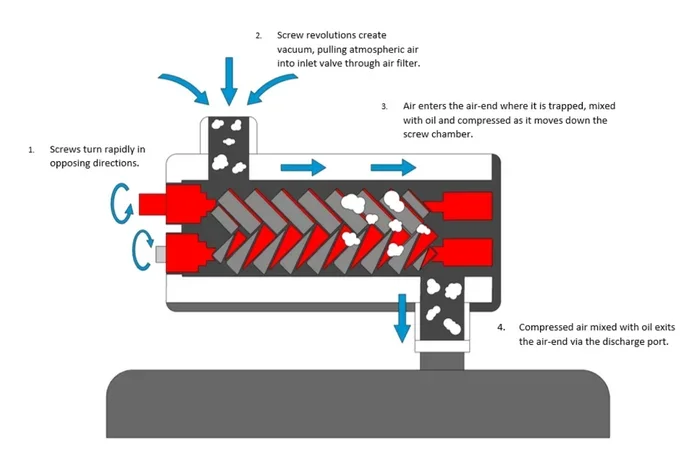
Rotary screw air compressor oil is a specialized lubricant designed for use in rotary screw compressors. These machines use two interlocking rotors to compress air, and the oil serves several essential jobs at once. It lubricates moving parts, seals gaps between the rotors, cools the compression chamber, and reduces wear over time.
Without proper lubrication, your compressor would overheat quickly. Metal-on-metal contact would cause damage, and the system would lose efficiency fast. This is why selecting the right rotary screw air compressor oil is so important for every operator.
The oil circulates through the air end, picks up heat, and then passes through a cooling system before returning to the compression chamber. It also plays a role in separating from the compressed air before the air exits the system. This process keeps your output clean and your equipment protected.
Not all compressor oils are the same. Different formulations work better under different conditions. Understanding what goes into your oil helps you make smarter maintenance decisions. Let us break this down in the next section.
Types of Rotary Screw Air Compressor Oil
Mineral-Based Compressor Oils
Mineral-based oils are the traditional choice for many rotary screw compressors. They are refined from crude oil and offer solid performance for standard applications. These oils are generally more affordable than synthetic alternatives, which makes them popular for budget-conscious operations.
However, mineral oils have a shorter service life. They break down faster under high heat and heavy use. If your compressor runs in a hot environment or operates for long hours, you may need to change mineral oil more frequently.
Synthetic Rotary Screw Compressor Oil
Synthetic oils are engineered in a lab for maximum performance. They offer excellent thermal stability, which means they resist breaking down at high temperatures. Synthetic rotary screw air compressor oil also provides better protection against oxidation and sludge buildup.
These oils last longer between changes, which saves time and money over the long run. They also perform well in both hot and cold environments. If your compressor faces extreme conditions, synthetic oil is usually the better choice.
Semi-Synthetic Blends
Semi-synthetic oils combine the best of both worlds. They offer improved performance over mineral oils but cost less than full synthetics. These blends work well for moderate-duty applications where extreme heat or cold is not a major concern.
Many operators choose semi-synthetic options as a middle ground. They deliver solid lubrication and reasonable service life without the premium price tag of full synthetics.
Benefits of Using the Right Rotary Screw Air Compressor Oil
Using the correct oil for your compressor brings many advantages. Let us look at the key benefits in detail.
- Longer equipment life: Proper lubrication reduces wear on rotors, bearings, and seals. This extends the overall lifespan of your compressor.
- Better energy efficiency: Quality oil reduces friction inside the air end. Less friction means less energy wasted, which lowers your electricity bills.
- Cleaner operation: Good oils resist oxidation and sludge formation. This keeps the internal components cleaner for longer.
- Improved air quality: The right oil minimizes carryover, meaning less oil gets into your compressed air output. This is crucial for applications where air purity matters.
- Consistent performance: Proper lubrication ensures your compressor delivers steady pressure and flow, even under heavy loads.
- Lower maintenance costs: When your oil does its job well, other components last longer too. You spend less on repairs and replacements over time.
Think of it this way. Your compressor oil is like the engine oil in your car. You would not skip an oil change or use the wrong grade. The same logic applies here. Investing in quality rotary screw air compressor oil pays for itself many times over.
How Often Should You Change Rotary Screw Air Compressor Oil?
Oil change intervals depend on several factors. The type of oil you use, the operating conditions, and the manufacturer all play a role. Here is what you need to know.
- Mineral oils: Typically require a change every 2,000 to 4,000 operating hours.
- Synthetic oils: Can last between 4,000 and 8,000 hours, sometimes even longer.
- Semi-synthetic oils: Usually fall in the 3,000 to 6,000-hour range.
However, these are general guidelines. Harsh operating conditions can shorten oil life significantly. If your compressor runs in a dusty, hot, or humid environment, you may need to change the oil more often. Similarly, if you run your compressor at full capacity for long shifts, the oil will degrade faster.
Always check your compressor manual for the manufacturer recommended interval. Many modern compressors also have oil life monitors that track usage and alert you when it is time for a change. Following these guidelines helps prevent costly breakdowns.
It is also important to check the oil level regularly. Low oil levels cause increased friction and heat, which can lead to premature failure. A quick visual check during your weekly routine can save you from major problems down the road.
When you do change the oil, make sure to flush the system properly. Old oil residues can contaminate the new oil and reduce its effectiveness. A proper flush ensures your fresh rotary screw air compressor oil starts with a clean slate.
How to Choose the Best Oil for Your Compressor
Selecting the right oil can feel overwhelming with so many options on the market. Here are the key factors to consider.
Check Your Compressor Manual First
Your compressor manual is the best starting point. It lists the recommended oil type, viscosity grade, and change intervals for your specific model. Following these guidelines keeps your warranty valid and ensures optimal performance.
Consider Your Operating Environment
Where does your compressor operate? If it runs in a hot factory, you need oil with high thermal stability. If it faces cold starts in winter, you need oil that flows easily at low temperatures. Synthetic rotary screw air compressor oil handles both extremes better than mineral alternatives.
Match the Viscosity Grade
Viscosity refers to how thick the oil is at different temperatures. The wrong viscosity can cause poor lubrication or excessive energy consumption. Common viscosity grades for rotary screw compressors include ISO 68, ISO 100, and ISO 220. Always match the grade to your manufacturer specifications.
Look for Quality Certifications
Reputable compressor oils carry industry certifications. Look for approvals from organizations like ISO, DIN, or OEM-specific certifications. These labels confirm the oil meets strict performance standards.
Think About Total Cost of Ownership
A cheaper oil might seem like a good deal upfront. But if it requires more frequent changes and causes more wear, it costs more in the long run. Consider the total cost including oil changes, energy consumption, and potential repair bills when making your choice.
Pro tip: Many operators keep a log of their oil purchases and change dates. This simple habit helps you track performance and spot trends early. It also makes it easier to switch to a better oil if your current option is not working well.
Common Mistakes to Avoid with Rotary Screw Air Compressor Oil
Even experienced operators sometimes make mistakes with compressor oil. Here are the most common ones to watch out for.
- Using the wrong oil type: Never mix oil types or use an oil not recommended for rotary screw compressors. Wrong oil can cause poor lubrication, increased wear, and even compressor failure.
- Skipping oil changes: It is tempting to stretch oil change intervals to save time. But degraded oil loses its protective properties. Skipping changes leads to higher repair costs later.
- Ignoring oil analysis: Oil analysis can reveal early signs of problems. Dark color, unusual smell, or metal particles in the oil are warning signs you should not ignore.
- Overfilling or underfilling: Both conditions cause problems. Overfilling can lead to oil carryover, while underfilling causes insufficient lubrication and overheating.
- Neglecting the oil filter: The oil filter removes contaminants from the oil. A clogged filter reduces oil flow and compromises lubrication. Replace the filter at every oil change.
One mistake that often gets overlooked is using oil that is not compatible with the seals in your system. Some oils can degrade certain seal materials over time, leading to leaks and pressure loss. Always verify seal compatibility before switching oil brands or types.
Another key consideration is the relationship between your compressor and its power supply. Proper power delivery affects how your compressor runs and how the oil performs under load. For more on matching power equipment to your compressor setup, check out our guide on what size generator for 30 amp RV air conditioner for insights on power matching.
Expert Tips for Extending Oil Life
Want to get the most out of every oil change? Follow these expert tips.
- Keep the intake filters clean: Dirty intake filters let dust into the compression chamber. This contaminates the oil and speeds up degradation. Clean or replace filters on a regular schedule.
- Monitor operating temperatures: High temperatures break down oil faster. Keep an eye on your compressor temperature gauge and address overheating issues promptly.
- Allow proper cooldown: Let your compressor cool down after heavy use before shutting it off. This reduces thermal stress on the oil and extends its life.
- Use oil analysis services: Many oil suppliers offer analysis services. You send in a sample, and they test it for contamination, viscosity changes, and wear metals. This data helps you make informed decisions about oil changes.
- Store oil properly: Keep oil containers sealed and stored in a cool, dry place. Contaminated or degraded oil should never go into your compressor.
These small habits add up over time. They help you get the most mileage out of every oil change and keep your compressor running at peak performance. The goal is to protect your investment and avoid unexpected downtime.
Key Takeaways
- Right oil matters: Using the correct rotary screw air compressor oil prevents wear, reduces heat, and improves efficiency.
- Synthetic vs. mineral: Synthetic oils last longer and perform better in extreme temperatures than mineral-based options.
- Change intervals are critical: Most manufacturers recommend changing oil every 2,000 to 8,000 hours depending on the oil type and operating conditions.
- Oil carryover affects air quality: Poor oil separation can contaminate your compressed air and damage downstream equipment.
- Compatibility is key: Always check your compressor manual before selecting an oil to ensure proper fit and performance.
- Avoid common mistakes: Using wrong oil types, skipping changes, and neglecting filters all lead to premature failure.
- Small habits make a big difference: Clean filters, temperature monitoring, and proper cooldown routines extend oil life significantly.
Conclusion
Rotary screw air compressor oil is more than just a lubricant. It is the lifeblood of your compressor system. The right oil keeps everything cool, clean, and running smoothly for thousands of hours. Choosing wisely and following proper maintenance practices saves you money, prevents downtime, and protects your investment.
Whether you choose mineral, synthetic, or semi-synthetic, the key is consistency. Stick to your change schedule, monitor oil condition, and always use the right type for your compressor. These simple steps go a long way toward reliable performance and long equipment life.
Take the time to understand your compressor oil today. Your future self will thank you when your compressor keeps running strong year after year. Start with the right rotary screw air compressor oil and build a maintenance routine you can trust.
What happens if I use the wrong oil in my rotary screw compressor?
Using the wrong oil can cause poor lubrication, increased wear, overheating, and even compressor failure. Always check your manual for the recommended oil type and viscosity before adding oil to your system.
Can I mix different brands of rotary screw air compressor oil?
It is best to avoid mixing oil brands or types. Different formulations may not be compatible and could reduce lubrication performance. If you need to switch oils, flush the system thoroughly first.
How can I tell if my compressor oil needs changing?
Signs that oil needs changing include dark color, strong burnt smell, increased operating temperatures, and visible contaminants. Many compressors also have oil life monitors that alert you when a change is due.
Is synthetic oil worth the extra cost for rotary screw compressors?
Yes, synthetic oil generally lasts longer, performs better in extreme temperatures, and provides superior protection. The higher upfront cost is offset by longer change intervals and reduced wear over time.
What is oil carryover and why does it matter?
Oil carryover is when small amounts of oil escape into the compressed air output. It matters because it can contaminate your tools, damage pneumatic equipment, and reduce air quality in sensitive applications.
Does ambient temperature affect my compressor oil performance?
Yes, high temperatures accelerate oil breakdown, while low temperatures can make oil too thick to flow properly. Choose an oil formulated for your typical operating temperature range to ensure consistent performance.
Frequently Asked Questions
What is rotary screw air compressor oil?
rotary screw air compressor oil is an important topic with many practical applications.