What Size Air Compressor Do You Need to Blow Out Sprinklers
Choosing the right air compressor to blow out sprinklers is essential for winterizing your irrigation system without causing damage. You need a machine that delivers enough CFM and PSI to push water out of every sprinkler head. This guide covers the exact size, compressor types, and step-by-step process to protect your lawn.
Winterizing your sprinkler system is one of the most important steps you can take to protect your lawn. Water left inside the pipes can freeze, expand, and crack fittings, heads, and valves. The best way to remove that water is by using compressed air—a process called a sprinkler blowout. But not just any air compressor to blow out sprinklers will do. You need the right size, the correct pressure, and a safe method. In this guide, we’ll walk you through everything you need to know to choose the perfect air compressor for sprinkler winterization and get the job done right.
Many homeowners make the mistake of grabbing the first compressor they find in the garage. An undersized unit will struggle to push water out, leaving behind moisture that causes damage. An oversized one wastes money and energy. By the end of this article, you’ll know exactly what CFM, PSI, and tank capacity you need. We’ll also cover the different compressor types, a simple step-by-step blowout procedure, and how to safely power your compressor with a generator if needed.
Key Takeaways
- Right CFM and PSI: Most residential systems need 20-30 CFM at 40-50 PSI to blow out sprinklers effectively.
- Tank Size Matters: A 20-30 gallon tank gives you enough stored air to clear pipes without constant refilling.
- Compressor Type: Pancake and hot dog compressors work well for small systems; twin-stack or rotary screw units handle larger setups.
- Generator Power: If you use a generator, size it correctly—check our guide on what size generator do I need to run power tools for wattage requirements.
- Safety First: Always wear eye protection and follow the manufacturer’s instructions to prevent injury.
📑 Table of Contents
- What Size Air Compressor to Blow Out Sprinklers: Why It Matters
- Understanding CFM, PSI, and Tank Size
- Types of Air Compressors for Sprinkler Winterization
- How to Size Your Compressor for Your Sprinkler System
- Step-by-Step: Blowing Out Your Sprinklers Safely
- Powering Your Compressor: Generator Tips
- Expert Insights and Quick Tips
- Conclusion
What Size Air Compressor to Blow Out Sprinklers: Why It Matters
A sprinkler blowout uses high-pressure air to force water out of the underground pipes and up through the heads. The goal is to leave the system completely dry before winter freezes arrive. To do this, you need a compressor that can deliver a steady stream of air at the right volume and pressure. The wrong equipment leads to incomplete drainage, frozen pipes, and expensive repairs in the spring.
The Goal of a Sprinkler Blowout
Every sprinkler system is designed with a specific number of zones. Each zone has several heads that release water. When you run compressed air through the system, you push the water ahead of the air until it exits the heads. The air must have enough volume (CFM) to move the water quickly and enough pressure (PSI) to overcome the water’s weight and friction in the pipes. A proper air compressor to blow out sprinklers will clear all zones in just a few minutes per zone, leaving the pipes bone dry.
What Happens If You Use the Wrong Size
If your compressor can’t deliver enough CFM, the air will move too slowly. Water pools in low spots and doesn’t fully evacuate. That trapped water freezes and splits PVC pipes or damages brass fittings. You might also damage the compressor itself by running it unloaded for too long or overheating the motor. On the other hand, a compressor with too much pressure without adequate flow can blow out sprinkler heads or damage the system’s seals. Matching the air compressor size to your sprinkler system is the key to a safe, effective winterization.
Understanding CFM, PSI, and Tank Size
Before you shop for a compressor, you need to understand three core specifications: CFM, PSI, and tank size. These numbers tell you whether a unit can handle your sprinkler system’s demands.
CFM: Cubic Feet per Minute
CFM measures the volume of air the compressor can deliver. For sprinkler blowout, you need a compressor that provides at least 20 CFM for a typical residential system. Larger systems with many zones or long pipe runs may require 30 CFM or more. The CFM rating must match the total air volume needed to push water through all the zones. A compressor with a low CFM will take forever and may never fully clear the lines.
PSI: Pounds per Square Inch
PSI measures the pressure of the air. Most sprinkler systems work well with 40 to 50 PSI for the blowout process. You don’t need extremely high pressure. In fact, too much PSI can damage sprinkler heads or fittings. A compressor that delivers 90 PSI is common, but you’ll use a pressure regulator to dial it back to a safe 40-50 PSI for the blowout. Always check your system’s maximum operating pressure before starting.
Why Tank Size Gives You an Edge
The tank stores compressed air and helps deliver a consistent flow. A larger tank means the compressor doesn’t have to cycle on and off as often. For sprinkler blowout, a 20- to 30-gallon tank is ideal. It gives you enough reserve air to clear a zone quickly without waiting for the pump to rebuild pressure. Smaller tanks (like 6-gallon pancake models) can work for very small systems, but you’ll need to wait longer between zones as the tank refills.
Types of Air Compressors for Sprinkler Winterization
Not all compressors are created equal. The right type depends on your system size, budget, and how often you winterize. Here’s a look at the most common options.
| Compressor Type | Typical CFM | Tank Size | Best For |
|---|---|---|---|
| Pancake Compressor | 2-4 CFM | 6-8 gallons | Very small systems, single zone |
| Hot Dog Compressor | 4-6 CFM | 1-2 gallons | Light residential use, quick jobs |
| Twin-Stack Compressor | 5-8 CFM | 6-10 gallons | Medium systems, up to 3-4 zones |
| Portable Rotary Screw | 10-25 CFM | No tank or large tank | Large systems, frequent use |
| Stationary 5-HP+ Unit | 20+ CFM | 30+ gallons | Full residential blowout, professional use |
For most homeowners, a twin-stack or a portable rotary screw unit hits the sweet spot. A pancake compressor can work for a single small zone, but you’ll spend a lot of time waiting. If you have a large system with 8 or more zones, you’ll want a compressor rated at 20 CFM or higher. This ensures you can blow out each zone quickly and move on.
Pancake Compressors
Pancake compressors are compact and affordable. They typically deliver 2-4 CFM at 90 PSI. They work fine for a single small zone or a very simple sprinkler setup. You’ll need to let the tank refill between zones, which slows down the process. If you only have a few heads, a pancake compressor can get the job done, but it’s not the most efficient choice for a full system.
Hot Dog and Twin-Stack Models
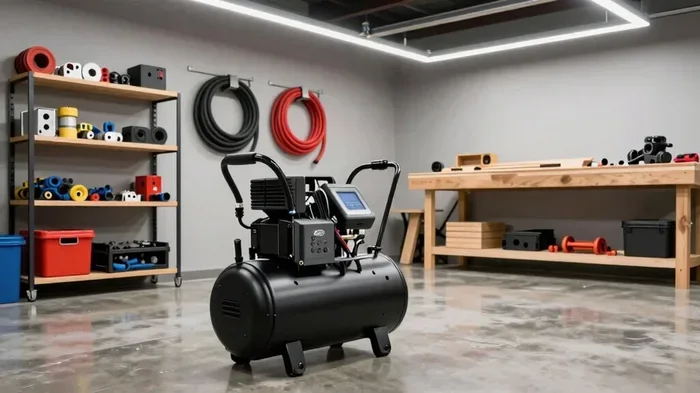
Hot dog compressors are vertical units with a small tank. Twin-stack models add a second tank for more air capacity. Both usually provide 5-8 CFM. Twin-stack compressors are popular among homeowners with medium-sized yards. They can handle 3 to 5 zones comfortably. The added tank means you get a longer burst of air before the motor kicks in. This makes the blowout process faster and more efficient.
Larger Rotary Screw and Stationary Units
If you have a large property or a commercial-style irrigation system, consider a rotary screw compressor or a larger stationary unit. These deliver 10 CFM and up, often with continuous duty cycles. They’re more expensive, but they make quick work of big systems. A 5-HP unit with 30+ gallons can blow out an entire residential system in under an hour. These are also great if you plan to use the compressor for other tasks like powering pneumatic tools or cleaning.
How to Size Your Compressor for Your Sprinkler System
Sizing the compressor correctly means matching its CFM output to your system’s air demand. Here’s a simple way to think about it.
Match the Compressor to Your System Size
Count the number of sprinkler zones and the total length of your underground pipe. A general rule is to need 10 CFM per zone for a standard residential system. So, a 4-zone system needs about 40 CFM. However, many homeowners find that 20-30 CFM is sufficient if they blow out one zone at a time and hold the air at the zone valve. The key is to have enough air volume to push the water out completely before the pressure drops too low.
Quick-Connect Fittings Make It Easier
Using a quick-connect fitting between your air hose and the sprinkler blowout kit saves time. You can switch zones quickly without wrestling with threaded adapters. Make sure the fitting is rated for the PSI you’ll be using. A standard ¼-inch quick-connect hose works for most residential systems. Always check that the hose is rated for the pressure and won’t kink or leak.
Common Mistakes to Avoid
- Using an undersized compressor: This is the #1 mistake. A low-CFM unit will leave water behind, leading to freeze damage.
- Forgetting to drain the tank: Moisture from the compressor can build up in the tank and blow into the system. Always drain the tank after each use.
- Running the compressor unloaded for too long: If the pressure drops too low, the motor strains. Stop and let it cool if it overheats.
- Ignoring the pressure regulator: Never send full 90 PSI into the sprinkler system. Use a regulator to set 40-50 PSI.
Step-by-Step: Blowing Out Your Sprinklers Safely
Once you have the right air compressor to blow out sprinklers, the process is straightforward. Follow these steps to protect your system and yourself.
Prep Work and Safety Gear
Before you start, gather your safety glasses, the blowout kit (often called a sprinkler blowout adapter), and your air hose. Turn off the water supply to the irrigation system and set the controller to the off position. Open the drain valve at the lowest point of the system if one exists. Put on safety glasses—compressed air can blow debris or water droplets out of the heads with force.
The Blowout Sequence
- Connect the air hose to the compressor outlet using a quick-connect fitting.
- Attach the blowout adapter to the hose and then to the sprinkler riser or hose bib.
- Set the compressor pressure regulator to 40-50 PSI.
- Start with the zone farthest from the compressor. Open the zone valve manually or via the controller.
- Turn on the compressor and let the air push the water out. You’ll see water spraying from the heads, then gradually just air.
- Move to the next zone once only air comes out. Repeat until all zones are clear.
- After the last zone, turn off the compressor and release the pressure in the hose before disconnecting.
This process takes about 5-10 minutes per zone, depending on the system size and compressor capacity. If you hear the compressor motor struggling or the pressure dropping too low, stop and let it catch up. A portable air compressor with a larger tank will make this much smoother.
Powering Your Compressor: Generator Tips
If you don’t have a dedicated outlet near your sprinkler system, you might need to use a generator. Running an air compressor off a generator is common, but you must size the generator correctly. An undersized generator will trip the breaker or fail to start the compressor motor.
Sizing a Generator for the Air Compressor
Check the compressor’s rated amperage on the nameplate. A typical 5-HP compressor draws around 20-25 amps on a 240V circuit. You need a generator that can handle the startup surge, which is often double the running amps. For most residential sprinkler blowout compressors, a 3000-4000 watt generator works. For larger units, you may need 5000 watts or more. Always refer to our article on what size generator do I need to run power tools to match the compressor’s power needs.
Wiring Safety
Never backfeed a generator into your home’s electrical panel without a proper transfer switch. This is dangerous and illegal in many areas. Use a heavy-duty extension cord rated for outdoor use and the compressor’s amperage. For a permanent solution, have a licensed electrician install a generator inlet box and a transfer switch. You can learn more about safe wiring in our article on how to wire a generator to a breaker box.
Whole-House Generator Sizing
If you want a generator that can power your compressor and other essential household loads during an outage, you’ll need a larger unit. A whole-house generator typically ranges from 7 kW to 20 kW. To understand how much power you need for your entire home, check our breakdown at how many kW generator to run a house. This ensures you can run the compressor, keep the fridge cold, and maintain other critical circuits all at once.
Expert Insights and Quick Tips
Here are a few pro tips that make the sprinkler blowout easier and safer.
- Use an air dryer or moisture trap: Compressors produce humid air. A simple moisture trap prevents water vapor from entering your sprinkler lines.
- Blow out one zone at a time: Trying to open all zones simultaneously drops the pressure and leaves water behind.
- Store the compressor properly: After use, drain the tank, release the pressure, and store it in a dry place. This extends the life of the unit.
- Check the oil level: If you have an oil-lubricated compressor, check the oil before each use. Running it low can damage the pump.
A proper air compressor to blow out sprinklers is an investment in the longevity of your irrigation system. Taking the time to choose the right size, follow safety steps, and use the correct pressure will save you from costly repairs and a soggy lawn in the spring.
Conclusion
Choosing the right air compressor to blow out sprinklers doesn’t have to be complicated. Focus on CFM, PSI, and tank size. Match the compressor to your system’s number of zones. Use a twin-stack or rotary screw unit for larger setups, and a pancake or hot dog for small ones. Always blow out one zone at a time, keep the pressure at 40-50 PSI, and wear safety glasses. If you’re using a generator, size it correctly and follow safe wiring practices. With the right equipment and a little care, you’ll winterize your sprinkler system like a pro and protect your lawn for years to come.
Frequently Asked Questions
What size air compressor do I need to blow out sprinklers?
Most residential systems need an air compressor that delivers at least 20 CFM at 40-50 PSI. For a small system with 1-2 zones, a twin-stack compressor with 5-8 CFM can work, but a larger unit is more efficient. Always check your system’s specific requirements before purchasing.
Can I use a small pancake compressor for a sprinkler blowout?
Yes, but only for very small systems with one or two zones. Pancake compressors typically provide 2-4 CFM, which is enough for a single zone. You’ll need to wait for the tank to refill between zones, making the process slower. For a full system, a larger compressor is recommended.
How long does it take to blow out sprinklers with an air compressor?
It usually takes about 5-10 minutes per zone, depending on the compressor’s CFM rating and the length of your pipe runs. A compressor with 20-30 CFM can clear a typical 4-6 zone system in under an hour total.
Do I need a generator to power my air compressor for sprinkler blowout?
Only if you don’t have a nearby outlet. A portable generator sized for the compressor’s amperage works well. Use our guide on what size generator do I need to run power tools to pick the right wattage. Always follow safety wiring practices.
What pressure should I use to blow out sprinklers?
Set your compressor’s pressure regulator to 40-50 PSI. Never exceed 50 PSI unless your system’s manufacturer specifies a higher limit. Too much pressure can blow out sprinkler heads or damage fittings.
Can I blow out sprinklers without an air compressor?
You can use a manual drain or gravity drain, but these methods often leave water in low spots. Compressed air is the most reliable way to ensure all pipes are completely dry before freezing temperatures arrive.