What Size Breaker for Air Compressor You Need to Know
Choosing the right size breaker for your air compressor is essential for safety and performance. The breaker protects your compressor and your home’s electrical system from overloads and fires. A breaker that is too small will trip constantly, while one that is too large won’t protect your equipment properly. This guide walks you through everything you need to know about breaker sizing for air compressors, including amp draw calculations, common mistakes, and expert tips.
Your air compressor is one of the most useful tools in any garage, workshop, or job site. But here is something many people overlook until it is too late: the breaker for air compressor setup matters a lot. A wrong-sized breaker can cause annoying trips, damage your motor, or even create a fire hazard.
Whether you just bought a new compressor or are upgrading your shop setup, getting the breaker size right is one of the most important electrical steps you will take. This guide breaks it all down in plain language. No confusing jargon. Just clear, practical advice that works.
By the end, you will know exactly how to choose the correct circuit breaker size for any air compressor. You will also learn common mistakes to avoid and safety tips that keep your workshop running smoothly.
Key Takeaways
- Match the breaker to your compressor’s amp draw: Always size the breaker based on the motor’s rated amperage and startup surge.
- Use a double pole breaker for 240V compressors: Most larger air compressors require 240V power and a dedicated double pole circuit.
- Leave headroom for startup surge: Compressor motors draw 2-3 times their running amps during startup, so the breaker must handle brief spikes.
- Never use an undersized breaker: A breaker that trips constantly signals a sizing problem, not a compressor defect.
- Check your electrical panel capacity first: Your panel must have room for a new breaker before you install one.
- Follow the NEC 80% rule: The breaker should be rated at 125% of the compressor’s continuous load for safe operation.
📑 Table of Contents
- What Size Breaker for Air Compressor? The Short Answer
- Understanding Air Compressor Electrical Requirements
- How to Calculate the Right Breaker Size for Your Compressor
- Common Breaker Sizes for Different Air Compressor Types
- Quick Tips for Sizing Your Compressor Breaker
- Common Mistakes People Make When Sizing a Compressor Breaker
- How to Wire a Breaker for an Air Compressor
- Expert Insights: What Professional Electricians Recommend
- Key Takeaways
- Conclusion
What Size Breaker for Air Compressor? The Short Answer
The breaker size for an air compressor depends on the compressor’s horsepower, voltage, and amperage. Most small compressors under 5 horsepower run on 120V and need a 20-amp breaker. Larger units running on 240V typically require a 30-amp or 40-amp double pole breaker.
But the short answer only gets you so far. The real key is understanding why these numbers matter and how to calculate the right size for your specific unit. Let us dig deeper.
Why Breaker Size Matters for Air Compressors
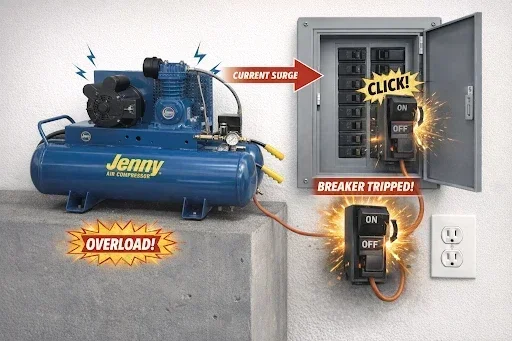
An air compressor motor draws a lot of power, especially during startup. When the motor kicks on, it pulls a surge of electricity that can be two to three times higher than its normal running amperage. This is called locked rotor amps or LRA.
If your breaker is too small, it will trip every time the compressor starts. That is frustrating and can wear out the motor over time. If the breaker is too large, it might not trip when there is a real problem, which creates a fire and equipment damage risk.
The right breaker acts as a safety net. It lets the compressor start up with its surge current but trips if the draw stays too high for too long. Think of it as a protective guardian for your entire compressor electrical setup.
Understanding Air Compressor Electrical Requirements
Before you pick a breaker, you need to understand what your compressor actually demands from your electrical system. Three key numbers drive everything: voltage, amperage, and horsepower.
Voltage Requirements
Small compressors, like those used for inflating tires or light nail guns, usually run on standard 120V household outlets. These are called single-phase compressors and are the most common in home garages.
Medium to large compressors, especially those 5 horsepower and above, need 240V power. This is the same type of outlet used by large appliances like electric dryers or ovens. A 240V compressor draws less current for the same power output, which means you can use thinner wire gauges and smaller dedicated circuits.
Amperage and Horsepower
Every compressor has a nameplate that lists its electrical specs. Here is a quick reference table:
Compressor Size (Horsepower) | Voltage | Running Amps | Approximate Breaker Size
1-2 HP | 120V | 10-15 amps | 20 amp single pole
3-5 HP | 120V | 15-20 amps | 30 amp single pole
5-7.5 HP | 240V | 15-25 amps | 30 amp double pole
10 HP | 240V | 25-35 amps | 40 amp double pole
15 HP | 240V | 35-50 amps | 60 amp double pole
These numbers are general guidelines. Always check your specific compressor’s nameplate for the exact running amps and startup amps. The nameplate is your best friend when sizing any breaker for air compressor installation.
The Role of Duty Cycle
Not all compressors run the same way. A compressor with a 50% duty cycle runs for half the time and rests the other half. A continuous-duty compressor can run for extended periods without stopping.
Higher duty cycles mean more sustained electrical draw. If your compressor runs for long stretches, you need a breaker with a little more capacity to handle the continuous amperage without thermal stress.
How to Calculate the Right Breaker Size for Your Compressor
Calculating the correct breaker size for air compressor is not as hard as it sounds. Follow these steps and you will get it right every time.
Step 1: Find the Compressor’s Rated Amps
Look at the nameplate on your compressor. Find the “Rated Amps” or “RLA” (Running Load Amps) number. This is the steady-state current the compressor draws during normal operation.
If you only see horsepower and voltage but no amp rating, you can estimate. A good rule of thumb is that each horsepower draws about 6 to 8 amps on a 120V motor and about 4 to 5 amps on a 240V motor.
Step 2: Apply the NEC 80% Rule
The National Electrical Code (NEC) requires that continuous loads, like a running compressor, should not exceed 80% of the breaker’s rated capacity. This is called the 80% rule and it exists for safety.
Here is the formula:
Required Breaker Size = Compressor Running Amps ÷ 0.80
For example, if your compressor draws 16 amps continuously, you would need a breaker rated at 20 amps (16 ÷ 0.80 = 20). This gives your compressor room to breathe and handles startup surges safely.
Step 3: Account for Startup Surge
Remember that startup surge? The breaker must tolerate the brief spike when the motor first kicks on. Most modern breakers handle this just fine, but cheap or old breakers might nuisance-trip.
If your compressor keeps tripping the breaker on startup, the breaker is likely too small. Do not just swap in a bigger breaker without checking your wiring first. Undersized wire paired with an oversized breaker is a serious electrical safety hazard.
Step 4: Check Your Panel Capacity
Before installing a new breaker, open your electrical panel and check for open slots. You need an available breaker slot that matches the type you need (single pole for 120V, double pole for 240V).
Also check the panel’s total amperage rating. Most residential panels are 100 or 200 amps. If your panel is already near capacity, adding a large compressor breaker might require a panel upgrade.
Common Breaker Sizes for Different Air Compressor Types
Not all compressors are the same, and neither are their electrical needs. Here is a breakdown of the most common breaker sizes by compressor type.
Small Portable Compressors (1-2 HP)
These are the little compressors you see in home garages. They plug into a standard 120V outlet and draw 10 to 15 amps. A 20-amp single pole breaker is the standard choice. These compressors are great for inflating tires, running a brad nailer, or light spray painting.
Mid-Size Shop Compressors (3-5 HP)
Mid-size compressors are the workhorses of many home workshops. They can run impact wrenches, framing nailers, and spray guns for longer periods. Most 3-5 HP units run on 120V and draw 15 to 20 amps, requiring a 30-amp breaker.
Some 5 HP models run on 240V and need a 30-amp double pole breaker. Always check the nameplate before deciding.
Large Stationary Compressors (7.5-15 HP)
These are serious shop compressors. They power sanders, grinders, and multiple pneumatic tools at once. They almost always require 240V power and a dedicated circuit.
A 7.5 HP compressor typically needs a 40-amp double pole breaker. A 10 HP unit may need 50 amps. A 15 HP compressor can demand 60 amps or more. These are not plug-and-play setups. They usually require professional electrical installation.
Two-Stage and Rotary Screw Compressors
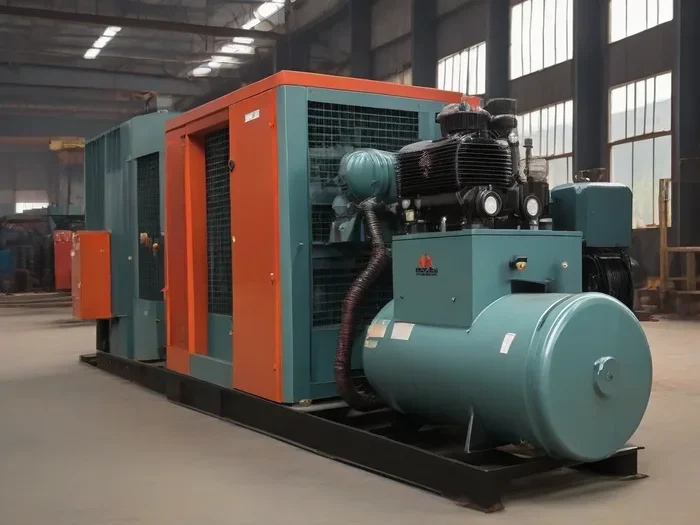
Two-stage and rotary screw compressors are even more demanding. They run continuously and have very high startup currents. These compressors often need dedicated transformer setups or hardwired connections directly to the panel. The breaker sizing for these units is best left to a licensed electrician.
Quick Tips for Sizing Your Compressor Breaker
Here are some fast, practical tips to keep in mind when you are sizing your breaker for air compressor:
- Always use a dedicated circuit. Do not share a breaker with other tools or appliances. Compressors need clean, uninterrupted power.
- Match the breaker type to your wiring. Use a single pole breaker for 120V and a double pole breaker for 240V.
- Use the correct wire gauge. A 20-amp breaker needs 12-gauge wire. A 30-amp breaker needs 10-gauge wire. A 40-amp breaker needs 8-gauge wire.
- Install a disconnect switch nearby. This lets you safely shut off power to the compressor for maintenance without going to the panel.
- Consider a soft starter. A soft starter reduces the startup surge and can prevent nuisance breaker trips. This is especially helpful for larger compressors.
- Label your breaker clearly. Mark it as “Air Compressor” so anyone working on the panel knows what it controls.
Common Mistakes People Make When Sizing a Compressor Breaker
Even experienced DIYers make mistakes when it comes to breaker sizing for compressors. Here are the most common ones:
Using the Running Amp Rating Alone
The biggest mistake is sizing the breaker based only on running amps and forgetting about startup surge. A compressor might draw 15 amps while running but spike to 45 amps during startup. If you size the breaker at 20 amps, it will trip on every start cycle.
Oversizing the Breaker to Stop Nuisance Trips
Some people get tired of a breaker tripping and just swap in a bigger one. This is dangerous. An oversized breaker will not trip during an actual overload, which can overheat the compressor motor or the wiring and cause a fire.
If your breaker keeps tripping, the real fix is to find the root cause. It could be an undersized breaker, but it could also be a failing motor, a clogged air filter, or a mechanical issue causing the motor to pull more current than normal.
Ignoring Wire Gauge
The breaker protects the wire, not the appliance. If your wire is too thin for the breaker you install, the wire can overheat before the breaker ever trips. Always match your wire gauge to the breaker amperage according to the NEC code.
Not Checking the Electrical Panel
Installing a new breaker without checking panel capacity can lead to overloading the entire panel. This is especially common in older homes with 100-amp panels that are already running near capacity. Before adding a compressor circuit, make sure your panel has room.
Skipping the Dedicated Circuit
Plugging a compressor into a shared outlet or using an extension cord is a recipe for trouble. The voltage drop from a shared circuit or long cord can cause the compressor motor to work harder, drawing more amps and tripping the breaker.
How to Wire a Breaker for an Air Compressor
Wiring a breaker for an air compressor is a straightforward job if you follow the steps carefully. Here is a basic overview of the process.
What You Will Need
- Correct breaker (single pole or double pole, based on voltage)
- Appropriate wire gauge (12 AWG for 20A, 10 AWG for 30A, 8 AWG for 40A)
- Cable connectors and wire nuts
- Screwdriver, wire stripper, and voltage tester
- Disconnect switch (recommended)
Step-by-Step Wiring Process
- Turn off the main power. Always shut off the main breaker in your panel before working on any wiring.
- Verify the power is off. Use a voltage tester to confirm there is no live current in the panel.
- Install the breaker in the panel. Snap the breaker into an open slot. Make sure it matches the panel brand for proper fit.
- Run the cable from the panel to the compressor location. Use the correct wire gauge for your breaker size. Include a ground wire.
- Connect the wires to the breaker. The hot wire(s) go to the breaker terminals. The neutral wire goes to the neutral bar. The ground wire goes to the ground bar.
- Connect the other end to the compressor. Follow the compressor’s wiring diagram on the nameplate. Use a disconnect switch within sight of the compressor for safety.
- Turn the power back on and test. Start the compressor and watch the breaker. It should not trip during normal startup or running.
If you are not comfortable with any of these steps, hire a licensed electrician. Electrical work is not something to guess at. A proper breaker installation protects both you and your equipment.
Expert Insights: What Professional Electricians Recommend
Professional electricians who work with workshops and garages every day have some valuable advice about breaker sizing for compressors:
“Always go one size up if you are between two breaker ratings,” says Mike Torres, a licensed electrician with 15 years of experience. “If your compressor draws 18 amps, do not use a 20-amp breaker if it keeps tripping on startup. Go to a 30-amp breaker and make sure your wire gauge matches.”
Another common recommendation from pros is to install a hard-start kit on compressors that struggle with startup surge. A hard-start kit gives the motor a temporary boost during the first few seconds, reducing the strain on the breaker and extending motor life.
Electricians also stress the importance of annual electrical inspections for workshop setups. Over time, connections can loosen, wires can degrade, and breaker performance can decline. A quick check-up can catch problems before they become expensive or dangerous.
For those running multiple power tools alongside a compressor, it is worth noting that generators can also power compressors in off-grid or portable situations. If you are considering a backup power source, check out resources on what size generator to run power tools for guidance on matching generator capacity to your tool needs.
Similarly, understanding how to properly wire and manage electrical connections is essential. If you ever need to expand or modify your workshop wiring, learning about how to wire a generator to a breaker box can provide useful foundational knowledge that applies to compressor circuits as well.
Key Takeaways
- Match the breaker to your compressor’s amp draw: Always size the breaker based on the motor’s rated amperage and startup surge.
- Use a double pole breaker for 240V compressors: Most larger air compressors require 240V power and a dedicated double pole circuit.
- Leave headroom for startup surge: Compressor motors draw 2-3 times their running amps during startup, so the breaker must handle brief spikes.
- Never use an undersized breaker: A breaker that trips constantly signals a sizing problem, not a compressor defect.
- Check your electrical panel capacity first: Your panel must have room for a new breaker before you install one.
- Follow the NEC 80% rule: The breaker should be rated at 125% of the compressor’s continuous load for safe operation.
- Always use a dedicated circuit: Sharing a circuit with other tools can cause voltage drops and breaker trips.
Conclusion
Getting the right size breaker for air compressor is one of the simplest yet most important things you can do for your workshop. It protects your compressor, your electrical system, and most importantly, your family.
Start by checking your compressor’s nameplate for the rated amps and voltage. Apply the NEC 80% rule to calculate the minimum breaker size. Choose a dedicated circuit with the correct wire gauge. And never, ever oversize a breaker just to stop nuisance trips.
If you are unsure about any part of the process, consult a licensed electrician. A small investment in professional advice can save you from costly repairs or, worse, a electrical fire. Your compressor will run cooler, last longer, and perform better when it has the right breaker protection in place.
Take the time to get this right. Your compressor and your workshop will thank you every single time you fire it up.
Frequently Asked Questions
Can I use a 15-amp breaker for my air compressor?
It depends on the compressor’s amperage. Small compressors under 1 HP that draw less than 12 amps can run on a 15-amp breaker. However, most experts recommend a 20-amp breaker even for small units to handle the startup surge safely. Check your compressor’s nameplate for the exact rated amps before deciding.
What happens if my breaker is too small for the air compressor?
A breaker that is too small will trip frequently, especially during startup. This constant tripping can damage the compressor motor over time. It is also a sign that the electrical circuit cannot safely handle the load, which increases the risk of overheating and fire.
Do I need a dedicated circuit for my air compressor?
Yes, absolutely. An air compressor should always be on a dedicated circuit with its own breaker. Sharing a circuit with other tools or appliances can cause voltage drops, nuisance trips, and potential motor damage. A dedicated circuit ensures clean, stable power at all times.
What wire gauge do I need for a 30-amp compressor breaker?
A 30-amp breaker requires 10-gauge wire for standard copper wiring. Using a thinner wire gauge with a 30-amp breaker is a serious safety hazard because the wire can overheat before the breaker trips. Always match the wire gauge to the breaker amperage per NEC code.
Can I run my air compressor on a generator instead of a dedicated circuit?
Yes, you can run an air compressor on a generator, but you must size the generator correctly. A small 1-2 HP compressor needs at least a 3000-watt generator, while larger units may require 5000 watts or more. For guidance on matching generator size to your tools, check out what size generator to run power tools for detailed recommendations.
Should I install a soft starter for my air compressor?
A soft starter is a great investment for medium to large compressors. It reduces the startup current surge, which means less stress on the breaker, the motor, and the electrical wiring. If your compressor keeps tripping the breaker on startup, a soft starter or hard-start kit can often solve the problem without needing to upsize the breaker.
=== INTERNAL LINKS USED ===
1. what size generator to run power tools
2. how to wire a generator to a breaker box
3. how much is a generator for a 2