What Is an Air Compressor Everything You Need To Know
An air compressor is a machine that converts power into pressurized air, storing it in a tank for later use. Whether you need one for DIY projects at home or heavy-duty work on a job site, understanding how an air compressor works helps you choose the right size, type, and model. This guide breaks down everything from basic components to real-world applications, so you can make a confident purchase.
Have you ever wondered how a simple nail gun fires nails without any manual effort? Or how a paint sprayer creates such a smooth, even coat? The answer is compressed air, and the machine behind it all is the air compressor. These powerful machines are everywhere, from home garages to massive factories. If you have ever thought about buying one or just want to understand what they do, you are in the right place.
This guide covers everything you need to know about air compressors. We will break down how they work, the different types available, what they are used for, and how to pick the right one for your needs. Whether you are a weekend DIYer or a professional tradesperson, this article will give you the knowledge to make smart decisions. Let us dive in.
Key Takeaways
- Air compressors turn power into stored compressed air: They use an electric motor or gas engine to push air into a tank, building pressure for tools and tasks.
- Multiple types exist for different needs: You will find piston, rotary screw, portable, and tankless models, each suited for specific jobs.
- CFM and PSI are the two numbers that matter: These ratings tell you how much air flow and pressure a compressor delivers, which determines what tools it can run.
- Regular maintenance keeps your compressor running longer: Simple tasks like draining the tank, checking oil, and replacing filters make a big difference.
- Safety should always come first: Proper handling, pressure relief valves, and protective gear prevent accidents and injuries.
📑 Table of Contents
What Exactly Is an Air Compressor?
At its core, an air compressor is a device that takes in air from the surrounding environment and squeezes it into a smaller space. This process increases the air pressure, creating a powerful source of energy that can be stored in a tank or used right away. Think of it like pumping up a balloon, except the air stays under high pressure until you release it.
The compressed air then powers a wide range of pneumatic tools, which are tools that run on air instead of electricity. These include nail guns, impact wrenches, sandblasters, and paint sprayers. Because compressed air delivers consistent energy, these tools tend to be lighter, more durable, and easier to maintain than their electric counterparts.
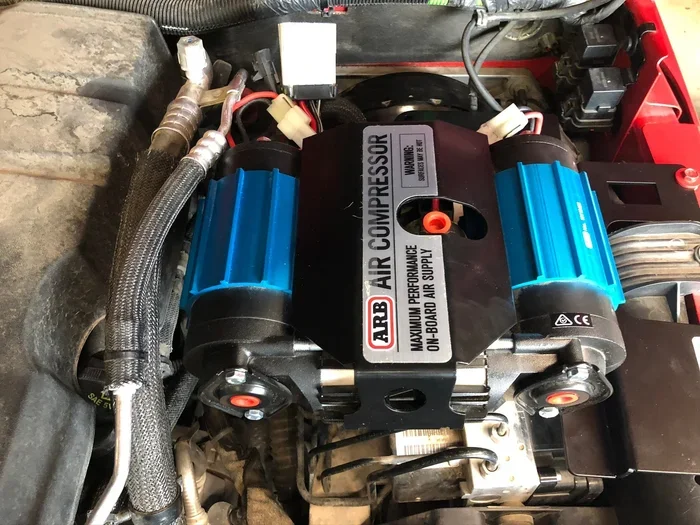
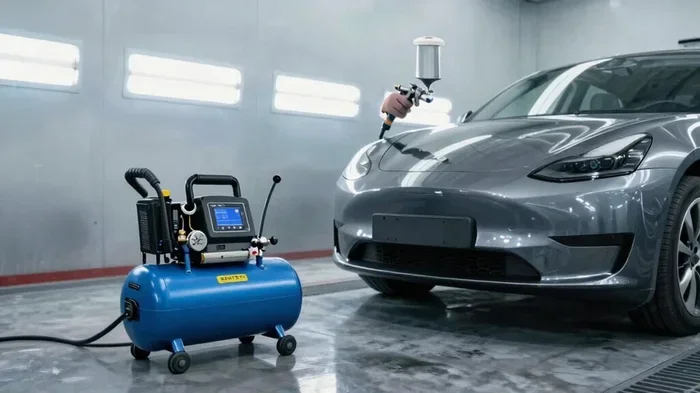
Air compressors come in many shapes and sizes. A small portable unit might sit on your workbench and fill tires. A large industrial compressor could run an entire factory floor. The basic principle remains the same across all of them: draw in air, compress it, and deliver it at the right pressure for the job.
How Does an Air Compressor Work?
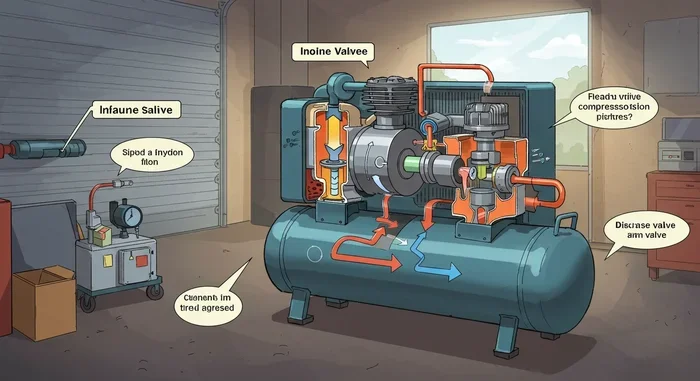
Most air compressors follow a simple three-step process. First, a motor or engine draws in ambient air. Second, a pump or compressor element squeezes that air, raising its pressure. Third, the compressed air flows into a storage tank or directly to a tool through a hose.
The motor drives the pump, which is the heart of the system. As the pump cycles, it builds pressure inside the tank until it reaches a set limit. At that point, the motor shuts off automatically. When you pull the trigger on a pneumatic tool, the pressurized air flows out and the motor kicks back on to refill the tank.
A pressure switch controls this cycle. It monitors the tank pressure and turns the motor on or off as needed. This keeps the system running efficiently without wasting energy. A pressure gauge on the tank lets you see exactly how much pressure is available at any given moment.
Types of Air Compressors
Not all compressors are the same. Different designs serve different purposes, and choosing the right type makes a huge difference in performance and value. Here are the most common types you will encounter.
Reciprocating (Piston) Compressors
Piston compressors use a back-and-forth motion to compress air. A piston moves inside a cylinder, drawing air in on one stroke and pushing it out on the next. These are the most common type for home garages and small workshops.
They come in single-stage and two-stage versions. A single-stage compressor compresses air once, which works well for most DIY tasks. A two-stage model compresses the air twice, delivering higher pressure and more consistent output. This makes two-stage units better suited for heavy-duty work and professional use.
Piston compressors are affordable, widely available, and easy to maintain. The trade-off is that they can be louder and heavier than other types. They also need regular oil changes to keep the pump running smoothly.
Rotary Screw Compressors
Rotary screw compressors use two interlocking helical screws to compress air continuously. Instead of a back-and-forth motion, the screws spin and trap air between them, gradually reducing the volume and increasing pressure.
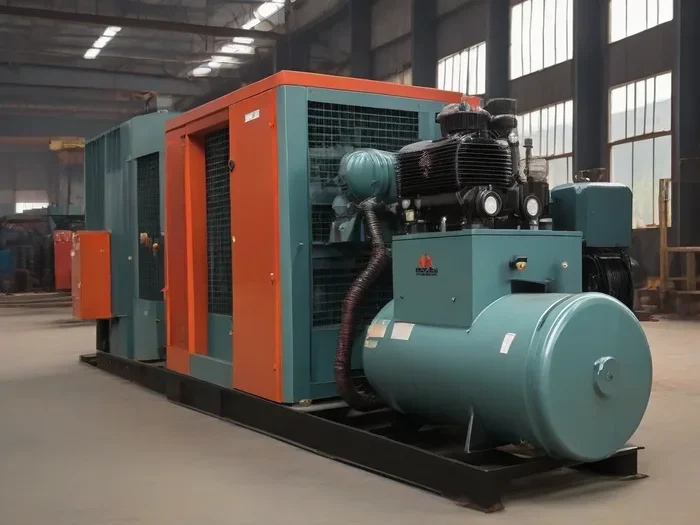
These compressors are built for heavy-duty, continuous use. You will find them in factories, construction sites, and large workshops. They run cooler, last longer, and deliver a steady supply of compressed air without the cycling on and off that piston models do.
The downside is cost. Rotary screw compressors are significantly more expensive than piston models. They also require professional maintenance in many cases. But for businesses that need reliable, high-volume air delivery, they are worth every penny.
Portable and Tankless Compressors
Portable air compressors are designed for mobility. They are lightweight, often handle-sized, and perfect for inflating tires, sports equipment, or air mattresses. Some portable models are so small you can carry them in a backpack.
Tankless compressors, also called zero-gallon models, do not store compressed air. Instead, they deliver air on demand as you need it. This makes them energy-efficient because they only run when a tool is activated. They are ideal for light-duty tasks and people with limited storage space.
Both types are popular among homeowners and hobbyists. They are quiet, compact, and easy to store. However, they are not powerful enough for heavy-duty tools or continuous use.
Key Specifications You Need to Know
When shopping for an air compressor, you will see a lot of numbers and abbreviations. Understanding these specs helps you choose a machine that actually fits your needs.
PSI (Pounds per Square Inch)
PSI measures the maximum pressure the compressor can produce. Most common pneumatic tools work fine between 90 and 150 PSI. Nail guns typically need around 70 to 120 PSI. Sandblasters and impact wrenches often require higher pressure, sometimes above 150 PSI.
Always check the PSI requirements of the tools you plan to use. Buying a compressor with too low a PSI rating means it will not power those tools properly. Going higher than you need wastes money and energy.
CFM (Cubic Feet per Minute)
CFM measures the volume of air the compressor delivers at a specific pressure. This is arguably the most important spec for tool users. A higher CFM means the compressor can supply more air, which allows it to run multiple tools at once or power tools that require a lot of air flow.
Light-duty tools like brad nailers need around 0.5 to 2 CFM. Impact wrenches and sanders may need 4 to 10 CFM. Heavy-duty industrial tools can demand 20 CFM or more. Add up the CFM requirements of all the tools you plan to run simultaneously, then choose a compressor that exceeds that total.
Duty Cycle
The duty cycle tells you how long a compressor can run continuously before it needs to cool down. It is expressed as a percentage. A 50% duty cycle means the compressor can run for 10 minutes out of every 20-minute period.
For occasional home use, a lower duty cycle is fine. For professional or industrial work, look for compressors with a 100% duty cycle, meaning they can run continuously without overheating. This is especially important for rotary screw models, which are designed for nonstop operation.
Common Uses for Air Compressors
Air compressors are incredibly versatile machines. Once you have one, you will find uses you never expected. Here are some of the most common applications.
- Powering pneumatic tools: Impact wrenches, angle grinders, drills, and sanders all run on compressed air. These tools are lighter and more powerful than electric versions, which is why professionals prefer them.
- Inflating tires and sports equipment: A basic compressor makes quick work of tire inflation for cars, bikes, ATVs, and more.
- Paint spraying: Air-powered spray guns deliver a smooth, even finish that is hard to achieve with a brush or roller.
- Sandblasting and surface preparation: Compressed air powers sandblasters that strip paint, rust, and old coatings from metal and wood surfaces.
- Cleaning and blowing dust: A simple air nozzle connected to a compressor makes cleaning workbenches, electronics, and hard-to-reach areas effortless.
- Running an ozone generator: Many ozone generators use an internal compressor to push ozone into a room for air purification. If you are interested in this application, you can learn more about what an ozone generator is and how it works with compressed air.
Beyond these examples, compressors play a vital role in manufacturing, mining, construction, and agriculture. They are the backbone of many industries because compressed air is safe, clean, and efficient.
How to Choose the Right Air Compressor
With so many options available, picking the right air compressor can feel overwhelming. But it does not have to be. Follow these steps to narrow down your choices.
Step 1: Identify Your Needs
Start by listing the tools and tasks you plan to use the compressor for. Make a note of the PSI and CFM requirements for each tool. If you only need to inflate tires and run a brad nailer, a small portable compressor will do the job. If you plan to run an impact wrench and a sander simultaneously, you need a larger, more powerful unit.
Step 2: Decide on Portable vs. Stationary
Portable compressors are great for homeowners, renters, and anyone who needs to move the unit around. They are lighter, easier to store, and many come with wheels and handles. Stationary compressors are bigger and more powerful, designed to stay in one place like a workshop or garage.
If you work on job sites, portability is a must. If your compressor lives in a fixed workshop, you have more flexibility with size and power.
Step 3: Consider the Power Source
Most home and workshop compressors run on electricity. They are quiet, clean, and easy to use. For outdoor job sites without access to power, a gas-powered compressor is the way to go. Gas models deliver more power and mobility but are louder and produce exhaust fumes.
If you are planning to run your compressor off a generator, make sure you choose a generator that can handle the startup load. For guidance on selecting the right generator, check out this guide on what size generator you need to run power tools. This is especially important for contractors who rely on generators at remote job sites.
Step 4: Set a Budget
Air compressors range from under $100 for small portable models to several thousand dollars for industrial units. Set a realistic budget based on how often you will use it and what tasks you need it for. A mid-range piston compressor in the $300 to $600 range covers most home and DIY needs perfectly.
Maintenance Tips for Longevity
Keeping your compressor in good shape extends its lifespan and keeps it running efficiently. Here are simple maintenance steps you should follow.
- Drain the tank regularly: Moisture builds up inside the tank over time. Open the drain valve after each use to release any accumulated water. This prevents rust and keeps the tank strong.
- Check the oil level: Piston compressors need oil for the pump. Check the oil level before each use and change it according to the manufacturer’s schedule.
- Replace air filters: A clogged filter forces the motor to work harder, reducing efficiency and lifespan. Inspect the filter monthly and replace it when it looks dirty.
- Inspect hoses and fittings: Leaks waste energy and reduce pressure. Check all connections for air leaks and tighten or replace any worn parts.
- Clean the exterior: Dust and debris on the outside of the unit can block vents and cause overheating. Wipe down the compressor after each use.
Following these simple steps ensures your air compressor stays reliable for years. A well-maintained compressor also operates more quietly and uses less electricity, which saves you money over time.
Safety Tips You Should Never Ignore
Air compressors are powerful machines, and they must be treated with respect. Here are some essential safety rules to follow.
- Never exceed the maximum PSI rating: Overpressurizing the tank can cause it to rupture. Always set the pressure switch to the recommended level.
- Use the pressure relief valve: Every compressor has a safety valve that releases excess pressure. Make sure it is functioning properly before each use.
- Wear protective gear: Safety glasses and hearing protection are essential, especially when using pneumatic tools or running a noisy compressor.
- Keep the area ventilated: Electric compressors produce ozone as a byproduct, and gas-powered models emit exhaust fumes. Always use compressors in well-ventilated spaces.
- Do not point the air hose at people: Compressed air can cause serious injuries, including eye damage and internal organ damage if inhaled at high pressure.
If you are concerned about ozone exposure from your compressor or related equipment, you can learn what to do in case of exposure by visiting our guide on what to do if exposed to an ozone generator. Safety should always be your top priority.
Final Thoughts
An air compressor is one of the most useful tools you can own. It opens up a world of possibilities, from powering pneumatic tools to inflating tires to preparing surfaces for painting. Understanding how they work, what types are available, and how to choose the right one puts you in a great position to make a smart purchase.
Start by identifying your needs, check the PSI and CFM ratings of your tools, and pick a compressor that meets those requirements. Maintain it regularly, follow safety guidelines, and your compressor will serve you well for many years. Whether you are a casual homeowner or a full-time professional, the right air compressor makes every job easier and faster.
Take the time to research, compare models, and read reviews before you buy. A little planning goes a long way toward finding a compressor that fits your budget and your workflow perfectly. You will wonder how you ever worked without one.
Frequently Asked Questions
What is an air compressor used for?
Air compressors are used to power pneumatic tools like nail guns, impact wrenches, and sanders. They are also used for inflating tires, painting with spray guns, sandblasting surfaces, and cleaning work areas. Their versatility makes them a must-have in workshops, garages, and job sites.
How do I know what size air compressor I need?
Check the PSI and CFM requirements of the tools you plan to use. Add up the CFM for all tools you might run at the same time, and choose a compressor that exceeds that number. For light-duty tasks like inflating tires and running a brad nailer, a small portable unit works great. For heavier tools like impact wrenches, you need a larger compressor with a higher CFM rating.
Can I run an air compressor off a generator?
Yes, you can run an air compressor off a generator, but you need to make sure the generator has enough wattage to handle the startup load. Compressors draw a surge of power when the motor first kicks on. Check both the running and starting wattage requirements of your compressor before connecting it to a generator.
How often should I maintain my air compressor?
You should drain the tank after every use, check the oil level before each use, and replace the air filter monthly or as needed. A deeper maintenance check, including inspecting hoses, fittings, and the pressure switch, should be done every few months. Following this routine keeps your compressor running smoothly and safely.
Is an air compressor dangerous?
When used properly, air compressors are safe. However, they can be dangerous if you exceed the tank pressure, fail to use the pressure relief valve, or point the air hose at people. Always wear safety glasses and hearing protection, use the compressor in a ventilated area, and follow all manufacturer guidelines for safe operation.
What is the difference between a piston and a rotary screw compressor?
A piston compressor uses a back-and-forth motion to compress air and is best for intermittent use. A rotary screw compressor uses two spinning screws to compress air continuously and is designed for heavy-duty, constant use. Piston models are more affordable and common for home workshops, while rotary screw models are built for industrial applications.