Choosing the Right Size Compressor for Your Nail Gun
Choosing the right size compressor for your nail gun depends on the tool’s CFM and PSI requirements, your project type, and whether you need portability. A small pancake compressor works great for light-duty finish nailers, while a larger hot dog or twin-stack unit powers framing nailers with ease. This guide breaks down everything you need to know to make the right choice.
This is a comprehensive guide about what size compressor for nail gun.
Key Takeaways
- Match CFM and PSI: Always check your nail gun’s required CFM and PSI before buying a compressor.
- Tank size matters: Larger tanks deliver more air and run longer between refills.
- Portability vs. power: Pancake compressors are lightweight; hot dog and twin-stack models offer more power.
- Duty cycle is key: Choose a compressor with a high duty cycle for continuous work.
- Consider your projects: Light-duty tasks need less power than heavy framing or roofing work.
- Electric vs. gas: Electric compressors are quieter and cleaner; gas models offer more portability on site.
[FEATURED_IMAGE_PLACEHOLDER]
Introduction
If you have ever stood in a hardware store staring at rows of compressors, you know how confusing it can be. There are so many sizes, styles, and brands. Picking the right one for your nail gun can feel overwhelming.
The good news is that choosing a what size compressor for nail gun setup does not have to be complicated. Once you understand a few basic numbers, the decision becomes much easier. This guide will walk you through everything step by step.
Whether you are a weekend DIYer building shelves or a professional framer working on a new home, the right compressor makes all the difference. A mismatched setup leads to frustrating pauses, uneven nails, and wasted time. Let us fix that right now.
Understanding Your Nail Gun’s Air Requirements
Before you buy any compressor, you need to know what your nail gun demands. Every nail gun has two key numbers stamped on it or listed in the manual. These numbers tell you exactly what the tool needs to work properly.
CFM: Cubic Feet per Minute
CFM stands for cubic feet per minute. It measures how much air the nail gun uses while firing. A finish nailer uses very little air, usually around 0.3 to 0.5 CFM. A framing nailer, on the other hand, can need 2.0 to 2.5 CFM or more.
The rule is simple. Your compressor must deliver at least the CFM your nail gun requires. If it falls short, the gun will not fire consistently. You will get misfires and uneven nails.
PSI: Pounds per Square Inch
PSI measures air pressure. Most nail guns work between 70 and 120 PSI. Some specialty guns need even more. Your compressor must be able to reach and maintain the right PSI for your tool.
Here is a quick look at common nail gun types and their basic needs:
- Brad nailers: 0.3 CFM at 70 PSI
- Finish nailers: 0.5 CFM at 70-90 PSI
- Pin nailers: 0.3 CFM at 60 PSI
- Framing nailers: 2.0-2.5 CFM at 90-120 PSI
- Roofing nailers: 2.5-3.0 CFM at 90-100 PSI
Compressor Types and Their Best Uses
Not all compressors are built the same. Each type has strengths and weaknesses. The right choice depends on your nail gun and your work style.
Pancake Compressors
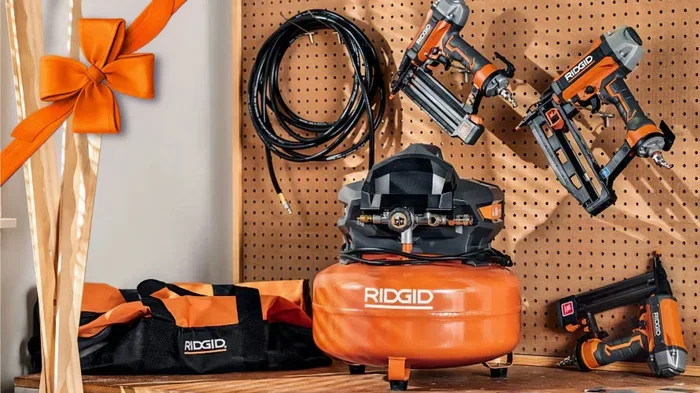
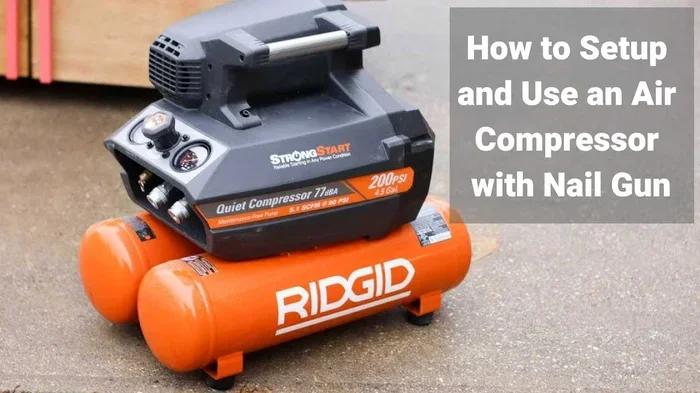
Pancake compressors are the most popular choice for home users and light-duty work. They have a flat, round tank that sits low to the ground. These units are lightweight and easy to move around a garage or workshop.
A typical pancake compressor delivers 2.0 to 3.0 CFM at 90 PSI. That is enough for most finish nailers and brad nailers. If you are doing trim work, furniture building, or light cabinetry, a pancake compressor is a solid pick.
Hot Dog Compressors
Hot dog compressors have a single vertical tank that looks like a hot dog lying on its side. They are a step up from pancake models in terms of air capacity. These compressors offer more CFM and a larger tank, which means longer run times between motor cycles.
A hot dog compressor works well for moderate framing and roofing tasks. If you use a framing nailer regularly, this type gives you more breathing room. It keeps up with steady firing without the motor running constantly.
Twin-Stack Compressors
Twin-stack compressors have two tanks stacked vertically. This design doubles the air storage without adding much more footprint. The result is more CFM and longer continuous operation.
These are great for contractors who need to run multiple nail guns or use several air tools at once. A twin-stack unit can comfortably power a framing nailer and a finish nailer at the same time. If you work on larger projects, this is the way to go.
Portable and Gas-Powered Compressors
For jobsite work where electricity is not available, gas-powered compressors are the answer. They run on gasoline and deliver serious air power. These units are louder and heavier, but they offer unmatched portability.
Some professionals pair a gas compressor with an air compressor setup for running power tools on remote sites. This combination gives you total freedom from electrical outlets.
How to Size a Compressor for Your Nail Gun
Now that you know the types, let us talk about how to actually size things correctly. Sizing a compressor properly means looking at more than just one number.
Step 1: Check Your Nail Gun’s Requirements
Find the CFM and PSI ratings on your nail gun or in the owner’s manual. Write them down. These are your baseline numbers. Every compressor you consider must meet or exceed both values.
Step 2: Add a Safety Margin
Never buy a compressor that only barely meets your nail gun’s requirements. Always add at least 1.5 times the CFM as a safety buffer. If your nail gun needs 2.0 CFM, look for a compressor that delivers at least 3.0 CFM.
This extra margin ensures the compressor does not run flat out all the time. It extends the motor life and gives you consistent performance. Think of it like driving a car with a bigger engine than you actually need. It handles the load with ease.
Step 3: Consider Tank Size
Tank size is measured in gallons. A larger tank holds more compressed air, which means the motor does not kick on as often. For nail gun work, a tank between 4 and 8 gallons is usually sufficient for most users.
Larger tanks (20 gallons and up) are better for continuous work like framing or roofing. They also help if you plan to use multiple tools at once. The tradeoff is weight and portability. Bigger tanks are harder to move around.
Step 4: Check the Duty Cycle
The duty cycle tells you what percentage of time the compressor can run continuously. A 50% duty cycle means the compressor can run for 10 minutes out of every 20 minutes. The rest of the time it needs to cool down.
For nail gun work, look for a compressor with at least a 50% duty cycle. Higher is better, especially if you are doing long projects without breaks. A compressor with a 70% or higher duty cycle will keep up with heavy use without overheating.
Best Compressor Sizes for Common Nail Gun Tasks
Let us get practical. Here is a breakdown of what size compressor works best for different types of nail gun projects.
Light-Duty Projects (Trim, Molding, Cabinetry)
For these tasks, you are using brad nailers, pin nailers, or light finish nailers. These tools use very little air. A small pancake compressor with 2.0 CFM at 90 PSI is more than enough.
Look for a 4 to 6-gallon tank. These units are compact, affordable, and easy to store. They are perfect for hobbyists and homeowners who work on occasional projects around the house.
Medium-Duty Projects (Furniture, Cabinetry, General Repair)
If you are building furniture or doing more involved cabinet work, you will likely use a heavier finish nailer or a stapler. These tools need more air. A hot dog compressor with 4.0 to 5.0 CFM works well here.
A 6 to 8-gallon tank gives you plenty of air reserve. You can fire several nails before the motor kicks back on. This keeps your workflow smooth and uninterrupted.
Heavy-Duty Projects (Framing, Roofing, Deck Building)
Heavy framing and roofing work demands serious air power. Framing nailers and roofing nailers consume a lot of CFM. You need a twin-stack compressor or a larger hot dog unit with at least 5.0 to 6.5 CFM.
A 6 to 10-gallon tank is ideal for these jobs. Some professionals even use two compressors on site to ensure they never run out of air. If you are running multiple tools at once, consider pairing your setup with a reliable portable generator to support your entire tool lineup.
Comparison Table: Compressor Sizes by Nail Gun Type
- Pancake (4-6 gal): Best for brad nailers, pin nailers, light finish nailers
- Hot Dog (6-8 gal): Best for finish nailers, light framing nailers
- Twin-Stack (6-10 gal): Best for framing nailers, roofing nailers, multi-tool setups
- Gas-Powered (portable): Best for remote jobsites with no electrical access
Common Mistakes When Choosing a Compressor for a Nail Gun
Even experienced DIYers make mistakes when picking a compressor. Here are the most common ones and how to avoid them.
Buying Based on Price Alone
The cheapest compressor is not always the best deal. A low-cost unit that cannot deliver enough CFM will frustrate you on the job. You will waste more time and money than you saved. Always check the CFM and PSI ratings first.
Ignoring the Duty Cycle
A compressor with a low duty cycle will overheat if you use it continuously. This is a common problem on large projects. Before buying, check the duty cycle rating and make sure it matches your expected usage time.
Underestimating Air Needs
Many people buy a compressor based on the nail gun’s minimum CFM requirement. But that number is usually the absolute minimum. In real-world use, you want a compressor that delivers significantly more. Always add a buffer of at least 50% above the nail gun’s stated CFM.
Forgetting About Hose and Fittings
Even the best compressor will underperform if your hose is too narrow or your fittings are wrong. Use a hose that is at least 3/8 inch in diameter for most nail gun setups. Make sure your quick connect fitting matches your nail gun’s coupler. A proper air hose setup makes a huge difference in performance.
Not Maintaining the Compressor
Compressors need regular maintenance to perform well. Drain the tank after each use to prevent moisture buildup. Check the oil level if you have an oil-lubricated model. Change air filters when they get dirty. A well-maintained compressor lasts for years.
Expert Tips for Getting the Most Out of Your Nail Gun Compressor
Here are some practical tips from experienced professionals to help you get the best results from your compressor and nail gun setup.
Use a Regulator
Not every nail gun needs full compressor pressure. A regulator lets you dial down the PSI to match your specific tool. This saves energy, reduces wear, and gives you more control over nail depth and firing power.
Keep Your Hoses Short
The longer your air hose, the more pressure you lose. If you can, keep hoses under 50 feet. If you need a longer run, upgrade to a larger diameter hose to minimize pressure drop. This simple change improves nail gun performance noticeably.
Store Your Compressor Properly
Keep your compressor in a dry, clean area. Moisture can cause rust inside the tank and fittings. Cover the unit when not in use. If you live in a humid climate, use a moisture trap on the output line.
Match the Compressor to the Job
Think ahead about what you will be doing. If you are doing light trim work at home, do not buy a massive twin-stack unit. If you are framing a house, do not buy a tiny pancake compressor. Matching the compressor to the job saves money and gets better results.
Conclusion
Choosing the right what size compressor for nail gun setup comes down to understanding your tool’s needs and matching them to the right compressor. Check the CFM and PSI requirements of your nail gun first. Add a safety margin. Pick the right compressor type for your projects. And do not forget the basics like tank size, duty cycle, and proper maintenance.
Whether you are a casual DIYer or a full-time professional, the right compressor setup makes every project smoother. You will fire nails consistently, work faster, and enjoy the process more. Take the time to get it right, and your nail gun will reward you with clean, precise results every time.
Start by checking your nail gun’s manual. Write down those CFM and PSI numbers. Then use this guide to find the perfect compressor. You will be glad you did.
FAQs
Can I use any compressor with any nail gun?
Not exactly. Your compressor must meet or exceed the CFM and PSI requirements of your nail gun. Using an undersized compressor leads to misfires and poor performance. Always check both numbers before purchasing.
What is the best compressor size for a finish nailer?
A 2.0 to 3.0 CFM compressor with a 4 to 6-gallon tank works great for most finish nailers. Pancake compressors in this range are affordable, portable, and more than capable of handling trim and molding work.
Do I need a big compressor if I only use a brad nailer?
No. Brad nailers use very little air, typically around 0.3 CFM. A small pancake compressor with 1.5 to 2.0 CFM is more than sufficient. You do not need a large unit for light-duty brad work.
How often should I drain my compressor tank?
You should drain the tank after every use. Moisture from compressed air collects at the bottom of the tank and can cause rust and damage. Simply open the drain valve at the bottom of the tank and let the water out.
Is a gas-powered compressor better than an electric one for nail guns?
It depends on your situation. Gas compressors offer more power and portability for remote jobsites. Electric compressors are quieter, cleaner, and easier to maintain. For most home and workshop use, an electric compressor is the better choice.
Can I run two nail guns from one compressor?
Yes, but only if your compressor has enough CFM to handle both tools at the same time. Add up the CFM requirements of each nail gun and make sure your compressor exceeds that total by at least 50%. Twin-stack compressors are ideal for this kind of multi-tool setup.
Frequently Asked Questions
What is what size compressor for nail gun?
what size compressor for nail gun is an important topic with many practical applications.