Who Invented the Electric Generator And Why It Matters
The electric generator was pioneered by Michael Faraday in 1831 through his discovery of electromagnetic induction. This invention laid the foundation for modern power generation and transformed how we produce and use electrical energy. Understanding the generator’s history helps us appreciate the technology that powers our everyday lives.
Have you ever stopped to think about where your electricity comes from? Every time you flip a light switch or charge your phone, an electric generator is working behind the scenes. But who actually invented this incredible machine? And why should you care about its history?
The story of the electric generator is one of curiosity, brilliant minds, and world-changing discoveries. It all started over 190 years ago with a scientist named Michael Faraday. His experiments with magnets and wires led to an invention that powers virtually every corner of modern life. In this article, we will explore the fascinating generator history, the key inventors who shaped it, and why this technology still matters so much today.
Whether you are a curious learner, a homeowner shopping for a backup power generation system, or someone who simply loves understanding how things work, this guide has something for you. We will break down complex ideas into simple, easy-to-understand explanations. By the end, you will have a clear picture of how the electric generator came to be and why it remains one of the most important inventions in human history.
Key Takeaways
- Michael Faraday invented the first electric generator in 1831: His discovery of electromagnetic induction changed the world forever.
- The dynamo was the first practical generator: It converted mechanical energy into direct current (DC) electrical power.
- Nikola Tesla revolutionized power generation: His AC generator design became the standard for modern electrical systems.
- Generators still matter today: They power homes, hospitals, industries, and backup systems worldwide.
- Faraday’s law remains the core principle: Every generator works by moving a conductor through a magnetic field.
- Early inventors built on each other’s work: The generator was not a single invention but an evolution of ideas.
- Understanding generator history helps you make better choices: Whether buying a home generator or learning about electrical power, knowing the basics gives you an edge.
📑 Table of Contents
The Discovery That Started It All: Electromagnetic Induction
Before anyone built a working generator, someone had to discover the science behind it. That person was Michael Faraday, a British scientist with very little formal education but extraordinary experimental skill. In 1831, Faraday made a discovery that would change everything.
What Is Electromagnetic Induction?
Faraday found that moving a magnet through a coil of wire creates an electrical current. This phenomenon is called electromagnetic induction. It is the fundamental principle behind every generator ever built. When a conductor moves through a magnetic field, voltage is produced. This voltage drives electrical current through a circuit.
Think of it like this. Imagine you are waving a magnet through a loop of wire. Each time the magnetic field changes, it pushes electrons through the wire. Those moving electrons are what we call electricity. Faraday proved that magnetism can create electricity. This was a revolutionary idea at the time.
Faraday’s First Experiment
Faraday’s first experiment was simple but brilliant. He wrapped two coils of wire around an iron ring. When he connected one coil to a battery, the other coil produced a brief spike of electrical current. The key insight was that a changing magnetic field induces voltage. A steady magnetic field does nothing. Only change creates electricity.
This discovery became known as Faraday’s law of induction. It is still taught in physics classrooms around the world. It is also the reason every AC generator and DC generator works today. Without Faraday’s insight, we would have no generators, no power plants, and no modern electrical grid.
Who Invented the Electric Generator? The Key Players
The generator invention was not the work of a single person. It was the result of many brilliant minds building on each other’s discoveries. Let us meet the key players who made the electric generator a reality.
Michael Faraday (1791-1867)
Faraday is widely regarded as the father of the electric generator. In 1831, he built the first device that converted mechanical energy into electrical energy. His device was called a “Faraday disk” or homopolar generator. It used a rotating copper disk between the poles of a horseshoe magnet.
Faraday’s device produced a small but steady electrical current. It was not very practical for large-scale use, but it proved the concept. Faraday’s law became the scientific foundation for all future generator designs. His work inspired generations of inventors to push the boundaries of power generation.
Hippolyte Pixii (1808-1835)
A French instrument maker named Hippolyte Pixii built the first dynamo in 1832. A dynamo is a type of generator that produces direct current (DC). Pixii’s device used a rotating magnet and stationary coils of wire. It was a major step forward because it showed that continuous electrical power could be generated mechanically.
Pixii’s dynamo was crude by modern standards. It produced a pulsating current rather than a smooth flow. But it demonstrated the generator history in action. Other inventors quickly improved on his design, adding commutators to produce steadier electrical current.
Ányos Jedlik (1800-1895)
The Hungarian scientist Ányos Jedlik developed an early electromagnetic rotating device in the 1820s. However, he did not publish his work widely, so his contributions went largely unnoticed for decades. Jedlik’s device used a rotating magnetic field to generate electrical energy. He is now recognized as one of the early pioneers of generator technology.
Charles Wheatstone (1802-1875)
Wheatstone was an English scientist who made important contributions to electromagnetic field research. He developed early models of electrical generators and improved upon existing designs. His work helped refine the understanding of how voltage and electrical current relate to magnetic fields.
Nikola Tesla (1856-1943)
No discussion of generator history is complete without Nikola Tesla. Tesla was a Serbian-American inventor who revolutionized the way we generate and use electrical power. His most important contribution was the AC generator, which uses a rotating magnetic field to produce alternating current.
Tesla’s AC generator was far superior to earlier DC designs for long-distance power generation. Alternating current can be easily transformed to higher or lower voltages. This made it possible to transmit electricity over vast distances with minimal loss. Today, nearly all of the world’s electricity is generated using Tesla’s AC principles.
Thomas Edison (1847-1931)
Thomas Edison is famous for many inventions, and his work with electrical energy was significant. Edison focused on developing practical DC power generation systems. He built the first commercial power station in New York City in 1882. Edison’s systems used DC generators to deliver electricity to homes and businesses.
However, DC power had limitations. It could not travel far without significant energy loss. This led to the famous “War of Currents” between Edison’s DC system and Tesla’s AC system. Ultimately, Tesla’s AC generator won out because of its efficiency and scalability.
How Does an Electric Generator Work?
Now that you know who invented the electric generator, let us look at how it actually works. The basic principle is simple and elegant. A generator converts mechanical energy into electrical energy using the principles of electromagnetic induction.
The Core Components
Every generator has a few essential parts:
- Stator: The stationary part of the generator. It usually contains the coils of wire.
- Rotor: The rotating part. It creates or moves through the magnetic field.
- Commutator (in DC generators): A switch that reverses current direction to maintain a steady flow.
- Slip rings (in AC generators): They allow the rotor to connect to external circuits while spinning.
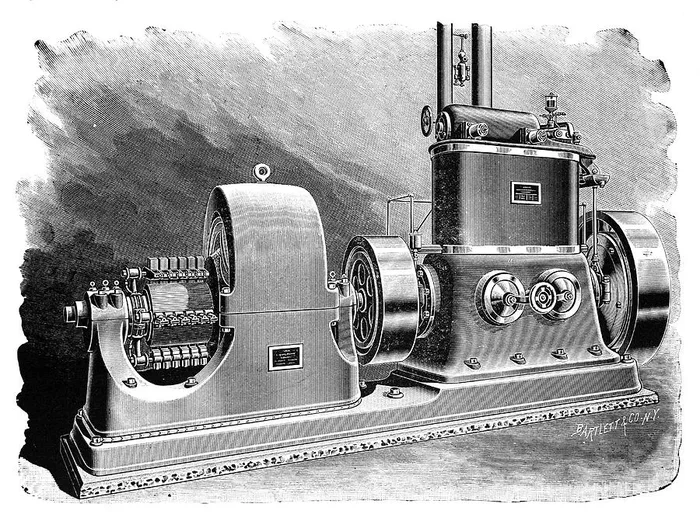
- Shaft: Connects the rotor to the mechanical energy source, like a turbine or engine.
The Simple Process
Here is how a generator works in plain terms:
- A source of mechanical energy spins the rotor. This could be steam, water, wind, or a gasoline engine.
- The rotor creates a magnetic field that moves relative to the stator coils.
- The changing magnetic field induces voltage in the stator windings.
- This voltage drives an electrical current through connected circuits.
- The electrical energy is then distributed to power homes, businesses, and devices.
That is it. The entire process relies on Faraday’s discovery that a changing magnetic field creates electricity. Every generator, from the tiny one in your car to the massive ones at power plants, follows this same basic process.
AC Generators vs. DC Generators
Not all generators are the same. The two main types are AC generators (also called alternators) and DC generators (dynamos). Each has its own strengths and uses. Understanding the difference helps you appreciate why generator technology evolved the way it did.
AC Generators
An AC generator produces alternating current, which means the electrical current changes direction periodically. Tesla’s design uses a rotating magnetic field to achieve this. AC generators are the backbone of modern power generation. They are used in power plants around the world.
The main advantages of AC generators include:
- Easy voltage transformation using transformers.
- Efficient long-distance electrical power transmission.
- Simpler construction with fewer moving parts.
- Lower maintenance costs for large-scale systems.
DC Generators
A DC generator produces direct current, which flows in one direction. Early generators like Pixii’s dynamo used commutators to convert the alternating output into direct current. DC generators are still used in certain applications today.
Common uses for DC generators include:
- Battery charging systems.
- Electroplating and industrial processes.
- Small portable power generation units.
- Older electrical systems that still rely on DC supply.
Comparison Table
| Feature | AC Generator | DC Generator |
|---|---|---|
| Type of Current | Alternating Current | Direct Current |
| Inventor/Key Developer | Nikola Tesla | Hippolyte Pixii / Michael Faraday |
| Voltage Transformation | Easy with transformers | Difficult without additional equipment |
| Transmission Distance | Long distance, efficient | Short distance, higher losses |
| Moving Parts | Fewer (slip rings) | More (commutator) |
| Common Applications | Power plants, homes, industries | Battery charging, electroplating |
| Maintenance | Lower | Higher |
Why the Electric Generator Matters Today
The generator invention is not just a piece of history. It is the engine of modern civilization. Without generators, our world would look completely different. Let us explore why electric generators remain so important in our daily lives.
Powering Our Homes
Every time you use a microwave, watch television, or turn on a fan, you are using electrical energy that was generated by a generator. Power plants use massive turbines connected to AC generators to produce the electricity that flows through power lines into your home. The generator history directly connects to the lights in your living room right now.
Backup Power and Emergency Systems
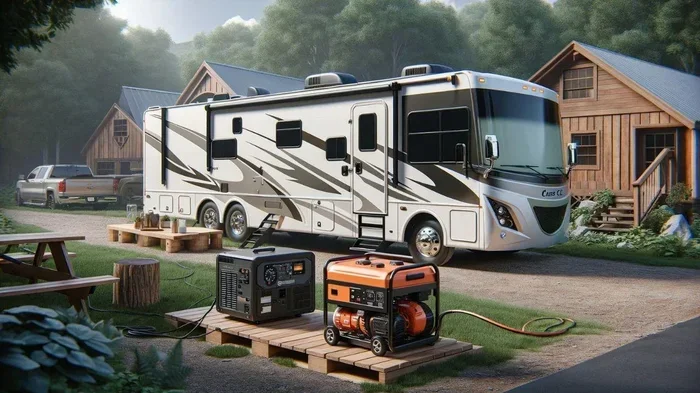
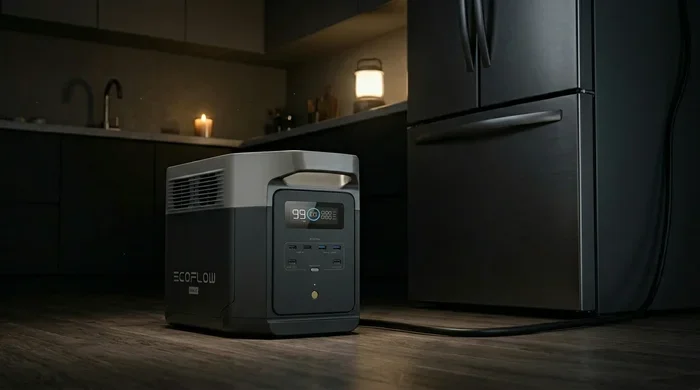
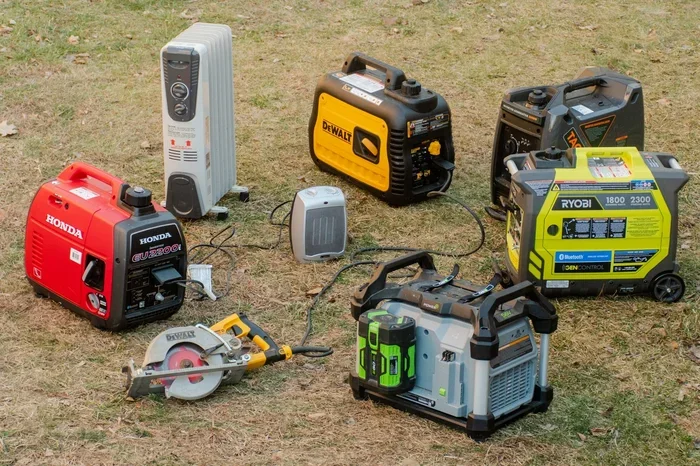
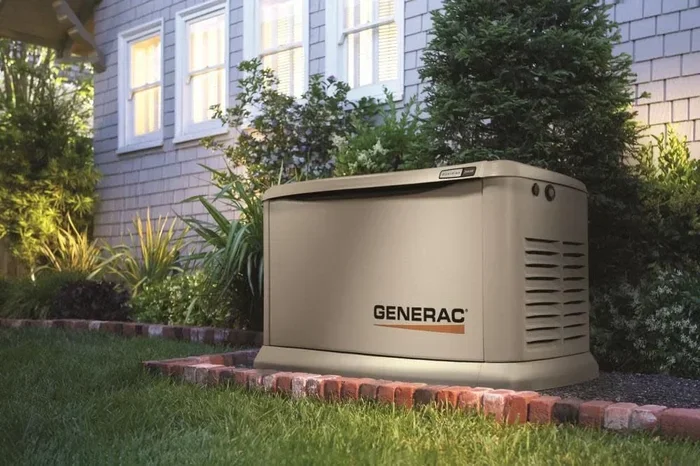
Generators are essential for backup power generation during outages. Hospitals, data centers, and emergency services rely on standby generators to keep critical systems running. Homeowners in areas prone to storms or blackouts also invest in portable or standby generators for peace of mind.
Industrial and Commercial Use
Factories, construction sites, and mining operations depend on generators for their electrical power needs. Many remote locations where grid access is limited use generators as their primary source of electrical energy. From powering heavy machinery to running lighting on job sites, generators are indispensable.
Renewable Energy Systems
Wind turbines and hydroelectric dams are essentially generators that use natural forces to spin their rotors. Wind energy converts the kinetic energy of moving air into electrical current. Hydroelectric systems use flowing water to do the same. These renewable systems are direct descendants of Faraday’s original generator invention.
Quick Tips: Choosing the Right Generator
- Determine your power needs: Add up the wattage of all devices you want to run simultaneously.
- Choose between portable and standby: Portable generators are great for camping and short outages. Standby generators provide automatic backup for your entire home.
- Consider fuel type: Gasoline, propane, natural gas, and diesel each have pros and cons for power generation.
- Look for inverter technology: Inverter generators produce cleaner electrical power that is safe for sensitive electronics.
- Check noise levels: If you live in a neighborhood, a quieter generator will keep your neighbors happy.
Expert Insights
According to energy historians, Faraday’s discovery of electromagnetic induction was one of the most significant scientific breakthroughs of the 19th century. Engineers today still use the same fundamental principles he discovered in 1831. The electric generator remains a testament to how a single scientific insight can transform the entire world.
Common Mistakes People Make
- Confusing generators with motors: A motor converts electrical energy into mechanical energy. A generator does the opposite. Remember: generator = motion to electricity, motor = electricity to motion.
- Ignoring power factor: When sizing a generator, power factor matters. It affects how much usable electrical power the generator can deliver.
- Overloading the generator: Running a generator beyond its rated capacity can damage both the generator and your connected devices.
- Neglecting maintenance: Regular maintenance keeps your power generation system reliable. Change oil, check fuel lines, and test the generator periodically.
The Evolution of Generator Technology
The generator history does not end in the 1800s. Generator technology has continued to evolve and improve over the decades. Modern generators are more efficient, quieter, and more reliable than ever before.
From Steam to Wind
Early generators were driven by steam engines. Coal-burning steam turbines were the primary source of mechanical energy for generating electricity for over a century. Today, we have moved toward cleaner energy sources. Wind turbines, hydroelectric dams, and even solar systems with tracking motors all use generator technology to produce electrical energy.
Smart Generators and Digital Controls
Modern generators feature digital control panels that monitor voltage, frequency, and fuel consumption in real time. Some smart generators can automatically start when grid power fails and shut down when power is restored. These advances make power generation more convenient and reliable than ever before.
The Future of Electrical Power
As the world moves toward renewable energy, generator technology will continue to evolve. Superconducting generators are being developed that could dramatically reduce energy losses. Advanced materials and digital controls will make future generators even more efficient and compact. The electric generator is far from a relic of the past. It is a technology that continues to shape our future.
Key Takeaways
- The electric generator was born from Faraday’s discovery of electromagnetic induction in 1831.
- Multiple inventors contributed to the generator invention, including Pixii, Tesla, and Edison.
- AC generators and DC generators serve different but important roles in power generation.
- Generators are essential for homes, industries, hospitals, and renewable energy systems.
- Generator technology continues to evolve with advances in materials, digital controls, and renewable energy integration.
Conclusion
The story of who invented the electric generator is a story of human curiosity and ingenuity. Michael Faraday’s discovery of electromagnetic induction opened the door to a world powered by electrical energy. From Pixii’s early dynamo to Tesla’s revolutionary AC generator, each inventor added something vital to the generator history. Today, generators power our homes, hospitals, factories, and entire cities. They keep the lights on, the refrigerators running, and the critical systems working during emergencies.
Understanding the electric generator is not just an academic exercise. It helps you make informed decisions about power generation for your home or business. It gives you a deeper appreciation for the technology that makes modern life possible. The next time you flip a switch, take a moment to appreciate the incredible journey from Faraday’s spinning copper disk to the sophisticated generators that keep our world running. The electric generator truly is one of humanity’s greatest inventions, and its importance will only continue to grow in the years ahead.
Frequently Asked Questions
Who is credited with inventing the electric generator?
Michael Faraday is widely credited with inventing the first electric generator in 1831. His discovery of electromagnetic induction proved that mechanical energy can be converted into electrical energy. While other inventors like Pixii and Tesla made important improvements, Faraday laid the essential groundwork for all modern generator designs.
What is the difference between a dynamo and a generator?
A dynamo is a type of generator that produces direct current (DC). The term “dynamo” was commonly used in the early days of generator history. Today, the word “generator” covers both AC and DC machines. So all dynamos are generators, but not all generators are dynamos.
How does Faraday’s law apply to modern generators?
Faraday’s law states that a changing magnetic field induces voltage in a conductor. This principle is the foundation of every modern generator. Whether it is a massive turbine at a power plant or a small portable unit, all generators rely on this same law of electromagnetic induction to produce electrical power.
Can I use a generator as a primary power source for my home?
Yes, many homeowners use generators as their primary or backup power generation source. Standby generators can automatically power your entire home during outages. However, it is important to size the generator correctly based on your electrical energy needs and to maintain it regularly for reliable performance.
Why did AC generators become more popular than DC generators?
AC generators became dominant because alternating current can be easily transformed to higher voltages for long-distance transmission. This made power generation far more efficient and cost-effective. Tesla’s AC system also had fewer energy losses over distance compared to Edison’s DC system, which gave it a decisive advantage for widespread electrical infrastructure.
What role do generators play in renewable energy?
Generators are at the heart of renewable power generation. Wind turbines use generators to convert wind energy into electrical current. Hydroelectric dams use flowing water to spin generator turbines. Even some solar tracking systems use small generators. The electric generator remains a critical technology in the transition to clean energy.