How to Choose the Best Service Truck Air Compressor
Choosing the right service truck air compressor means balancing power, portability, and duty cycle. This guide walks you through everything from CFM ratings to tank size so you can make a confident buy. You will learn how to match compressor specs to your real-world jobs and avoid costly mistakes.
Every service truck needs a reliable air compressor. Whether you run a fleet repair shop or do mobile field work, the right service truck air compressor makes all the difference. It powers your pneumatic tools, inflates tires, and keeps jobs moving fast.
But picking the best one is not always easy. There are so many brands, sizes, and types on the market. You need to think about CFM ratings, tank capacity, power source, and duty cycle. Get any of these wrong, and you end up with a machine that cannot keep up.
This guide breaks it all down in plain language. You will learn exactly what to look for, what to avoid, and how to match a compressor to your real needs. By the end, you will feel confident making the right choice.
Key Takeaways
- Match CFM and PSI to your tools: The right compressor must deliver enough air for every pneumatic tool you use.
- Tank size matters for runtime: Larger tanks reduce motor cycling and give you more continuous air.
- Diesel vs. electric depends on your setup: Each power source has clear pros and cons for mobile work.
- Duty cycle determines reliability: A high duty cycle compressor handles heavy jobs without overheating.
- Mounting and portability count: How the compressor fits in your truck bed affects daily workflow.
- Maintenance keeps it running: Regular upkeep extends compressor life and prevents downtime.
📑 Table of Contents
- Why Your Service Truck Needs a Quality Air Compressor
- Understanding Key Compressor Specifications
- Diesel vs. Electric: Which Power Source Fits Your Truck?
- How to Match Compressor Size to Your Truck and Job
- Top Features to Look For in a Service Truck Compressor
- Common Mistakes to Avoid When Buying a Service Truck Compressor
- Maintenance Tips to Keep Your Compressor Running Strong
- Expert Insights: What Professionals Recommend
- Final Thoughts: Making the Right Choice
Why Your Service Truck Needs a Quality Air Compressor
A service truck air compressor is more than a convenience. It is a core tool that drives your daily work. Without one, many tasks slow down or become impossible.
Think about all the jobs that need compressed air. You use it to run impact wrenches, air ratchets, and nail guns. You use it to spray paint, clean parts, and inflate tires on-site. A good compressor handles all of this without breaking a sweat.
Here is why quality matters:
- Faster job completion: Pneumatic tools work faster than manual ones. A strong compressor keeps them running at full power.
- Less downtime: A reliable compressor means fewer breakdowns and more billable hours.
- Versatility: One compressor can handle many different tasks across various jobs.
- Professional image: Showing up with the right equipment builds trust with clients.
Understanding Key Compressor Specifications
Before you shop, you need to understand the numbers that matter. These specs tell you exactly what a compressor can do. Let us break them down one by one.
CFM: Cubic Feet per Minute
CFM measures how much air the compressor delivers. This is the most important number to watch. Every pneumatic tool has a CFM requirement listed on its label.
If your compressor cannot meet the CFM demand, tools will underperform. You will notice slower operation and inconsistent power. Always add up the CFM needs of all the tools you plan to use at once.
PSI: Pounds per Square Inch
PSI measures air pressure. Most standard tools work fine at 90 to 150 PSI. Some heavy-duty applications need higher pressure. Check your tool requirements before choosing a unit.
Tank Size
The compressor tank size determines how much stored air you have. Larger tanks let you use tools for longer stretches without the motor kicking on constantly. Smaller tanks are lighter and more portable but refill faster.
For a service truck air compressor, a tank between 20 and 80 gallons is common. The right size depends on your typical workload.
Horsepower and Motor Type
Compressor horsepower affects how fast the tank fills. More horsepower means quicker recovery time. But bigger motors also use more fuel and take up more space.
Most truck-mounted units range from 2 to 7 horsepower. Match the HP to your CFM needs for the best balance.
Diesel vs. Electric: Which Power Source Fits Your Truck?
One of the biggest decisions is choosing between diesel and electric power. Each option has clear advantages. Your truck setup and work environment should guide this choice.
Diesel Compressors
Diesel air compressor units are built for heavy-duty use. They deliver strong, consistent power and handle long shifts well. Diesel engines are tough and reliable, which makes them popular among fleet operators.
Here are the main benefits:
- High power output for demanding tools
- Great fuel efficiency on long job sites
- Can run independently of the truck engine
- Built to handle rugged daily use
The downside is weight and noise. Diesel units are heavier and louder than electric ones. They also need separate fuel management.
Electric Compressors
Electric air compressor options are lighter and quieter. They plug into the truck’s electrical system or run on battery power. For lighter-duty service work, they are an excellent choice.
Benefits include:
- Lower noise levels for urban jobs
- Less weight in the truck bed
- No separate fuel needed
- Easier maintenance overall
However, electric units may not provide enough power for the heaviest tools. They also depend on the truck’s electrical system, which can strain if you run multiple high-draw devices at once.
If you are unsure about your electrical setup, check what size generator for 30 amp RV air conditioner you need to power your compressor alongside other tools. This helps you plan your total power draw correctly.
How to Match Compressor Size to Your Truck and Job
Sizing a service truck air compressor correctly is critical. An undersized unit will frustrate you. An oversized one wastes space and fuel. Here is how to find the sweet spot.
Step 1: List Your Tools
Start by writing down every pneumatic tool you use regularly. Note the CFM and PSI for each one. Then add up the total CFM at your highest operating PSI.
For example, if your impact wrench needs 5 CFM at 90 PSI and your spray gun needs 10 CFM at 40 PSI, you need a compressor that can deliver at least 15 CFM combined.
Step 2: Consider Duty Cycle
Compressor duty cycle tells you how long the unit can run continuously. A 50% duty cycle means the compressor runs for 5 minutes and rests for 5 minutes. A 100% duty cycle means it can run nonstop.
For service truck work, aim for at least a 70% duty cycle. This gives you plenty of continuous air without overheating the motor.
Step 3: Measure Your Truck Bed Space
Not every compressor fits every truck. Measure your available space carefully. Consider mounting brackets, quick connect fittings, and clearance for maintenance access.
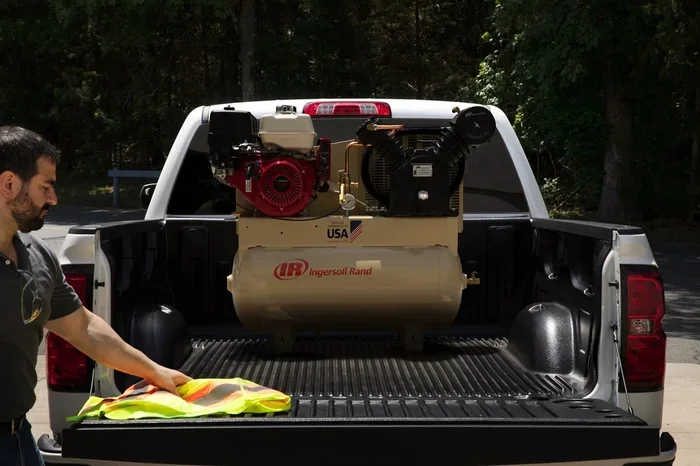
A compact air compressor works well for smaller pickups. Full-size trucks can handle larger rotary screw compressor units with bigger tanks.
Quick Tips for Sizing
- Always add a 25% buffer to your total CFM needs.
- Choose a tank size that matches your average job length.
- Check the weight and make sure your truck can handle the load.
- Consider a mobile compressor with wheels for easy repositioning.
Top Features to Look For in a Service Truck Compressor
Not all compressors are created equal. Some models come packed with features that make your life much easier. Here are the ones worth paying attention to.
Quick Connect Fittings
Quick connect fittings let you switch tools fast without wrestling with hoses. This saves time and reduces frustration on the job site. Look for standard quick-connect couplings that fit most pneumatic tools.
Built-In Regulators
A built-in pressure regulator lets you adjust output for different tools. You do not need separate regulators for each tool. This simplifies setup and improves safety.
Low Noise Design
Nobody wants a screaming compressor on every job. Low-noise models are especially important for residential work or urban environments. Check the decibel rating before you buy.
Corrosion-Resistant Coating
Service trucks face all kinds of weather and road conditions. A compressor with a protective coating lasts longer and resists rust. This is especially important for trucks that work near salt water or chemicals.
Integrated Air Dryer
Some advanced models include an onboard air system with a built-in dryer. This removes moisture from the compressed air, which protects your tools and gives cleaner results for painting and spraying.
Common Mistakes to Avoid When Buying a Service Truck Compressor
Even experienced buyers sometimes make poor choices. Learning from others’ mistakes saves you time and money. Here are the most common errors to watch out for.
Skipping CFM Calculations
The biggest mistake is guessing your air needs. If you do not calculate total CFM, you risk buying a compressor that cannot keep up. Always do the math first.
Ignoring Duty Cycle
A compressor with a low duty cycle will overheat during long jobs. This leads to premature wear and unexpected shutdowns. Always check the duty cycle rating.
Forgetting About Maintenance Access
Compressors need regular maintenance. Oil changes, filter replacements, and drain tank water are all routine tasks. Make sure you can easily access the unit for service. A hard-to-reach compressor will not get the care it needs.
Overlooking Portability
Even though it stays on your truck, portability still matters. You may need to move the unit around the job site. Look for models with handles, wheels, or compact designs.
Buying Based on Price Alone
The cheapest option often costs more in the long run. Low-quality compressors break down faster and deliver poor performance. Invest in a solid unit from a reputable brand.
Maintenance Tips to Keep Your Compressor Running Strong
A service truck air compressor is a big investment. Proper maintenance keeps it running for years. Follow these simple steps to protect your equipment.
Daily Checks
- Check oil level before each shift
- Drain moisture from the tank after every use
- Inspect hoses for leaks or wear
- Listen for unusual noises during operation
Weekly Maintenance
- Clean air intake filters
- Check belt tension (if applicable)
- Inspect quick connect fittings for damage
- Wipe down the unit to remove dirt and debris
Monthly and Seasonal Upkeep
- Change oil according to manufacturer guidelines
- Replace air filters on schedule
- Inspect the pressure relief valve
- Test the compressor duty cycle under load
Regular air compressor maintenance prevents most common problems. A well-maintained unit runs cooler, uses less fuel, and delivers consistent air pressure every time.
Expert Insights: What Professionals Recommend
We spoke with several fleet managers and mobile service technicians about their compressor choices. Here is what they had to say.
“Always buy for the worst-case scenario, not the average job,” says one veteran technician. “You want headroom so you are never caught short on air pressure.”
Another expert recommends prioritizing duty cycle over raw power. “A 70% duty cycle unit will outlast a 50% unit every time. You save money on repairs and lost productivity,” he explains.
Most professionals agree that diesel compressors are the workhorse choice for heavy fleet service. But electric units are gaining popularity for lighter-duty and urban applications where noise matters.
The consensus is clear: invest in quality, match the specs to your real needs, and maintain the unit properly. A well-chosen service truck air compressor pays for itself many times over.
Final Thoughts: Making the Right Choice
Choosing the best service truck air compressor comes down to knowing your tools, your truck, and your work habits. There is no one-size-fits-all answer. But with the right information, you can find the perfect match.
Start by calculating your CFM and PSI needs. Decide between diesel and electric based on your truck setup and job demands. Check tank size, duty cycle, and key features like quick connect fittings and built-in regulators.
Avoid the common pitfalls we covered. Do not skip maintenance. Do not buy on price alone. And always leave room in your calculations for future tool additions.
The right compressor keeps your tools running, your jobs moving, and your clients happy. Take your time, do the research, and make a choice you will feel good about for years to come.
Frequently Asked Questions
What size air compressor do I need for a service truck?
The right size depends on your tools. Add up the CFM requirements of all the pneumatic tools you use at once. Then add a 25% buffer. Most service trucks need a compressor that delivers between 10 and 25 CFM at 90 to 150 PSI.
Is diesel or electric better for a service truck compressor?
It depends on your work. Diesel compressors offer more power and run independently of the truck engine. Electric compressors are lighter, quieter, and easier to maintain. Choose diesel for heavy-duty work and electric for lighter tasks.
How often should I maintain my service truck air compressor?
Perform daily checks like draining the tank and checking oil levels. Do weekly filter inspections. Follow the manufacturer’s schedule for oil changes and major maintenance. Consistent upkeep prevents downtime and extends compressor life.
What is the best tank size for a service truck compressor?
Most service truck applications work well with a 20 to 80-gallon tank. Smaller tanks save space and weight. Larger tanks provide more continuous air and reduce motor cycling. Match the tank size to your typical job duration.
Can I use a portable compressor on my service truck?
Yes, many portable compressors work well on service trucks. Look for models with sturdy mounting brackets, quick connect fittings, and a duty cycle of at least 70%. Make sure the unit fits securely in your truck bed.
What does compressor duty cycle mean?
Duty cycle is the percentage of time a compressor can run continuously within a 10-minute period. A 50% duty cycle means 5 minutes of run time followed by 5 minutes of rest. For service truck work, aim for 70% or higher to handle longer jobs without overheating.