What Size Generator to Run Refrigerator and Freezer
Choosing the right size generator to run refrigerator and freezer keeps your food safe when the power goes out. You need to match both the starting and running watts of your appliances to avoid damage or downtime. This guide walks you through everything you need to know, from wattage calculations to the best generator types for your home.
There is nothing worse than a power outage. One minute your refrigerator is humming along, and the next thing you know, everything goes quiet. The clock blinks. The freezer alarm starts beeping. You rush to open the door and wonder if your food is still safe.
This is exactly why knowing what size generator to run refrigerator and freezer matters so much. A backup power source can make all the difference between a minor inconvenience and a spoiled grocery bill. But here is the thing many people get wrong. They buy a generator based on guesswork, and then it either fails to start their appliances or sits unused because it was way too big.
In this guide, we will walk you through everything you need to know. We will cover wattage requirements, generator types, and how to pick the right unit for your specific setup. By the end, you will feel confident making the right choice for your home and your family.
Key Takeaways
- Know your wattage: Always check the starting and running watts of your fridge and freezer before buying a generator.
- Add a safety buffer: Choose a generator that exceeds your total load by at least 20% to handle surges safely.
- Inverter generators are ideal: They provide clean, stable power that protects sensitive appliance electronics.
- Consider fuel type: Gasoline, propane, and dual-fuel options each have pros and cons for backup power use.
- Never overload the generator: Running too many appliances at once can trip the breaker or damage your unit.
- Maintenance matters: Regular testing and fuel management keep your generator ready when you need it most.
📑 Table of Contents
- Understanding Refrigerator and Freezer Power Needs
- What Size Generator Do You Actually Need?
- Types of Generators for Running a Refrigerator and Freezer
- How to Calculate Your Total Power Needs
- Best Generators for Running a Refrigerator and Freezer
- Tips for Running Appliances on a Generator Safely
- Conclusion
Understanding Refrigerator and Freezer Power Needs
Before you shop for a generator, you need to understand how much power your refrigerator and freezer actually use. Not all appliances draw the same amount of electricity. The numbers can surprise you.
Running Wattage vs. Starting Wattage
Every refrigerator and freezer has two power numbers. The first is running wattage, also called continuous power. This is the electricity the compressor uses to keep your food cold once it has reached the set temperature.
The second number is starting wattage, sometimes called surge wattage or peak wattage. This is the extra power the compressor needs when it kicks on after a cycle. Think of it like the burst of energy a car needs to jump from a stoplight.
Starting wattage is always higher than running wattage. For most refrigerators, the running wattage falls between 100 and 400 watts. But the starting wattage can spike to 600, 800, or even 1,200 watts for a brief moment. This surge is critical. If your generator cannot handle it, the compressor will not start, and your generator may shut down.
Average Wattage by Appliance Type
Here is a quick look at typical power needs for common refrigerator and freezer setups:
| Appliance | Running Watts | Starting Watts |
|---|---|---|
| Standard Top-Freezer (15 cu ft) | 150-300 W | 600-900 W |
| Standard Bottom-Freezer (18 cu ft) | 200-400 W | 800-1,200 W |
| Side-by-Side Refrigerator | 300-500 W | 1,000-1,500 W |
| Chest Freezer (5 cu ft) | 100-200 W | 400-600 W |
| Chest Freezer (7 cu ft) | 150-250 W | 600-800 W |
| Upright Freezer (7 cu ft) | 200-300 W | 700-1,000 W |
These numbers are estimates. Always check the nameplate on the back of your appliance for the exact wattage requirements. The nameplate will show the amps and voltage, which you can multiply to get watts. If you are unsure, a watt meter plugged into the outlet can give you real-time readings.
How Freezer Size Affects Power Use
Your freezer capacity plays a big role in energy consumption. A smaller chest freezer uses less electricity than a large upright model. Chest freezers are generally more energy efficient because cold air stays inside better when you open the lid. Upright freezers, on the other hand, lose more cold air each time you open the door.
If you have both a refrigerator and a freezer running on the same generator, you need to add their wattages together. This total is your total electrical load. It is the number you will use to size your generator correctly.
What Size Generator Do You Actually Need?
Now that you understand the power numbers, let us talk about sizing. The answer to what size generator to run refrigerator and freezer depends on a few factors, but the general rule is simple. You need enough capacity to handle both the starting surge and the continuous running load.
The 20% Safety Buffer Rule
Never size your generator to the exact wattage of your appliances. Always add at least 20% extra capacity. This safety buffer protects the generator from overloading and gives you room if you need to run a few other small devices at the same time.
Here is how to calculate it:
- Find the starting wattage of your refrigerator.
- Find the starting wattage of your freezer.
- Add those two numbers together.
- Multiply the total by 1.2 to add your 20% buffer.
- The result is the minimum generator size you should buy.
For example, if your refrigerator needs 1,200 starting watts and your freezer needs 800 starting watts, the total is 2,000 watts. Multiply by 1.2, and you get 2,400 watts. A 2,500-watt or 3,000-watt generator would be a solid choice.
Quick Tips for Sizing Your Generator
- Check the nameplate: The manufacturer sticker on your fridge or freezer has the most accurate power data.
- Use a watt meter: These inexpensive devices plug into the wall and show real-time energy use.
- Account for other loads: If you plan to run lights, a microwave, or a sump pump too, add those watts to your total.
- Think about fuel efficiency: A slightly larger generator running at 50% load often uses less fuel than a small one running at full throttle.
Common Mistakes When Sizing a Generator
Many homeowners make avoidable errors when choosing a generator. Here are the most common ones:
- Ignoring starting wattage: This is the number one mistake. If you only look at running watts, your generator will fail to start the compressor.
- Buying the cheapest option: A low-cost generator may not provide clean power. This can damage the compressor and control board of your refrigerator over time.
- Forgetting about future needs: If you plan to add a second freezer or a wine cooler later, factor that into your sizing now.
- Underestimating runtime: A generator that runs out of fuel after four hours is not much help during a long outage.
Types of Generators for Running a Refrigerator and Freezer
Not all generators are created equal. Different types serve different purposes, and choosing the right one depends on your budget, power needs, and how you plan to use it.
Inverter Generators
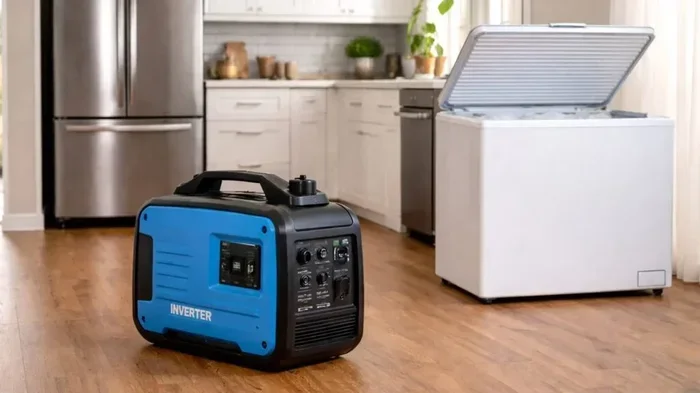
Inverter generators are the top choice for running refrigerators and freezers. They produce what is called clean sine wave power. This means the electrical output is smooth and stable, just like the power from your wall outlet.
Why does this matter? Refrigerators contain sensitive electronic controls and compressors that can be damaged by power fluctuations. Inverter generators regulate their output carefully, delivering consistent continuous power without dangerous spikes or drops.
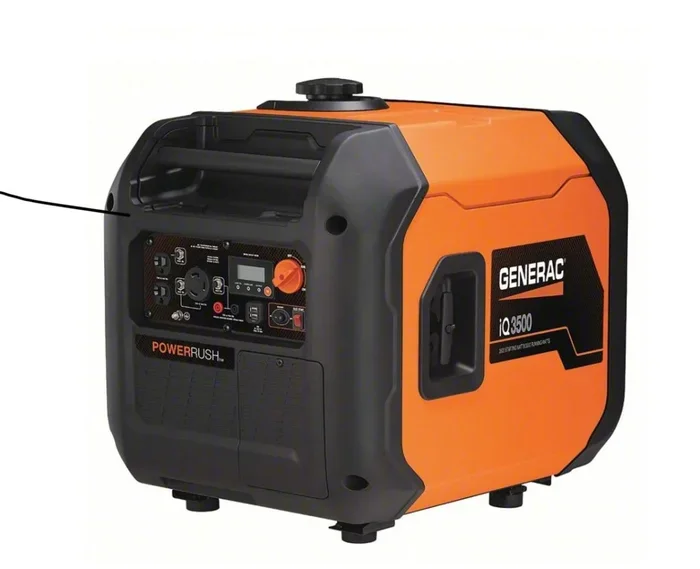
These units are also quieter and more fuel-efficient than traditional generators. They are a great option for homes in neighborhoods where noise matters. Most inverter models in the 2,000 to 3,500-watt range handle a fridge and freezer easily.
Portable Generators
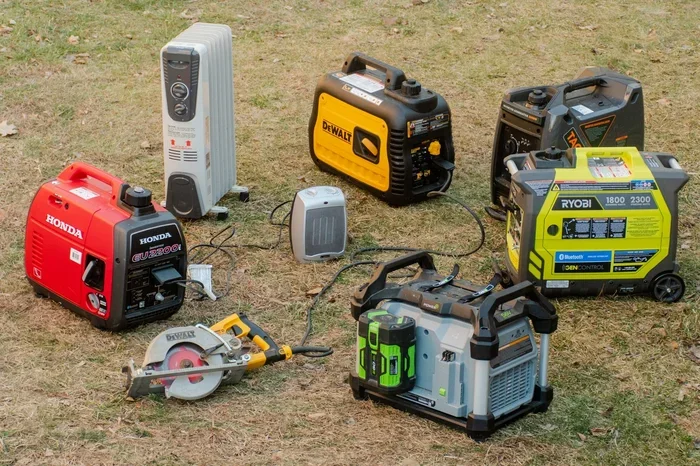
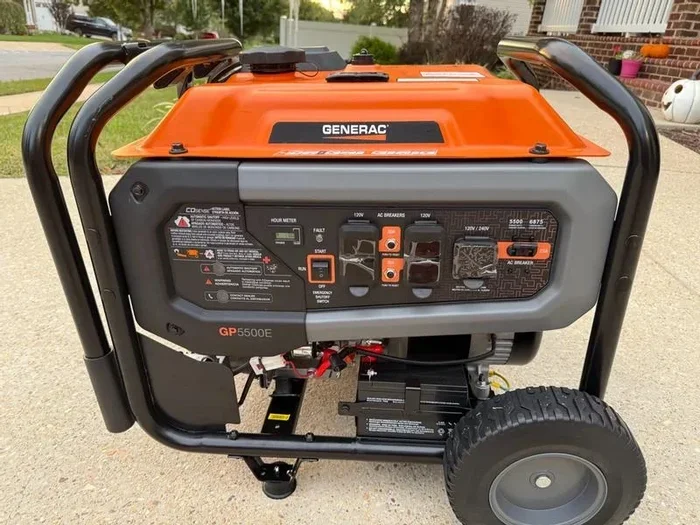
A portable generator is the most common choice for backup power during outages. They come in a wide range of sizes, from small 1,000-watt units to powerful 7,500-watt models. For running a refrigerator and freezer, a portable generator in the 2,000 to 4,000-watt range works well.
Portable generators run on gasoline, which is easy to find at any gas station. They are affordable and widely available. The downside is that they tend to be louder and less fuel-efficient than inverter models. You also need to refuel them periodically, which means turning them off and letting them cool down first.
Dual-Fuel and Propane Generators
A dual-fuel generator can run on either gasoline or propane. This gives you flexibility. During a short outage, you can use gasoline. For longer outages or extended storage, propane is a great alternative because it has a longer shelf life.
Propane generators burn cleaner than gasoline, which means less maintenance over time. They also tend to run quieter. If you already have a propane tank for your grill or home heating, a propane generator can be a very convenient choice.
Standby Generators
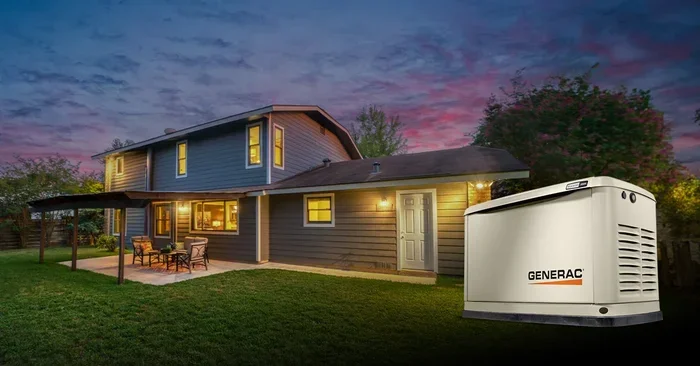
A standby generator is a permanent installation that connects directly to your home’s electrical panel. It kicks on automatically within seconds of a power outage. These units are powerful enough to run your entire house, including multiple refrigerators, freezers, HVAC systems, and more.
Standby generators run on natural gas or liquid propane and connect to your home’s existing fuel lines. They are expensive, typically costing between $3,000 and $10,000 installed. But if you live in an area prone to frequent power outages, a standby generator is the ultimate backup solution.
Comparison Table: Generator Types at a Glance
| Feature | Inverter Generator | Portable Generator | Dual-Fuel Generator | Standby Generator |
|---|---|---|---|---|
| Price Range | $500-$2,500 | $400-$1,500 | $600-$2,000 | $3,000-$10,000+ |
| Power Output | 1,000-4,500 W | 1,000-7,500 W | 2,000-7,000 W | 7,000-20,000+ W |
| Fuel Type | Gasoline | Gasoline | Gasoline or Propane | Natural Gas or Propane |
| Noise Level | Low to Medium | Medium to High | Medium | Low (exterior unit) |
| Best For | Clean power for appliances | Budget-friendly backup | Fuel flexibility | Whole-home backup |
| Portability | Good | Good | Moderate | None (permanent) |
How to Calculate Your Total Power Needs
Calculating your total power needs is simpler than it sounds. You just need to gather a few numbers and do some basic addition. Let us walk through a real example.
Step-by-Step Calculation
Let us say you have a standard side-by-side refrigerator and a 7-cubic-foot upright freezer. Here is how you would calculate your needs:
- Find the refrigerator starting watts: Let us say the nameplate shows 1,400 starting watts and 400 running watts.
- Find the freezer starting watts: The freezer shows 1,000 starting watts and 300 running watts.
- Add the starting watts: 1,400 + 1,000 = 2,400 watts.
- Add the 20% buffer: 2,400 x 1.2 = 2,880 watts.
- Choose a generator: A 3,000-watt or 3,500-watt generator would work perfectly.
Now, what if you also want to run a few lights and charge your phone? Add those extra loads too. A few LED lights might use 50 watts total, and a phone charger uses about 10 watts. That brings your new total to about 2,940 watts with the buffer, which a 3,000-watt generator can still handle comfortably.
Using a Watt Meter for Accuracy
If you want real-world data instead of estimates, grab a watt meter. These devices cost under $30 and plug right into your wall outlet. You simply plug your refrigerator into the watt meter, and it tracks the actual energy use over hours or days.
This is especially helpful because older refrigerators often use more power than the nameplate suggests. A watt meter gives you the true picture of your energy consumption and helps you make a more accurate sizing decision.
Expert Insights on Generator Sizing
According to home energy experts, the most common reason generators fail during outages is improper sizing. Many people buy a generator based on the running wattage alone and do not account for the starting surge.
Another expert tip: never run your refrigerator and freezer on the same generator circuit if you can avoid it. Use separate outlets or a quality surge protector to distribute the load evenly. This reduces the risk of electrical issues and helps both appliances run more efficiently.
Best Generators for Running a Refrigerator and Freezer
Now that you understand the numbers, here are some solid generator options that work well for running a refrigerator and freezer. These recommendations cover different budgets and needs.
Budget-Friendly Option: WEN 56200i
The WEN 56200i is a popular inverter generator that delivers 2,000 starting watts and 1,600 running watts. It is lightweight, quiet, and fuel-efficient. It handles most standard refrigerators and small freezers with ease. This is a great choice if you need a simple, affordable backup power solution.
Mid-Range Pick: Honda EU2200i
The Honda EU2200i is a well-known name in the generator world. It produces 2,200 starting watts and 1,800 running watts. It is extremely reliable, whisper-quiet, and built to last for thousands of hours. The fuel efficiency is outstanding, giving you up to 8 hours of runtime on a single tank.
Heavy-Duty Option: Westinghouse WGen3600v
If you have a larger setup or want the option to run additional appliances, the Westinghouse WGen3600v delivers 4,500 starting watts and 3,600 running watts. It runs on gasoline and has a large fuel tank for extended generator runtime. This unit is ideal for homeowners who want serious backup power without a permanent installation.
Whole-Home Solution: Generac 22kW Standby Generator
For homeowners who want automatic, worry-free backup power, a standby generator like the Generac 22kW is hard to beat. It connects to your home’s natural gas line and powers everything automatically. Your refrigerator, freezer, lights, and HVAC system all stay running without you lifting a finger.
Tips for Running Appliances on a Generator Safely
Once you have the right generator, you need to use it safely. Improper use can damage your appliances or create serious safety hazards.
Never Backfeed Into Your Home
Never plug a portable generator directly into a wall outlet. This practice, known as backfeeding, is extremely dangerous. It can send electricity back through your wiring and endanger utility workers. Always use a transfer switch or connect appliances directly to the generator using heavy-duty extension cords.
Place the Generator Outdoors
Generators must always be used outside, away from windows, doors, and vents. Carbon monoxide from a running generator is odorless and deadly. Place the unit at least 20 feet from your home with the exhaust pointing away from windows and doors.
Let the Generator Warm Up First
Before plugging in your refrigerator or freezer, let the generator run for a minute or two. This allows the engine to stabilize and the electrical output to reach a steady state. Connecting appliances during startup can cause voltage spikes that harm sensitive electronics.
Manage Your Fuel Supply
Keep fresh fuel on hand for portable generators. Gasoline degrades over time, especially if stored for more than 30 days. Use a fuel stabilizer to extend shelf life, or consider a dual-fuel generator that can also run on propane for longer storage.
Test Your Generator Regularly
Do not wait for an outage to discover your generator is not working. Run it once a month for 15 to 20 minutes. This keeps the engine lubricated and the battery charged if it has an electric start. It also gives you a chance to verify that the generator runtime and power output are still within normal range.
Use a Surge Protector
A quality surge protector adds an extra layer of protection for your refrigerator and freezer. It absorbs voltage spikes that can occur when the generator cycles on and off. This is especially important for older or more sensitive appliance models.
Conclusion
Knowing what size generator to run refrigerator and freezer is one of the smartest investments you can make for your home. Power outages are unpredictable, but being prepared does not have to be complicated.
Start by checking the starting and running watts on your appliances. Add a 20% safety buffer. Choose a generator type that fits your budget and needs, whether that is a portable inverter generator for short outages or a standby unit for all-day protection.
Use your generator safely, maintain it regularly, and test it often. A little preparation goes a long way toward keeping your food cold, your family comfortable, and your peace of mind intact when the power goes out.
Take the time today to calculate your power needs and find the right generator. Your future self will thank you the next time the lights go out.
Frequently Asked Questions
What size generator do I need to run a refrigerator and freezer?
A generator with at least 2,000 to 3,500 starting watts is typically sufficient for a standard refrigerator and freezer combo. Always add a 20% safety buffer to your total starting wattage to ensure reliable operation. Check the nameplate on your appliances for exact numbers before purchasing.
Can a 2000 watt generator run a refrigerator and freezer?
A 2,000-watt generator can run a small refrigerator and a small freezer, but only if their combined starting wattage stays under 2,000 watts. Larger refrigerators or freezers may require a 3,000-watt or bigger generator to handle the startup surge. Always verify the starting watts of your specific appliances first.
What type of generator is best for a refrigerator?
An inverter generator is the best choice for running a refrigerator. It produces clean, stable power that protects the sensitive compressor and electronic controls. Inverter generators are also quieter and more fuel-efficient than traditional portable models, making them ideal for home backup use.
How long can a generator run a refrigerator and freezer?
Generator runtime depends on the fuel tank size and the load. Most portable generators can run for 8 to 12 hours on a full tank of gasoline. If you need longer runtime, consider a dual-fuel model that can switch to propane, or invest in a larger fuel tank. Always monitor your fuel level during extended outages.
Is it safe to run a freezer on a generator?
Yes, it is safe as long as the generator is properly sized and used outdoors. Never operate a generator indoors or in an enclosed space due to carbon monoxide risk. Use a surge protector and make sure the generator’s wattage exceeds the freezer’s starting wattage by at least 20%.
Do I need a special outlet to connect my refrigerator to a generator?
You do not need a special outlet, but you should use a heavy-duty extension cord rated for outdoor use and the wattage of your appliances. For a permanent solution, have an electrician install a transfer switch, which connects your generator directly to your home’s electrical panel safely and conveniently.