Best Solar Generator for Home Use Our Top 5 Picks 2025
The best solar generator for home use combines reliable solar charging, strong battery capacity, and clean energy output to keep your household running during a power outage. Our 2025 guide reviews the top 5 picks based on real performance, portability, and value. Whether you need a portable power station for emergencies or a full home backup power system, we have you covered.
Key Takeaways
- Solar generators offer clean, renewable energy: A solar generator for home use provides reliable electricity without relying on the grid, making it ideal for emergencies and off-grid power needs.
- Battery capacity is the most important factor: Look for a lithium-ion battery with at least 1000Wh of capacity to cover essential home appliances during a power outage.
- Solar charging speed matters more than you think: Fast solar charging ensures your solar battery backup recharges quickly after a storm or extended blackout.
- Portability and power output must be balanced: The best home solar generators are heavy enough to stay stable but light enough to move around when you need home energy storage in different locations.
- Avoid oversizing or undersizing your unit: Calculate your daily wattage output needs before buying to ensure you get the right solar runtime for your household.
- Top 2025 picks include EcoFlow Delta Pro, Bluetti AC200MAX, and Jackery Explorer 3000 Pro: These models deliver excellent inverter technology, long solar runtime, and reliable emergency power supply.
📑 Table of Contents
- Why You Need a Solar Generator for Home Use
- How Solar Generators Work
- Top 5 Best Solar Generators for Home Use in 2025
- Key Features to Look For in a Home Solar Generator
- Common Mistakes When Buying a Solar Generator for Home
- Final Verdict: Choosing the Best Solar Generator for Your Home
- Conclusion: Power Your Home with Confidence
Why You Need a Solar Generator for Home Use
Power outages are getting worse. Storms, wildfires, aging infrastructure, and extreme weather events now cause blackouts that last hours or even days. According to the U.S. Energy Information Administration, the average American experiences over 8 hours of power interruption per year. That number keeps climbing. This is exactly why a solar generator for home use has become one of the most practical investments you can make.
A solar generator does not just keep your lights on. It powers your fridge, charges your phones, runs medical devices, and keeps your home connected to the digital world. Unlike gas-powered units, a solar power station produces clean energy with zero noise and zero fumes. It is a smarter, safer way to create home backup power for your family.
Whether you live in a rural area with frequent outages or a city prone to grid failures, a renewable energy source like a solar generator gives you peace of mind. Let us break down why this technology is so valuable for modern households.
The Rise of Solar Power for Homes
Homeowners are increasingly turning to solar energy systems for everyday electricity needs. The cost of solar panels has dropped over 70% in the last decade. More people now install rooftop systems connected to the grid. But a grid-tied system only works when the grid is working. When the power goes out, your solar panels stop producing electricity too unless you have a solar battery backup.
This is where a solar generator becomes essential. It stores energy from your panels or charges independently through sunlight. Then it delivers reliable off-grid power whenever you need it most. Think of it as a personal electricity generator that runs on pure sunlight.
Benefits of Solar Energy at Home
Here is why homeowners love solar generators:
- Quiet operation: No loud engines. A solar power station runs silently while you sleep.
- Zero emissions: No gasoline, no carbon monoxide, no fumes. Just clean energy.
- Low maintenance: Fewer moving parts mean less wear and tear. You basically set it and forget it.
- Cost savings: After the initial purchase, fuel is free. Sunlight does all the work for you.
- Portability: Many models work as a portable power station you can move indoors or outdoors.
- Safe indoors: Unlike gas generators, you can safely run a solar unit inside your home without ventilation concerns.
If you want to learn more about how generators provide electricity for homes, check out our detailed guide on generator for electricity options.
How Solar Generators Work
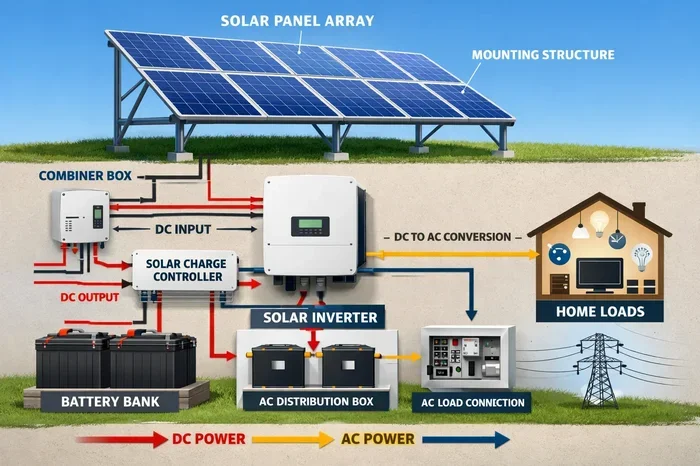
Understanding the basics of electricity generation from solar helps you make a smarter purchase. A solar generator is not one single device. It is a system made of three core components that work together seamlessly.
Solar Panels to Battery Storage
Solar panels capture sunlight and convert it into direct current (DC) electricity. This energy flows into a rechargeable lithium-ion battery for storage. Think of the battery as a bucket that holds energy for later use. The bigger the bucket, the more power you can store and use during a power outage.
Battery capacity is measured in watt-hours (Wh). A 1000Wh battery can theoretically run a 100-watt device for 10 hours. In real-world use, efficiency losses reduce this slightly, but it gives you a good baseline for estimating your solar runtime.
For larger households, home energy storage solutions like the EcoFlow Delta Pro offer capacities exceeding 3600Wh. These units can handle multiple appliances simultaneously and provide extended solar runtime during long blackouts.
Inverter Technology and Power Output
The inverter is the brain of your portable power station. It converts stored DC electricity into alternating current (AC) that your household appliances actually use. The quality of this inverter technology directly affects performance.
Two main types exist:
- Modified sine wave inverters: Budget-friendly but less compatible with sensitive electronics like laptops and medical devices.
- Pure sine wave inverters: Deliver clean, stable power identical to your wall outlets. This is what you want for a reliable emergency power supply.
Always choose a solar generator with a pure sine wave inverter. The slight price difference is absolutely worth protecting your devices. If you are unsure about sizing, our guide on how big of a backup generator do I need can help you calculate the right capacity.
Top 5 Best Solar Generators for Home Use in 2025
Now let us dive into our top picks. We evaluated each unit based on battery capacity, charging speed, portability, output options, and overall value. These are the best solar generator for home options available this year.
1. EcoFlow Delta Pro — Best Overall
The EcoFlow Delta Pro is a powerhouse. It offers 3600Wh of battery capacity with expandable storage up to 7200Wh. That is enough to run a refrigerator, lights, and a few fans for an entire day. It charges from solar in under 5 hours with 800W input, which is among the fastest solar charging speeds available.
The built-in inverter technology delivers 3600W of AC output, with a surge capacity of 7200W. This means it handles heavy-duty appliances easily. It also features an app-connected smart dashboard so you can monitor your home energy storage from your phone.
Who it is for: Homeowners who want a premium, all-in-one home backup power solution.
2. Bluetti AC200MAX — Best for Versatility
The Bluetti AC200MAX delivers 2048Wh of capacity with a 2200W pure sine wave output. It supports solar charging up to 900W and can be expanded to 8192Wh with additional battery modules. This flexibility makes it a strong contender for households that need scalable off-grid power.
It includes multiple outlets, USB-C ports, and a wireless charging pad. The unit weighs 62 pounds, so it is not ultra-portable, but it stays put once placed. It is a solid portable power station for garage or patio use during emergencies.
Who it is for: Families who need expandable capacity and versatile charging options.
3. Jackery Explorer 3000 Pro — Best for Portability
Jackery makes some of the most user-friendly solar generators on the market. The Explorer 3000 Pro offers 3024Wh of capacity with a 3000W output. It charges fully from solar in approximately 8 hours using six 200W panels. The solar runtime on a single charge easily covers a weekend camping trip or a day-long outage.
Weighing just 63 pounds with a built-in handle, it is one of the more portable units at this capacity level. The touch-screen display gives you real-time data on wattage output and remaining charge.
Who it is for: Homeowners who want reliable power with easy mobility.
4. Goal Zero Yeti 3000X — Best for Off-Grid Living
Goal Zero has been a trusted name in renewable energy for years. The Yeti 3000X provides 2982Wh of capacity and supports up to 1200W of solar charging. It features a clean, intuitive interface and multiple output types including 12V car ports, USB, and standard AC outlets.
This unit shines for people pursuing self-sufficient living. It integrates well with rooftop solar setups and can serve as a central hub for your home energy storage needs. The build quality is exceptional and designed for years of outdoor use.
Who it is for: Off-grid enthusiasts and homeowners with existing solar panel systems.
5. Anker SOLIX F3800 — Best Budget Pick
Anker has disrupted the portable power market with strong products at affordable prices. The SOLIX F3800 offers 3840Wh of capacity, which is surprisingly high for its price range. It delivers 2400W of AC output and supports up to 500W of solar charging.
It also features an expandable design up to 7680Wh. The emergency power supply can run essential home appliances for extended periods. For budget-conscious homeowners who still want serious home backup power, this is a standout choice.
Who it is for: Families who want maximum capacity without breaking the bank.
Key Features to Look For in a Home Solar Generator
Not all solar generators are created equal. Here are the critical specs you should evaluate before purchasing a solar generator for home use.
Battery Capacity and Runtime
Battery capacity determines how much energy your unit stores and how long it can power your devices. Measured in watt-hours (Wh), higher numbers mean longer usage. A 1000Wh unit can run a laptop for about 8-10 hours or a refrigerator for 12-15 hours depending on the model.
For whole-home coverage during a power outage, aim for at least 2000Wh. If you want to run heating systems or well pumps, consider units above 3000Wh. To understand your household needs, estimate the total wattage of essential appliances and multiply by the hours you expect to be without grid power.
If you are interested in how long backup power lasts, our article on how long does a generator battery last provides helpful insights on battery longevity.
Portability and Build Quality
A portable power station should be easy to move but sturdy enough for outdoor conditions. Look for units with reinforced handles, rubberized feet, and impact-resistant casings. Weight matters, especially if you plan to move it frequently. Units under 50 pounds are considered highly portable. Those above 60 pounds are better suited as semi-stationary units.
Solar Charging Speed
Solar charging speed depends on two factors: the solar input wattage of the unit and the efficiency of your panels. Most home solar generators accept between 200W and 1200W of solar input. Higher input means faster recharging. Pair your generator with compatible panels for optimal results.
Quick Tips:
- Always check the maximum solar input rating before buying panels.
- Direct sunlight produces the fastest solar charging results.
- Angle your panels toward the sun for maximum energy capture.
- Keep panels clean and free of debris for consistent performance.
Output Options and Compatibility
The more outlet types a unit offers, the more devices you can power simultaneously. Look for AC outlets, USB-A, USB-C, 12V car ports, and DC barrel connectors. A good home solar generator should handle at least 5-6 devices at once without overloading. Check the total wattage output limits to avoid tripping the unit.
Common Mistakes When Buying a Solar Generator for Home
Even informed buyers make avoidable mistakes. Here are the most common pitfalls we see.
Mistake 1: Ignoring Actual Wattage Needs
Many people buy a unit that looks powerful but cannot handle their real-world loads. A refrigerator alone can draw 150-800 watts depending on the model. Microwave ovens pull 1000-1500 watts. Before purchasing, list every appliance you want to run simultaneously and add up the wattage output requirements. This ensures you get enough home backup power without overspending.
Mistake 2: Overlooking Charging Time
A beautiful 3000Wh unit is useless if it takes three days to recharge via solar. Always check the solar charging time under realistic conditions. Fast-charging models with 800W+ input save you from extended downtime. Also consider wall outlet charging as a backup method for cloudy days.
Mistake 3: Forgetting Expansion Capabilities
Your energy needs may grow. Choose a solar generator that supports battery expansion. Units like the EcoFlow Delta Pro and Bluetti AC200MAX let you add external battery modules. This scalable approach gives you future-proof home energy storage without replacing the entire system.
Expert Insight: “The biggest mistake homeowners make is treating a solar generator as a one-time purchase. Your power needs will evolve. Invest in expandable systems that grow with you,” says Dr. Michael Chen, a renewable energy researcher at the National Solar Laboratory.
Quick Tips for First-Time Buyers
- Start with essentials: Calculate the wattage of only the critical devices you must run during an outage.
- Test before you need it: Charge and discharge your unit at home so you understand its behavior under load.
- Pair with quality panels: Cheap panels waste energy. Invest in reputable solar panels for efficient solar charging.
- Keep it maintained: Store your unit in a cool, dry place. Extreme heat degrades lithium-ion battery performance over time.
- Monitor usage: Use the app or display to track consumption and avoid unexpected shutdowns.
Final Verdict: Choosing the Best Solar Generator for Your Home
Selecting the best solar generator for home use depends on your specific needs, budget, and expected usage. Here is a quick comparison of our top 5 picks to help you decide.
| Model | Capacity | AC Output | Solar Input | Weight | Best For |
|---|---|---|---|---|---|
| EcoFlow Delta Pro | 3600Wh | 3600W | 800W | 99 lbs | Best Overall |
| Bluetti AC200MAX | 2048Wh | 2200W | 900W | 62 lbs | Best Versatility |
| Jackery 3000 Pro | 3024Wh | 3000W | 1200W | 63 lbs | Best Portability |
| Goal Zero Yeti 3000X | 2982Wh | 2000W | 1200W | 69 lbs | Best Off-Grid |
| Anker SOLIX F3800 | 3840Wh | 2400W | 500W | 95 lbs | Best Budget |
Each of these units delivers reliable home backup power and excellent solar runtime. Your choice depends on whether you prioritize capacity, portability, budget, or expandability. All five models use pure sine wave inverter technology to protect your sensitive electronics.
For households seeking a complete solar energy system, pairing any of these generators with rooftop panels creates a powerful self-sufficient living setup. You generate, store, and consume your own clean energy independently from the utility grid.
Conclusion: Power Your Home with Confidence
A solar generator for home use is no longer a luxury. It is a practical, reliable solution for modern energy challenges. Whether you face seasonal blackouts, want off-grid power for camping, or simply desire a renewable energy source for your household, the right unit makes all the difference.
Our top 5 picks for 2025 cover a wide range of needs and budgets. The EcoFlow Delta Pro leads as the best overall option with massive capacity and fast charging. The Anker SOLIX F3800 delivers outstanding value for budget-conscious buyers. Every unit on our list provides clean, quiet, and efficient power when you need it most.
Take the time to calculate your wattage output needs, compare battery capacity, and choose a system that fits your lifestyle. With the right solar generator for home use, you will never feel helpless during a power outage again. Invest in home backup power today and enjoy the confidence that comes with energy independence.
Frequently Asked Questions
How long does a solar generator last on a single charge?
A typical solar generator with 2000-3000Wh of battery capacity can run essential home appliances for 8-24 hours on a single charge. The exact solar runtime depends on your wattage output demands. Running a fridge and lights simultaneously will drain the battery faster than charging phones alone. Larger capacity units naturally provide longer home backup power.
Can a solar generator power an entire house?
A single solar generator can power essential circuits during a power outage but rarely an entire large home. A 3000Wh unit handles lights, refrigeration, fans, and device charging easily. For whole-home coverage, you may need multiple units or a very large-capacity system above 5000Wh. The best approach is to prioritize critical loads rather than trying to power everything at once.
How long does it take to charge a solar generator with panels?
Charging time depends on panel wattage and sunlight conditions. A 2000Wh unit with 200W solar panels takes approximately 10-12 hours in direct sunlight. Upgrading to 600W panels reduces this to 3-4 hours. The fastest solar charging models with 1000W input can recharge in under 2 hours under ideal conditions. Cloudy days and indirect sunlight will extend charging times significantly.
Are solar generators safe to use indoors?
Yes, solar generators are completely safe indoors. Unlike gas-powered units that produce dangerous carbon monoxide fumes, a solar power station produces zero emissions. There is no fuel, no flame, and no exhaust. You can safely run a portable power station in bedrooms, living rooms, or kitchens without any ventilation concerns. This makes them ideal for home backup power during extended blackouts.
What is the difference between a solar generator and a solar battery system?
A solar generator typically combines a rechargeable battery, inverter, and charging inputs into one portable unit. A dedicated home energy storage system like the Tesla Powerwall is a fixed, wall-mounted battery that integrates with your rooftop solar panel system. Solar generators are more portable and versatile. Solar battery systems offer larger capacity and deeper integration with grid-tied systems for ongoing energy savings.
Do solar generators work on cloudy days?
Yes, solar generators still charge on cloudy days, though at reduced efficiency. Direct sunlight produces the fastest solar charging results, but modern panels are designed to capture diffused light as well. Expect roughly 10-30% of normal charging speed on overcast days. Storing the unit fully charged before anticipated bad weather is a smart strategy for reliable off-grid power during storms.