Everything You Need to Know About Dent Repair Tool Kit
A dent repair tool kit gives you everything you need to fix dents at home without visiting a mechanic. These kits include suction cups, glue guns, bridge pullers, and other dent repair tools that make DIY dent repair simple and affordable. With the right dent repair tool kit, you can tackle minor dents, hail damage, and door dings in minutes.
A dent repair tool kit is one of the most practical investments any car owner can make. Whether you have a small door ding from a parking lot or a larger dent from a hailstorm, having the right tools at home makes all the difference. These kits are designed to help you fix dents quickly, affordably, and without the hassle of visiting a body shop.
In this guide, we will walk you through everything you need to know about dent repair tool kits. We will cover what comes inside a typical kit, how to choose the best one for your needs, and how to use the tools effectively. By the end, you will feel confident tackling minor dent repairs on your own.
The beauty of DIY dent repair is that you do not need years of experience. With a quality dent repair tool kit and a little patience, most car owners can achieve professional-looking results. Let us dive into the details and help you get started.
Key Takeaways
- Affordable Alternative: A dent repair tool kit saves hundreds of dollars compared to professional auto body repair.
- Easy to Use: Most kits come with clear instructions and require no special skills or experience.
- Versatile Tools: Quality kits include suction cups, glue guns, slide hammers, and dent boards for various repair scenarios.
- Paintless Dent Repair: Many dent repair tools allow you to fix dents without damaging the original paint.
- Quick Results: Simple dents can often be fixed in under 30 minutes with the right kit.
- Worth the Investment: A good dent repair tool kit pays for itself after just one repair.
📑 Table of Contents
- What Is a Dent Repair Tool Kit?
- Types of Dent Repair Tools and Techniques
- How to Choose the Right Dent Repair Tool Kit
- Step-by-Step Guide to Using a Dent Repair Tool Kit
- Common Mistakes to Avoid When Using a Dent Repair Tool Kit
- Benefits of Using a Dent Repair Tool Kit
- Quick Tips for Better Dent Repair Results
- Who Should Buy a Dent Repair Tool Kit?
- Final Thoughts
What Is a Dent Repair Tool Kit?
A dent repair tool kit is a collection of specialized tools designed to remove dents from vehicles. These kits vary in size and complexity, ranging from basic suction cup sets to comprehensive packages with dozens of tools. The goal is simple: pull, push, or suction dents back into shape without harming the surrounding paint.
Most dent repair tools are built for paintless dent repair, also known as PDR. This technique preserves the original factory paint, which is crucial for maintaining your car’s value and appearance. Traditional dent repair often involves sanding, filling, and repainting, which is far more expensive and time-consuming.
What Typically Comes in a Dent Repair Tool Kit?
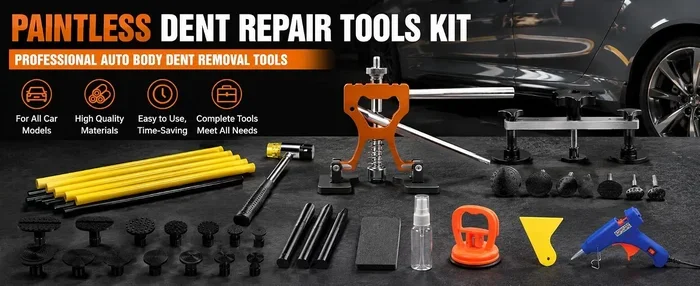
A standard dent repair tool kit includes several essential components. Here is what you can expect to find inside:
- Suction cup dent puller: This is the most basic tool. It creates a vacuum seal over the dent and pulls it outward. Great for shallow dents on flat panels.
- Glue gun and glue sticks: Used for attaching pull tabs or tabs to the dent surface. The glue hardens quickly and provides a strong grip for pulling.
- Slide hammer and accessories: A slide hammer connects to threaded studs or lifters and delivers controlled pulling force. It is one of the most effective dent removal tools for deeper dents.
- Bridge puller: This tool grips the edges of a dent and pulls the center outward. It works well for medium-sized dents on doors and hoods.
- Dent repair rods and picks: These are used to push dents out from behind the panel. They come in various shapes and sizes for different dent types.
- Dent board: A backing board that supports the panel from behind during pushing repairs. It helps create a smooth surface for the rods to work against.
- Car dent puller tools: Various specialized pullers designed for specific dent sizes and shapes.
- Reflection board or light: Helps you see the dent clearly by reflecting light across the panel surface.
Some premium kits also include car scratch repair materials, polishing compounds, and finishing pads. These extras add value and allow you to address minor paint imperfections alongside dent repairs.
Types of Dent Repair Tools and Techniques
Not all dents are the same, and neither are the tools used to fix them. Understanding the different types of dent repair tools helps you choose the right approach for each situation. Let us look at the most common methods.
Suction Cup Method
The suction cup method is the simplest and most accessible technique. You place the cup over the dent, pump out the air, and pull steadily. This works best for small to medium dents on flat surfaces like doors, fenders, and hoods.
One of the biggest advantages of suction cup car dent fix tools is that they require no glue or drilling. However, they do have limitations. Very deep dents or dents on curved surfaces may not respond well to suction alone.
Glue Pull Technique
The glue pull technique involves heating a glue gun, applying glue to a pull tab, pressing it onto the dent, and then using a puller to extract the dent. This method is incredibly versatile and works on a wide range of dent sizes and locations.
For paintless dent repair enthusiasts, glue pulling is an essential skill. The glue sticks cleanly off the paint when heated, leaving no residue. This makes it a favorite among automotive dent repair professionals and DIYers alike.
Slide Hammer and Lifter Method
The slide hammer method provides the most pulling power. A threaded stud or lifter is attached to the dent, and the slide hammer slides back and forth to deliver strong, controlled force. This technique handles deeper and more stubborn dents that suction cups cannot manage.
When using a slide hammer, always start with gentle force and increase gradually. Applying too much pressure too quickly can damage the paint or stretch the metal. Patience is key with this approach.
Pushing from Behind
For dents that are accessible from the backside of the panel, pushing is often the best method. You place a dent board behind the panel and use rods or picks to push the dent back into place from the reverse side.
This technique produces excellent results because it preserves the original paint finish. It requires access to the back of the panel, which is not always possible on some vehicle areas. Doors, fenders, and hoods typically offer the best access for pushing repairs.
How to Choose the Right Dent Repair Tool Kit
With so many options on the market, selecting the right dent repair tool kit can feel overwhelming. Here are the key factors to consider before making a purchase.
Consider the Types of Dents You Face
Think about the kinds of dents you typically encounter. If you deal with small door dings and hail damage, a basic kit with a suction cup and glue gun will likely suffice. For more serious damage or varied dent types, invest in a comprehensive kit with slide hammers, bridge pullers, and multiple rods.
Check the Tool Quality
Not all dent repair tools are created equal. Look for kits made from durable materials like hardened steel and professional-grade components. Cheap plastic parts will break or wear out quickly. Read reviews and check the build quality before buying.
Ease of Use
A good dent repair tool kit should be user-friendly, especially if you are a beginner. Look for kits that include clear instructions, video tutorials, or both. The tools should feel comfortable in your hands and not require excessive force to operate.
Price vs. Value
Dent repair cost for professional services can range from $50 to $300 or more per dent, depending on severity. A quality dent repair tool kit typically costs between $30 and $150. Even if you only fix one dent yourself, the kit pays for itself many times over. Look for kits that offer the best value in terms of tool variety and durability.
Kit Size and Portability
Consider how and where you will store your kit. Some kits come in compact cases that fit in a glovebox, while others include large boards and multiple accessories. If you want a kit you can keep in your car for emergencies, choose a portable option.
Top Features to Look For
- Multiple suction cup sizes for different dent diameters
- Adjustable slide hammer for variable pulling force
- Heat-resistant glue gun for reliable adhesion
- Variety of dent rods and picks for different access angles
- Durable carrying case for organized storage
- Reflector or LED light for better visibility
- Compatibility with both glue-based and non-glue methods
Step-by-Step Guide to Using a Dent Repair Tool Kit
Using a dent repair tool kit is straightforward once you understand the basic process. Here is a step-by-step guide to help you get the best results.
Step 1: Assess the Dent
Start by examining the dent closely. Determine its size, depth, and location. Check whether the paint is cracked or intact. Use a reflection board or a bright light to see the dent’s contours clearly. This assessment helps you choose the right tool and technique.
Step 2: Clean the Area
Thoroughly clean the dent and surrounding area with soap and water. Remove any dirt, wax, or debris. A clean surface ensures better adhesion for glue-based tools and a stronger suction seal for cup pullers.
Step 3: Choose Your Method
Based on your assessment, select the appropriate method. For shallow dents on flat panels, start with a suction cup. For medium to deep dents, use the glue pull or slide hammer method. For dents you can access from behind, use the pushing technique with rods.
Step 4: Apply the Tool
Follow the specific steps for your chosen method. For glue pulling, heat the glue gun, apply a small amount of glue to the pull tab, press it firmly onto the center of the dent, wait for it to cool, and then attach the puller. For suction cups, simply place the cup and pump to create suction.
Step 5: Pull or Push Gradually
Apply steady, even force. Do not rush the process. For pulling, work slowly and check your progress frequently. For pushing, use light taps and gradually increase pressure. The goal is to move the metal back into its original shape without causing new damage.
Step 6: Check Your Progress
Use the reflection board or light to inspect the dent after each pull or push. Look for any remaining low spots or high points. Minor adjustments may be needed to achieve a perfectly smooth surface.
Step 7: Finish and Polish
Once the dent is removed, use a polishing compound to restore the paint finish if needed. Some kits include finishing pads and compounds for this purpose. Apply a thin layer of wax to protect the repaired area.
Common Mistakes to Avoid When Using a Dent Repair Tool Kit
Even with the best dent repair tool kit, mistakes can happen. Avoiding these common errors will help you achieve better results and protect your vehicle’s paint.
Using Too Much Force
One of the most common errors is applying excessive force when pulling or pushing a dent. This can stretch the metal, crack the paint, or create new high spots. Always start gently and increase force gradually. Patience delivers better outcomes than brute strength.
Skipping the Surface Preparation
Failing to clean the dent area properly leads to poor adhesion and weak suction. Always wash the surface before applying any tool. Even a thin layer of wax or dirt can reduce the effectiveness of glue tabs and suction cups.
Choosing the Wrong Tool
Using the wrong tool for a specific dent type often leads to frustration and subpar results. A suction cup will not work on a deep crease dent, and a bridge puller may be too large for a tiny door ding. Match the tool to the dent for the best outcome.
Ignoring the Paint Condition
If the paint is already cracked or chipped, paintless dent repair may not be appropriate. Attempting PDR on damaged paint can worsen the problem. In such cases, consider professional automotive dent repair that includes paint correction.
Rushing the Process
Dent repair is not a race. Rushing through the steps often leads to incomplete repairs or new damage. Take your time, work methodically, and enjoy the process.
Benefits of Using a Dent Repair Tool Kit
Investing in a dent repair tool kit offers numerous advantages that go beyond just fixing a single dent. Let us explore the key benefits.
Significant Cost Savings
Professional dent repair can cost anywhere from $50 to $300 per dent, and that is before any paintwork. A quality dent repair tool kit costs a fraction of that and can be used for years. If you own multiple vehicles or live in an area prone to hail, the savings add up quickly.
Convenience and Speed
You can fix a dent anytime, anywhere, without scheduling an appointment or waiting days for a repair shop. Many simple car dent fix jobs take less than 30 minutes. This convenience is especially valuable for minor dents that do not warrant a trip to the body shop.
Preservation of Original Paint
Most dent repair tools enable paintless dent repair, which keeps your factory paint intact. Original paint is worth more in terms of resale value and aesthetics. Repainted areas can sometimes show differences in texture and color over time.
Increased Vehicle Value
Keeping your car free of dents and imperfections helps maintain its overall appearance and market value. Regular minor repairs with your dent repair tool kit prevent small issues from becoming larger, more expensive problems.
Sense of Accomplishment
There is genuine satisfaction in fixing a dent on your own. Learning a new practical skill builds confidence and self-reliance. Once you master the basics, you will find yourself tackling more complex repairs with ease.
No Need for Special Equipment or Space
Unlike many automotive repairs, DIY dent repair does not require a garage, specialized lifts, or expensive machinery. A dent repair tool kit fits in a small bag and can be used on your driveway, in a parking lot, or even in your kitchen.
Quick Tips for Better Dent Repair Results
Here are some practical tips that will help you get the best results from your dent repair tool kit:
- Always work in a well-lit area. Good visibility makes a huge difference in spotting subtle imperfections.
- Use a reflection board or a bright LED light to see the dent’s profile clearly.
- Start with the gentlest method first and escalate only if needed.
- Warm the paint slightly with a heat gun before pushing repairs. Warm metal is more flexible and responds better to manipulation.
- Keep your tools clean and well-maintained. Wipe them down after each use and store them properly.
- Practice on an old panel or scrap metal before working on your car. This builds confidence and skill.
- Take breaks when working on larger dents. Fatigue leads to mistakes and inconsistent pressure.
- Use the right size accessories for each dent. A pull tab that is too small or too large will reduce effectiveness.
Who Should Buy a Dent Repair Tool Kit?
A dent repair tool kit is a smart purchase for a wide range of people. Here is who benefits most:
- Car owners who want to save money on routine dent repairs instead of paying for professional services every time.
- People who live in hail-prone areas where frequent storm damage makes professional repairs impractical and expensive.
- Car enthusiasts who take pride in maintaining their vehicle’s appearance and want quick, professional-quality results.
- Rideshare and delivery drivers who deal with daily door dings and minor damage from passengers and parking situations.
- DIY hobbyists who enjoy working on their vehicles and learning new automotive skills.
- Parents whose cars are constantly getting dented by playground equipment, shopping carts, and active kids.
Even if you have never done any automotive dent repair before, a well-designed dent repair tool kit makes it easy to get started. The tools are intuitive, and the learning curve is gentle. Most people see noticeable improvement after just one or two attempts.
Final Thoughts
A dent repair tool kit is one of the most practical and cost-effective tools any car owner can own. Whether you are dealing with a small door ding, a hail dent, or a minor crease, the right kit gives you the power to fix it yourself quickly and effectively.
The key to success lies in choosing a quality kit, understanding the different tools and techniques, and approaching each repair with patience and care. Paintless dent repair has made it possible to restore your vehicle’s appearance without the expense and hassle of traditional body work.
Start with a basic kit if you are new to DIY dent repair, and upgrade as your skills grow. The confidence and satisfaction you gain from fixing dents on your own is well worth the investment. Grab your dent repair tool kit, find that next dent, and get to work. Your car will thank you.
Frequently Asked Questions
Can a dent repair tool kit fix deep dents?
Yes, many dent repair tool kits can handle deep dents, especially those that include a slide hammer and glue pull accessories. However, very deep dents with paint damage may require professional automotive dent repair. Always assess the dent’s severity before starting.
Is paintless dent repair safe for my car’s paint?
Absolutely. Paintless dent repair is designed to preserve the original factory paint. When done correctly with quality dent repair tools, it does not damage, scratch, or remove the existing paint finish. This is one of the biggest advantages of using a dent repair tool kit at home.
How much does a good dent repair tool kit cost?
Quality dent repair tool kits range from about $30 to $150. Basic kits with suction cups and glue guns fall on the lower end, while comprehensive kits with slide hammers, bridge pullers, and multiple rods cost more. Compared to professional dent repair cost, even an expensive kit pays for itself quickly.
How long does it take to fix a dent with a tool kit?
Simple dents can often be fixed in 15 to 30 minutes using a dent repair tool kit. More complex or larger dents may take an hour or more. The time depends on the dent size, location, depth, and the tools you are using. With practice, your speed will improve significantly.
Do I need any special skills to use a dent repair tool kit?
No special skills are required. Most dent repair tool kits are designed for beginners and come with clear instructions. The techniques are straightforward, and you can learn the basics in minutes. Like any skill, practice helps you achieve better and faster results over time.
Can I use a dent repair tool kit on any type of vehicle?
Yes, dent repair tools work on virtually any vehicle, including cars, trucks, SUVs, and vans. The techniques are the same regardless of the make or model. The only consideration is access to the dent — some panels are harder to reach than others. Always ensure you can access the front or back of the dent for the best results.