What Tools Does a Mechanic Need for Every Repair Job
Knowing what tools does a mechanic need is the first step toward handling any repair job with confidence. Whether you are a weekend hobbyist or a professional, having the right mechanic tool set makes every job faster, safer, and more precise. This guide breaks down every category of essential tools you should own.
Every repair job starts with one thing: the right tools. Whether you are changing oil, rebuilding an engine, or diagnosing a tricky electrical issue, having the correct equipment makes all the difference. So what tools does a mechanic need to get the job done right?
The answer is not as simple as buying one big box and calling it a day. A real mechanic’s setup includes hand tools, power tools, diagnostic equipment, and shop essentials. Each category serves a purpose. And skipping any one of them can turn a simple job into a frustrating mess.
This guide walks you through every tool category you need. We cover what to buy, why it matters, and how to build your collection over time. By the end, you will have a clear roadmap for equipping your garage or shop like a pro.
Key Takeaways
- Hand tools are the foundation: Wrenches, sockets, pliers, and screwdrivers handle the majority of everyday repairs.
- Power tools dramatically speed up work: Impact wrenches, drills, and grinders save hours on tough jobs.
- Diagnostic tools are non-negotiable: OBD scanners and multimeters help you find problems fast and accurately.
- Shop equipment creates a proper workspace: A reliable air compressor, jack stands, and tool storage keep your shop organized and safe.
- Build your collection gradually: You do not need everything at once. Start with the basics and expand as you take on more jobs.
- Quality over quantity matters: Investing in fewer, higher-quality tools saves money and frustration in the long run.
📑 Table of Contents
Why Having the Right Tools Matters
Tools are a mechanic’s lifeline. Using the wrong tool for a job can damage parts, waste time, and even cause injuries. On the other hand, having the right mechanic tools means you work faster, cleaner, and with more confidence.
Think about it this way. A plumber would not try to fix a pipe with a butter knife. Similarly, a mechanic cannot tighten a bolt properly with a worn-out wrench. Quality tools give you the precision and leverage you need for every task.
Safety First
Using proper tools keeps you safe. A jack stand holds your vehicle securely when you are underneath it. Insulated screwdrivers protect you from electrical shocks. Without the right safety gear and equipment, even simple jobs become dangerous.
Efficiency and Speed
The right tools also save time. A pneumatic impact wrench loosens lug nuts in seconds. A quality socket set lets you work through bolts quickly without stripping them. Over time, these time savings add up to hours of extra productivity every week.
Professional Results
When you have the right gear, your work looks professional. Parts go back together without damage. Adjustments are precise. Clients or family members notice the difference. And you build a reputation for doing quality work.
Quick Tip
Before buying any tool, ask yourself: “Will I use this at least once a month?” If yes, buy it. If not, rent it or skip it for now. This keeps your spending focused and your shop clutter-free.
Essential Hand Tools Every Mechanic Needs
Hand tools form the backbone of any mechanic’s kit. They do not need electricity or compressed air. You can use them anywhere, anytime. Every mechanic should own a solid collection of these basics.
Wrenches and Sockets
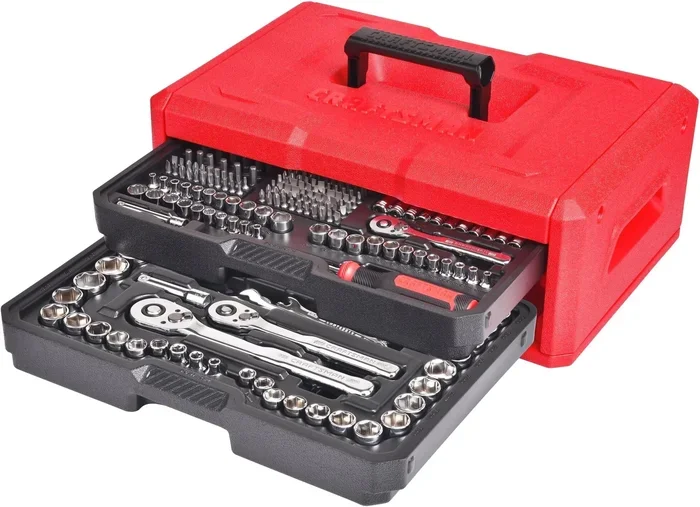
A good socket set is the single most important purchase a mechanic can make. You want both metric and standard sizes. A complete set covers most bolts and nuts you will encounter.
Combination wrenches are also essential. They give you an open-end and a closed-end in one tool. You will use these constantly for tightening and loosening fasteners in tight spaces.
Do not forget a torque wrench. This tool ensures bolts are tightened to the exact specification. Over-tightening can strip threads or crack parts. Under-tightening can cause components to come loose while driving. A torque wrench prevents both problems.
- Metric socket set (8mm to 32mm)
- Standard socket set (1/4 inch to 1 inch)
- Combination wrench set
- Torque wrench (click-type for accuracy)
- Breaker bar for stubborn bolts
Pliers and Gripping Tools
Needle-nose pliers let you reach into tight spots. Locking pliers (also called Vise-Grips) act as a temporary clamp or wrench. Slip-joint pliers handle general gripping and bending tasks.
Wire cutters and strippers are essential for electrical work. Every mechanic deals with wiring at some point. Having dedicated wire tools makes the job cleaner and faster.
Screwdrivers
A mechanic needs both Phillips and flat-head screwdrivers in multiple sizes. Magnetic tips are a huge help because they hold screws in place while you work.
For modern vehicles, you will also need Torx drivers. Many manufacturers use Torx screws in engines, transmissions, and interior panels. A dedicated Torx bit set saves a lot of frustration.
Pliers and Specialty Hand Tools
Pipe wrenches handle round pipes and fittings. Snap-ring pliers work on internal and external retaining rings. Punch sets help you knock out old bolts or align holes for new ones.
A good multitool with pliers, wire cutters, and a knife is handy to keep in your pocket for quick jobs on the spot.
Expert Insight
Seasoned mechanics recommend buying name-brand hand tools from the start. Cheap wrenches strip bolts and break easily. A single quality socket wrench pays for itself by preventing damaged fasteners. Brands like Snap-on, Craftsman, and GearWrench offer excellent durability at different price points.
Power Tools That Save Time and Effort
Hand tools get the job done, but power tools get it done fast. Every mechanic benefits from having a few key power tools in the shop. These tools handle heavy-duty tasks that would take forever by hand.
Impact Wrenches
An impact wrench is a mechanic’s best friend. It delivers high torque with minimal effort. You can loosen lug nuts, suspension bolts, and engine mounts in seconds.
Impact wrenches come in two main types:
- Air-powered (pneumatic): These need an air compressor to run. They are lightweight, powerful, and affordable. Most professional shops use pneumatic impacts because they are reliable and easy to maintain.
- Electric (cordless or corded): These are convenient because you do not need compressed air. Cordless models offer great portability. However, they may not match the raw torque of pneumatic tools.
If you use pneumatic tools, you need a quality air compressor. A 2-stage compressor provides consistent, powerful airflow for running impact wrenches, grinders, and spray guns. The 2-stage design is more efficient and handles continuous use better than a single-stage model.
The attack setting on your compressor controls how quickly the tool responds to air pressure. Understanding what does attack do on a compressor helps you adjust your tools for the best performance. A faster attack setting gives you snappier tool response, which is great for impact work.
Drills and Drivers
A cordless drill is versatile and essential. You use it for drilling holes, driving screws, and even removing bolts with the right bit. A impact driver specializes in driving screws and bolts with high torque. Both tools belong in every mechanic’s shop.
Grinders and Cut-Off Tools
Angle grinders cut through rusted bolts, grind welds, and shape metal. Cut-off tools are smaller and more precise. They are perfect for tight spaces where a full-size grinder will not fit.
These tools make quick work of rust removal and metal fabrication. Every mechanic who works on older vehicles will find them invaluable.
Air Tools Overview
Beyond impact wrenches, pneumatic tools include:
- Air ratchets: Tight spaces where a regular ratchet will not fit.
- Die grinders: Small, fast rotary tools for grinding and polishing.
- Sandblasters: For cleaning rust and paint from surfaces.
- Paint sprayers: For bodywork and refinishing jobs.
All of these tools connect to your air compressor. Keeping your compressor well-maintained ensures everything runs smoothly. Knowing what oil does an air compressor take is important for regular maintenance and extending the life of your equipment.
Quick Tip
Invest in a good air hose reel. It keeps your hoses organized, prevents tripping hazards, and extends the life of your hoses by preventing kinks and tangles.
Diagnostic and Electronic Tools
Modern vehicles are computers on wheels. You cannot fix what you cannot diagnose. Electronic diagnostic tools have become just as important as wrenches and sockets.
OBD-II Scanners
An OBD-II scanner plugs into your vehicle’s diagnostic port and reads error codes. These codes tell you exactly what is going wrong with the engine, transmission, or emissions system.
Basic scanners show generic codes. Advanced models provide manufacturer-specific codes, live data streams, and even the ability to reset service lights. For any mechanic serious about their work, a quality OBD-II scanner is a must-have.
Multimeters
A digital multimeter measures voltage, current, and resistance. You use it to test batteries, check wiring, and trace electrical faults. Every mechanic who works on electrical systems needs one.
Analog multimeters still have their fans, but digital models offer better accuracy and easier reading. Look for one with auto-ranging so you do not have to manually select the measurement range every time.
Additional Diagnostic Tools
- Circuit tester: Quickly checks if a wire or fuse has power.
- Infrared thermometer: Measures surface temperature without contact. Great for checking brakes, exhaust, and cooling systems.
- Battery tester: Tests battery health and charging system performance.
- Vacuum gauge: Diagnoses engine vacuum leaks and compression issues.
Using a Generator for Shop Power
Some repair shops operate in locations without reliable power access. In these cases, a portable generator keeps your tools running. If you are considering a generator, you might wonder how much natural gas does a generator use during a full workday. Understanding fuel consumption helps you plan costs and choose the right size for your shop.
Similarly, knowing how big of a backup generator you need ensures you never lose power mid-job. A properly sized generator keeps your diagnostic tools, lights, and power tools running without interruption.
Shop Equipment and Workspace Essentials
Having the right tools means nothing if your workspace is not set up properly. Shop equipment supports your work and keeps you organized.
Lifting and Jacking Equipment
You need a way to get under the vehicle safely. A hydraulic floor jack lifts the car quickly and smoothly. But a jack is not enough on its own.
Jack stands hold the vehicle securely while you work underneath. Never rely on a jack alone for support. Jacks can slip or fail, and the results can be catastrophic. Always use jack stands rated for the vehicle’s weight.
For heavier work, a 2-post or 4-post lift is ideal. These lifts raise the entire vehicle off the ground and provide plenty of clearance. They are a significant investment but worth it for any serious shop.
Tool Storage
A mechanic’s tools are their livelihood. Proper storage protects them and keeps your workspace efficient.
- Tool chests: Heavy-duty drawers that hold your most-used tools.
- Tool cabinets: Larger storage units with doors and locks.
- Tool bags: Portable options for mobile mechanics.
- Wall organizers: Pegboards and magnetic strips keep tools visible and within reach.
Good storage saves you from digging through piles of tools every morning. It also protects your investment by preventing damage and rust.
Workbench and Lighting
A sturdy workbench gives you a solid surface for assembling parts and performing detailed work. Look for one with built-in storage and a durable top.
Lighting is often overlooked but extremely important. A well-lit workspace reduces eye strain and helps you spot small problems. LED shop lights or magnetic strip lights work well in any garage.
Safety Equipment
No shop is complete without proper safety gear:
- Safety glasses: Protect your eyes from debris, fluids, and sparks.
- Mechanic gloves: Protect your hands from cuts, grease, and chemicals.
- Hearing protection: Essential when using power tools and air compressors.
- Respirator mask: Protects against fumes, dust, and aerosols.
- Fire extinguisher: A must-have in any garage or shop.
Common Mistakes to Avoid
Many new mechanics skip safety equipment to save time. This is a mistake that can lead to serious injuries. Always wear your glasses and gloves. Always use jack stands. These habits take seconds but protect your life.
Another common mistake is buying cheap tool storage. A flimsy toolbox collapses under the weight of heavy tools and damages the contents. Invest in quality storage from the beginning.
How to Build Your Tool Collection Over Time
You do not need to buy everything at once. Building a complete mechanic tool set takes time, patience, and smart planning.
Start With the Basics
Begin with the hand tools you will use on every job:
- A socket set (metric and standard)
- A combination wrench set
- A torque wrench
- A set of screwdrivers
- A pair of pliers and locking pliers
- A breaker bar
These six items cover the majority of repair jobs. Once you have these, you can start adding power tools and diagnostics.
Expand as You Grow
As you take on more complex jobs, your tool needs will grow. Add an impact wrench, a drill, and diagnostic tools to your collection. Each new tool opens up more repair possibilities.
If you work on specific vehicle types, you may need specialty tools. For example, working on European cars often requires specific torque adapters and engine support tools. Research your most common jobs and buy accordingly.
Maintain Your Tools
Tools last longer with proper care. Keep them clean and dry after each use. Apply a light coat of oil to metal surfaces to prevent rust. Store them in their proper places so they do not get lost or damaged.
Regular maintenance also applies to your shop equipment. Check your air compressor for leaks, change the oil as recommended, and drain the tank moisture regularly. A well-maintained compressor runs better and lasts for years.
Expert Insight
Professional mechanics often recommend the “one-in, one-out” rule. When you buy a new tool, donate or sell one you no longer use. This keeps your collection focused and prevents clutter. A clean, organized shop is a productive shop.
Budget-Friendly Tips
Building a tool collection does not have to break the bank. Look for sales, buy during holiday promotions, and consider refurbished tools from reputable brands. Many manufacturers offer starter sets that include the most essential tools at a discounted price.
You can also find quality used tools at estate sales, pawn shops, and online marketplaces. Just inspect them carefully for wear and damage before purchasing.
Conclusion
Knowing what tools does a mechanic need is the foundation of every successful repair job. From basic hand tools to advanced diagnostic equipment, each category plays a vital role in your work. The right tools make jobs faster, safer, and more precise.
Start with the essentials and build your collection over time. Invest in quality, maintain your tools, and organize your workspace. These habits pay off every single day.
Whether you are a beginner just starting out or a seasoned professional looking to upgrade your setup, this guide gives you the roadmap. The path to becoming a well-equipped mechanic starts with a single tool. So pick up that socket set, roll up your sleeves, and get to work.
Your next repair job is waiting. And now you have exactly what you need to tackle it.
Frequently Asked Questions
What are the must-have tools for a beginner mechanic?
Start with a socket set, combination wrenches, a torque wrench, screwdrivers, pliers, and a breaker bar. These hand tools handle the majority of basic repairs. Once you have these, you can add power tools and diagnostic equipment as your skills grow.
How much should I spend on a mechanic tool set?
Budget tool sets start around $100 and include basic hand tools. Professional-grade sets can cost $1,000 or more. The best approach is to buy quality tools you will actually use. A mid-range set of $300 to $500 covers most beginner and intermediate needs.
Do I need an air compressor if I use pneumatic tools?
Yes, absolutely. Pneumatic tools like impact wrenches and air ratchets require compressed air to operate. A 2-stage compressor is ideal for a mechanic’s shop because it provides consistent airflow and handles continuous use. Make sure to use the right oil for your compressor to keep it running smoothly.
What is the difference between an impact wrench and an impact driver?
An impact wrench delivers high torque for loosening and tightening bolts and nuts. An impact driver is designed for driving screws and fasteners. Both are useful, but they serve different purposes. Most mechanics need both in their shop.
How often should I maintain my mechanic tools?
Clean your hand tools after every use and apply a light oil to prevent rust. Power tools need regular inspection of cords, batteries, and moving parts. Air compressors should be drained daily and serviced according to the manufacturer’s schedule. Consistent maintenance keeps your tools reliable for years.
Can I use a regular generator for my mechanic shop?
Yes, but you need to choose the right size. A generator that is too small will struggle to power multiple tools at once. Consider how much power your shop equipment draws and select a generator accordingly. If you are off-grid, knowing how much natural gas does a generator use helps you plan fuel costs for long workdays.