How to Clean Drywall Tools Like a Pro in No Time
Keeping your drywall tools clean is essential for smooth finishes and longer tool life. This guide shows you exactly how to clean drywall tools like a pro, covering knives, trowels, sanders, and more. You will learn quick, easy methods that save time and money on every project.
You just finished a drywall job. Your arms are sore, the walls look great, and you are ready to call it a day. But before you walk away, there is one thing you should not skip. Cleaning your drywall tools. It might seem like a chore, but it makes a huge difference. Clean tools last longer. They perform better. And they save you money in the long run. In this guide, we will walk you through exactly how to clean drywall tools like a professional. No fancy equipment needed. Just simple steps you can do right at home.
Whether you are a beginner or a seasoned DIYer, this article covers everything. We will talk about drywall knives, trowels, sanders, and even pneumatic tools. You will learn the best cleaning methods for each type of tool. We will also share tips on storage and maintenance. By the end, you will know exactly what to do every time you finish a job. So let us get started and keep those tools in perfect shape.
Key Takeaways
- Clean your drywall tools immediately after each use to prevent dried compound buildup.
- Use warm water and a wire brush for metal tools like trowels and knives.
- Replace sanding pads regularly to maintain a smooth finish on every wall.
- Store tools properly in a dry place to prevent rust and damage.
- Use a compressor for pneumatic tools to blow out dust and debris effectively.
- Sharpen your drywall knives periodically for cleaner, more precise cuts.
- Dispose of leftover joint compound safely to keep your workspace clean.
📑 Table of Contents
- Why Cleaning Drywall Tools Matters
- What You Need to Clean Drywall Tools
- How to Clean Different Drywall Tools
- Best Practices for Drying and Storing Drywall Tools
- Common Mistakes to Avoid When Cleaning Drywall Tools
- How Often Should You Deep Clean Your Drywall Tools?
- Quick Tips for Keeping Drywall Tools in Top Shape
- Final Thoughts
Why Cleaning Drywall Tools Matters
Some people think cleaning tools is a waste of time. They toss their knives and trowels in a corner and move on to the next project. That is a big mistake. Dried joint compound hardens fast. Once it sets on your tools, it becomes much harder to remove. Over time, buildup can ruin the edges of your knives. It can make your trowels sticky and uneven. Dirty tools also leave marks on your walls. That means more work for you later.
Cleaning your tools after every use takes only a few minutes. But it pays off big time. Your tools stay sharp. Your finishes look smoother. And you do not have to replace them as often. Think of it like washing dishes after a meal. A little effort now saves a lot of hassle later. If you use an air compressor to clean stubborn dust, check out our guide on how to use an air compressor for the best results.
Saves Money Over Time
Good drywall tools are not cheap. A quality drywall knife or a set of trowels can cost anywhere from twenty to over a hundred dollars. When you clean and maintain them, they last for years. That means you spend less money replacing worn-out tools. It is one of the easiest ways to save on your projects.
Improves Work Quality
Clean tools give better results. A sharp, clean knife cuts through joint compound smoothly. A clean trowel spreads compound evenly. Dirty tools drag and leave ridges. That means more sanding and more work for you. Clean tools make the entire job easier and faster.
What You Need to Clean Drywall Tools
Before you start, gather your supplies. You do not need anything fancy. Most of these items are already in your garage or workshop. Here is a simple list of what you will need:
- Warm water – the most important cleaning supply.
- Mild dish soap – helps break down dried compound.
- Wire brush or old toothbrush – for scrubbing off buildup.
- Rag or old towel – for wiping tools dry.
- Plastic scraper or putty knife – to remove large chunks of dried compound.
- Bucket or basin – to soak tools if needed.
- Sandpaper or sanding block – for smoothing tool edges.
- Rust inhibitor or mineral oil – to protect metal surfaces.
That is it. You do not need any special cleaners. Warm water and soap do most of the work. If you are dealing with heavy buildup, a wire brush is your best friend. And if you use pneumatic drywall tools, a small air compressor can help blow out dust and debris from hard-to-reach spots. Learn more about getting the most out of your compressor in our article on how to get more CFM from your air compressor.
How to Clean Different Drywall Tools
Not all drywall tools are the same. Each type needs a slightly different cleaning approach. Let us break it down tool by tool so you know exactly what to do.
Cleaning Drywall Knives and Trowels
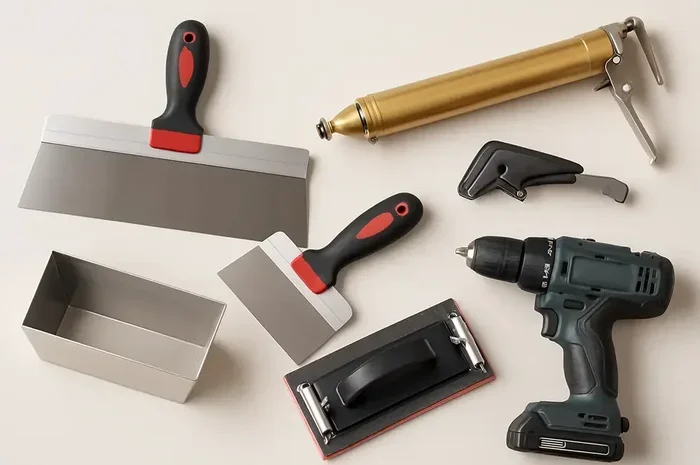
Drywall knives and trowels are the most common tools you will use. They also collect the most dried compound. Here is how to clean them properly:
- Remove excess compound first. Use a plastic scraper or the edge of another knife to knock off large chunks of dried joint compound. Do this while the compound is still slightly soft if possible.
- Soak in warm water. Fill a bucket with warm water and add a few drops of dish soap. Let your knives and trowels soak for five to ten minutes. This softens the remaining compound.
- Scrub with a wire brush. After soaking, use a wire brush to scrub away any remaining buildup. Focus on the edges and the flat surface of the blade.
- Rinse and dry. Rinse the tools under clean running water. Wipe them dry with a clean towel. Make sure there is no moisture left, especially on metal surfaces.
- Apply rust inhibitor. If your tools are made of metal, apply a thin layer of mineral oil or a rust inhibitor. This protects them from moisture and extends their life.
If you notice your knife edge is getting dull, you can lightly sand it with fine-grit sandpaper. A sharp knife makes a huge difference in the quality of your finish. Keeping your blades sharp is part of how to clean drywall tools the right way.
Cleaning Drywall Sanders and Sanding Blocks
Sanders and sanding blocks get covered in dust and used compound. Cleaning them is a bit different than cleaning knives:
- Remove the sanding pad or sheet. Most sanders use replaceable sanding pads. Take the old pad off and throw it away.
- Brush off loose dust. Use a stiff brush to remove as much dust as possible from the sander body.
- Wipe down with a damp cloth. Dampen a cloth with warm water and wipe the sander body. Avoid soaking the motor or electrical parts.
- Clean the dust collection area. If your sander has a dust bag or collection chamber, empty it out. You can also use a small air compressor to blow out the dust. Check out our guide on how to use a compressor pedal for quick and efficient dust removal.
- Let everything dry completely. Before storing, make sure all parts are fully dry to prevent rust and mold.
Cleaning Drywall Mud Pans and Buckets
Mud pans and buckets are where you mix your joint compound. They get coated in dried compound fast. Here is the simplest way to clean them:
- Scrape out leftover compound. Use a putty knife or scraper to remove as much dried compound as possible while it is still soft.
- Soak in warm water. Fill the pan or bucket with warm water and let it sit for a few minutes.
- Scrub with a brush. Use a stiff brush to scrub the inside surfaces. Most of the compound will come off easily after soaking.
- Rinse thoroughly. Rinse with clean water and dry with a towel.
For really stubborn buildup, you can use a mixture of warm water and a small amount of vinegar. The acid helps dissolve dried compound. Just make sure to rinse the pan well afterward.
Cleaning Pneumatic and Air-Powered Drywall Tools
If you use pneumatic drywall tools, they need special care. These tools rely on compressed air, and any dust or debris inside can cause problems. Here is what to do:
- Disconnect the air supply. Always disconnect the tool from the compressor before cleaning.
- Use compressed air to blow out dust. A short burst of air from your compressor can clear out dust and debris from inside the tool. If you are not sure how to get the most airflow, our article on how to get more CFM from your air compressor can help you optimize your setup.
- Wipe down the exterior. Use a damp cloth to clean the outside of the tool.
- Check for wear and tear. While cleaning, inspect hoses, fittings, and moving parts for damage. Replace any worn parts right away.
Taking care of your pneumatic tools keeps them running smoothly. It also prevents costly repairs down the road. If you want to learn more about how two-stage compressors power these tools, read our guide on how a 2-stage compressor works.
Best Practices for Drying and Storing Drywall Tools
Cleaning is only half the battle. How you dry and store your tools matters just as much. Proper storage prevents rust, keeps edges sharp, and extends the life of your tools.
Dry Tools Completely Before Storing
Never put tools away while they are still wet. Moisture causes rust on metal surfaces. It can also lead to mold on wooden handles. After cleaning, wipe every tool dry with a clean towel. For metal tools, you can even use a hair dryer on a low setting to remove all moisture.
Store Tools in a Dry Place
Keep your tools in a dry, well-ventilated area. A garage or workshop is usually fine, but avoid damp spaces like basements. Consider using a tool bag or toolbox to protect them from dust and moisture.
Hang Tools or Keep Them Separated
Do not throw your tools into a pile. Stacking them can dull the edges and cause scratches. Hang knives and trowels on a pegboard. Keep sanders and smaller tools in separate compartments. This simple habit keeps everything in great condition.
Use Tool Protectors
Blade guards and tool covers are cheap and very effective. They protect the edges of your knives and prevent accidental cuts when you reach for tools in a drawer. A small investment that pays off big time.
Common Mistakes to Avoid When Cleaning Drywall Tools
Even experienced DIYers make mistakes when cleaning their tools. Here are the most common ones and how to avoid them:
- Leaving compound to dry on tools. This is the number one mistake. Always clean your tools right after use, while the compound is still soft.
- Using harsh chemicals. Avoid strong solvents or abrasive cleaners. They can damage the surface of your tools and leave residue that affects your next project.
- Soaking wooden handles. Wooden handles should not soak in water for too long. It can cause them to warp or crack. Wipe them with a damp cloth instead.
- Storing tools while damp. This leads to rust and mold. Always dry tools thoroughly before putting them away.
- Ignoring blade sharpening. Dull knives make your job harder and your finish worse. Sharpen or replace them regularly.
- Using the wrong cleaning tools. Steel wool or metal scrapers can scratch and damage your drywall tools. Stick to plastic scrapers and soft brushes.
How Often Should You Deep Clean Your Drywall Tools?
A quick wipe-down after every job is great. But every few weeks, you should do a deep clean. A deep clean removes buildup that regular cleaning misses. Here is what a deep clean looks like:
- Disassemble any removable parts. Take off sanding pads, blades, or any detachable components.
- Soak all metal parts in warm soapy water. Let them soak for at least fifteen minutes.
- Scrub everything thoroughly. Use a wire brush or old toothbrush to get into all the nooks and crannies.
- Rinse and dry completely. Make sure no soap residue is left behind.
- Apply rust inhibitor or mineral oil. Protect all metal surfaces before reassembling.
A deep clean once a month is usually enough for regular users. If you work on large projects every week, you might want to do it more often. The goal is to keep your tools in the best possible condition so they perform at their peak every time you use them.
Quick Tips for Keeping Drywall Tools in Top Shape
Here are some bonus tips to help you get the most out of your drywall tools:
- Clean tools while the compound is still slightly damp. It is much easier to remove before it hardens completely.
- Keep a bucket of soapy water at your workbench. This makes quick cleanup between coats of compound much faster.
- Use a damp sponge to wipe knives between applications. This keeps the blade smooth and free of buildup.
- Label your tools. If you share tools with others, labeling helps everyone know which tools are theirs and encourages proper cleaning.
- Replace worn-out parts promptly. A frayed sanding pad or a dull blade can ruin your work. Replace them before they cause problems.
Taking a few extra minutes to care for your tools after each job goes a long way. It is one of those habits that separates a pro from a weekend warrior. And once you make it part of your routine, it becomes second nature.
Final Thoughts
Cleaning drywall tools does not have to be complicated or time-consuming. With the right supplies and a simple routine, you can keep your tools in excellent condition for years. Remember to clean your knives, trowels, sanders, and pans after every use. Dry them thoroughly. Store them properly. And do a deep clean regularly to remove stubborn buildup.
The effort you put into cleaning your tools pays off in better work quality, fewer replacements, and a smoother drywall experience every time. Whether you are a beginner or a seasoned professional, these tips will help you get the most out of your drywall tools. Start incorporating these habits into your workflow today, and you will notice the difference in every project you take on.
Your tools work hard for you. The least you can do is give them a little care in return. Clean them well, store them right, and they will keep delivering great results project after project.
Frequently Asked Questions
Can I use a pressure washer to clean drywall tools?
It is not recommended. Pressure washers are too powerful and can damage the edges of your knives and trowels. Stick to warm soapy water and a wire brush for safe and effective cleaning.
How do I remove dried joint compound from a drywall knife?
Soak the knife in warm soapy water for five to ten minutes. Then use a wire brush or plastic scraper to remove the softened compound. Rinse and dry thoroughly afterward.
Can I clean drywall sanders with water?
You can wipe the exterior with a damp cloth, but avoid soaking the motor or electrical parts. Use compressed air to blow out dust from inside the sander instead.
What is the best way to store drywall knives?
Hang them on a pegboard or store them in a tool bag with blade guards. Keep them in a dry place to prevent rust and protect the sharp edges.
How often should I replace my drywall sanding pads?
Replace sanding pads when they become worn or lose their grit. For regular users, this is typically every few projects. Using worn-out pads leads to uneven finishes.
Is it okay to leave joint compound in my mud pan overnight?
No. Always clean out your mud pan after each use. Dried compound becomes much harder to remove the longer it sits. A quick rinse with warm water keeps it easy to clean every time.