How Does a Centrifugal Compressor Work and Why It Matters
A centrifugal compressor uses spinning force to push gas outward, converting speed into pressure. It is a key piece of turbomachinery used in factories, refineries, and HVAC systems. Understanding how this dynamic compressor works helps you choose the right equipment and keep it running efficiently.
A centrifugal compressor might sound like a complex machine, but the idea behind it is actually pretty simple. It uses a spinning wheel to push gas outward, and that movement creates pressure. This type of dynamic compressor is everywhere in industrial settings, from oil refineries to large HVAC systems.
If you have ever wondered what makes gas move through pipes at high pressure, a centrifugal compressor is often the answer. It plays a huge role in modern manufacturing and energy production. In this guide, we will break down exactly how it works, what parts it has, and why it matters so much.
Key Takeaways
- Centrifugal force drives compression: The impeller spins at high speed, pushing gas outward and increasing its energy.
- Key components matter: The impeller, diffuser, and volute casing each play a vital role in the compression process.
- Efficiency is high at scale: Centrifugal compressors excel in large industrial applications where steady, continuous flow is needed.
- Regular maintenance prevents failures: Simple upkeep like bearing checks and seal inspections extends compressor life significantly.
- Multiple types exist: Knowing the differences between centrifugal, reciprocating, and rotary compressors helps you pick the right one.
- Power source planning is essential: If you run compressor equipment on a generator, understanding fuel needs and sizing matters.
📑 Table of Contents
- What Is a Centrifugal Compressor?
- The Working Principle: How It Actually Works
- Key Components of a Centrifugal Compressor
- Centrifugal vs. Other Compressor Types
- Applications: Where Centrifugal Compressors Shine
- Maintenance Tips for Long-Lasting Performance
- Why a Centrifugal Compressor Matters
- Conclusion
What Is a Centrifugal Compressor?
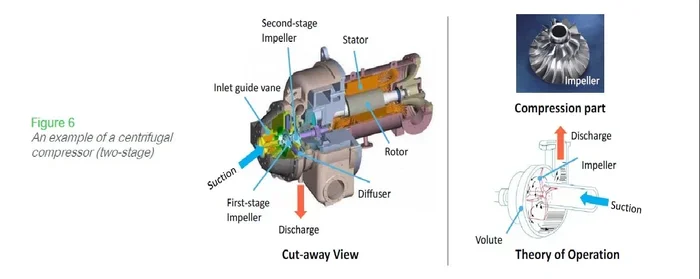
A centrifugal compressor is a machine that increases the pressure of a gas by spinning it at high speed. It belongs to a family called rotary compressors and is also known as a dynamic compressor. Unlike some other types, it does not use pistons or moving walls to squeeze the gas.
Instead, it relies on centrifugal force. When something spins really fast, it pushes anything on the outside outward. A centrifugal compressor uses this exact idea to move and compress gas. The gas enters the center of a spinning part called an impeller and gets flung outward.
This process is part of a broader field called turbomachinery. Turbomachines include turbines, pumps, and compressors that use rotating parts to move fluids or gases. The centrifugal compressor is one of the most common types found in factories and power plants around the world.
How Centrifugal Force Creates Compression
The whole compression process starts with rotation. The impeller spins at thousands of revolutions per minute. As gas flows into the center of the impeller, the blades push it outward. This gives the gas kinetic energy, which is the energy of motion.
Once the gas reaches the outer edge, it slows down inside a part called the diffuser. Slowing down converts that kinetic energy into pressure energy. This is the core principle behind how a centrifugal compressor works. The faster the impeller spins, the more pressure it can create.
The Working Principle: How It Actually Works
Now let us walk through the compression process step by step. Understanding each stage helps you see why the centrifugal compressor is so effective.
Step 1: Gas Enters the Impeller
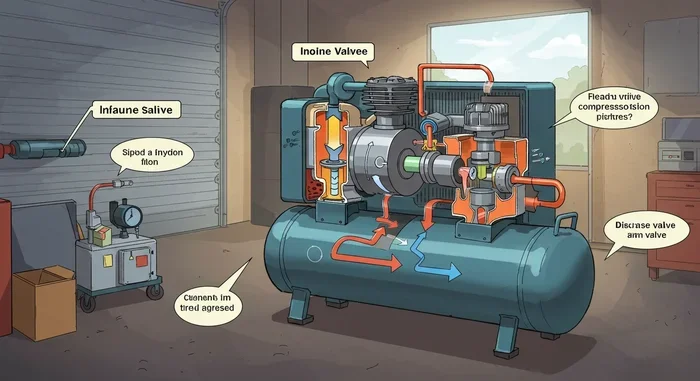
The gas enters through the center of the impeller, which is called the eye. The impeller has curved blades that are angled to push the gas outward. As the impeller spins, the gas picks up speed. This is where kinetic energy builds up.
Step 2: Gas Moves Through the Diffuser
After leaving the impeller, the gas enters the diffuser. The diffuser has wider channels that slow the gas down. This slowing effect is crucial because it turns speed into pressure energy. Without the diffuser, the compressor would not build up enough pressure.
Step 3: Gas Flows Into the Volute Casing
Next, the gas moves into the volute casing. This is a spiral-shaped housing that collects the gas and directs it toward the outlet. The volute casing also helps maintain a steady flow rate as the gas leaves the compressor. It ensures the pressure stays consistent.
Step 4: Gas Exits at High Pressure
Finally, the compressed gas exits through the discharge port. At this point, the gas is at a much higher pressure than when it entered. This compressed air or gas can then be used for industrial processes, cooling systems, or power generation.
Key Components of a Centrifugal Compressor
Each part of a centrifugal compressor has a specific job. Knowing these parts helps you understand maintenance needs and performance.
The Impeller
The impeller is the heart of the centrifugal compressor. It is the spinning part with curved blades. The impeller adds energy to the gas and gets it moving at high speed. Impeller design affects the compressor efficiency a great deal.
The Diffuser
The diffuser slows the gas down and converts speed into pressure. It sits right behind the impeller. A well-designed diffuser can significantly boost the pressure ratio of the compressor.
The Volute Casing
The volute casing is the spiral shell that wraps around the diffuser. It collects the gas and guides it to the exit. This casing also helps reduce turbulence, which improves compressor efficiency.
Bearings and Seals
Bearings support the high-speed shaft that connects to the impeller. Seals prevent gas from leaking out during the gas compression process. Both parts need regular inspection to keep the centrifugal compressor running smoothly.
Centrifugal vs. Other Compressor Types
There are several types of compressors, and each has its strengths. Knowing the differences helps you choose the right one for your needs.
Centrifugal vs. Reciprocating Compressors
A reciprocating compressor uses pistons to compress gas. It works well for high-pressure, low-flow applications. A centrifugal compressor is better suited for high-flow, moderate-pressure tasks. Reciprocating units are often smaller and more portable.
Centrifugal vs. Rotary Screw Compressors
A rotary compressor like the screw type uses two spinning rotors to trap and compress gas. Rotary screw compressors are common in workshops and small factories. Centrifugal compressors handle much larger volumes and are often used in heavy industry.
When to Choose a Centrifugal Compressor
Choose a centrifugal compressor when you need steady, high-volume gas flow. They are ideal for continuous operations where downtime is costly. They also tend to have lower maintenance needs over time compared to reciprocating models.
Applications: Where Centrifugal Compressors Shine
Centrifugal compressors are used in a wide range of industries. Their ability to handle large volumes makes them indispensable.
Oil and Gas Industry
In refineries and gas processing plants, centrifugal compressors move natural gas through pipelines. They also boost gas pressure for storage and transport. These machines must run continuously and reliably.
HVAC and Cooling Systems
Large commercial buildings use centrifugal chillers for air conditioning. The compressor is a core part of these cooling systems. They provide efficient cooling for skyscrapers, hospitals, and malls.
Chemical and Pharmaceutical Plants
Factories that produce chemicals and medicines need clean, consistent compressed air. Centrifugal compressors deliver this without oil contamination. They help maintain safe and sterile production environments.
Power Generation
Gas turbines in power plants use centrifugal compressors to pressurize air before it enters the combustion chamber. This boosts the efficiency of electricity generation. Without the compressor, the turbine could not produce as much power.
Industrial Manufacturing
Many factories use centrifugal compressors to power pneumatic tools and automated systems. They provide a reliable source of compressed air for assembly lines, painting booths, and material handling.
Maintenance Tips for Long-Lasting Performance
Keeping a centrifugal compressor in good shape does not have to be complicated. A few regular steps can prevent major breakdowns.
Check Bearings Regularly
Bearings wear out over time, especially at high speeds. Inspect them on a scheduled basis and replace them before they fail. This simple step can save you from costly downtime.
Monitor Oil and Coolant Levels
Most centrifugal compressors use oil or coolant to manage heat. Low levels can cause overheating and damage. Check these levels daily and top them off as needed.
Inspect Seals for Leaks
Gas leaks reduce compressor efficiency and waste energy. Look for signs of leakage around seals and fittings. Replace worn seals promptly to keep the system tight.
Clean the Impeller
Dirt and debris can build up on the impeller blades over time. This throws off the balance and reduces performance. Regular cleaning keeps the compression process running smoothly.
Keep the Volute Casing Clear
Make sure the volute casing is free of blockages. Any obstruction can restrict flow rate and lower pressure output. A clear casing allows gas to move freely and efficiently.
Common Mistakes to Avoid
One common mistake is ignoring vibration. Excessive vibration can signal bearing problems or imbalance. Another mistake is skipping scheduled inspections. Small issues become big problems fast if you do not catch them early. Also, never exceed the recommended pressure ratio for your specific model. Running the compressor beyond its design limits causes premature wear.
Why a Centrifugal Compressor Matters
The centrifugal compressor is more than just a machine. It is a backbone of modern industry. Without it, many processes we rely on every day would slow down or stop entirely.
These compressors offer high efficiency, especially in large-scale operations. They handle continuous duty cycles with minimal maintenance. Their smooth operation also means less wear on connected equipment. For businesses that depend on steady compressed air or gas flow, a centrifugal compressor is often the best investment.
Understanding how the machine works also helps operators troubleshoot problems faster. When you know the compression process step by step, you can spot issues before they become expensive repairs. That knowledge saves time and money in the long run.
If you are running compressor equipment on a backup power source, it is worth understanding your fuel needs. You can learn more about fuel consumption in our guide on how much gas a generator uses. This helps you plan for uninterrupted compressor operations during power outages.
Budgeting for compressor operations also means factoring in power costs. If you are considering a generator to support your compressor setup, check out our article on how much a home generator costs to get a clear picture of expenses.
Finally, choosing the right power source starts with proper sizing. Visit our guide on what size generator to run a house for practical advice on matching your power supply to your compressor and other equipment needs.
Conclusion
A centrifugal compressor is a remarkable machine that turns spinning motion into powerful pressure. From the impeller to the volute casing, every part plays a role in the compression process. Whether you work in oil and gas, manufacturing, or building maintenance, understanding this machine gives you a real advantage.
Regular maintenance keeps it running efficiently for years. Choosing the right compressor type for your application saves money and prevents headaches. The centrifugal compressor may not always get the spotlight, but it is a workhorse that keeps industry moving. Take the time to learn how it works, and you will see why it matters so much.
Frequently Asked Questions
What is the main job of a centrifugal compressor?
A centrifugal compressor increases the pressure of a gas by spinning it at high speed. It converts kinetic energy from the impeller into pressure energy through the diffuser and volute casing.
How is a centrifugal compressor different from a centrifugal pump?
A centrifugal compressor handles gases, while a centrifugal pump moves liquids. Both use the same spinning principle, but compressors work with compressible fluids and deal with higher pressure ratios.
Can a centrifugal compressor run on a generator?
Yes, a centrifugal compressor can be powered by a generator, especially in remote or backup situations. Make sure your generator is properly sized to handle the compressor’s power draw and starting load.
What is the typical efficiency of a centrifugal compressor?
Modern centrifugal compressors can achieve efficiencies between 70 and 85 percent depending on the design and operating conditions. Efficiency drops if the machine runs far below or above its design flow rate.
How often should a centrifugal compressor be serviced?
Most manufacturers recommend routine inspections every 2,000 to 4,000 operating hours. Regular oil changes, bearing checks, and seal inspections are the most important maintenance tasks for long compressor life.
What gases can a centrifugal compressor handle?
A centrifugal compressor can compress many gases including air, natural gas, hydrogen, and nitrogen. The specific materials and seals used depend on the gas type and its corrosive properties.
=== END OF ARTICLE ===