What Size Generator Will Run a House During a Power Outage
Finding the right what size generator will run a house depends on your power needs, fuel preference, and budget. A typical home needs between 5,000 and 7,500 watts for essential circuits, while a full-house backup may require 10,000 to 25,000 watts. This guide breaks down everything you need to know about home generator sizing, wattage requirements, and choosing the best backup power option for your family.
Key Takeaways
- Know your wattage: Add up the running and starting watts of your essential appliances to find the right size.
- Standby generators offer automatic backup, while portable options are more affordable and flexible.
- A 5,000 to 7,500-watt generator handles basic essentials like fridge, lights, and furnace.
- A 10,000 to 25,000-watt unit powers the entire house, including heavy-duty appliances.
- Fuel type matters: Propane, natural gas, and diesel each have pros and cons for home use.
- Hire a licensed electrician for safe installation, especially with standby units and automatic transfer switches.
- Regular maintenance keeps your generator running reliably when you need it most.
📑 Table of Contents
- Understanding What Size Generator Will Run a House
- Types of Generators for Whole House Backup
- How to Calculate the Right Generator Size
- Essential Appliances and Their Power Requirements
- Standby vs Portable: Which Generator Is Right for You?
- Fuel Types and Their Impact on Generator Size
- Safety Tips for Home Generator Use
- Expert Tips for Getting the Most from Your Generator
- Common Mistakes People Make When Sizing a Generator
- Final Thoughts on Choosing the Right Generator Size
Understanding What Size Generator Will Run a House
Power outages happen more often than most people think. Storms, equipment failures, and grid overloads can leave your home in the dark for hours or even days. Having the right backup generator makes all the difference. But the question most homeowners ask is simple: what size generator will run a house?
The answer is not one-size-fits-all. Your power needs depend on the size of your home, the appliances you use, and how much comfort you want to maintain during an outage. A small apartment might need just 3,000 watts. A large family home with central air and electric heat could need 20,000 watts or more.
This guide walks you through everything you need to know. We will cover how to calculate your power needs, the different types of generators, and how to choose the right one for your home. By the end, you will feel confident making the right decision.
Let us start with the basics. Every generator is rated by its wattage output. Wattage tells you how much electrical power the unit can produce at any given time. Understanding this number is the first step toward finding the perfect home backup power solution.
Running Watts vs Starting Watts
Not all appliances use the same amount of power at all times. There are two types of wattage you need to understand:
- Running watts (continuous watts): The power an appliance needs to stay on.
- Starting watts (surge watts): The extra power needed to start a motor or compressor.
For example, your refrigerator compressor needs a burst of power to kick on. That surge can be two to three times the running wattage. If you do not account for starting watts, your generator will stall or fail to start the appliance.
This is why many people get confused when sizing a generator. They add up running watts and forget about the surge. Always factor in starting watts for motor-driven appliances like air conditioners, well pumps, and sump pumps.
Types of Generators for Whole House Backup
Not all generators are the same. Different types serve different needs. Let us look at the main options available for homeowners today.
Portable Generators
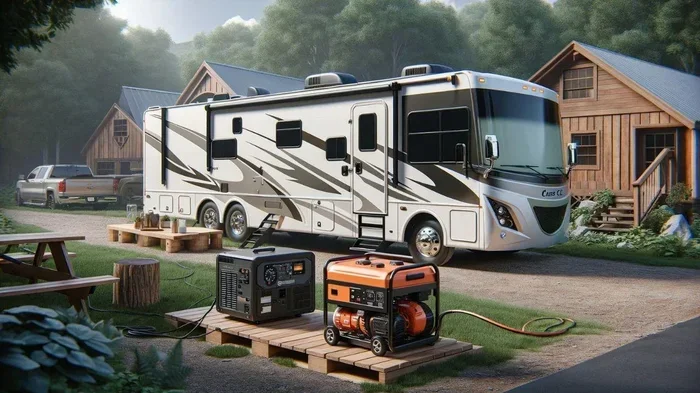
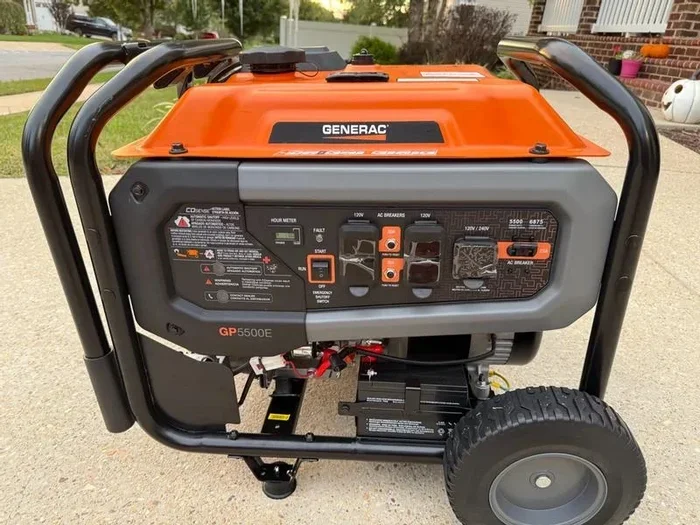
A portable generator is the most affordable option. These units typically range from 2,000 to 10,000 watts. You can move them around, store them easily, and they work well for basic needs.
Portable generators run on gasoline or propane. They are great for camping trips and emergency backup. However, they require manual setup. You need to plug in appliances using extension cords. They also need regular refueling and produce more noise than other options.
If you only need to run a few essential appliances, a portable unit might be all you need. They are a solid choice for budget-conscious homeowners who want reliable backup power during short outages.
Standby Generators
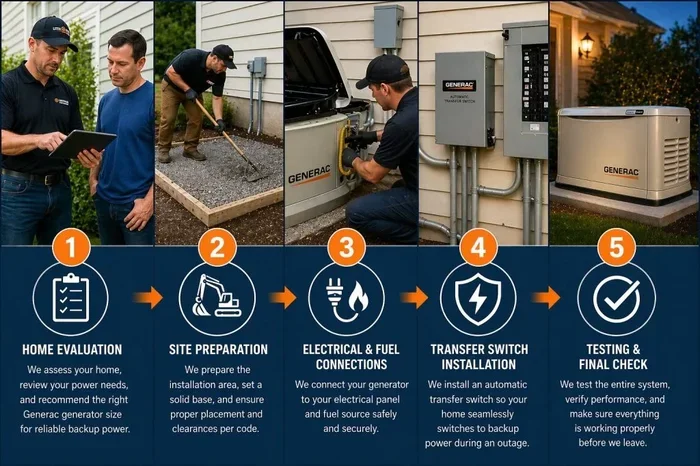
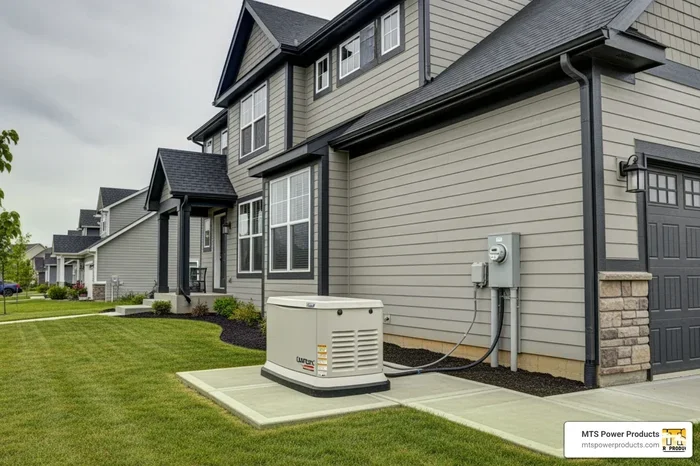
A standby generator is a permanent installation outside your home. These units are much more powerful, typically ranging from 7,000 to 25,000 watts or more. They connect directly to your home’s electrical panel.
The biggest advantage of a standby unit is automation. When the power goes out, an automatic transfer switch detects the outage and starts the generator within seconds. You do not need to lift a finger. Power is restored automatically.
Standby generators run on natural gas or propane. They can power your entire house, including central air conditioning, electric stoves, and water heaters. The downside is the higher upfront cost and installation requirements.
Inverter Generators
An inverter generator produces clean, stable power. This makes it safe for sensitive electronics like laptops, phones, and TVs. They are also much quieter than conventional generators.
Inverter generators are typically portable and range from 1,000 to 7,000 watts. They are fuel-efficient and great for running a few essentials. However, they are not ideal for powering an entire house unless you buy a larger, more expensive model.
Solar Generators
Solar generators are a newer option gaining popularity. They use solar panels to charge battery banks, which then power your home. They are quiet, emission-free, and low maintenance.
The main limitation is runtime. Solar generators depend on sunlight to recharge. During cloudy days or extended outages, they may not provide enough power. They work best as a supplement to a traditional generator or for short outages.
How to Calculate the Right Generator Size
Now let us get into the numbers. Figuring out what size generator will run a house comes down to one simple process: adding up your power needs.
Step 1: List Your Essential Appliances
Start by listing every appliance and device you want to run during a power outage. Be honest about what you truly need versus what is nice to have. Here is a basic list of essentials for most homes:
- Refrigerator and freezer
- Lights (a few rooms)
- Heating or cooling system
- Well pump or sump pump
- Cell phone chargers
- Microwave or cooking appliance
- Television
- Internet router
Step 2: Find the Wattage of Each Appliance
Check the label or manual for each appliance. Look for the wattage rating. If it is listed in amps, you can convert it by multiplying amps by volts (usually 120V for standard outlets).
Here is a quick reference for common household items:
- Refrigerator: 600 to 800 running watts, 1,200 to 1,600 starting watts
- Freezer: 500 to 600 running watts, 1,000 to 1,200 starting watts
- Window AC unit: 1,000 to 1,500 running watts, 2,000 to 3,000 starting watts
- Central AC: 3,000 to 5,000 running watts, 6,000 to 10,000 starting watts
- Electric furnace: 5,000 to 10,000 running watts
- Water heater: 3,000 to 4,500 running watts
- Microwave: 600 to 1,200 running watts
- Well pump: 1,000 to 2,000 running watts, 3,000 to 4,000 starting watts
- Lights (per bulb): 60 to 100 watts
- Television: 100 to 400 watts
- Cell phone charger: 5 to 25 watts
Step 3: Add Up the Total Watts
Now add the running watts of all the appliances you want to run at the same time. Then look at the starting wattage of the appliance with the highest surge. Add that surge number to your total running watts.
For example, let us say you want to run a refrigerator, freezer, a few lights, a microwave, and a well pump. The running watts might add up to 4,000. The well pump has the highest starting surge at 3,500 watts. So your total would be 4,000 plus 3,500, which equals 7,500 watts.
In this case, you would need a generator rated for at least 7,500 watts. It is always smart to add a buffer of 10 to 20 percent for safety.
Step 4: Match Your Total to a Generator Size
Here is a simple breakdown of generator sizes and what they can power:
- 3,000 to 5,000 watts: A few essentials like lights, a fridge, and phone chargers. Good for small homes or apartments.
- 5,000 to 8,000 watts: Handles most essential circuits including a refrigerator, freezer, some lights, a furnace fan, and a sump pump.
- 8,000 to 12,000 watts: Can run a window AC unit, microwave, and several essential circuits in a medium-sized home.
- 12,000 to 20,000 watts: Powers most of the house including central AC, electric heat, and multiple heavy appliances.
- 20,000 to 25,000+ watts: Full-house coverage including central air, electric stove, water heater, and all circuits.
Essential Appliances and Their Power Requirements
Understanding which appliances draw the most power helps you prioritize. During an outage, you may not be able to run everything at once. Knowing your priorities makes sizing easier.
High-Wattage Appliances to Watch
Some appliances use significantly more power than others. These are the big consumers you need to plan for:
- Central air conditioning: This is often the biggest power hog in a home. A central AC unit can draw 3,000 to 5,000 watts while running and up to double that when starting.
- Electric water heaters: These can use 3,000 to 4,500 watts continuously. If your water heater is electric, it will heavily influence your generator size.
- Electric ovens and stoves: A standard electric stove can pull 2,000 to 5,000 watts depending on the burners and oven.
- Clothes dryers: Electric dryers use 1,800 to 5,000 watts. They are one of the heaviest loads in any home.
Low-Wattage Essentials
On the other hand, many essentials use surprisingly little power:
- LED lights use only 6 to 15 watts each
- A refrigerator uses about 600 to 800 watts
- Phone and laptop chargers use 5 to 100 watts
- A television uses 100 to 400 watts
- A Wi-Fi router uses about 5 to 20 watts
By focusing on these low-wattage essentials, you can keep your home comfortable with a smaller, more affordable generator.
Standby vs Portable: Which Generator Is Right for You?
This is one of the most important decisions you will make. Both options have clear advantages and trade-offs.
When to Choose a Standby Generator
A standby generator is the best choice if you want fully automatic backup power. It is ideal for homeowners who:
- Live in areas with frequent or long outages
- Have medical equipment that needs constant power
- Want to power the entire house without manual effort
- Are willing to invest in a permanent solution
Standby generators cost more upfront, typically between $3,000 and $15,000 for the unit alone. Installation by a licensed professional adds another $1,000 to $5,000. But the convenience and reliability are hard to beat.
When to Choose a Portable Generator
A portable generator makes sense if you want a budget-friendly option for occasional outages. They are great for homeowners who:
- Have a smaller power need or just want essentials
- Do not want the cost of permanent installation
- Need a generator for multiple uses like camping or tailgating
- Are comfortable with manual setup and operation
Portable units range from $300 to $2,000 depending on size and features. They are much more accessible for most homeowners. The trade-off is less convenience and lower overall power output.
Quick Comparison Table
| Feature | Portable Generator | Standby Generator |
|---|---|---|
| Power Range | 2,000 to 10,000 watts | 7,000 to 25,000+ watts |
| Installation | None required | Professional installation needed |
| Cost | $300 to $2,000 | $3,000 to $15,000+ |
| Fuel Type | Gasoline, propane | Natural gas, propane |
| Automation | Manual start | Automatic start |
| Runtime | 8 to 24 hours (refuel) | Days (continuous fuel supply) |
| Noise Level | Moderate to loud | Moderate |
Fuel Types and Their Impact on Generator Size
The fuel type you choose affects both the generator size and how it fits into your home setup.
Natural Gas
Natural gas is the most common fuel for standby generators. It connects directly to your home’s gas line, providing virtually unlimited runtime. You do not need to refuel. Natural gas is clean-burning and widely available in most neighborhoods.
Propane
Propane is another popular option. It stores easily in tanks and burns cleanly. Propane tanks come in various sizes, from 20-pound portable tanks to 500-gallon or 1,000-gallon stationary tanks. Propane has a long shelf life, making it reliable for long-term storage.
Diesel
Diesel generators are powerful and efficient. They are commonly used for commercial and industrial backup but can work for large homes too. Diesel has a longer shelf life than gasoline, but it is less commonly available for residential use.
Gasoline
Gasoline is the most common fuel for portable generators. It is widely available and affordable. However, gasoline has a short shelf life of about three to six months. It is not ideal for long-term storage or standby use.
Safety Tips for Home Generator Use
A generator is a powerful tool, but it must be used safely. Following basic safety rules prevents accidents, carbon monoxide poisoning, and electrical hazards.
Never Operate a Generator Indoors
Generators produce carbon monoxide, which is odorless and deadly. Always run your unit outside, at least 20 feet from your home, doors, and windows. Never place it in a garage, even with the door open.
Use a Transfer Switch
Never plug a portable generator directly into a wall outlet. This is called backfeeding, and it is extremely dangerous. It can send power back through the grid, endangering utility workers. Always use a proper transfer switch or interlock device installed by a licensed electrician.
Protect Your Generator from Weather
Rain and moisture can damage your generator and create safety hazards. Use a generator tent or canopy designed for the model. Never operate it in standing water or during a flood.
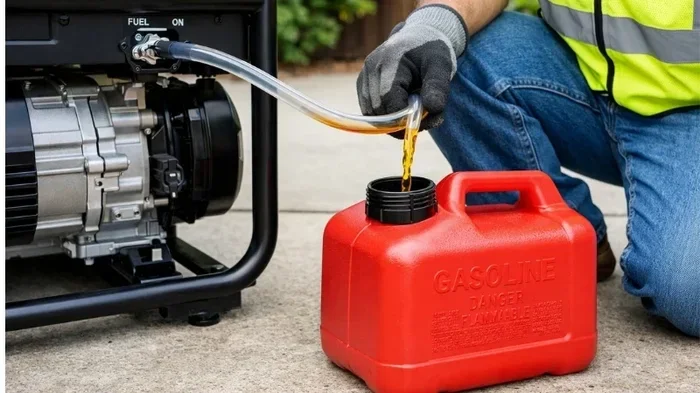
Let the Generator Cool Before Refueling
Gasoline spilled on hot engine parts can ignite. Always turn off the generator and let it cool for at least 10 minutes before adding fuel.
Install Carbon Monoxide Detectors
Even with proper placement, CO levels can build up. Install battery-operated or hardwired carbon monoxide detectors on every level of your home. Test them regularly.
Expert Tips for Getting the Most from Your Generator
Once you have chosen the right home generator, a few best practices will keep it running smoothly for years.
Run it regularly. Start your generator once a month and let it run for about 15 minutes. This keeps the engine lubricated and the battery charged. It also lets you catch any issues before an emergency.
Keep a fuel supply on hand. For portable generators, store enough gasoline or propane for at least a full day of use. Use fuel stabilizer if you store gasoline for more than 30 days.
Consider a whole-house surge protector. Power surges during outages can damage electronics. A surge protector installed at your electrical panel adds an extra layer of defense.
Know your runtime. Check the manufacturer’s specs for runtime at 25 and 50 percent load. A generator running at 50 percent load will last much longer than one running at full capacity.
Budget for maintenance. Like any engine, generators need regular upkeep. Oil changes, air filter replacements, and spark plug checks keep the unit reliable. Follow the maintenance schedule in the owner’s manual.
Common Mistakes People Make When Sizing a Generator
Avoid these common pitfalls to make sure you buy the right unit the first time.
- Underestimating starting watts: Forgetting surge wattage is the number one mistake. Always check starting watts for motor-driven appliances.
- Choosing based on price alone: The cheapest generator may not meet your needs. Focus on wattage and features first.
- Ignoring fuel availability: After a major storm, gasoline may be unavailable for days. Propane and natural gas offer more reliable fuel sources.
- Skipping professional installation: Standby generators require proper wiring and a transfer switch. DIY installation can be dangerous and may void your warranty.
- Not considering future needs: If you plan to add an electric vehicle charger or upgrade your HVAC, factor that into your power calculations now.
Final Thoughts on Choosing the Right Generator Size
So, what size generator will run a house? The honest answer is it depends on your situation. For most homes, a 5,000 to 8,000-watt portable generator covers the essentials. For full-house backup, a 15,000 to 25,000-watt standby generator is the gold standard.
Take the time to calculate your power needs carefully. List your appliances, check their wattage, and factor in starting surges. Choose the fuel type that works best for your home. And invest in professional installation for standby units.
A generator is one of the best investments you can make for your home. It keeps your family safe, your food cold, and your comfort intact during unexpected outages. Do your research now, and you will be glad you did when the lights go out.
Start by making a list of your essential appliances today. Use the wattage guide in this article to calculate your needs. Then shop around for units that match your power requirements and budget. The right backup power solution is out there, and with the right preparation, you will be ready for whatever comes your way.
Frequently Asked Questions
What size generator do I need to run a 2000 square foot house?
A 2,000-square-foot home typically needs between 5,000 and 10,000 watts for essential circuits. If you want to run the entire house including central air and electric heat, you may need 15,000 to 20,000 watts. Your exact needs depend on the appliances and systems you want to power during an outage.
Can a 5000 watt generator run a house?
A 5,000-watt generator can run the essentials in most homes. It can handle a refrigerator, a few lights, a furnace fan, a sump pump, and phone chargers. However, it will not power heavy-duty appliances like central air conditioning or electric water heaters simultaneously.
What is the difference between running watts and starting watts?
Running watts are the continuous power an appliance needs to stay on. Starting watts are the extra burst of power needed when a motor or compressor kicks in. Always add both to your total when sizing a generator. Starting watts are often two to three times higher than running watts for motor-driven appliances.
Is a portable or standby generator better for home backup?
It depends on your needs and budget. A portable generator is affordable and flexible but requires manual setup. A standby generator is more expensive but offers automatic backup power and can run the entire house. Standby units are better for frequent or long outages, while portable units work well for occasional short outages.
How long can a generator run continuously?
Portable generators typically run 8 to 24 hours on a tank of gas, depending on the load. Standby generators connected to natural gas or large propane tanks can run for days without interruption. Always check the manufacturer’s runtime specifications for the specific model you are considering.
Do I need an electrician to install a generator?
Yes, for standby generators and any permanent installation, you should hire a licensed electrician. They will ensure proper wiring, install the automatic transfer switch, and comply with local electrical codes. Portable generators can be used without professional installation but should still be set up safely with proper grounding and load management.